KU sanctions fraternity after underclassman hospitalized first day of classes
Paramedics arrived at the Sigma Alpha Epsilon fraternity house in Lawrence shortly after 11 p.m. on Aug. 18, the first day of fall semester classes at the University of Kansas.
Over the phone, a 911 call-taker had coached the SAE men through performing chest compressions on an unconscious chapter member, who they said was either 19 or 20.
After rushing to the Lawrence fraternity house, paramedics took over to “provide advanced life support” for the underclassman and transport him to Lawrence Memorial Hospital, an incident report shows. It lists “cardiac arrest” as the dispatch code.
Seven days later, KU sent a letter to SAE’s student and national leaders to inform them of a university investigation into “alleged hazing that occurred this semester involving new members of Sigma Alpha Epsilon Fraternity.”
On Sept. 24, KU updated an online database to reflect that SAE had received a warning for violating university rules, including one about lying or misleading officials.
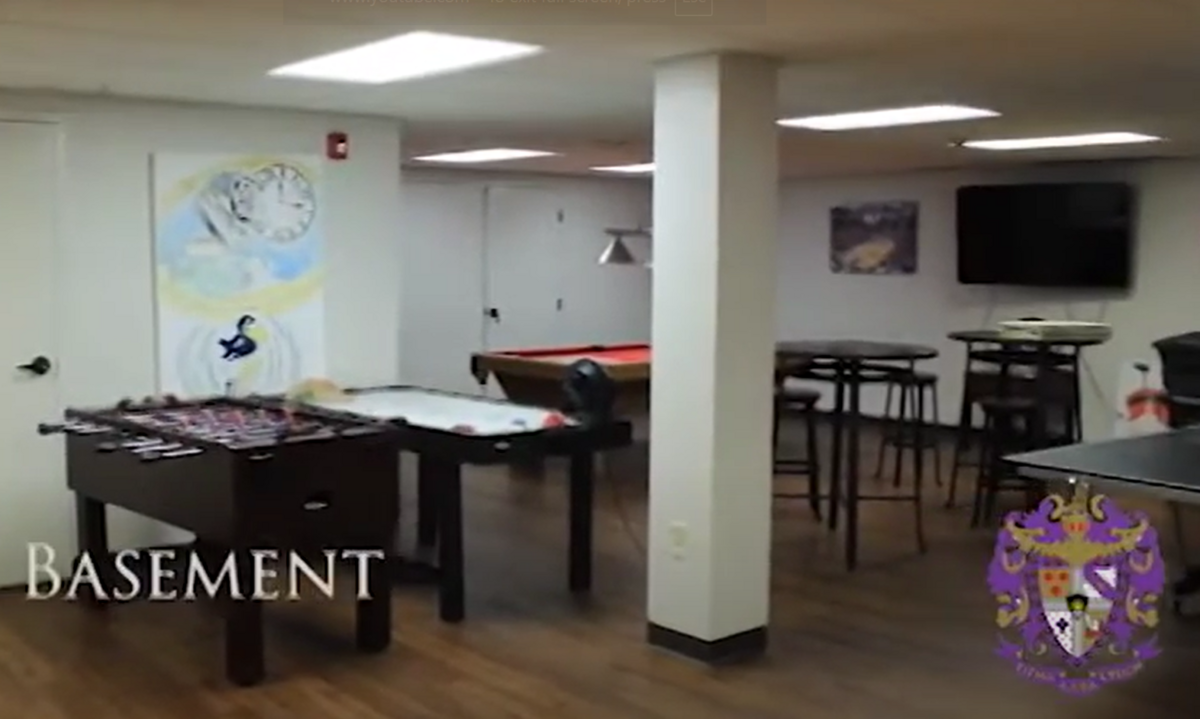
What isn’t known — and what university and fraternity officials have refused to discuss — is what happened in the basement of the three-story house in the 1300 block of West Campus Road, before the young man lost consciousness. The Star is not identifying him out of respect for his privacy.
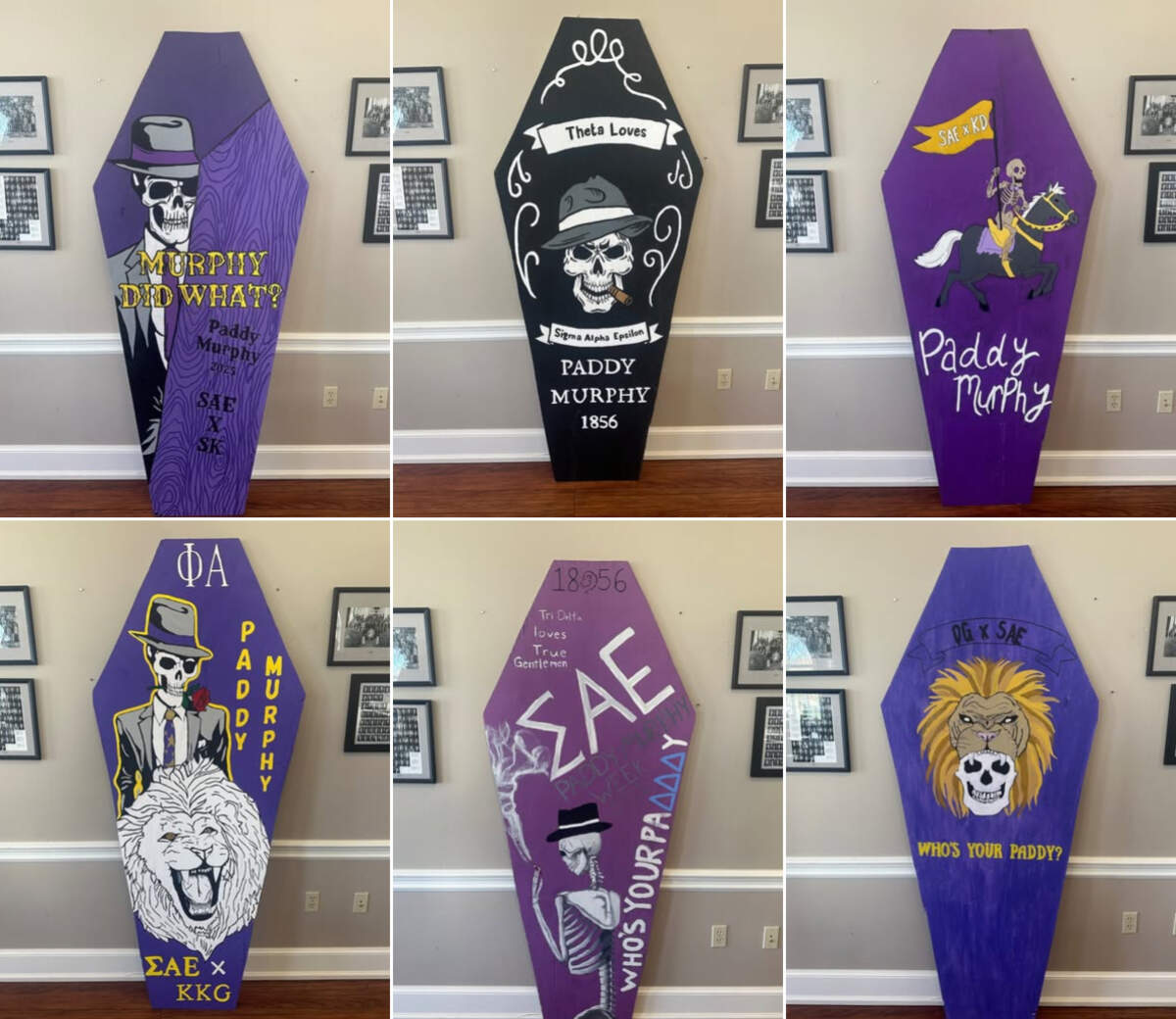
The hazing investigation was spurred on by an anonymous report that an older fraternity member forced a younger member inside a coffin on the night of the 911 call.
SAE national officials responded in a statement Thursday afternoon.
“Sigma Alpha Epsilon Fraternity was made aware of an incident involving the health of a member at the University of Kansas,” the statement said. “Upon learning of the situation, the Fraternity promptly initiated a thorough investigation, which determined that at no time did hazing or unsafe treatment of members occur.”
“We were proud to learn from the chapter that when faced with a medical emergency, the fraternity brothers quickly sprang into action to provide CPR, call for paramedics, and accompany him at the hospital. The experience reinforces to all our members the importance of education and diligence in responding to emergencies.”
The statement did not address the sanctions implemented by the university or what members were doing prior to the medical emergency.
Penny Sassaman, SAE’s live-in house mother, said she was at the hospital with the student until 3 a.m. after the harrowing incident. He’s still a member of the fraternity, she said.
“There was absolutely no alcohol and no drugs in his system,” Sassaman said in a phone interview Tuesday. “It was an anxiety attack.
“It was right after school started. He was in a new environment. He’s a freshman … It was a full-on panic attack. And the doctor said so,” Sassaman said. “They ran all kinds of tests. They did CAT scans and they checked his ribs because somebody tried to give him CPR or something.”
The student did not respond to phone calls and text messages for this story. On behalf of the family, his father declined to comment.
Sassaman said she doesn’t know what members were doing in the basement before paramedics were called to the fraternity house. She was there, she said, but not in the basement.
“We don’t haze. I’m so proud of my guys. We do not haze,” Sassaman said.
The 911 call from the SAE basement on Aug. 18 was placed two days before the Kansas Fraternity Landlords’ League hosted an anti-hazing event on campus with the parents of Tim Piazza, a 19-year-old fraternity pledge at Pennsylvania State University who died in 2017.
Sassaman said there have been no changes in student leadership in response to the August medical emergency or the September sanctions from KU.
“Internal discipline for what?” she said. “A kid having a panic attack?”
This semester, the university lifted the suspensions of three other KU fraternities — Phi Delta Theta, Phi Gamma Delta and Sigma Chi — that had resulted from hazing investigations. Phi Delta Theta and Phi Gamma Delta had not actually ceased operations because their national offices said they had dealt with the problems internally.
.JPG "IMG_DRYFRAT_ME_041013_DR_2_1_HH8UM37(2).JPG")
The sanctions against SAE
KU issued the sanctions against Sigma Alpha Epsilon on Sept. 24, according to an online site it maintains of registered organizations that have been disciplined for violating university rules. The site names those sanctioned since 2017.
The SAE sanctions were issued one day after The Star inquired about whether any disciplinary actions had been taken against the fraternity since July.
KU spokesperson Erinn Barcomb-Peterson said in an email Tuesday that the SAE sanctions resulted from an investigation into the fraternity’s actions on the night of the medical emergency.
The online university site shows that SAE was sanctioned for two violations: “falsification” and “registered organization.”
The university’s Code of Student Rights and Responsibilities defines falsification as when “a student, applicant or former student intentionally and knowingly furnishes false or misleading information or records to the University, including the omission of relevant information or is in possession of forged, altered, misrepresentative documents, records, or instruments of identification.”
The document’s description of a “registered organization” says that “organizations through their officers, and/or individual members may be held responsible and sanctioned for conduct in accordance with guidelines established for individual students. In addition, the University may impose educational measures.”
SAE was issued a warning for the violations. It is set to expire on Dec. 18, 2026. According to the site, a warning is “notice in writing that continuation or repetition of conduct found wrongful, within a period of time stated in the warning, may be cause for more severe disciplinary action.”
No further details were available.
Fraternity 911 call
The Star obtained public records from KU, Douglas County Emergency Communications and Lawrence-Douglas County Fire Medical for this story. They show the steps that first responders took on the night of Aug. 18 after an SAE member called for help.
In a nearly nine-minute recording of the 911 call that brought paramedics to the fraternity house on West Campus Road, a call-taker can be heard directing people to perform CPR on a student who is described as “unconscious” and “not awake.”
“One of the guys in my house was laying down downstairs and then just passed out,” said the caller, who gave his name as Aidan.
Aidan Welch, SAE’s KU chapter president, and other student leaders in the fraternity did not respond to repeated phone calls and email questions this week about the hazing allegations and KU sanctions.
Shortly after confirming the address of the house, the call-taker asked whether the unconscious student was breathing. Yes, he had a pulse but he was breathing “a little slow.”
“Do you think he’s taken any drugs or alcohol?” the call-taker asked.
Someone else in the room said something inaudible before Aidan replied.
“Yeah, uh, today he went to urgent care and he got antibiotics for his eye,” he said.
The conversation then shifted back to rendering life support while the brothers waited for paramedics to arrive. Someone had gone to search for a defibrillator.
Another person in the room took over on the phone and agreed to let the call-taker know verbally each time the unconscious student’s chest rose.
SAE members were directed to lay the student on his back and remove anything from underneath his head.
“OK. But he is drooling. Is that OK?” someone asked.
A string of instructions was relayed and CPR began, with the call-taker adjusting the pace of chest compressions. Eventually, audible groans could be heard on the recording.
“Ma’am, he’s groaning. Is that OK?”
“Is he fighting you at all?” the call-taker responded.
“No.”
“No. Then keep going.”
Soon came the sound of profuse coughing.
“He’s coughing up, I would say a decent amount of mucus and/or vomit.”
The call-taker told SAE members to try to keep him awake and make sure he was aware of his surroundings.
A chorus of voices in the room repeated the student’s name and encouraged him to respond.
“You’re OK.”
“We have help on the way.”
“You gotta stay with me.”
Paramedics could be heard arriving. Before they did, the call-taker asked where in the house they were located.
“We are in the basement, ma’am.”
‘This is deeply concerning’
Four days after the 911 call, SAE national leaders and KU’s student conduct office received an anonymous tip alleging “a recent hazing incident that occurred in the SAE chapter house.”
According to the Aug. 22 email exchanges provided to The Star, the tipster said that during pledge activities, one of the pledges was allegedly forced by an older member to get into a coffin in the basement of the house, leading to a medical emergency that resulted in a 911 call. The tipster said the incident was downplayed and described as being related to a “pre-existing condition” in order to cover up the alleged hazing.
The person who anonymously made the report refused to provide investigators or The Star with more information about their own identity, saying they feared for their safety.
Both Melissa Stewart, KU’s director of student conduct and community standards, and Layne Smith, SAE’s assistant director of risk management, responded that same day.
Stewart thanked the tipster, saying that “this is deeply concerning, and we would like to address this.” She also asked for more information “to assist my office’s ability to follow up and intervene appropriately.”
Smith said that “we would like all details you know about the alleged incident.”
“We are committed to working with the school to determine what alleged hazing has occurred with the chapter,” he said.
On Aug. 25, Stewart sent a letter to SAE’s KU chapter.
“My office and Sigma Alpha Epsilon Headquarters have received information regarding alleged hazing that occurred this semester involving new members of Sigma Alpha Epsilon Fraternity,” said the letter, obtained by The Star through a Kansas Open Records Act request.
The letter said that the university and SAE headquarters would conduct an investigation to determine what occurred and whether it was a violation of university policy.
“The purpose of the investigation is simply to gather information and determine appropriate next steps, if any,” it said. “At this time, the chapter has not been formally charged with any violations. The chapter is expected to engage in this process to resolve the concern as quickly as possible.”
The letter warned that retaliation against those who filed a complaint or participated in the investigation was strictly prohibited and could result in disciplinary action. It also said that “falsification, distortion, or misrepresentation of facts by individuals participating in the investigation or in follow-up interviews” could result in disciplinary charges, “for obstructing the investigative process.”
And the letter ordered SAE to “cease immediately” any events, programs or activities not approved by KU’s Sorority and Fraternity Life Office and/or SAE headquarters. Continuing such unsanctioned events, it said, could lead to disciplinary action.
Four weeks after sending the letter notifying SAE of the investigation, KU issued the sanctions against the fraternity. The sanctions, however, were not for hazing but for “falsification.”
The statement from SAE’s national headquarters in Evanston, Illinois, did not address the disciplinary action, instead praising the fraternity members for how they handled the medical emergency.
“The safety and well-being of our members remain our highest priority,” the statement said. “Sigma Alpha Epsilon understands from our members that no hazing or alcohol abuse occurred in connection with this incident. Importantly, Sigma Alpha Epsilon’s Bystander Intervention and Good Samaritan policies are designed to ensure that members feel empowered and protected when calling for medical assistance. We are thankful our member received such prompt medical assistance, and we will continue to foster a culture of responsibility and care across all our chapters.”
Sassaman, the house mother, denied the hazing allegations.
“When we’ve got new members and their families come in, I tell the parents, ‘You can rest assured. We do not haze in this house,’” Sassaman said.
“Rumors,” she added, “can ruin lives.”
“I don’t know who this anonymous tip is coming from,” she said. “Could be a disgruntled girlfriend. It could be — who knows?”
SAE’s troubled history
SAE’s University of Kansas chapter has been the subject of multiple disturbing incidents.
In 2009, Jason Wren, a 19-year-old freshman from Colorado, was found dead in his bed at the SAE house after a night of binge drinking. An autopsy said he died of alcohol poisoning.
Wren’s father said his underage son began drinking pitchers of margaritas at dinner with friends and later continued drinking beer and whiskey into the morning hours at the fraternity house.
The family sued the fraternity, alleging that Wren and other underage pledges were forced to quickly down large amounts of alcohol as part of a challenge. The first person to stop drinking or vomit was deemed the loser of the challenge, the lawsuit said.
At least 10 people who had some responsibility for Jason Wren were aware of fraternity rules against underage drinking, the suit alleged, but “served him alcohol and failed to assist him with medical attention even after it was clear that he needed medical attention.”
The lawsuit was settled in 2011, but the details were not made public.
In 2015, the university placed SAE on a one-year warning for hazing, and in January 2018, the fraternity was put on probation following a new hazing investigation. Five weeks later, the national office of Sigma Alpha Epsilon suspended the KU chapter. It reopened in 2022.
An April 8, 2024, story in The Kansan, the university newspaper, said the SAE chapter had undergone “a remarkable resurrection.”
Then-chapter president Andrew Fisher told The Kansan that the chapter had a renewed focus on philanthropy and responsible conduct.
“We have zero tolerance for hazing,” he told The Kansan. “Our focus is on academics, brotherhood, and giving back to the community.”
The Sigma Alpha Epsilon fraternity has also faced troubling issues at other college campuses.
In Dec. 2013, Bloomberg News reported that nine people — most of them students — had died since 2006 in events connected to SAE, labeling it the nation’s “deadliest” fraternity.
A few months later, the fraternity’s Supreme Council eliminated all new member pledge programs. Brad Cohen, at the time SAE’s national president, announced the action in a March 2014 video released on the organization’s Founders Day.
“As an organization, we have been plagued with too much bad behavior, which has resulted in loss of lives, negative press and large lawsuits,” Cohen said. “We have taken our bloodline for the fraternity, our new members, and treated them as second-class citizens … We are at a crossroads. Do we continue to operate as we have because some deem it to be tradition, and risk our existence?”
In 2015, SAE’s national office shut down the University of Oklahoma chapter after a viral video surfaced that allegedly showed members singing a racist chant about Black people and lynching while dressed in formal attire and riding on a chartered bus. Those on the bus included high school students who were potential fraternity recruits.
“To those who have misused their free speech in such a reprehensible way, I have a message for you. You are disgraceful,” said University of Oklahoma President David Boren. “You have violated all that we stand for.”
A university investigation found that the chant — sung to the tune of the song “If you’re happy and you know it” but with the phrase “There will never be a n— at SAE” — was learned at a national leadership event organized by the fraternity four years earlier.
In releasing the results of the investigation, Boren announced that two students had been expelled and 25 others would be disciplined.
This story was originally published October 9, 2025 at 3:33 PM.