How the Chiefs or Royals could end up in Kansas even if offer ‘deadline’ passes
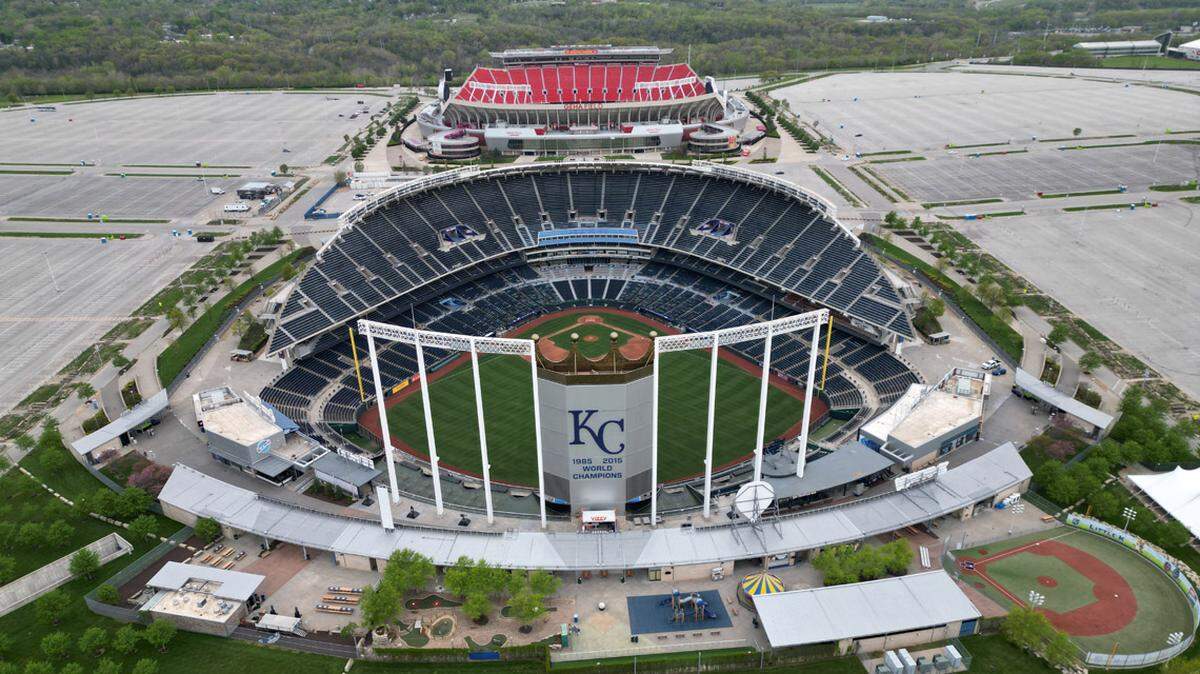
When Kansas passed a massive incentives program last year to lure the Kansas City Chiefs and Royals into the state, lawmakers included a June 30, 2025, deadline to strike a deal with the teams.
Except not really.
Even as the key date approaches, a close reading of the Kansas law makes clear that the deadline is largely artificial. That’s important because some legislative leaders have repeatedly signaled they had no intention of acting before June 30.
The law allows top lawmakers to extend the state’s offer for one year. But it also gives them another, lesser-known escape hatch, allowing lawmakers to retroactively approve an extension after June 30. In theory, they could wait weeks or months before authorizing an extension — offering a path for the state to remain in the hunt for the teams even after the much-discussed deadline.
Missouri lawmakers in recent weeks have cited the approaching date in justifying urgent action to pass their own incentive package. Missouri Republican Gov. Mike Kehoe called the General Assembly into a special session in early June, at least partly because of the perception of a ticking clock in Kansas.
The Kansas Legislative Coordinating Council, or LCC, will decide whether to extend the state’s offer, which features supercharged Sales Tax and Revenue, or STAR, bonds. Top lawmakers of both parties make up the council, with Republicans holding a majority.
The Kansas law, passed in 2024 — called House Bill 2001 — allows the LCC to approve a one-year extension at any point on or before July 1, 2025. But it also allows the council to approve an extension at its next meeting, and sets no requirement for how quickly that meeting must be called.
The LCC typically handles internal administrative matters for the Legislature, which meets for its annual session in the winter and spring. During the off-season, it’s not uncommon for the LCC to go weeks or even months without meeting.
Short-term STAR bond extension
Despite the law’s wide latitude to defer a decision, Kansas House Speaker Dan Hawkins, a Wichita Republican who is running for state insurance commissioner, in recent weeks had said he opposes an extension.
“My opinion is, you extend it, it just gives them more time to leverage against Missouri, so why do we want to do that?” Hawkins said in an interview with The Star in late May.
But now that Missouri lawmakers have passed their own plan, Kansas will have no leverage at all if its plan permanently expires. At least one leading Kansas Republican has kept the door open to an extension. And while the Kansas law is clear that any extension must last a year, the LCC could effectively impose a quicker deadline by refusing to consider any agreement after a certain date.
A spokesperson for Kansas Senate President Ty Masterson, an Andover Republican, said a short-term renewal could be on the table despite the law requiring extensions to last a year.
“While the law says any extension is for a year, the LCC can arbitrarily limit that timeline,” the spokesperson, Mike Pirner, wrote in a text message. “As the president has said, it’s not likely that timeline would be long.”
Masterson has previously taken a measured stance compared to Hawkins, suggesting the STAR bond offer could potentially be renewed for a shorter period than a year if leaders believe the teams are serious about jumping the border.
“Any extension would be short-term and the need for any (extension) at all will be determined closer to the deadline,” Pirner said shortly after Hawkins came out against the incentive renewal.
Kansas stadium details
Kansas’ negotiations with the Chiefs and Royals have been shrouded in mystery.
The STAR bond bill, signed into law at the end of a 2024 special session by Gov. Laura Kelly, authorizes David Toland to negotiate directly with the teams in his capacity as both lieutenant governor and commerce secretary.
Toland’s office has refused to share any details about his dealings with team executives, and lawmakers say they aren’t getting much more information than the public.
“I have not heard any of the latest about negotiations on any official level,” said Rep. Stephanie Clayton, an Overland Park Democrat.
“I keep hearing that the Chiefs are just messing around and the Royals are actually, you know, seriously considering. But that’s what I was hearing a year ago.”
Last month, a Royals affiliate purchased the mortgage for the former Sprint campus, now Aspiria, in Overland Park, intensifying speculation about the MLB club’s potential interest in venturing to the Kansas side of the state line.
Since Missouri lawmakers passed their own incentive plan to fund up to 50% of stadium construction or renovation costs, Chiefs and Royals lobbyists have remained noncommittal about where they see their teams building a future.
The Kansas plan offers public money to fund an even higher percentage of stadium costs — 70% — through future sales tax revenue generated by stadium developments.
One major difference between the two incentive packages is that Missouri’s plan would require a local commitment, which could come in the form of a local tax vote like the one Jackson County voters overwhelmingly rejected last April.
Kansas’ offer includes no such requirement of a local commitment. But the proposal hinges on a STAR bond project larger than any such development Kansas has supported through the incentive program before.
In the quarter century since Kansas Speedway in Wyandotte County became the first STAR bond-backed development, projects associated with the program have had a mixed track record.
Some projects, including the racetrack and Children’s Mercy Park, where Sporting KC plays, have spurred development and generated return on investment in the form of tourism dollars.
But others haven’t fared so well. The Prairiefire museum in Overland Park defaulted in 2023 after bondholders were unable to make a $15 million payment. Schlitterbahn Waterpark Kansas City, another STAR bond project, was permanently closed after the 2016 death of a 10-year-old child on the park’s signature waterslide.
Although fans and lawmakers on both sides of the state line have stressed the potential economic windfall of locking in stadium deals, decades of research show stadium projects rarely earn back the amount of public aid that goes into them.
This story was originally published June 26, 2025 at 5:30 AM.