Kansas’ offer for Chiefs, Royals stadiums will come off table soon, top lawmaker says
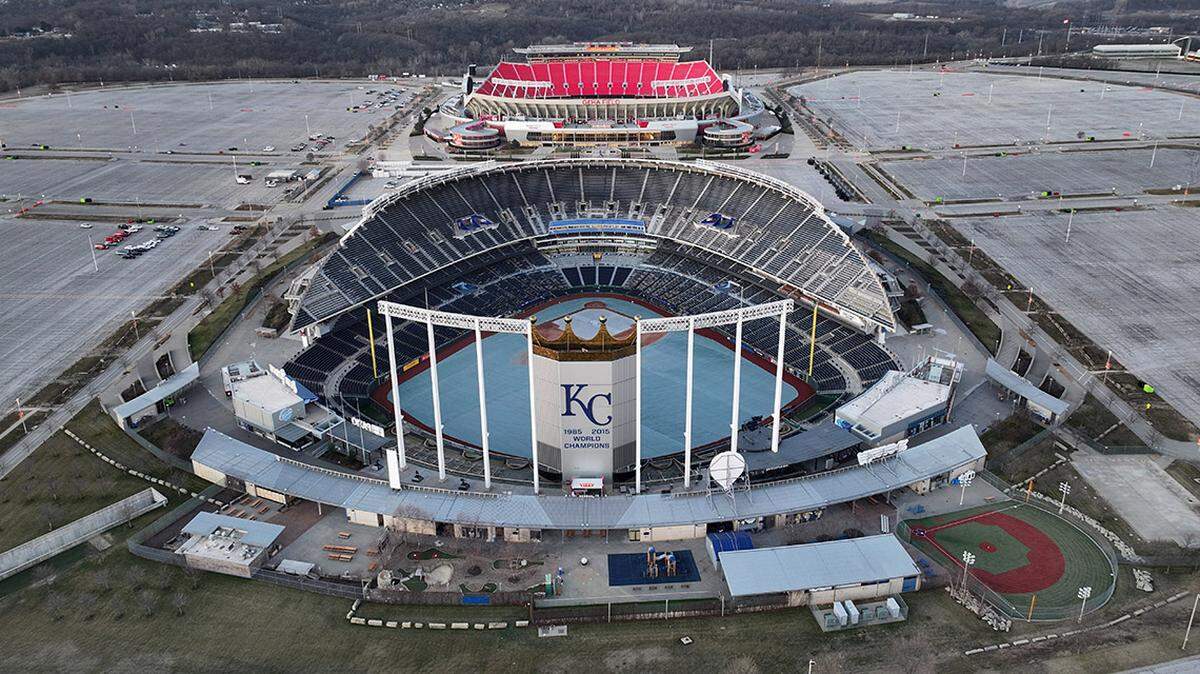
Kansas House Speaker Dan Hawkins says if the Chiefs or Royals are interested in jumping the border to build new stadiums in Kansas, they should act on the state’s offer soon.
On Wednesday, Hawkins, a Wichita Republican, said he doesn’t want to extend the supercharged stadium-funding incentive proposal beyond its June 30 expiration date.
“I think if they want to get it done, they’ve still got time to get it done,” Hawkins told The Star.
Under the bill signed into law after a one-day special session last June, a small group of legislative leaders, including Hawkins, has the option to extend Kansas’ stadium-funding plan for another year.
“My opinion is, you extend it, it just gives them more time to leverage against Missouri, so why do we want to do that?” said Hawkins, who recently announced his bid to become state insurance commissioner.
As Missouri lawmakers prepare to convene next week for what promises to be a hectic special session centered on a last-ditch stadium-funding plan and other contentious issues, Kansas officials seem content to sit back and maximize their leverage with the Chiefs and Royals.
“If one of them wants to — or both — wants to come to Kansas, we’d love to have them,” Hawkins said. “We have the tools.”
Under the 2024 plan, Kansas could finance up to 70% of stadium construction through Sales Tax and Revenue bonds, also known as STAR bonds. The bonds would be paid back by tax revenues generated from within any new stadiums and surrounding retail development, as well as future sports betting and Kansas Lottery revenues.
The plan empowers Lt. Gov. David Toland, as commerce secretary, to negotiate deals directly with the Chiefs and Royals. No statewide or local vote would be required for Commerce to enter into a stadium funding agreement with one or both teams.
“I want the Chiefs and the Royals to come to Kansas. That’s what I want,” said House Majority Leader Chris Croft, an Overland Park Republican who will also have a say in whether Kansas’ offer gets extended beyond June 30.
“I want them to stay in the area for sure,” Croft added. “You know that … If they happen to be on the Kansas side, I’m excited for that.”
Missouri dysfunction
Missouri Gov. Mike Kehoe has made it clear that Kansas has no business poaching either team.
“The Kansas City Chiefs and Royals are Missouri’s teams,” Kehoe said bluntly at a Tuesday press conference announcing the special session, which could last for up to 60 days under state law.
Kehoe’s stadiums proposal would allow Missouri to offer state aid to pay for up to 50% of new or upgraded stadiums for the two teams. But getting it across the finish line will be a tall order.
Other business on the table during the special session will include disaster relief after recent tornadoes and severe weather in St. Louis and eastern Missouri, and state funding for projects that didn’t pass during the regular session, including funding for a new mental health hospital in Kansas City.
And Missouri Senate Republicans’ decision to cut off multiple filibusters during the final week of the regular session has angered Democrats and stoked division that will likely carry over to the special session.
The rare move to curtail debate allowed GOP senators to advance a state constitutional amendment that would again ban abortion and pass legislation to roll back voter-approved sick leave protections for workers.
“Missouri is doing what it does,” said Rep. Stephanie Clayton, an Overland Park Democrat. “They are too busy spending time taking the rights away from women and ignoring the voices of their own constituents to pay attention to economic development.”
Clayton doesn’t agree with Hawkins on much. But she said she sees the logic in not extending Kansas’ STAR bond stadiums package.
“I understand where the speaker is coming from because it does seem like the teams — in particular, the Chiefs — are trying to play both sides of the state line to get whatever it is that they want,” Clayton said.
She said she’s not privy to any information about the teams’ official negotiations with Toland. The Commerce Department has declined to say whether either team is in serious talks with the state.
Clayton said Missouri lawmakers’ “backwards attitudes” aren’t conducive to business. The Kansas Legislature has its own dysfunction, she acknowledged. But lawmakers know when to set aside their differences, Clayton said.
“When it comes down to it, especially when it comes down to really important economic development issues, we have a track record of coming together,” Clayton said.
“We have enough common sense to know, when there is money to be made, we figure out a way to make it.”
Extensive research indicates that stadium projects rarely earn back the amount of public aid that goes into them. Decades of research show stadiums aren’t major drivers of economic growth.
Kansas’ STAR bond program, renewed by the Legislature for another three years this spring, only authorizes the state to fund up to 50% of project costs through future sales tax revenue under normal circumstances.
The stadium STAR bond proposal is a souped-up version of the incentive that allows for up to 70% of development costs to be paid for by future stadium district customers.
Sen. Kenny Titus, a Wamego Republican who voted against the stadiums-funding incentive offer last June, said he still thinks the proposal could leave the state economically vulnerable.
“As much as I am a fan of the Chiefs and the Royals, I don’t think we should be just handing out taxpayer dollars to build stadiums for these highly profitable organizations,” Titus said.
This story was originally published May 29, 2025 at 11:46 AM.