She was counting on Kansas’ promised property tax relief. GOP fighting foiled it
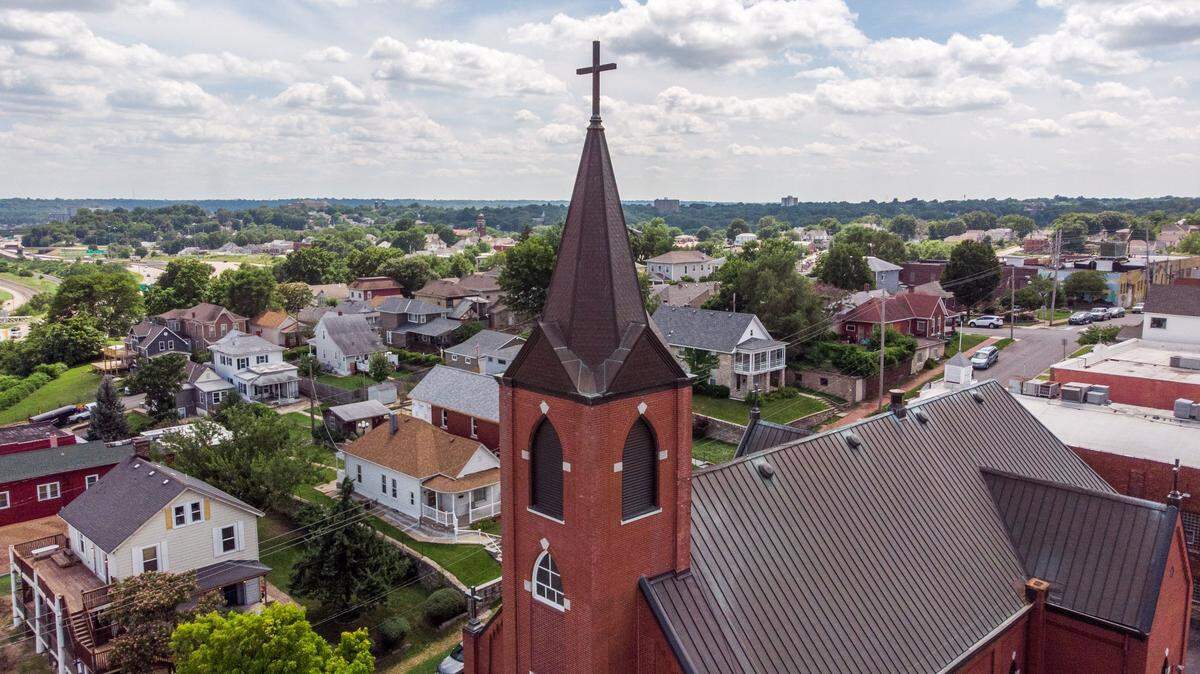
Fannie Hill finally paid off her home in the Bethel Welborn neighborhood of Kansas City, Kansas, this year.
But she doubts she’ll ever be able to live comfortably there.
Her property tax bill is around $5,000 now. It’s gone up each of the last five years.
“I will be renting this house for the rest of my life — paying $3,000 or some $4,000 in insurance and then $6,000 to $7,000 in taxes,” said Hill, 73, a retired hospice worker.
Since 2020, her property value has climbed by 69% from $167,700 to $283,500, according to the county appraiser.
Like many Kansans, Hill hoped lawmakers would deliver major property tax reform this year.
But the Legislature gaveled out last week having made minimal progress, thanks to a stalemate between Republicans in the House and Senate over which chamber’s constitutional amendment proposal should be brought to voters.
After three months of negotiations, the only significant change coming is a 1.5 mill reduction to the state levy that will save Hill $48.90 on her tax bill. Savings on a home with the median Wyandotte County value of $181,600 will be less — $31.33.
With property values on the rise again this year, most homeowners will pay more in taxes than they did last year. Hill said for seniors on fixed incomes, the status quo is already untenable.
“What are you going to save for taxes out of $1,000 a month when your utilities, your light bill, is running $400, $500? That’s your money right there,” Hill said. “What you got? $500 to live the rest of the month until the next check? Where’s the money you’re going to set aside to pay these taxes? There is none.”
Division on tax reform
Lawmakers returned to Topeka in January after months of campaign doorknocking with a consensus opinion on their constituents’ top priority: reining in soaring property taxes.
Senate President Ty Masterson, an Andover Republican and likely gubernatorial candidate, said in his response to Gov. Laura Kelly’s State of the State speech that for too long, property tax relief has “just been a political talking point.”
“We must act,” he said, promising to do just that with expanded GOP supermajorities in both chambers.
But the House rejected the bill passed by the Senate, calling for a referendum vote to limit property value increases to no more than 4% annually. And the Senate wasn’t any more keen on the House’s favored plan, which would have factored in appraisal increases using a rolling average to minimize single-year spikes.
Secretary of State Scott Schwab, who has already announced his bid for governor, blasted the relative lack of progress in a campaign statement last week.
“Kansans expected better,” Schwab said. “Kansans expected leadership that would address runaway property tax increases, arrest out-of-control valuations, and restore confidence that they can afford the homes they live in — not rent them from the government.”
Masterson defended the 1.5-mill cut, which also applies to state taxes on vehicles, as “meaningful tax relief.” He touted the passage of a new law over Kelly’s veto that will incrementally lower flat individual and corporate income tax rates to as low as 4% over time if state revenue collection remains stable.
“We also passed a constitutional amendment three times to cap property appraisal increases, a vital step toward reforming our property tax system,” Masterson said. “Despite resistance from some in the House, the Senate remains steadfast in our commitment to this essential reform.”
Speaker of the House Dan Hawkins, a Wichita Republican, and Rep. Adam Smith, a Weskan Republican who chairs the House Taxation Committee, did not respond to requests for comment.
“Republicans promised Kansans they would deliver property tax relief, but they failed to make good on that promise,” said Senate Minority Leader Dinah Sykes, a Lenexa Democrat.
Financial hardship and tax relief
Robert Ewing, another KCK homeowner, recently abandoned his property tax protest petition and paid his tax bill with a credit card after being denied a second hearing.
“I’m just worn out. I can’t do it anymore,” said Ewing, 59, a public school teacher and community activist.
He pays for his utility bills and groceries out of his paycheck, but he can no longer do the same with his property taxes. Two years ago, he had to charge his credit card when he needed a hernia surgery. He’s worried the stress caused by his taxes could contribute to a medical emergency he can’t afford.
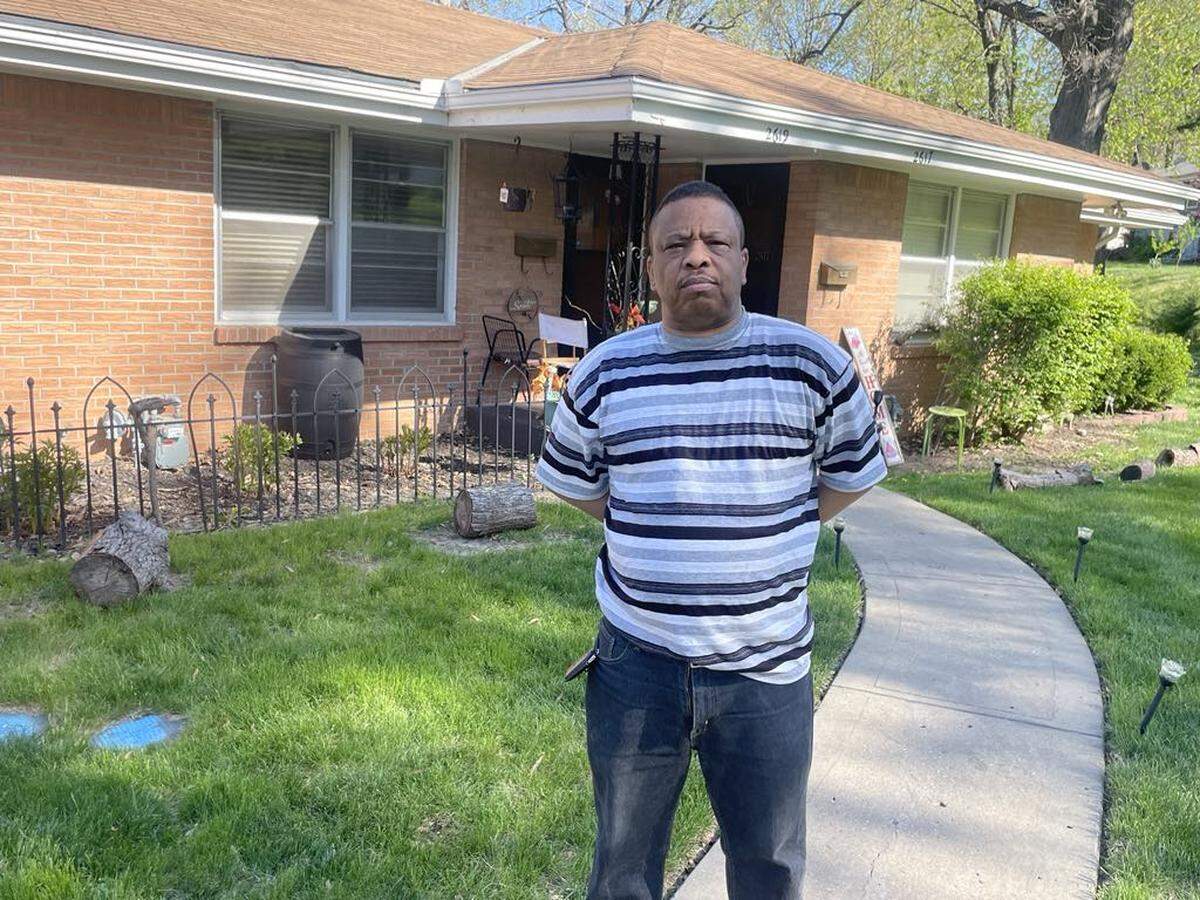
“I give up. I’m just going to pay it,” Ewing said. “Because I’m going to end up having a stroke and be out of here and won’t be in a position to pay anything or work after they get through with me. So I just said, ‘forget it.’ Don’t have any pressure. Don’t have a stroke. Just pay it.”
Sen. Caryn Tyson, a Parker Republican who chairs the Senate Committee on Assessment and Taxation, said she’s all too familiar with the stories of people being priced out of their homes. She said lawmakers need to move with a sense of urgency on property tax reform, but she’s also not willing to sign off on a plan she doesn’t think will work.
“We wanted more this year, as everyone did. But we’ve got to come to an agreement on how to get there,” Tyson said.
But it’s unfair to portray the Legislature as ineffectual on tax reform, she said, citing the “numerous calls and emails” she’s received in the last week from people thanking her for last year’s income tax cuts.
“They are filing their state income tax and they realize how important those cuts were that we passed — especially exempting state income tax on Social Security and the personal exemption increases. That definitely is being felt by lower-income families and people,” Tyson said. “I know there are some that would say those cuts are for the rich, but they absolutely were not.”
Rep. Stephanie Clayton, an Overland Park Democrat on the House tax committee, said not one of her constituents asked her for more income tax reform this year. Instead, she’s heard repeatedly that people need relief from high property tax bills.
Clayton supported the six-year rolling average constitutional amendment proposal formulated by Smith, the Republican tax chair. It was adopted with near-unanimous bipartisan support 117-4 last month but gutted and replaced with the Senate’s amendment proposal language in committee.
“One of the things that a lot of my constituents in northeast Johnson County deal with is, they are happy to pay their property taxes, you know,” Clayton said. “They’re happy to have a good functioning local government. But like it or not, these things spike, so there will be some years where they hardly go up at all and some years where things are spiking and going up quite a bit.
“We had a really good plan too that ended up basically getting ruined by politics … And as we’re heading into a potential recession, it’s dangerous and frightening for the people that we represent.”
As infighting derails any vote of the people on systemic change to the property valuation system, Hill said the dream of homeownership across her community is fading.
“My grandchildren and my children will never own a home in Wyandotte County,” Hill said. “We’re barely owning a home in Wyandotte County.”
This story was originally published April 17, 2025 at 2:25 PM.
CORRECTION: An earlier version of this story incorrectly identified the lawmaker responsible for replacing language in a Kansas House resolution. The lawmaker was Sen. Virgil Peck.