KC mom got a raise at Arby’s after voters passed Prop A. Now efforts aim to strike it down
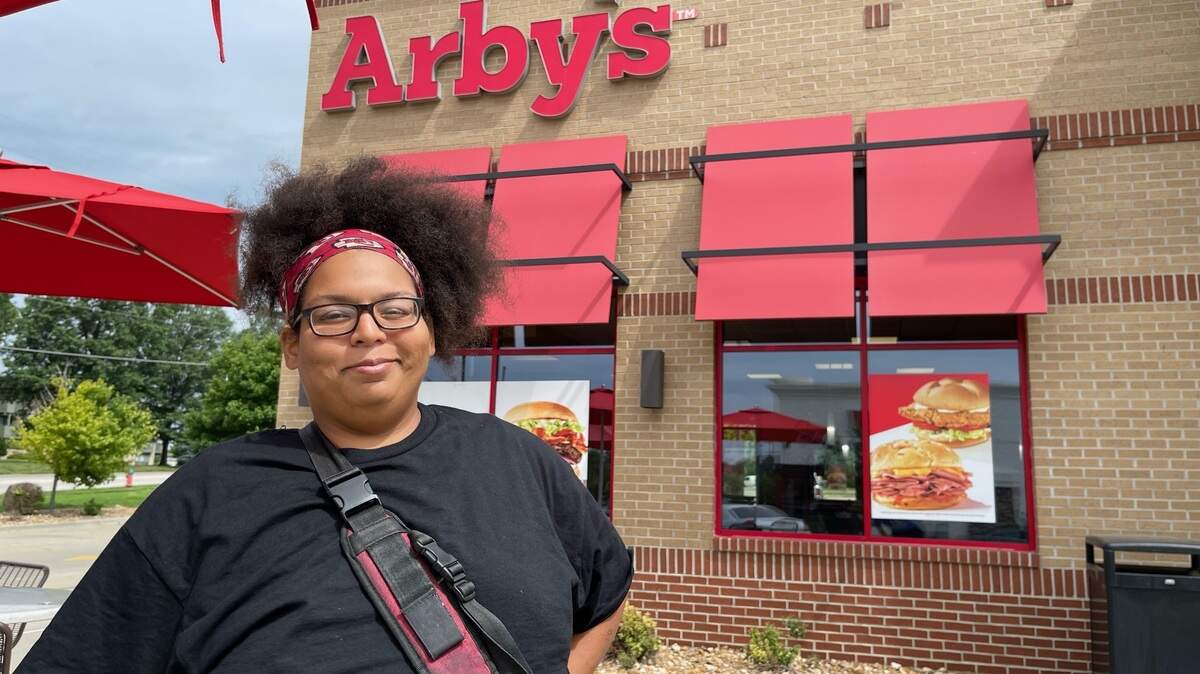
Kaamilya Hobbs received a small pay raise when Missourians voted to increase the state’s minimum wage and guarantee paid sick leave for workers in November.
Hobbs, a 33-year-old mother of three, made $13.44 an hour working behind the register and the drive-thru window at Arby’s along North Oak Trafficway in Kansas City. Thanks to the voter-approved Proposition A, she now makes the state-mandated minimum wage of $13.75 an hour and could make at least $15 an hour by next year.
It’s not a lot. But the raise gave Hobbs and her family some extra money to lean on. Some breathing room. Diapers, wipes, formula, milk. It all adds up at the end of the month.
“It’s still something to help give us a little bit more leniency on things that we need to take care of,” Hobbs told The Star in a recent interview. “I would hate for them to have to take that away.”
Hobbs and other low-wage employees who live and work in the sprawling Kansas City metro are now left waiting to see whether the voter-approved minimum wage increase and paid sick leave will survive the courts and the GOP-controlled Missouri General Assembly.
In the wake of Proposition A, which 57% of voters approved in November, a coalition of the state’s largest business advocacy groups sued to strike down the election results. The state Supreme Court has not yet ruled on the election challenge, which argues that the proposal violated a requirement that ballot measures only deal with one subject.
At the same time, Republican state lawmakers are weighing a raft of legislation that would weaken the new state law. House lawmakers earlier this month passed a bill that would strip away the paid sick leave provision, arguing that the policy would hurt businesses if it were allowed to take effect in May.
The dueling efforts to strike down Proposition A mark a continuation of Republican attempts to curtail direct democracy in Missouri, as voters have repeatedly passed policies seen as progressive at the ballot box, including abortion rights, Medicaid expansion and marijuana legalization. The voter-approved minimum wage increase is the latest target.
When asked about the push to overturn a ballot measure that helped her family, Hobbs was frank: “It pisses me off.”
“We’ve been trying to get this into effect for a very long time,” said Hobbs, who advocates for higher wages with groups Stand Up KC and Missouri Workers Center. “We finally get to see some kind of positive outcome from it and then they just want to rip it out of our hands. It’s not fair.”
As judges and lawmakers consider whether to strike down Proposition A, Hobbs and other supporters of the measure are left frustrated.
Thousands of workers across the Kansas City metro make less than $15 an hour with nearly 44,000 in Jackson County alone, according to data from the nonprofit Economic Policy Institute. Another nearly 20,000 work in Clay and Platte counties.
‘We need this difference.’
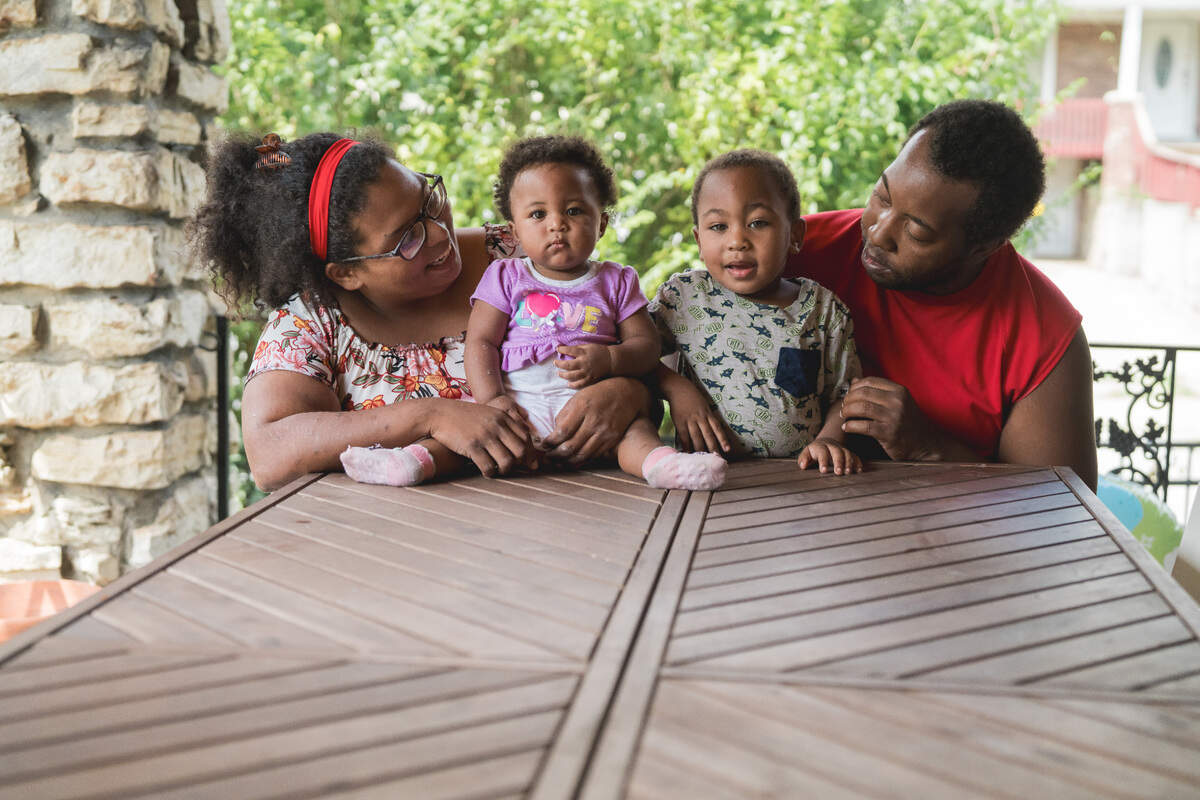
Hobbs began working at Arby’s roughly five years ago after a stint at McDonald’s. Her boyfriend, Allen Strickland, referred her for the job. She wears a lot of different hats: preparing food, talking with customers and, overall, keeping products moving smoothly.
“Usually they’d have me on either the front counter register or the drive-thru because I’m pretty good with the customer,” she said.
With three young kids at home — a 6-month-old, a 1-year-old and a two-year-old — Hobbs requested to work the morning shift. It gives her some time to see her family before they go to bed in the evenings.
“At the end of the month, we are short on things — like short on funds to be able to get the diapers and wipes and the formula and stuff that we need for the kids,” she said. “Along with keeping up with the milk and everything.”
When Missouri voters soundly passed Proposition A in November, the ballot measure gave Hobbs and her family some extra change to work with. It provided added security to a life she described as busy but worth it.
Hobbs expressed frustration at recent efforts to strike down the minimum wage increase and paid sick leave through the courts and legislature. Hobbs said that while other employees need sick time off, only managers at her store currently receive paid leave.
Under Proposition A, the state’s minimum wage jumped from $12.30 an hour to $13.75 an hour in January. It will then increase to $15 an hour in January 2026. In subsequent years, the wage will be adjusted based on inflation.
The measure also requires employers with 15 or more workers to provide one hour of paid sick leave for every 30 hours worked. That provision does not apply to government workers, retail or service employees who work for a business that makes less than $500,000 a year, people who are incarcerated, golf caddies, and babysitters, among others.
“They just want to just take away everything that we’re working so hard to provide for our family and everything,” Hobbs said. “I’d really hate to see them win. We need this difference.”
Overhauling Proposition A
Despite broad support for the minimum wage increase, Republican lawmakers and business advocacy groups remain steadfast in their push to overhaul Proposition A.
In the days after voters approved the measure, House Speaker Jonathan Patterson, a Lee’s Summit Republican, told The Star that there “will not be an effort to overturn something that the people passed with over 57% of the vote.”
However, at a news conference earlier this month, Patterson was less definitive. He argued that the bill to strike down the paid sick leave provision was a form of compromise with voters.
“I think what you’re seeing here is that we are compromising,” he said. “We want to keep the minimum wage piece in place. We don’t want to delay that, but the onerous burdens of the sick leave part, I think we’re compromising with the people and saying this really is not sustainable.”
Gov. Mike Kehoe, a staunch opponent of raising the minimum wage, told reporters at the same news conference that increases should be “market-driven.” Kehoe appeared to throw his support behind the bill to eliminate the paid sick leave requirements.
“The biggest piece that’s a problem with Proposition A are the benefits that go along with it,” he said. “I’ve heard from employers in Missouri, again, both large and very small, about the problems that that could produce.”
The Missouri Chamber of Commerce and Industry, one of the groups that sued to overturn the election results for Proposition A, is also backing the Republican bill. In a statement shortly after the House passed the legislation, Kara Corches, the organization’s president and CEO, said the bill would “give employers the flexibility to tailor workplace policies to meet the needs of their workforce.”
“We have heard from hundreds of business owners across the state,” Corches said. “Implementing this mandate is not just a burden – it will force many to reduce their workforce or close their doors entirely.”
Despite the intense focus on Proposition A, the majority of Kansas City’s workforce already earns more than the minimum wage outlined in state law, said Brent Never, an associate professor of public affairs at the University of Missouri-Kansas City.
The minimum wage increase itself, Never said, will likely have very little effect on Kansas City’s economy. Instead, the concern among businesses is the paid sick leave requirement, a benefit that minimum wage employees have traditionally never had access to, he said.
However, he added that many businesses affected by the requirement — those that make at least $500,000 a year — often already offer some form of paid sick leave. He estimated that the measure will have less of an impact on Kansas City compared to other parts of Missouri.
Overall, he said, raising the minimum wage will likely result in increased prices. He pointed to businesses that offer day care as an example, saying that Proposition A would lead to higher charged prices for families.
“But on the other side, you have to think about having employees who are making a better wage, who most likely have an incentive to stay with an organization longer,” Never said. “When you talk about sick leave, you have people who have an incentive to also stay longer.”
For Hobbs, the Arby’s worker in Kansas City, the effort to strike down Proposition A won’t just affect her family. It will impact her friends, her fellow low-wage workers and families all over the state.
She urged others to continue to fight to keep the measure in place. Because, she said, “we need this.”
“It’s not going to help us in any kind of way if they decide to take it away from us,” Hobbs said. “We need to keep this going for as long as we can so they don’t succeed in taking it away.”