Missouri’s new governor wants to keep Chiefs, Royals. How he plans to do it is a mystery
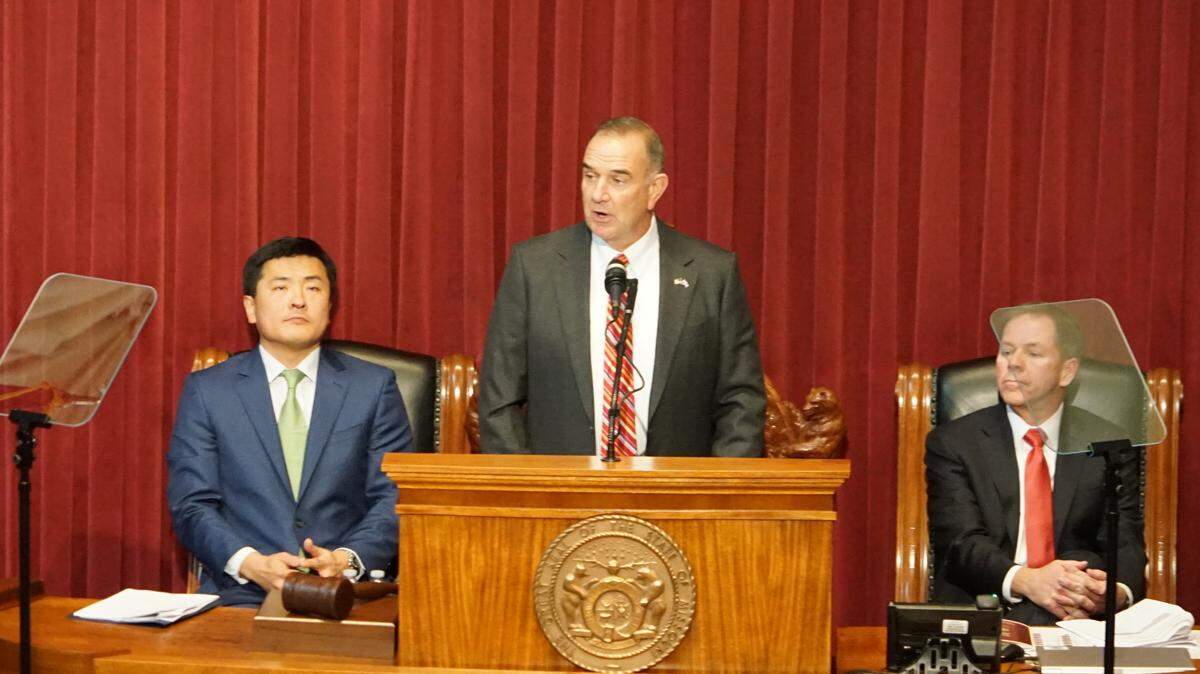
When Missouri Gov. Mike Kehoe delivered his first State of the State address on Tuesday, one of the most pressing issues confronting Kansas City — the future of the Chiefs and Royals — earned only a passing nod.
“We’re going to work hard to retain and recruit businesses here in Missouri,” Kehoe said. “From manufacturers to retailers, to Missouri’s sports teams, these businesses, who provide jobs and opportunities to Missourians, are an important part of our state’s economic success.”
How Kehoe intends to keep the teams remains a mystery.
Since taking the oath of office earlier this month, the Republican governor has announced no concrete funding or incentive plans to retain one or both of the teams in Missouri. The lack of a clear plan — at least publicly — comes more than seven months after Kansas lawmakers passed an aggressive financing proposal to lure the teams across the state line.
Kehoe has signaled that the lack of news is strategic, saying that releasing information about ongoing negotiations could give competitors an advantage. But it still remains unclear how large of a role the governor is playing in negotiations relative to local officials, such as Kansas City Mayor Quinton Lucas and Jackson County Executive Frank White, Jr.
The murkiness over Kehoe’s involvement comes as the future of the teams looms over the legislative session in Missouri and as the Chiefs will attempt to become the first NFL team to ever win three consecutive Super Bowls. While Kansas City-area lawmakers broadly support keeping the teams, Kehoe has also suggested that any incentive package would have to be a good deal.
“I’m not a fan of just throwing money at things,” Kehoe told reporters last week in response to a question from The Star. “I’m not a fan of just throwing money at cities. But I’m a fan of keeping the economic activity that those two teams provide and we’re going to continue to work and put our best foot forward to make sure that they stay in Missouri.”
Extensive research demonstrates that stadium projects almost never earn back the amount of public aid that goes into them. Decades of research show stadiums aren’t major drivers of economic growth.
Kehoe’s decision to not specifically address the future of the Chiefs and Royals in his State of the State speech drew notice from Kansas City-area lawmakers. While Kehoe was unlikely to use the moment to roll out a comprehensive plan for the teams, the absence of any details or updates at all raised eyebrows.
House Minority Leader Ashley Aune, a Kansas City Democrat, said she wasn’t surprised, saying that there were “still a lot of” discussions ongoing. She suggested those conversations are likely happening at the local level.
“I have not seen Kehoe lead on the issue,” Aune said after the speech. “That does not mean it’s not happening but I would guess it is probably falling more on local leaders at this point.”
Talks continue with Chiefs, Royals
The teams’ future has been uncertain since last April when Jackson County voters rejected a stadiums sales tax that would have effectively guaranteed both teams stayed in the county. The tax also would have helped the Royals move into the Crossroads.
Since then, local officials have routinely said they’re having conversations with both teams, but few details have emerged. Representatives from the Chiefs and Royals have regularly said they are exploring options on both sides of the state line. But the teams have also not provided specifics.
White, the Jackson County executive, has regularly said that any funding agreement would have to be fair to taxpayers. He previously told The Star that he planned to continue conversations about the future of the teams with Kehoe.
In terms of the teams, White said much of Jackson County’s conversations have been with the Chiefs, adding that the county has “respected the City of Kansas City’s publicly stated desire to take the lead in conversations with the Royals.”
While visiting the Missouri Capitol in Jefferson City when Kehoe was sworn in as governor earlier this month, Lucas flatly told The Star that both teams would be staying in Missouri.
“The Royals will be downtown,” he said. “The Chiefs will be staying as well. But I won’t break any news for you. I’ll let the governor do that because I know he’s had conversations.”
Lucas has previously said the city’s conversations with the Royals have focused solely on a site at Washington Square Park near Crown Center. In Kansas, the Royals are also exploring a site at the former Sprint Campus near 117th Street and Nall Avenue in Johnson County, The Star has previously reported.
After the failed Jackson County vote, the Kansas Legislature approved a massive financing plan aimed at attracting the teams that Democratic Gov. Laura Kelly signed into law.
The plan relies on billions in Sales Tax and Revenue, or STAR bonds. Under the law, the bonds would be paid back by tax revenues from within any new stadiums and surrounding retail development, as well as future sports betting and Kansas Lottery revenues.
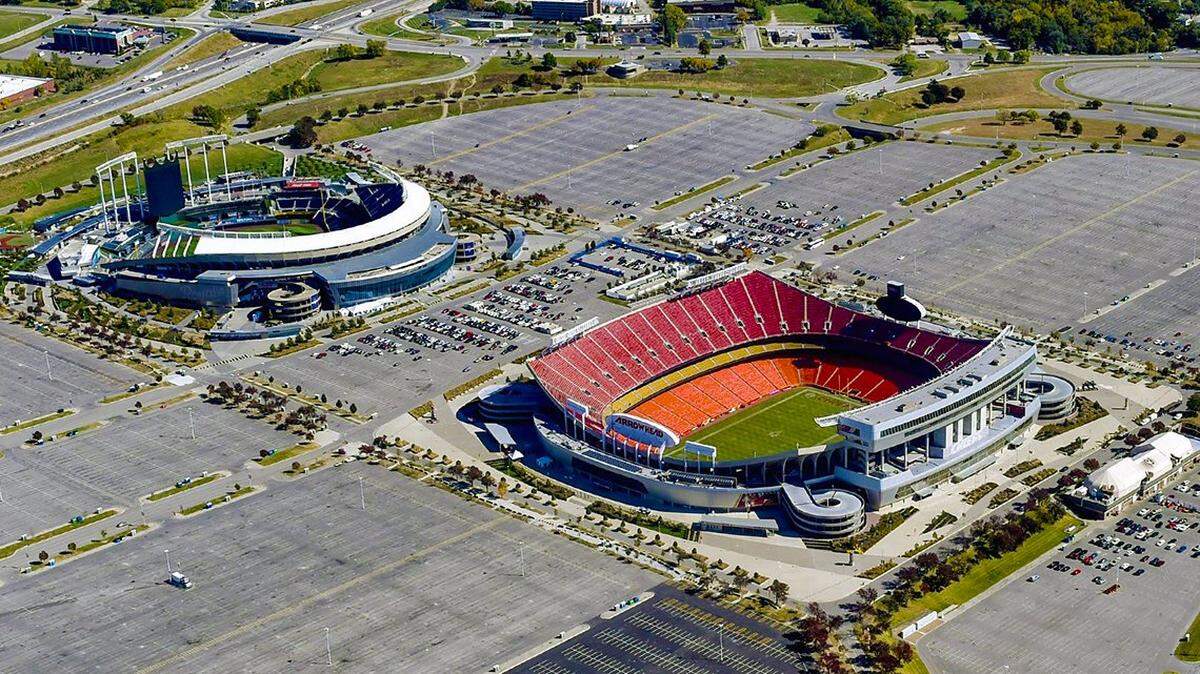
The law authorizes Kansas to potentially issue STAR bonds to pay for up to 70% of the cost of stadiums for one or both teams – up from the 50% under the previous law. A Chiefs stadium alone could cost at least $2 billion. A Royals stadium could be another $1.5 billion, if not more.
The debt would be repaid over 30 years by a combination of tax revenue from the stadiums and surrounding development, sports gambling revenue and Lottery revenue. As part of the bill, annual Lottery revenues above $71.5 million each year will now be redirected into a fund to help pay off the bonds, a change likely worth about $10 million a year.
Cities and the counties would have the option to pledge local tax revenue from inside the STAR bond district toward repaying bonds, but wouldn’t have to.
Even as Kansas plunged forward with an audacious financing plan, researchers over several decades have consistently found that stadiums and arenas are not major drivers of economic development.
A 2022 review of 130 studies over 30 years found that nearly all empirical studies found “little to no tangible impacts of sports teams and facilities on local economic activity” and that the level of subsidies typically provided for stadiums “far exceeds any observed economic benefits.”
While the review found that any identified economic effects typically occurred in the area immediately surrounding a stadium, those impacts weren’t always present and “can not be generally applied to all stadium projects.”
“There’s just a very longstanding left-right, 50-year academic consensus that they don’t constitute economic development. That’s not a contested argument,” said Greg LeRoy, executive director of Good Jobs First, a Washington-based group that advocates for reforms of economic development incentives.
Even as Kehoe has promoted what he says is the economic activity produced by the teams’ presence, LeRoy suggested the governor’s caution over spending money to retain them may be driven in part by the message sent by the Jackson County vote.
“Those are Missouri constituents, right? So he’s got to be mindful of that,” LeRoy said.
Stadium efforts ‘challenging’
After Kansas launched its effort, Kehoe’s predecessor, former Republican Gov. Mike Parson, made clear that Missouri needed to respond in some way. Despite telling reporters he wanted a plan by the end of 2024, Parson left office this month with no public explanation of where the state was headed.
Kehoe suggested last week that was more likely a business decision than a lack of direction from Parson’s administration. He said Parson’s office “did a very good job” at “keeping these conversations going.”
“When you’re dealing with a business deal, you can’t just put it on a billboard every day on what step of that process you’re in. There’s too much going on,” he said. “You’re…telling the competition what you’re doing, which is always a bad idea.”
Missouri lawmakers from the Kansas City-area, including House Speaker Jonathan Patterson, have recently signaled that any type of funding plan would have to come from local officials first. Patterson, a Lee’s Summit Republican, said earlier this month that state officials would “have to really put our heads together” if state funds were needed.
“I wish we had a plan set in place right now,” Patterson said. “But I think what we’re finding is that — finding homes for two major sports franchises is more challenging than we had expected.”
Patterson on Wednesday reiterated that the details surrounding the stadium plans should “remain the work of the local level, with the state coming in as the closer.”
“Missouri’s sports teams support thousands of jobs, attract tourism, and invest back into our Kansas City community,” he said in a prepared statement. “We look forward to keeping our Missouri sports teams for many years to come.”
After the teams went largely unmentioned in Kehoe’s address on Tuesday, Sen. Mike Cierpiot, a Lee’s Summit Republican, acknowledged that the state’s direction was unclear.
“I keep being asked about the Chiefs and Royals,” Cierpiot said. “But until I see numbers, I just don’t know what to think.”