Mike Kehoe becomes Missouri governor, promising bipartisan unity & crackdown on crime
Michael Leo Kehoe became the 58th governor of Missouri on Monday, vowing a crackdown on crime while urging politicians to work together amid a “divided and more cynical” world.
Kehoe’s inauguration keeps the state’s chief executive office in Republican hands for four more years, with his new administration expected to largely reflect the governing approach of the departing governor, Mike Parson. He takes office amid an era of deep Republican dominance in Missouri, with the party controlling the General Assembly and every statewide office.
Kehoe assumes control of a state government that has benefited from a raft of pandemic-era federal aid, but will soon confront a tighter budget era. He will be in office during a consequential period for Kansas City, as the region plays host to the World Cup next year and the Kansas City Chiefs and Royals decide whether they will remain in Missouri.
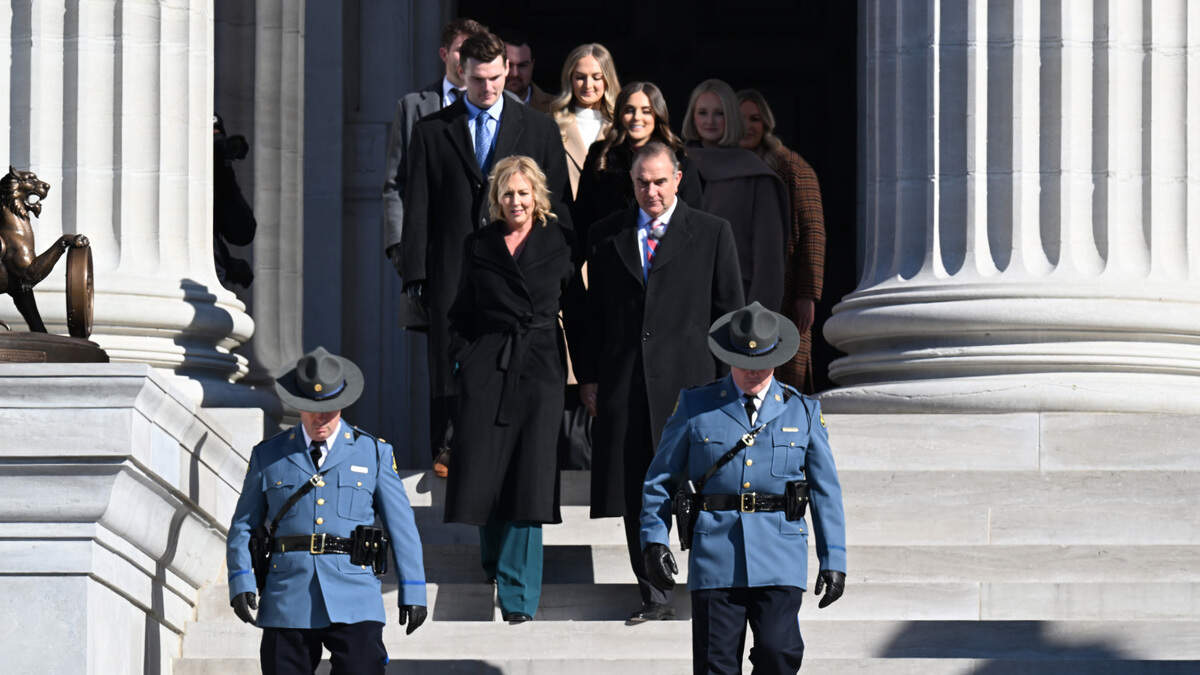
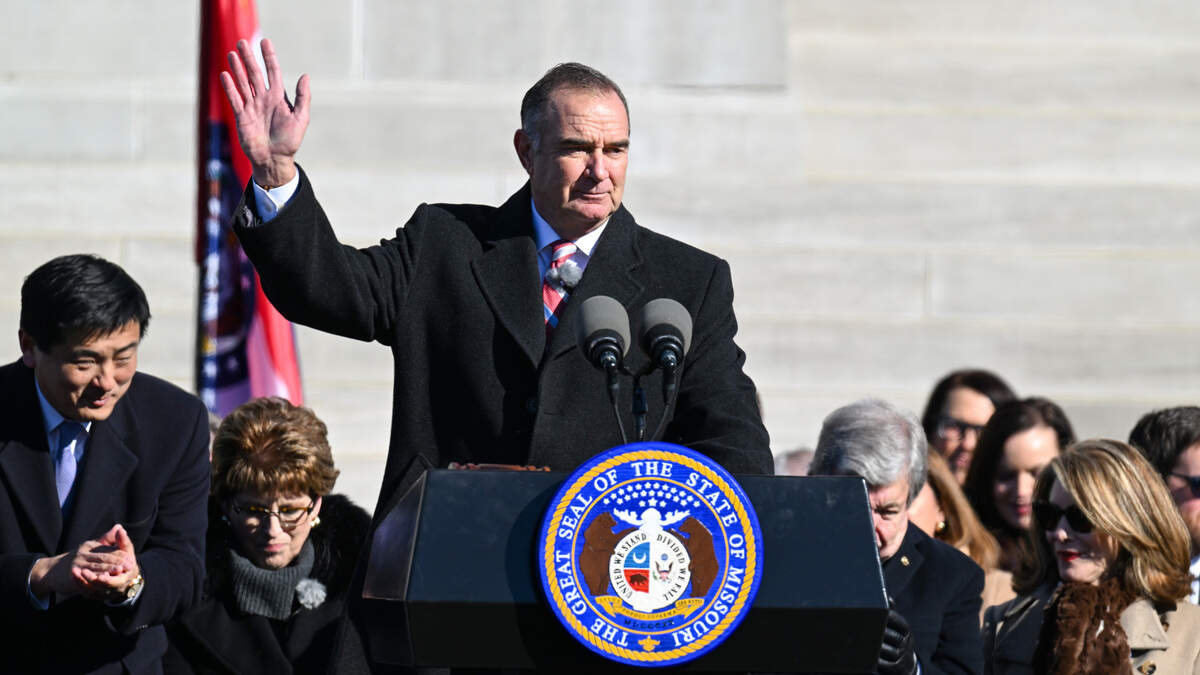
Kehoe, 62, took the oath of office, administered by former U.S. Sen. Roy Blunt, at noon on the south side of the Capitol in Jefferson City. Hundreds gathered to watch in below-freezing temperatures.
In his inaugural address, Kehoe rejected what he called an increasingly divided and cynical political world, saying “there is a lot of work to be done.”
“For too many people, hard work has been replaced by handouts,” the new governor said. “The power of prayer is mocked. The contest of ideas is no longer a matter of right versus wrong but of good versus evil. Political opponents cast each other as traitors and criminals.”
Kehoe framed his speech around the theme of “securing Missouri’s future.” He laid out several priorities, with a major focus on curtailing crime. He also vowed to strengthen public education and expand school choice options, reduce taxes and slash regulations for the farming industry.
After the speech, Kehoe went upstairs to his Capitol office and signed six executive orders that he collectively touted as his “day one crime plan.” The orders included a measure that requires law enforcement to collect the immigration status of those charged with crimes.
“Securing Missouri’s future begins with public safety,” he said. “Too many Missourians don’t feel safe — and too many Missourians aren’t safe.”
The inauguration capped a remarkable but steady rise for Kehoe, who was raised by a single mother in St. Louis and now occupies the state’s most powerful office. Kehoe, who doesn’t hold a college degree, began washing cars at a Ford dealership as a teen, working his way into sales management by his early 20s.
“This day, this moment in time — it is a win for single mothers, like Lorraine Kehoe,” Kehoe said, referring to his mother.
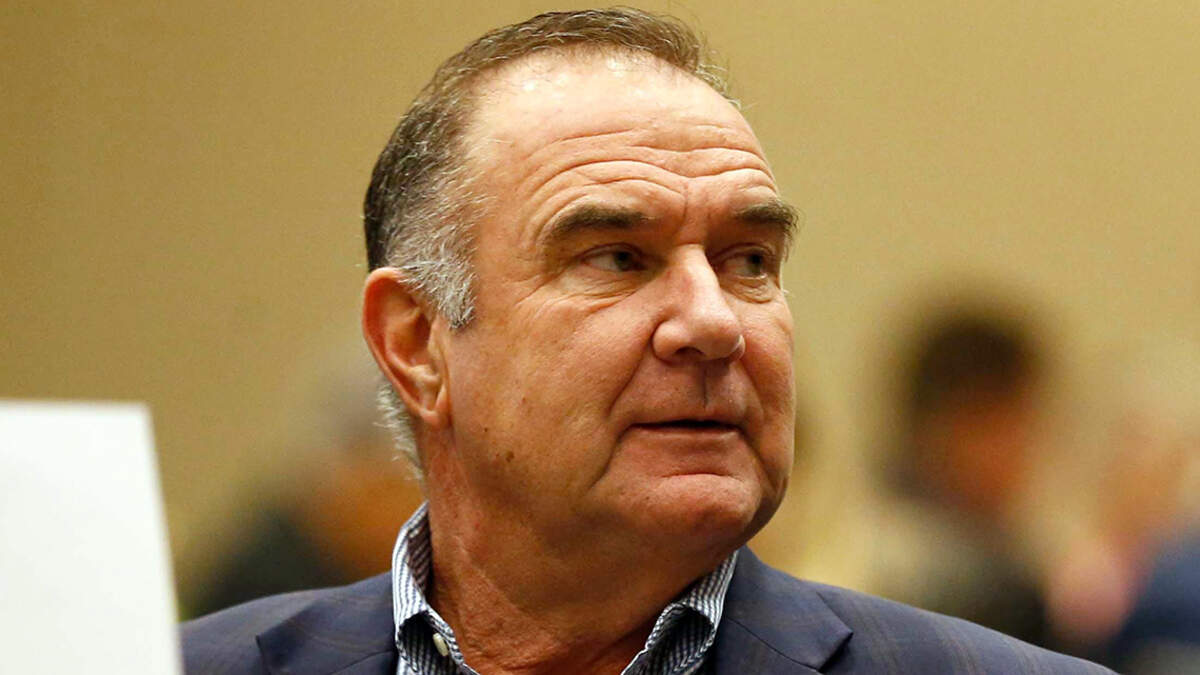
In addition to Kehoe, four other Republican statewide officials were also sworn in: Attorney General Andrew Bailey, Treasurer Vivek Malek, Secretary of State Denny Hoskins and Lt. Gov. David Wasinger.
As a Jefferson City car dealer in the 1990s, Kehoe built a brand that would eventually help power his political career, first as a member of the Missouri Highways and Transportation Commission and later as a state senator. He became lieutenant governor in 2018 after Parson appointed him to the position after Parson became governor after Eric Greitens resigned in scandal.
During a combative Republican primary for governor, Kehoe promised steady leadership and a measured tone, contrasting himself with the more aggressive rhetoric of his major rivals, state Sen. Bill Eigel and Secretary of State Jay Ashcroft. Still, he outlined staunchly conservative priorities, including fighting abortion.
Abortion and Kansas City’s future
Republicans are under pressure this year to pass some level of abortion restrictions after voters in November approved Amendment 3, which enshrined the right to the procedure in the state constitution. Missouri lawmakers had previously banned nearly all abortions under a law that took effect in 2022.
Kehoe, who sharply opposed Amendment 3, has signaled on numerous occasions that he would work with the General Assembly to curtail access to abortion. Lawmakers have already filed nearly a dozen bills that seek to limit the procedure, including some that would reinstate a near-total abortion ban.
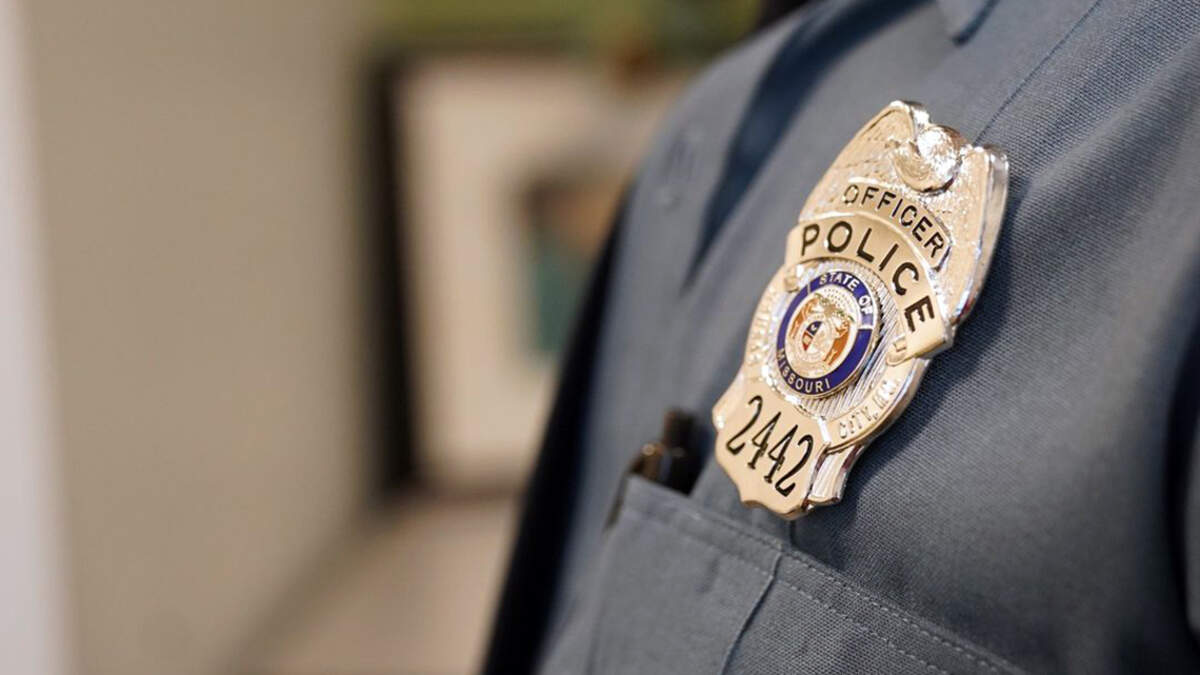
Kehoe has consistently pointed to addressing crime as a key focus this year and has promised to implement a crime plan. While short on specifics, he has signaled it will include measures aimed at recruiting and retaining more law enforcement officers, both in Kansas City and elsewhere. The Kansas City Police Department currently has more than 100 funded but unfilled officer positions, Mayor Quinton Lucas’ office said late last year.
“In the coming weeks, months, and years, my administration will be relentless in our pursuit to make Missouri a place where it’s easier to be a cop than a criminal,” Kehoe said on Monday.
In addition to his executive order related to the immigration status of those charged with crimes, Kehoe also signed several other crime-related measures.
They included an effort dubbed “Operation Relentless Pursuit” that allows law enforcement agencies to team up to apprehend people with outstanding warrants, an order to boost pay for longstanding Missouri State Highway Patrol troopers, a measure that awards certain law enforcement agencies with a “Blue Shield designation” to receive state grants and an order that directs the Department of Corrections to create a working group to study state rules surrounding parole such as the conditions imposed on those on parole.
The issue of policing will be especially prevalent in Kansas City, a Democratic-leaning city where residents have long expressed frustrations with police.
That distrust is heightened after Parson, Kehoe’s predecessor, commuted the prison sentence of former Kansas City police detective Eric DeValkenaere, the first white Kansas City officer ever convicted of killing a Black man. Kehoe had also promised to free DeValkenaere once he took office.
Kehoe also supports the longtime state control structure of the Kansas City Police Department, despite significant pushback from city and civic leaders. The Republican has even promised to take that a step further and wants to also place St. Louis police under state control.
Under the current system, the KCPD is governed by a five-member Board of Police Commissioners, with four appointed by the governor. The mayor fills the fifth seat.
The current arrangement, while supported by Missouri Republicans, faces intense criticism from local officials who say it gives Jefferson City too much power over policing. Lucas, Kansas City’s mayor, has compared the system to an empire wielding influence over one of its colonies.
While Kehoe has touted state control as a way to curtail crime in St. Louis, Kansas City has long struggled with rising crime. The city recorded record and near-record numbers of homicides in recent years, even as homicides fell in many major cities across the country. Two years ago, 2023, was the deadliest on record, with 185 killings, according to a count kept by The Star.
The new governor will also face several key issues in Kansas City this year, including the state’s push to keep the Chiefs and Royals and the city’s role in hosting World Cup matches in 2026.
“I wish him the best,” Lucas said on social media on Monday. “I look forward to working with him in public safety and policing, education, and a number of areas to ensure a bright future for Kansas City, the surrounds, and our entire state.”
While Kansas approved an aggressive plan last year to lure both Kansas City teams across the state line, Missouri leaders have not rushed to respond. The lack of a Missouri response is likely to put pressure on Kehoe’s administration to come up with an incentives plan to keep the teams.
Kehoe has said he supports keeping the teams in Missouri but has not offered a specific plan.
Even as the teams’ future remains uncertain, Kehoe and lawmakers will also be tasked with evaluating public safety and infrastructure in Kansas City ahead of the World Cup. The city is set to host six matches – a massive event that will draw tens of thousands of spectators from around the world.
Kansas City could also see other key issues at the forefront of the General Assembly over the next few years as the top Republican and Democratic leaders in the Missouri House are both from the Kansas City area.
“I hope that Kansas City and Jackson County will get a fair shot in the budget,” House Speaker Jonathan Patterson, a Lee’s Summit Republican, said last week. “But I think things that are good for Jackson County and Kansas City are generally good for the state.”
Education and taxes
In addition to public safety, Kehoe outlined several other themes that could affect the Kansas City region, including education. Kehoe’s focus on education comes as Missouri Republicans have sought to expand a scholarship program that uses public funds to allow students to attend private or charter schools.
“Whether it’s a four-year college or career technical education, schools that teach kids how to think — not what to think — are the key to long-term self-reliance,” he said.
Kehoe, in his first speech, also emphasized a need to reduce taxes and regulations on businesses and farmers. He touted these moves as a way to entice companies to “come here, expand here and hire more hard-working Missourians.”
During his campaign, Kehoe voiced support for eliminating the state’s income tax. He has cautioned that it must be done responsibly. Several GOP lawmakers have already introduced constitutional amendments that would set Missouri on a path to ending the tax.
The former car salesman turned politician closed his remarks by pointing to Missouri’s central location with major rivers, expansive highways and “industrious people.” He promised to “unleash freedom” with conservative policies and limited government.
“It will take each of us, working together, to secure an even safer, stronger and more prosperous Missouri,” he said.
This story was originally published January 13, 2025 at 12:12 PM.