Missouri House passes bill restricting trans people’s use of public restrooms
AI-generated summary reviewed by our newsroom.
- Missouri House passed a bill restricting sex‑segregated spaces to birth sex.
- Bill would allow lawsuits against public entities.
- Bill follows earlier House bans on transgender athletes and minor medical care.
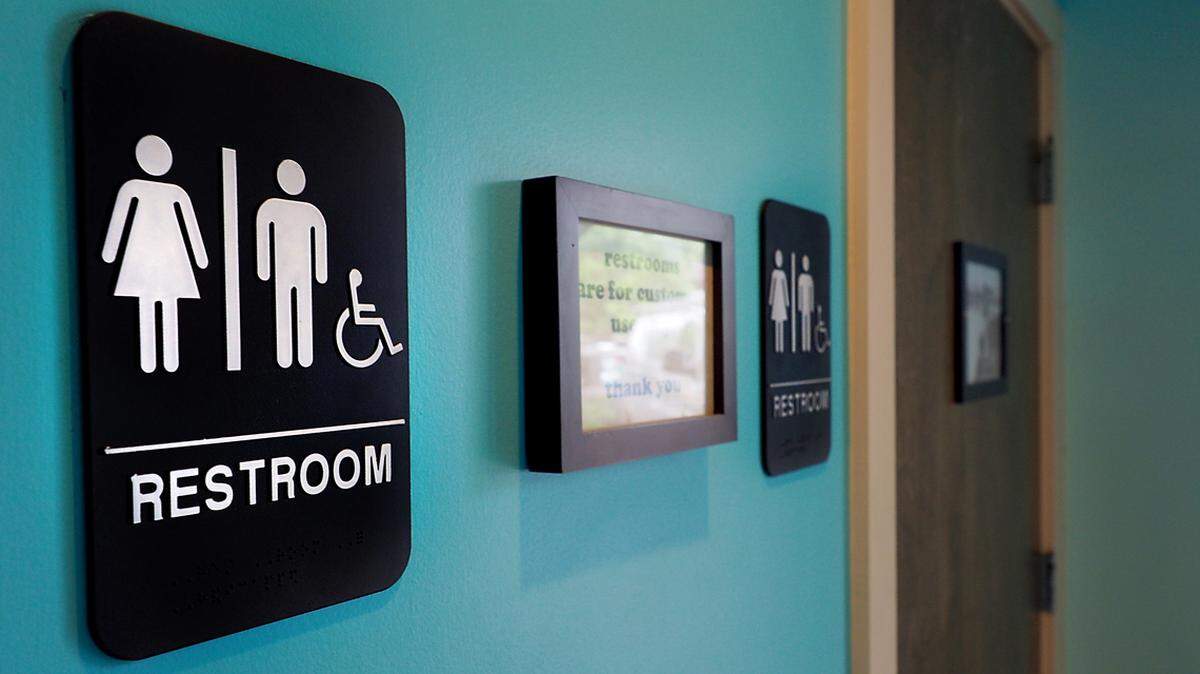
The Missouri House passed a bill on Monday that would punish cities, public schools and other government entities that fail to prevent transgender people from using restrooms and other sex-specific spaces that don’t align with their sex assigned at birth.
The bill, sometimes referred to as a “bathroom bill,” is the latest action by Republican House lawmakers targeting transgender people, after it passed an indefinite ban on transgender athletes competing in school sports according to their gender identity and banned gender-affirming care for minors earlier this legislative session.
If passed by the Senate and signed by Republican Gov. Mike Kehoe, people could sue public entities for failing to take steps to prohibit a person from using a restroom or changing room that doesn’t align with their sex assigned at birth.
Rep. Becky Laubinger, a Park Hills Republican, said she introduced the bill after a constituent relayed that he observed two people he believed to be transgender leaving a bathroom after his daughter entered.
“This situation highlights a growing lack of clarity that directly affects the safety, privacy and confidence of families, especially the parents of young children,” Laubinger said.
Laubinger further justified the bill with a high-profile incident at the Kansas City International Airport, where airport employee Teriosi Ludwig allegedly recorded over 60 women using an all-gender bathroom between Jan. 16 and March 12. Ludwig was charged in Platte County Circuit Court with felony invasion of privacy for the offense.
The all-gender bathrooms have been a source of controversy for some conservatives. In 2024, a conservative social media influencer went viral in a post calling the restrooms “crazy.” Republican Kansas City Councilman Nathan Willett proposed removing at least half of the airport’s all-gender bathrooms last month in response to Ludwig’s alleged crimes.
Laubinger said the incident was “enabled by an environment that removed clear boundaries.”
Opponents say bill makes women less safe
Instances of trans people perpetrating violence in public bathrooms, locker rooms and dorm rooms are exceedingly rare. A 2017 Police Foundation review found zero instances of sexual assault complaints in four major U.S. cities that established protections for transgender people using public restrooms.
Democrats and LGBTQ advocates say the bill is government overreach that terrorizes a small and vulnerable minority population. Rep. Wick Thomas, a Kansas City Democrat, highlighted that the bill could force hefty construction costs and have the unintended consequence of heightened scrutiny of women’s restrooms.
“All this bill is going to do is it’s going to cost a lot of money to make women less safe. It essentially deputizes people to harass women and girls in bathrooms,” Thomas said.
Jude Shattuck, a trans Kansas Citian, said they believe the bill is to “push transgender people out of public life.”
“It’s a psychological war, almost,” Shattuck said. “I’ve been fortunate that I haven’t gotten beaten up or something, which is a worry that is in the back of my mind, and it’s like a slow wearing down of one’s sense of safety and belonging.”
Celeste, a transgender Kansas Citian who asked not to share their last name due to fear of losing their job, said she has been harassed in a bathroom before over her identity, and has even been physically assaulted.
“I’ve been beaten in the street for my trans identity, it’s something that’s very real and impacts us,” Celeste said. “When we make it illegal for women such as myself and people of different gender experiences to utilize the restroom, it just further perpetuates an already precarious point of view.”
Cara Hile, a Kansas City-based activist who spoke with The Star about how the bill could impact cisgender women, said she doesn’t believe the bill does anything to protect girls and women, and believes that cisgender women will face more scrutiny for trying to use public facilities.
“It’ll just all be based on how someone perceives your gender identity. It makes me feel very unsafe to think someone is watching and deciding on their own what bathroom any person should use,” Hile, a Kansas City-based organizer with Abortion Action Missouri, told The Star.
Nine states currently ban transgender people from using bathrooms and facilities consistent with their gender identity in all government buildings, according to the Movement Advancement Project, a progressive think tank.
Earlier this year, Kansas joined the growing list of states restricting bathroom access, and it is one of five states where the ban applies to some private settings.
Another seven states restrict transgender people from using bathrooms consistent with their gender identity at public schools and some government-owned buildings, and another five ban access just for public K-12 schools.