‘We need help’: Missouri child welfare crisis puts children’s lives at risk, workers say
READ MORE
‘We’re in crisis’
A critical shortage of Missouri child welfare workers is putting children’s lives at risk.
Expand All

‘We need help’: Missouri child welfare crisis puts children’s lives at risk, workers say
Missouri child abuse investigators sounded the alarm early about a statewide staffing crisis
‘The worst I’ve ever seen.’ Two workers on why they left Missouri child welfare agency
‘I could never do your job.’ Why some work in child welfare. And why they are quitting

Want to foster a child in Missouri? Here’s what you need to know
Like others inside Missouri’s troubled child welfare agency, Dayna Eckhardt feared that a critical shortage of abuse and neglect investigators was putting children’s lives at risk.
She tried to get the attention of her bosses — and even their bosses — by writing detailed emails about what she saw as the growing dangers inside the Missouri Department of Social Services. When that didn’t work, and DSS leaders failed to acknowledge the problem, she again sat down to write about the troubles, desperate to have someone, anyone, listen.
In that email, obtained by The Star, Eckhardt told Rep. Mary Elizabeth Coleman, a Republican from eastern Missouri, that there were so few investigators in her circuit that investigative reports were drastically overdue. And because of that, the child abuse investigator said, some allegations that otherwise would be substantiated had been concluded as “unsubstantiated.”
That meant some kids, Eckhardt and other experts say, may have been left in homes where they were not safe.
The Star reviewed dozens of emails, obtained through a Sunshine Law request, that were sent to legislators from frustrated social workers begging them to do something to help protect kids.
Reporters also talked with many former and current agency employees — from the front lines to leadership — as well as child advocates and lawmakers.
The Star found that vacancies plague the agency in every pocket of the state. Underpaid and overworked employees say they are forced to carry caseloads up to two and three times the standard. And some circuits have just a small fraction of the investigators they should have to handle hotline reports, workers said.
In Kansas City alone, officials are scrambling to hire employees as the turnover rate in that office is expected to reach 100 percent in Fiscal Year 2022.
“We fear the kids are going to fall through the cracks and not receive the attention that they should,” said Angie Blumel, president and CEO of Jackson County Court Appointed Special Advocates, which works regularly with the local Children’s Division. “... (It’s) unlike anything we’ve seen before.
“We’re in crisis. We need help.”
Those in the field say that because of the massive turnover rate, some children who are already in state care have to wait for the services they need, stay in custody longer than they should and too often are forced to go through a revolving door of workers during their case’s tenure.
Darrell Missey, the new Children’s Division leader — the agency’s seventh director in Gov. Mike Parson’s 3½ years in office — emailed workers in late January, acknowledging struggles inside the department and describing staffing shortages as “our current crisis.” He told workers he’d soon begin visiting the state’s circuits to hear from them what obstacles and issues he needs to address.
That’s a remarkable difference, former and current workers say, from the last administration that they said made policy decisions from the top without input from the front line and reprimanded workers who spoke out.
Concerns about the local Children’s Division office and staffing shortages surfaced again last month after authorities found the body of a decapitated 6-year-old boy, Karvell Stevens, inside a southeast Kansas City home. Karvell’s mother, Tasha Haefs, had called 911 and, according to a police report, said “the devil was trying to attack her.”
In the days after the boy’s death, questions lingered: Had anyone in Kansas City reported concerns about Haefs? And had the child welfare system in Missouri missed something?
Friends said Haefs had been involved in the past with child welfare officials in Iowa, where she lived for many years. They weren’t specific, though, on the details of that involvement and how long ago it was. It isn’t clear whether Haefs, who as a child spent some time in foster care, was ever involved with the child welfare system in Missouri.
When asked, a DSS spokeswoman said that information on child abuse and neglect investigations “is closed and confidential under Missouri law.” There are exceptions to that law and the DSS director has “sole discretion” to release information upon request. The Star has asked for all records regarding Karvell.
In the nearly two months before Missey took over the Missouri Children’s Division, DSS communications officers failed to respond to The Star’s questions about vacancies, turnover and the lack of investigators across the state. But after Missey assumed the top post on Jan. 5, agency officials started returning emails regarding current agency turmoil as they pushed for the passage of Parson’s proposal for a 5.5 percent pay increase for all state workers.
Yet agency spokespeople still fail to provide detailed numbers that would give a clear picture of how severe the vacancies are across the state and how children are being affected.
“The Department of Social Services is aware that turnover is a major problem in many areas across the state, including turnover amongst team members who conduct investigations,” said Chelsea Blair, communications project manager with DSS, last month. “We are committed to supporting our team members and continue to advocate for them to get the resources, including pay, they need and deserve.”
For some, that talk comes too late.
When Candi Kersey took a job with the Jackson County Children’s Division seven years ago, she assumed it was for the long haul. She knew the work could be stressful and the pay lousy — Missouri’s salaries for this job are among the very lowest in the nation — but she believed that protecting the state’s abused and neglected children was what she was meant to do.
In September, she called it quits.
“I’m sorry, I can’t fight this battle,” Kersey told The Star. “They’re asking people to do more and more and more and more. And there’s only so much you can do before you just say, ‘I’m done.’”
When investigations come in, Kersey said, workers have to document a good attempt at making contact with the child within three hours if it’s considered an emergency — often meaning the alleged perpetrator is likely with a child — or 24 hours in most other cases.
“If an investigator is getting five to six new investigations assigned to them in a workday, how are you supposed to do that?” said Kersey, who worked in out-of-home investigations, such as cases in foster homes, schools and daycare centers. “You’re driving all over Kansas City or Cass County or St. Louis or wherever. How are you supposed to physically do that?”
Because of the critical staffing shortages, she said, children’s safety is being jeopardized.
“We can’t even go to a school and sit down and make sure that this kid is OK, because they came to school with bruises, or because they come to school dirty and hungry every day,” Kersey said. “We can’t even check on them, because there are simply not enough hours in the day, and not enough people to do it.
“It’s dangerous and it’s scary. The people of this state ought to be completely outraged that we can’t even take care of the most vulnerable.”
Layoffs hit hard, experience wiped out
Much of the chaos going on now tracks back two years, former and current workers say, and the decisions made by officials since then.
In January 2020, when Jennifer Tidball was the acting director of DSS, top leadership of the Children’s Division was nearly wiped clean. The director and two deputy directors were “walked out with no explanation, other than there’s a change of leadership,” one former worker said. A third deputy director retired from her post but is still working at the agency in a lower-paying position, the state employee portal shows.
“They were well respected,” said that worker, who still works in child welfare and didn’t want to be named. “They were out, and new people who didn’t have that tenure were brought in. With no explanation. No help in understanding why.
“And that sets the stage for, ‘You don’t question our decisions.’ … It simply crushed morale.”
Then, within months, staff got word that layoffs were coming. Workers said they were told it was the agency’s turn to shoulder some of the cost-cutting.
In August 2020, officials eliminated 200 unfilled positions across state agencies. Another roughly 300 employees were laid off, 200 of those from DSS. The Children’s Division alone lost nearly 100 employees, the vast majority in middle management.
“They chose to lay off people that had worked so hard to move up,” one worker wrote in an April 13, 2021, letter to lawmakers. “…They chose to lay off the experience. In a field where experience makes all the difference.”
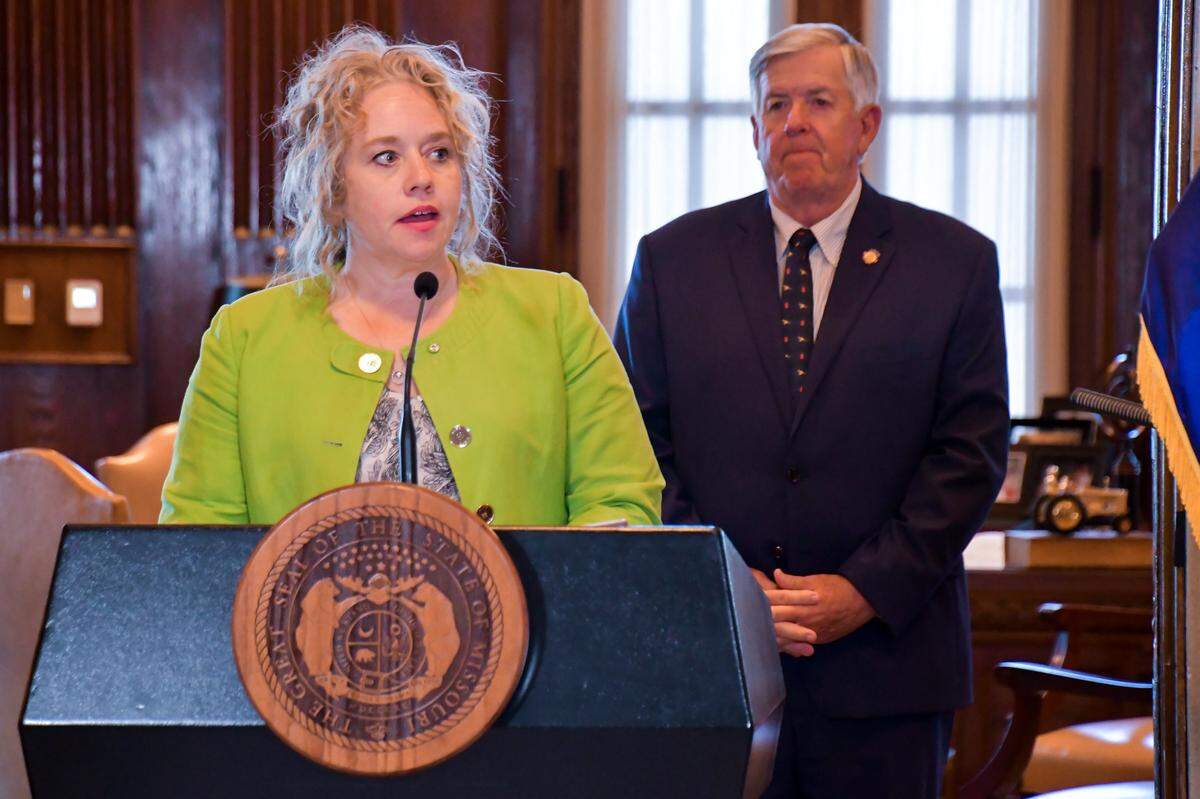
That same month, Tidball turned down a Senate committee’s offer of more money to help with staffing.
When lawmakers questioned her about that surprising decision at a hearing the following month, Tidball said the Children’s Division didn’t need any additional full-time employees because it couldn’t get enough people to apply for positions as it was. She also said she’d recently learned that according to the agency’s accreditation, it had an appropriate ratio of workers for the number of cases.
Her response confounded lawmakers, especially coming from the head of an agency under fire for poor morale, low worker pay and a high turnover rate, which at times had been 35 percent statewide.
Missouri’s starting pay of $33,943 for an Associate Social Services Specialist, an entry-level position, is well below that of surrounding states, according to information from DSS. Iowa, for example, pays $44,000 for that same type of job and Arkansas, on the lower end, pays $36,155, current figures show.
“Any time that the legislature offers you an opportunity to increase their salary, it’s a good way to retain staff — that’s a great way to recruit them for sure,” said Rep. Keri Ingle, D-Lee’s Summit, during a hearing in May. “I would highly recommend that you accept that.”
Ingle, a licensed social worker and former Jackson County Children’s Division employee, said staff in the state are “abysmally paid.”
“I was licensed in two states and have a master’s degree and maxed out as a specialist at $36,000,” Ingle said. Earlier in her career, as an alternative care worker spending 60 hours a week on the job, she said, she made around $27,000 a year.
“Obviously, the most important staff at the Children’s Division are the frontline workers,” Ingle said. “There’s no one more important than those people that are going out into our communities and laying eyes on children, ensuring their safety.”
Numbers provided by a DSS spokeswoman earlier this year show why workers are concerned about the loss of experience in the agency. The average tenure of employees who are defined as Children’s Service Workers I, II and III is just one to four years. And 23 percent of the workers in that classification have been on the job less than one year.
The worker who left the Children’s Division and spoke to The Star on the condition their name not be used said the loss of “institutional knowledge” has taken a devastating toll on the agency, ultimately hurting children and families.
“It’s like building a basketball team,” the worker said. “We have all freshmen on our teams. We have no seniors, we have all freshmen, and we have to rebuild.
“Then that freshman moves away, and we get a new one. But you can’t rebuild … because it takes time.”
Emails show workers’ desperation
In April, Rep. Crystal Quade, D-Springfield, put out a call on social media for child welfare workers with “grave concerns” about how DSS had been managed to testify in Jefferson City.
“Remember when Children’s Division laid off nearly 100 employees out of no where putting Missouri’s children in harms way?” Quade wrote on Facebook on April 12. “#MOleg is finally digging into this.”
Many workers were too afraid to testify publicly before the House Special Committee on Government Oversight or even meet behind closed doors with lawmakers. Others couldn’t make the hearing because they weren’t able to take time off from work.
Instead, they began writing emails to Quade and other lawmakers. Children’s Division officials weren’t being truthful when they told legislators in a hearing that workers were free to speak up, several employees said.
“For them to say we weren’t told to keep our mouths shut, it’s just a bold-face lie,” said one current worker who spoke to The Star on condition of anonymity because of fear of retaliation.
In an effort to understand how dire the current situation is, The Star submitted Sunshine Law requests to Quade and other lawmakers on committees that deal with children and agency accountability. Reporters asked for emails and other correspondence from workers in the Children’s Division or DSS from Feb. 1, 2021, to mid-November.
Eckhardt’s email was among the responses. The child abuse investigator included a statistic that alarmed many lawmakers, quantifying for the first time how bad things had gotten, at least in one of Missouri’s most populated areas.
“Currently there are six investigators within St. Louis County, leaving 48 open positions,” she wrote in November.
Email after email painted a picture of workers laboring into the night and on weekends, trying to catch up on paperwork and family calls and visits to make sure kids in the state were safe. They also detailed how the change in top leadership and the layoffs crippled the Children’s Division, leaving parts of the state without crucial supervisory roles, which in turn left inexperienced new employees working with children and families without proper guidance.
“I have been with the Children’s Division through budget cuts, case load rebuilds, disasters, deaths, and scandals. ... Throughout that time, I have never seen this kind of damaging change,” one worker wrote.
Those who emailed were at times emotional, explaining how they felt they weren’t able to do right by the kids they were meant to protect.
“Right now I think a kid coming into foster care in most situations is even worse than being left at home with their family,” a worker wrote on April 12 to Quade, the House minority leader. “We have no placements for kids, we can’t get kids mental health treatment that they need or residential care. I honestly don’t think that our agency is doing any family or kid any good at this point.”
One current worker who wrote to a lawmaker also spoke to The Star, saying that employees were overwhelmed by the caseloads and staffing shortages.
“The pay is so low and the demand is so high,” that worker said. “You know, their own families are suffering because they’re having to work basically 24/7.”
Another worker, who has been with the division for many years, wrote an email that was copied to Rep. Raychel Proudie, D-Ferguson, saying she and her colleagues are often afraid they won’t be able to do enough for each kid because they have so many on their caseloads.
“Children’s Division is in critical need of help to ensure the most vulnerable in our state are being taken care of but with the amount of work I am worried something will be missed and the children and families will suffer,” the worker wrote.
Ingle said workers are “basically just ringing the alarm bells.”
“They’re concerned about their ability to do their job in these conditions,” she said. “They are concerned about when these empty positions will be filled and how long they will have to be doing the work of multiple people.
“It’s one thing to feel like you’re on a sinking ship and to try to keep it going for the good of the kids of the state of Missouri. But they feel like there’s no one that is helping the ship. There’s no rescue occurring.”
As The Star repeatedly has done, lawmakers have asked questions and requested information from DSS. But officials have been just as close-mouthed and cagey with them. At one point, they told Quade that it would cost thousands of dollars for documents she requested, including records pertaining to the agency layoffs in August 2020.
And when Rep. Hannah Kelly, R-Mountain Grove, asked in late November for the number of investigators in the state and their caseloads, the then-interim director of the Children’s Division responded in an email that “it’s not an easy answer.”
“It’s very concerning to not get responses from the department,” said Rep. Sarah Unsicker, D-Shrewsbury, late last year. “They don’t want to seem to be held accountable. It’s really important to get that transparency, to know what’s going on.”
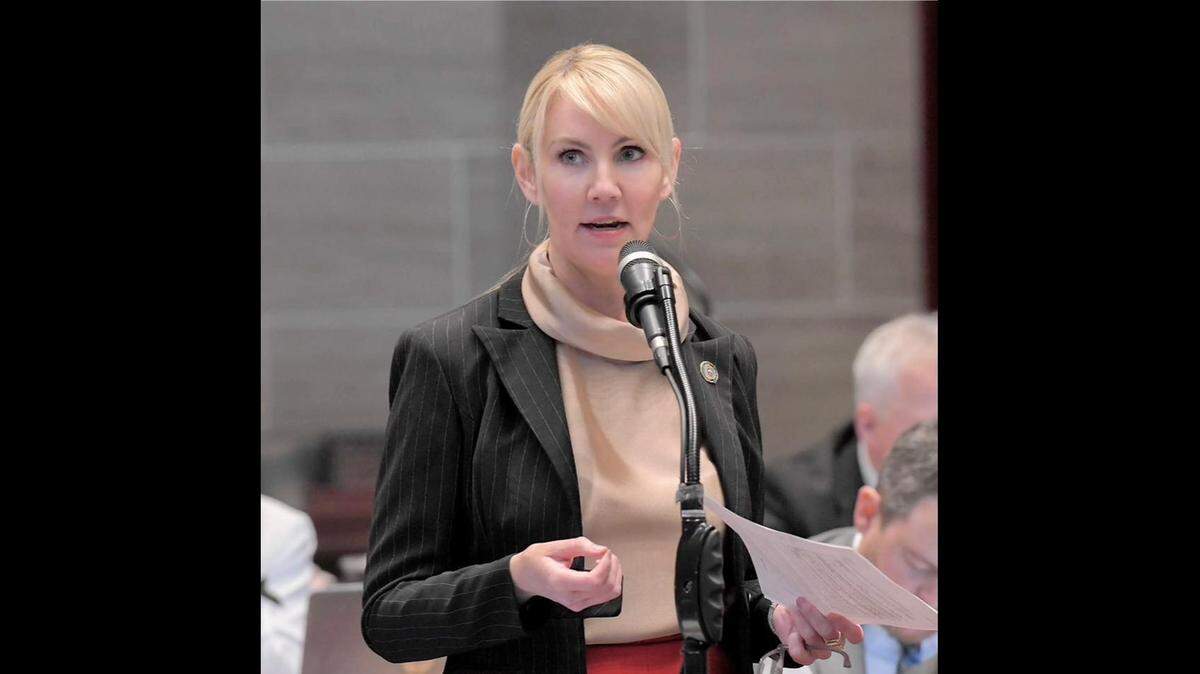
Rep. Dottie Bailey, R-Eureka, has been one of the most vocal lawmakers in questioning DSS during the past year.
“They’re famous for obfuscating data,” Bailey said. “You can’t get an answer. It is always and every time, ‘I can’t give you that information, representative, because of statute XYZ.’ They want to pat you on the head and they want you to go away. It’s not in my personality to go away.”
Agency’s numbers are questioned
In late January, 10 weeks after The Star first requested information, a DSS spokeswoman sent statistics that appeared to show that the Children’s Division was only down 120 workers across the state. The agency, the document said, was budgeted for 1,928 workers for Fiscal Year 2022, and as of Nov. 15, had 1,808 “on board.”
Officials explained that numbers of current workers were tallied using payroll data, which means some could be on family leave or have left the department and were still receiving their payout.
The information that DSS provided showed there were zero vacancies in the Greene County Children’s Division office as of Jan. 15. But people in the field there said the office was down about 20 workers. And at the end of January, The Star found five openings advertised on the MO Careers website for that office in southwest Missouri.
DSS did not respond when asked about that discrepancy.
At The Star’s request, several child welfare experts and workers reviewed the DSS document, which included a snapshot in time of the staffing picture inside the Children’s Division in mid-November and another from mid-January. They showed an alarming increase in the staff turnover rate in St. Louis and Kansas City and the high number of vacancies as of January in those two offices.
The department did not include the number of investigators statewide — or vacancies for that position — or their caseloads, because officials said that the agency “does not track team members by specific category of job … in our system.” That’s because, DSS spokeswoman Heather Dolce said, many employees are trained to handle different duties.
One former child abuse investigator described the information from DSS this way: “CD’s response to your inquiry is vague at best and at worst, a lie.”
The problem is, it’s impossible to tell from DSS’ numbers how many workers are on the job, working cases, every day.
Those who work with the Children’s Division in the field, though, know that there aren’t nearly enough.
Blumel, of Jackson County, and other CASA leaders across the state warned back in July 2020 that eliminating so many positions would only further hurt an overwhelmed agency. But, Blumel said, “I’m not interested in the finger pointing or the ‘We-told-you-so moment.’ We need solutions. Now.”
The acting director of DSS does not disagree.
“Given the extreme challenges our Department and, especially, the Children’s Division are having with recruiting and retaining employees, Director Missey and I are working aggressively to provide as much flexibility to our workforce as we can,” said Robert Knodell, whom Parson appointed in October after Tidball was removed and resumed her previous post as DSS’ chief operating officer.
In the past two years, DSS officials have seen the number of applicants plummet for each job posting. According to information from the agency, from March 2020 to October 2021, there was an 84 percent decrease in the number of applications for each Children’s Division opening.
Bailey, the lawmaker from Eureka, said she’s heard Missey speak and is encouraged about the next steps the Children’s Division will take. But she said she worries that the changes needed won’t come quickly or easily.
“I liked him instantly,” Bailey said. “And I could tell he really cared and his depth of knowledge is there. But he’s got quite the mountain. It’s doable. All parties are going to have to come together and get behind him to make it work.
“But it’s going to take a very long time, because there’s so many broken pieces down in the pipeline in that department. Almost every level has fractured in some way.”
Unsicker, the state representative from Shrewsbury in St. Louis County, also said she’s “relieved” to see a “change in the culture at DSS in recent months.”
“I feel that we now have a collaborative, rather than an adversarial relationship,” Unsicker said earlier this month. “It is important to work together to improve outcomes for Missouri kids, and I feel like we are doing that now.”
Change comes too late for many workers
Eckhardt’s crusade for change dates back to late 2019. In her 13 years working in the child-welfare field, she’d never been so worried that kids’ lives were in jeopardy.
At that time, St. Louis County where she worked was down to about 25 child abuse investigators, less than half the allocated 54. On top of that, Eckhardt said, the county had about 2,500 overdue investigative reports.
“I sent out an email to everyone,” she told The Star. “And I said, ‘I think it’s time we start documenting how bad it’s getting.’”
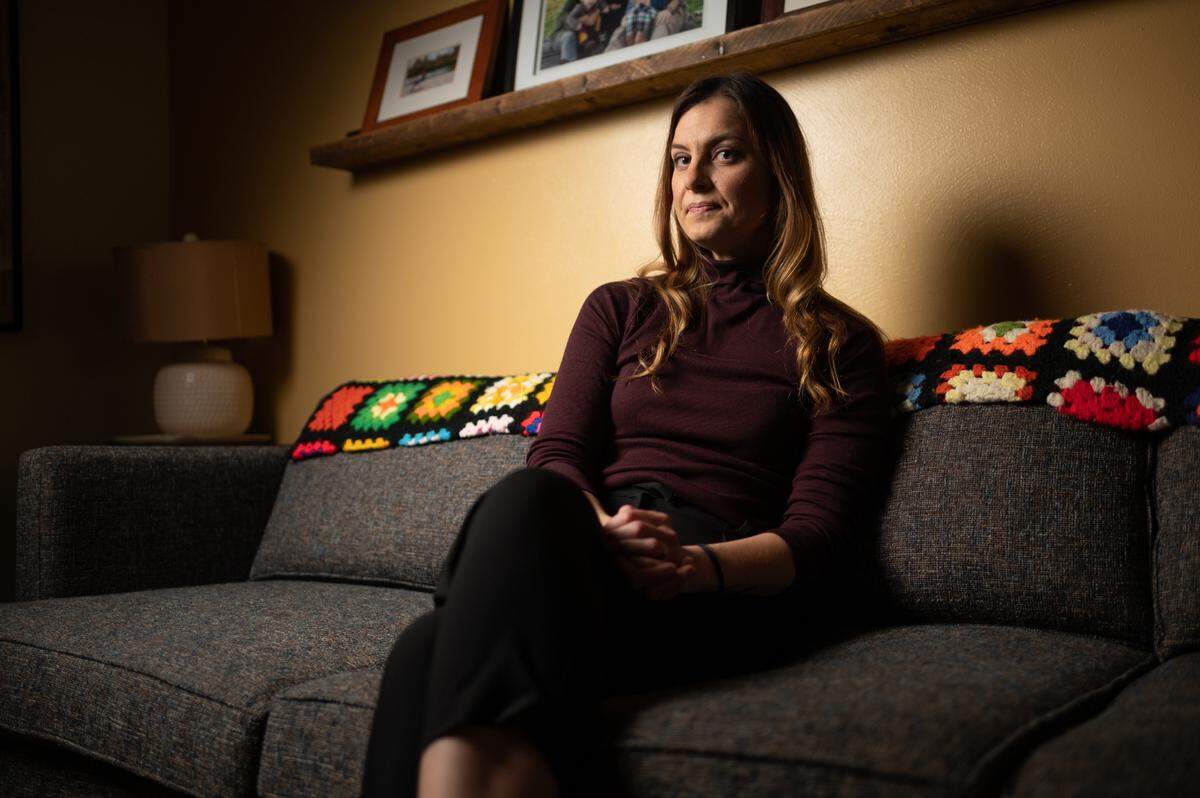
She and many fellow investigators started putting their concerns in writing, and in March 2020, Eckhardt submitted the package to their supervisors and program manager.
“I’m taking my problem up the ladder,” she said, “and no response.”
She waited a couple of months, then in May 2020 sent those reports to the regional director, the HR director and the Children’s Division interim director. About two weeks later, she got a call and was told the agency would be conducting a hiring blitz the next month.
That didn’t happen. On July 11, 2020, Eckhardt followed up with an email to the division’s deputy directors. Days later, Children’s Division employees were officially notified about the layoffs.
Though state officials have said that child welfare was negatively impacted by the coronavirus pandemic, Eckhardt said it actually helped investigators catch up on their reports because when kids were out of school the number of hotline calls sharply decreased. But when in-person classes resumed in early 2021, the number of calls shot back up. Investigators quickly fell behind again.
In March 2021, after sending another email about too few investigators, Eckhardt was told that the person they’d hired to recruit workers had moved on and they had eliminated the position.
Finally, she said, she had no choice but to file a grievance. It took more than two weeks and several emails just to get the grievance form from HR, she said. Then they told her they wouldn’t be addressing her case.
“They said they don’t have any policy set up to hear internal grievances.”
Feeling no one was listening, Eckhardt turned to the political arena. In September, she contacted Coleman, whom she’d seen quoted in some stories about DSS. But after pleading for nearly two years for leaders to do better by kids, she needed a change. She left the Children’s Division in November for a job with a contract agency.
“I was so sad to leave, because I love investigating,” Eckhardt said. “But I can’t even tell you how many cases I was getting a day. I mean, it was at least five… And I would be in tears all evening, just thinking about the kids that I couldn’t get to.”
Since she left, Eckhardt said, she’s heard things have only gotten worse.
“When I left, there were six people in rotation,” she said. “Those are people that are out, boot to ground, out in the field. I know of at least two more people that have left. And across the state there are entire circuits of investigators that have walked off the job.
“And I think it’s only a matter of time before something very serious happens.”