Kansas City landlords fault city officials for letting KC Tenants set housing agenda
READ MORE
‘Landlords, we’re coming for you’
Some may question their tactics, but KC Tenants and its founder are making their mark.
Expand All
Robert Long has about had it with being a landlord in Kansas City.
“If I sell my homes, they will not be sold to another investor,” he said, “they’ll be sold to owner-occupants because Kansas City doesn’t deserve to have rental properties.”
As the group KC Tenants has grown, both in visibility and City Hall successes, Long is among the critics who have pushed back on many of its initiatives.
There already was too much regulation and bias against landlords in a city where 46 percent of the population rents, he said. And it’s only gotten worse since the advocacy group came on the scene in 2019, he said, tipping the power balance even more toward the rights of renters.
First came the requirement that rental property be registered, then in 2018 voters overwhelmingly approved the Healthy Homes initiative, which gave city inspectors the right to enter rental properties in response to complaints about things like mold and cockroaches, as well as make unannounced visits to inspect properties to check on suspected hazards. Landlords were required to pay a fee per unit as part of that initiative.
And the hassle has only grown since KC Tenants got involved, Long said. As the renters rights’ group has gained influence at City Hall, local investment property owners have increasingly felt like they’re being shut out of the conversation on issues such as the rights of tenants and affordable housing policies, said Long, who represents 400 rental home owners as president of the industry association Landlords Inc.
“A huge percentage of rentals are owned by what I would call small-business housing providers who own two to 10 units,” he said, “and those are the very people who can’t absorb all of these regulations.”
Small mom-and-pop landlords, he feels, are getting caught in the crossfire as KC Tenants takes aim at the big corporations that have been buying up large numbers of properties, not taking care of them properly and jacking up rents.
Long said he and many of his group’s members believe that the policies and protections for renters being pushed by KC Tenants are bound to backfire by forcing out good landlords like them who try to keep their rents affordable and properties well kept.
“I think that they’ve been highly effective in getting policy created,” Long said of KC Tenants. “But I think that the policy has been counterproductive as a disincentive for small-business housing providers to continue to produce rental units in the city.
“And I think that their policies, whether directly or indirectly, have also contributed to the drastic increase in housing prices that we’ve seen.”
He’s sure of the first point and can’t prove the second one. Neither can Stacey Johnson-Cosby, president of the Kansas City Regional Housing Alliance. All the same, she and her husband are also considering liquidating their holdings because of what they feel is an increasingly hostile environment for small landlords in Kansas City.
And she puts the blame squarely on KC Tenants:
“It is frustrating, as a successful housing creator & taxpayer, to watch the city being run by a small group of activists that have never created a single housing unit,” she said in an email. “Especially when the city manager has publicly said that he is not interested in working with professional local housing creators because they generate a profit. Unbelievable. We have yet to see socialist policies successfully create long term sustainable housing anywhere in the world. Yet, we’re going down that path.”
Landlords see more hassle
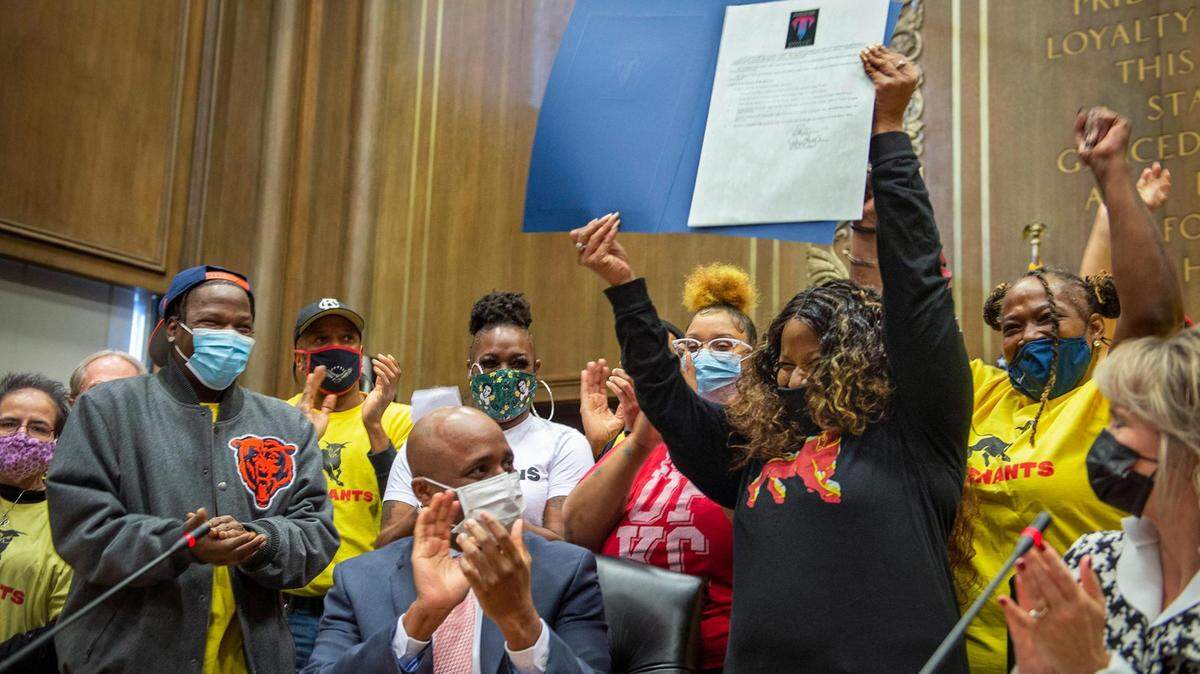
The most recent example of KC Tenants scoring a policy win that hurts landlords, they say, was last month when all 11 city council members who attended the Dec. 9 meeting (Heather Hall and Teresa Loar were absent) voted to spend $2.5 million hiring private attorneys to represent renters threatened with eviction from their homes.
Landlords almost always win eviction cases, and one big reason, KC Tenants argued, is that renters rarely have legal representation in court.
But Long and Johnson-Cosby say that all the new program will do is prolong the inevitable. Renters will get evicted anyway for non-payment of rent or breaking the terms of their lease. Meantime, the landlords will be out even more rent money and stuck with paying their own legal fees as court proceedings drag on for months.
“I’ve always wanted a landlord to go to (the city) and say, ‘Hey, I need an attorney to kick my deadbeat tenants out,’ and let them get denied and then sue for not having equal access to government services,” Long said.
Johnson-Cosby said the $2.5 million would be better spent on rent assistance.
Landlords Inc. and the Regional Housing Alliance also pushed back when KC Tenants lobbied two years ago for legislation that the council passed along with the so-called tenants bill of rights.
While the latter mostly put in one place protections that were already on the books, the accompanying ordinance added new rules. One required landlords to give 24 hours’ notice before entering properties for most reasons. Another barred landlords from refusing to rent to someone because of their criminal record or past evictions, and created a board to hear appeals on rental housing issues.
More hassle, more expense, they say. Pretty soon, only big corporate landlords will be able to afford doing business in Kansas City, according to both groups. And as the price of properties and the cost of doing business keeps going up, rents will rise.
“Everybody loves to hate the corporate landlords,” he said, “but the corporate landlord doesn’t give a (expletive) about these policies. They’ve got the staff to deal with them. They can afford the attorneys.”
KC Tenants takes opposing view
Tara Raghuveer, founding director of KC Tenants, doesn’t buy that argument and thinks that the vocal opposition from small landlords only helps the big guys who are taking over the rental markets in city after city, squeezing renters.
“I don’t know if they understand the position that they’re putting themselves in, because really who they’re defending ends up being the out-of-state private equity firm that doesn’t care about their little six properties or whatever,” she said.
“The fight that we’re trying to pick is not against the Robert Longs of the world.”
But she is quick to add that renters deserve the same protections, whether their landlord lives in Prairie Village or runs a hedge fund in New York City.
“Our argument has always been that if a landlord, no matter how big or small, cannot meet the bare minimum standards for habitability, for their tenants and cannot respect the rights that their tenants are owed, they shouldn’t be in business.”
Johnson-Cosby counters that from what she can tell, KC Tenants is at its core opposed to private enterprise being in the rental housing business. She cites Raghuveer’s ties to the progressive group People’s Action, where the KC Tenants leader is also director of a national campaign in support of more government-owned public housing.
“They are a group that’s part of a very well-funded national network with a goal of changing the housing industry,” Johnson-Cosby said. “Elected officials have a responsibility to do their research & know whose demands they are following.”
The debate, it appears, will likely go on.
This story was originally published January 30, 2022 at 5:00 AM.