Who is Eric Schmitt? As Missouri AG courts GOP right wing, spotlight turns to his past
READ MORE
Who is Eric Schmitt?
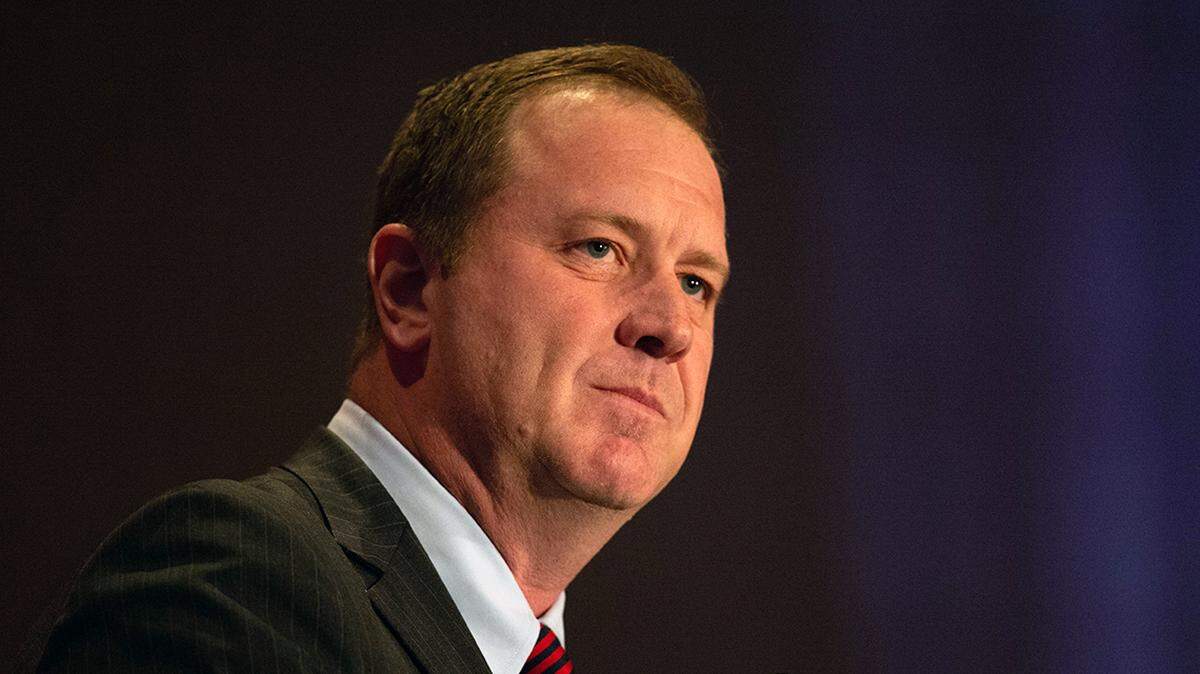
Missouri Attorney General Eric Schmitt has drawn national attention for lawsuits challenging COVID-19 rules and the Biden administration. But has he always been like this?
Expand All
Years ago, the Rev. B.T. Rice could count on Missouri Attorney General Eric Schmitt showing up at his church every few months to share a “word of encouragement” with his congregation.
It didn’t matter that most of the parishioners at New Horizon Christian Church in St. Louis County were probably Democrats. Or that Schmitt, then a state senator, was one of the few Republican politicians to ever stop by.
After unrest engulfed Ferguson in 2014, the two men partnered to push for new restrictions on the revenue that cities could collect from traffic tickets and other citations. It was a practice Schmitt called “taxation by citation.” Lawmakers passed a bill.
Schmitt and Rice had a good relationship, the pastor recalled. When Rice traveled to Jefferson City, he made a point of dropping in on the senator. Sometimes they ate lunch together. Rice even served as an adviser on Schmitt’s transition team when he became attorney general in 2018.
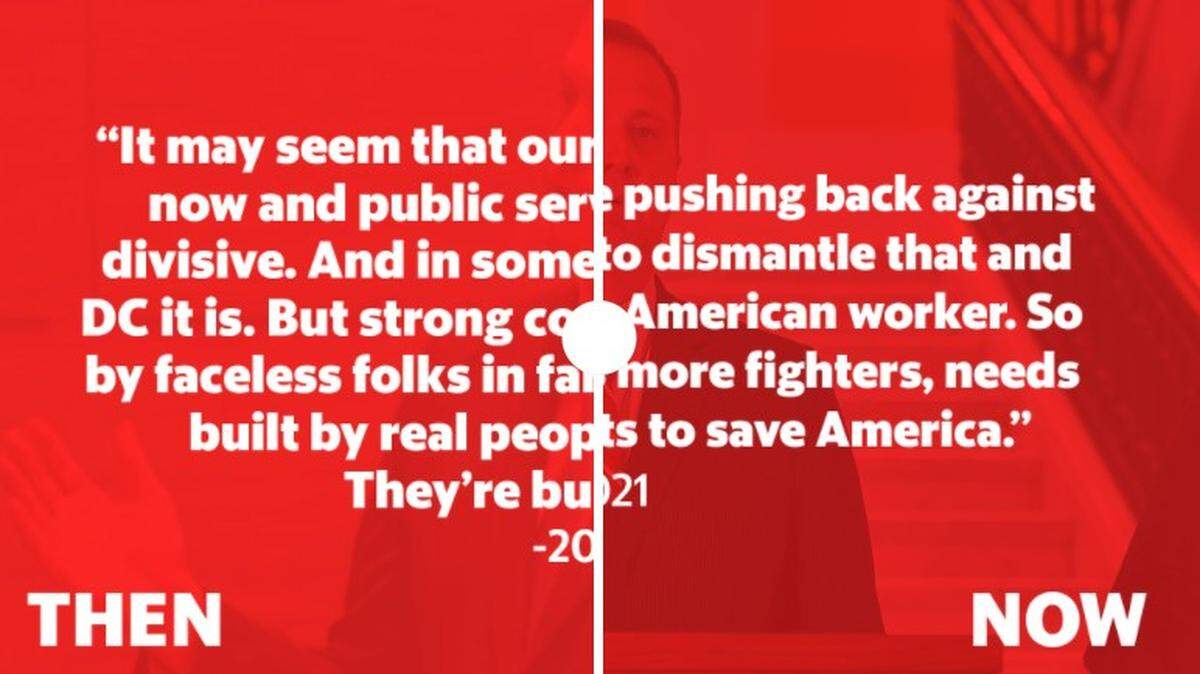
But that was then.
“He seems to be more now dogmatic, rather than saying, ‘Look, let’s try to come to some kind of meeting of the mind.’ It’s like, ‘I’m really not interested if you’re not a Republican,’” Rice said.
The two men haven’t spoken in a while. “Because he’s been so forceful in some of his rhetoric ... I said there’s not much need of a conversation,” Rice said.
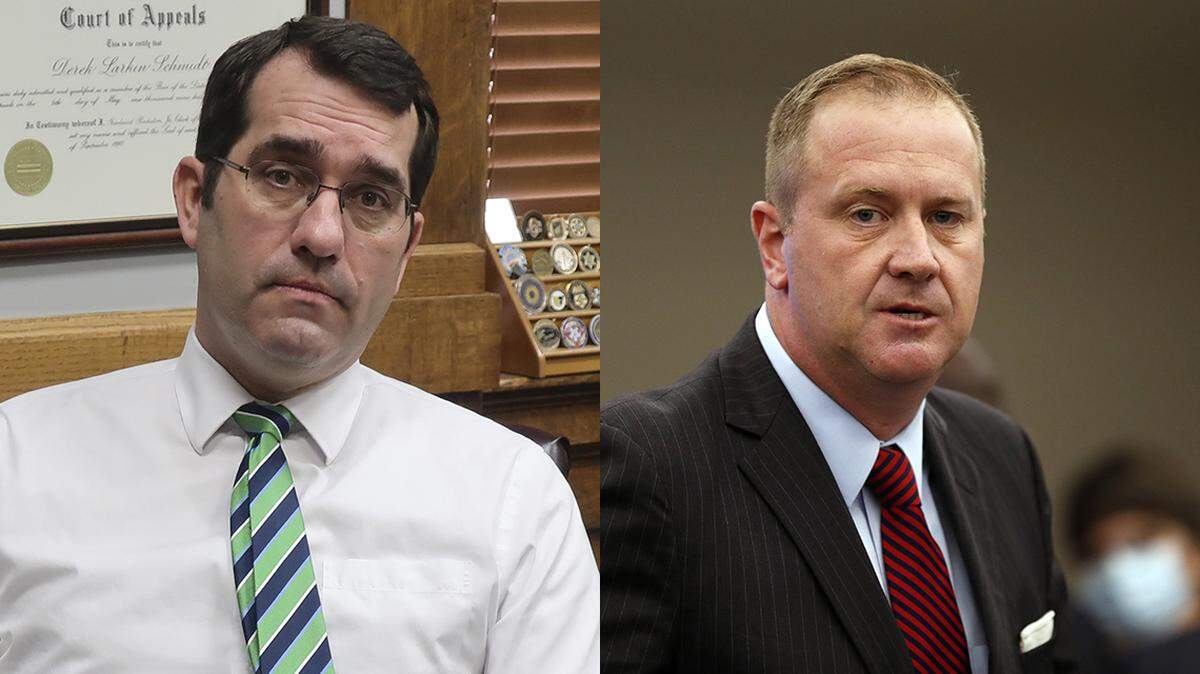
As Schmitt, 46, runs for the U.S. Senate, some who knew him earlier in his life say a transformation has taken place before their eyes. The affably moderate, sensible state lawmaker they remember is now something closer to a right-wing caricature.
His office has churned out litigation designed to win favor with Donald Trump’s angry, aggrieved Republican base. He sued China over COVID-19 and local governments over mask mandates; he supported a baseless challenge to the results of the 2020 presidential election — helping to perpetuate the fiction that Joe Biden is not the legitimate president.
Last month, he flew to the southern border of the U.S. to announce a lawsuit to force construction of the wall Trump covets.
Some of the actions Schmitt has taken on his own, such as fighting Kevin Strickland’s claim of innocence. Other times, he’s been part of a cohort of politically ambitious Republican attorneys general, challenging proposed environmental rules or seeking to reimpose regulations on federally-funded family planning clinics.
Much of it underscores Schmitt’s basic campaign message — that he can save Missourians from liberal fecklessness and relentless government overreach. “Mask mandates are about petty tyrants wanting power and control,” a recent, and typical, tweet of his said.
Still others say Schmitt is misunderstood. The state senator who championed reforms for individuals with disabilities, who emotionally described raising a son with autism and seizures as he pushed to legalize CBD oil, who embraced post-Ferguson changes — that politician was always a conservative, they say. Serving as attorney general and running for federal office calls for a different approach than representing a state Senate district.
“I think people conflate a personal affability or an ability to talk with people as — I never mistook that as agreement. I think they sometimes mischaracterize that,” said Victor Callahan, a Democrat who served with Schmitt in the Senate for four years.
As David Sater, a Republican former state senator, put it: “Eric has always been, when he was in the Senate ... very conservative.”
Schmitt himself says he hasn’t changed. His campaign didn’t agree to a formal interview, but he briefly spoke to reporters outside an event in Columbia in October.
“I’ve been a conservative my whole life,” Schmitt said. “People can characterize whatever they want to characterize, but I think right now people want a fighter in Washington, D.C.”
Primary battle
Schmitt’s aggressive style shows that a Trump-like posture is now the price of admission across much of GOP politics. Candidates in the Missouri Senate primary have decided that the race will be won not only by who can best demonstrate unfaltering allegiance to the former president, who remains extremely popular in the state, but also by who best embodies Trump’s pugnacious approach.
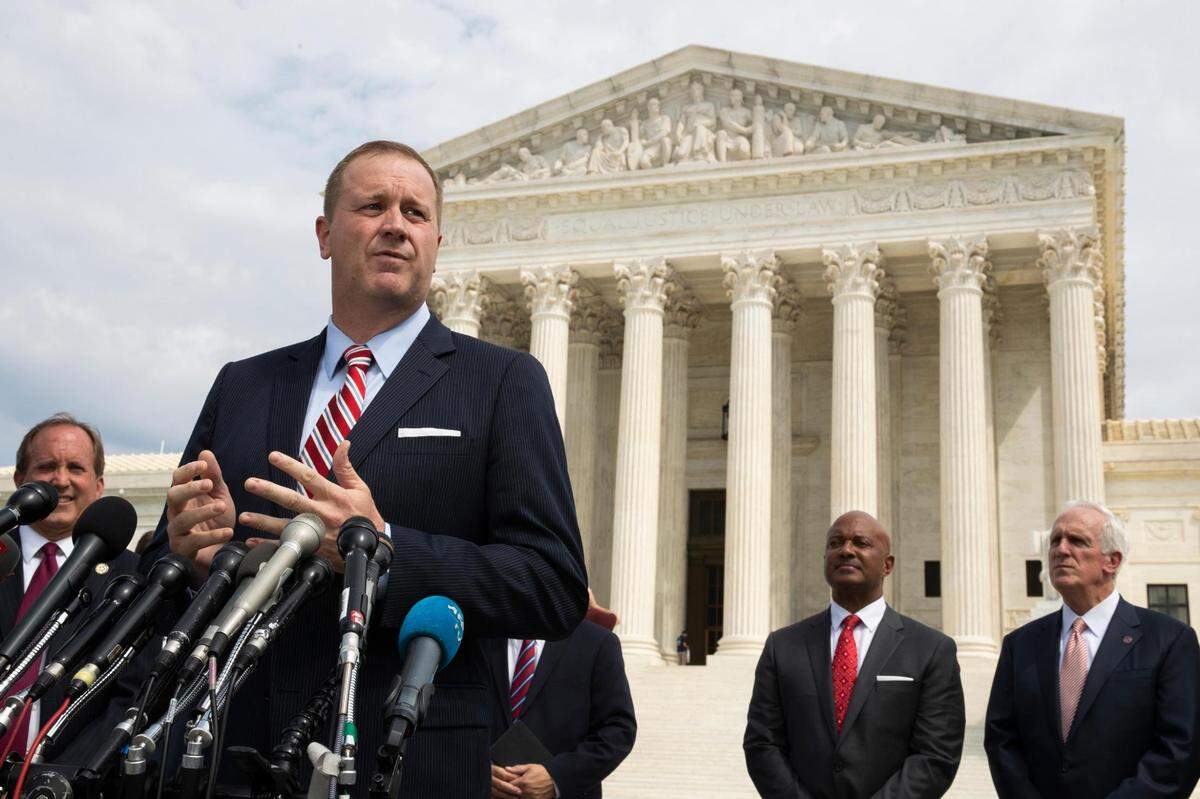
The stream of message-ready lawsuits sustaining Schmitt’s campaign for higher office is producing headlines. But it is also attracting opponents’ attention to what they see as a potential weakness: evidence of a more moderate past.
His competitors — former Gov. Eric Greitens, U.S. Reps. Vicky Hartzler and Billy Long, and St. Louis attorney Mark McCloskey — all have various degrees of right-wing credibility. All are jousting to associate themselves with Trump.
The primary is new terrain for Schmitt. Since his first state Senate campaign in 2008, he has never faced a Republican opponent on the ballot, which may explain why his combative stance appears so unfamiliar to so many.
“How else do you explain it other than he’s running in a primary election where the goal is … to represent the grievance side of the Republican Party and appeal to the base?” said John Danforth, a former U.S. senator from Missouri who also served as state attorney general.
Over a decade ago, Schmitt was among a handful of state Senate candidates that Danforth believed represented the future of the Republican Party. He was a “good person, a solid person and sensible,” Danforth said.
So Danforth, a towering figure in Missouri politics known for mentoring the up-and-coming, helped raise money for Schmitt during his run in 2008.
But, like another famous young Missouri Republican, Sen. Josh Hawley, Schmitt has disappointed Danforth. While Hawley voted against certifying Biden’s electoral victory and infamously raised his fist to a pro-Trump crowd that later stormed the Capitol, Schmitt aided the Texas lawsuit to overturn results in Pennsylvania and other swing states. It was promptly dismissed by the U.S. Supreme Court.
Schmitt has stood by his involvement. To Danforth, it remains a mark against him.
“I thought that Eric ginning up the amicus brief challenging Pennsylvania was a very destructive thing to do to our country,” Danforth said.
‘My wildest dreams’
Born in Bridgeton, Schmitt grew up in the St. Louis area watching his father, Stephen, work midnight shifts at Anheuser-Busch, the beer giant. His father had also been a butcher, like his grandfather, and for a time attended night school.
“I think that perseverance … that desire to achieve the American dream had a profound effect on me,” Schmitt once said of his father and grandfather.
He attended De Smet, a Jesuit high school for young men in St. Louis. By his own admission, he wasn’t the most disciplined student. He earned a few demerit cards before, as he tells it, the Jesuits “redirected my energy” and he got on a more solid academic path.
“The motto of the high school was ‘To be a man for others.’ And when you’re 14 or 15 years old, you don’t know exactly what that means,” Schmitt said at a 2018 conference. “But as it turns out, later in life, I think that foundation and that background that I had at that high school … mattered for me.”
Schmitt became the first in his family to attend college directly after high school. He went to Northeast Missouri State University, which rebranded as Truman State University while he was a student there. Before he graduated with a bachelor’s degree in political science in 1997, he met Jaime Forrester, who was in the campus Habitat for Humanity chapter when Schmitt was president of it. They married soon after graduation.
When he returned to Truman in 2012 to deliver the commencement address, he joked that he had asked Jaime whether she thought in her wildest dreams they would return.
“You’ve never been in my wildest dreams,” Schmitt said his wife told him. (He recycled the joke in his commencement address at Saint Louis University School of Law in 2018.)
At Truman, he tried politics, serving as treasurer of the student senate. In a twist, Scott Sifton, a former state senator whose time in the Missouri Senate overlapped with Schmitt’s, was Truman’s student senate president in 1996.
Sifton is now running for the Democratic nomination for the U.S. Senate. His campaign didn’t make him available for an interview.
Campus politics, where issues like food service dominated the agenda, didn’t break down across neat partisan lines, and student senators didn’t identify as Republicans or Democrats. In an early Schmitt campaign — a losing bid for senate president — a top student concern was carts used by facilities workers to zip around at high speeds.
Summer Johnson, a student senator who said she helped Schmitt campaign, has watched the arc of his political career with surprise.
“It’s a little bit shocking to me that Eric ran, has been running, as a Republican, because there’s so many things where I as a Democrat agreed with him,” said Johnson, now a St. Louis psychologist. “But I also know if you’re in the state of Missouri and you want to be elected, you’re going to run as a Republican.”
There were early signs of Schmitt’s conservative instincts, even if they weren’t exactly the Trump-like attributes on display now. His campaign said the candidate is a “son of the conservative Reagan revolution” and that, watching his father work, he knew what more take-home pay meant for people pursuing the American dream.
The young Schmitt and his father watched “Crossfire,” CNN’s nightly show of political verbal combat. There he was drawn to Republican Jack Kemp, the congressman, Housing and Urban Development secretary and vice presidential nominee whose economic optimism and “happy warrior” style drew a devoted following of young conservatives in the 1980s and ’90s.
“He believed very strongly in the Republican principle of economic growth,” Schmitt, describing Kemp, told The Missouri Times in 2013. “He was trying to reach out and convince others who may have been Democrats of his principles with a conservative message.”
The personal and political
Eight years after earning a law degree from Saint Louis University, Schmitt won his first election to the state Senate with 54.7% of the vote. By then, he was well established as a Republican with a future, seasoned by political experience as a Glendale alderman and legal work at Lathrop & Gage (now Lathrop GPM), the firm where he focused on real estate, business disputes and land use.
And he had influential backers. Danforth, the former U.S. senator, poured $20,000 that year into the Missouri Republican Leadership Council, which wrote a $4,000 check to Schmitt’s campaign.
“When we got to the state Senate, it was pretty much taken for granted that Eric had the pathway paved to be (president) pro tem one day,” said former Republican state senator Jane Cunningham, referring to the chamber’s top leadership post.
He quickly took up the cause of helping individuals with disabilities and their families. It was a deeply personal topic.
Schmitt’s son, Stephen, born in 2004, has tuberous sclerosis, a genetic disorder that can cause tumors to grow in many areas of the body. Stephen is also autistic, a condition associated with tuberous sclerosis, commonly called TSC.
In 2010, the General Assembly overwhelmingly approved a bill co-sponsored by Schmitt requiring insurance plans to cover autism treatment for children. Democratic Gov. Jay Nixon signed it into law.
“He provided a lot of leadership and his personal story added a lot of momentum to it, and his personal connections were very helpful as well,” said Scott Rupp, a Republican former state senator who had also pushed the insurance bill.
Four years later, lawmakers approved the use of CBD oil to treat epilepsy. On the Senate floor, Schmitt drew upon his family’s experience in asking for support, describing the frightening seizures his nonverbal son suffered.
“When he has them at night, all I can do is just hold him and say that I love him,” Schmitt said. “And I often wonder what he would say to me. Is he scared? How long is it going to last?”
Kari Rosbeck, president and CEO of the TSC Alliance, an advocacy group, first met the Schmitt family in 2005 at a walkathon in the St. Louis area.
“For a family receiving the diagnosis, especially after experiencing seizures … it’s scary. Your world is kind of turned upside-down,” she said.
While making clear that she isn’t endorsing Schmitt, Rosbeck said his work to help the TSC community “has been really groundbreaking.”
She pointed to both the autism insurance bill and the 2014 passage of the Missouri ABLE Act — Achieving a Better Life Experience — which gives families of individuals with disabilities access to tax-free savings accounts they can use to pay for education, housing, transportation and other expenses.
Conservative or ‘chameleon’?
But some who worked alongside Schmitt saw not just an interest in championing popular bills but also a fear of taking tough positions.
“Eric was afraid of his shadow,” said Cunningham, “and he didn’t like to vote on things that could come back to bite him or make it hard for him to get re-elected or that would offend one of his constituencies.”
Cunningham, who has been among Schmitt’s most vocal critics, said he’s a “chameleon” that changes colors to fit the situation.
“What’s the most popular stand in the Republican primary? It’s precisely what he’s doing,” said Cunningham, who represented St. Louis County in the state Senate and now lives at Lake of the Ozarks. “I mean, he’s following the coloration he needs to be in order to move his candidacy in the Republican primary.”
Callahan, the former state senator, doesn’t see it that way.
“Eric Schmitt was always at his core a conservative, and a lot of people didn’t necessarily understand that. I think because, again, he was personally affable,” Callahan said.
Carl Bearden, CEO of United for Missouri, which advocates for limited government, provided scorecards showing Schmitt always received “A” ratings from the group during his final years in the Senate.
In the Senate, Schmitt backed a failed effort over multiple years to turn Lambert-St. Louis International Airport into a major destination for international cargo, a project dubbed the “China Hub.” As lawmakers weighed tens of millions of dollars in tax incentives in 2011, Schmitt said that China was paying attention.
“The world’s largest trading partner, right now, is sitting at the table watching what we do,” he said during a Senate committee hearing.
Lawmakers adjourned a special session without taking action after the proposal became ensnared in larger disputes over economic incentives. Cunningham said senators had “this uncomfortable feeling that something wasn’t right with it.”
The China Hub is now an issue in the U.S. Senate race. In September, the conservative site Breitbart published an article on Schmitt’s past support for the project, headlined: “Missouri AG Eric Schmitt Has a History of Helping Communist China.”
The article also noted Schmitt’s support for legislation that authorized foreign-owned companies to buy Missouri farmland. Lawmakers passed the bill just weeks before Smithfield Foods, which has operations in Missouri, announced its sale to a Chinese company.
“General Schmitt grew up in the shadow of the airport in a blue collar town, watching families in his neighborhood grow increasingly devastated by the loss of manufacturing jobs to companies overseas,” Schmitt spokeswoman Charli Huddleston said in a statement.
Huddleston said that China is “our single greatest threat to democracy and freedom and Missourians deserve a Senator with a proven track record of putting America first and standing up to China.”
Schmitt has also touted his support of tax cuts, including a 2014 bill the General Assembly passed into law over Nixon’s veto. It reduced income tax rates as revenue grew. He pushed for a larger cut before he was elected state treasurer in 2016.
“I fought for two of the largest tax cuts in the history of the state — that was bipartisan. There were Democrats who voted for that,” Schmitt told reporters last month. “But I’m gonna continue to fight for the important policies that I believe in; I mean, I’ve been a conservative Republican my whole life and I’m gonna keep fighting every single day.”
In 2014, Schmitt voted in favor of requiring Missouri college students living on campus to get vaccinated for meningitis, even though he now rails against COVID-19 vaccine mandates and has filed multiple lawsuits to stop federal vaccination rules. When St. Louis Post-Dispatch columnist Tony Messenger questioned Schmitt’s office in August about his positions, a spokesman accused the journalist of having “Schmitt Derangement Syndrome.”
John Lamping, a former Republican state senator, called Schmitt a friend but said he was mainly concerned with “chamber of commerce” issues.
“What’s different about his campaign versus how he spent time in office is he’s advocating for issues today that are important to primary voters, whereas in my four years, he didn’t really concern himself so much with the primary voters ... while in office,” Lamping said.
Still, Bearden said that in watching and evaluating Schmitt, “he’s been a very consistent conservative performer.”
As Schmitt advanced politically, he proved adept at winning over big-name donors.
Running for state treasurer in July 2014, he received a $250,000 check from St. Louis mega-donor Rex Sinquefield. Schmitt didn’t face a Republican opponent in the 2016 race but would go on to receive an additional $500,000 from the libertarian-leaning Sinquefield, who has plowed millions into Missouri Republican politics, often in pursuit of lower taxes.
As Schmitt ran for election to a full term as attorney general, Sinquefield gave at least $1 million to a PAC supporting the candidate.
Huddleston said Schmitt considers Sinquefield and his wife, Jeanne, to be friends and that he appreciates their philanthropy and work “to make Missouri a better place.”
“We have known and supported Eric Schmitt for several years. We believe he has Missouri’s best interests in mind,” Sinquefield said in a statement for this story.
Controversial lawsuits
During the treasurer’s campaign, Schmitt again drew on son Stephen’s story and his bipartisan work on autism insurance reform.
“There’s plenty that divides us, but these are the kinds of things that should bring us together. The resolve that Stephen has given me to fight for a better world is something that I’m very grateful for,” Schmitt said in an ad during the final stretch of the campaign.
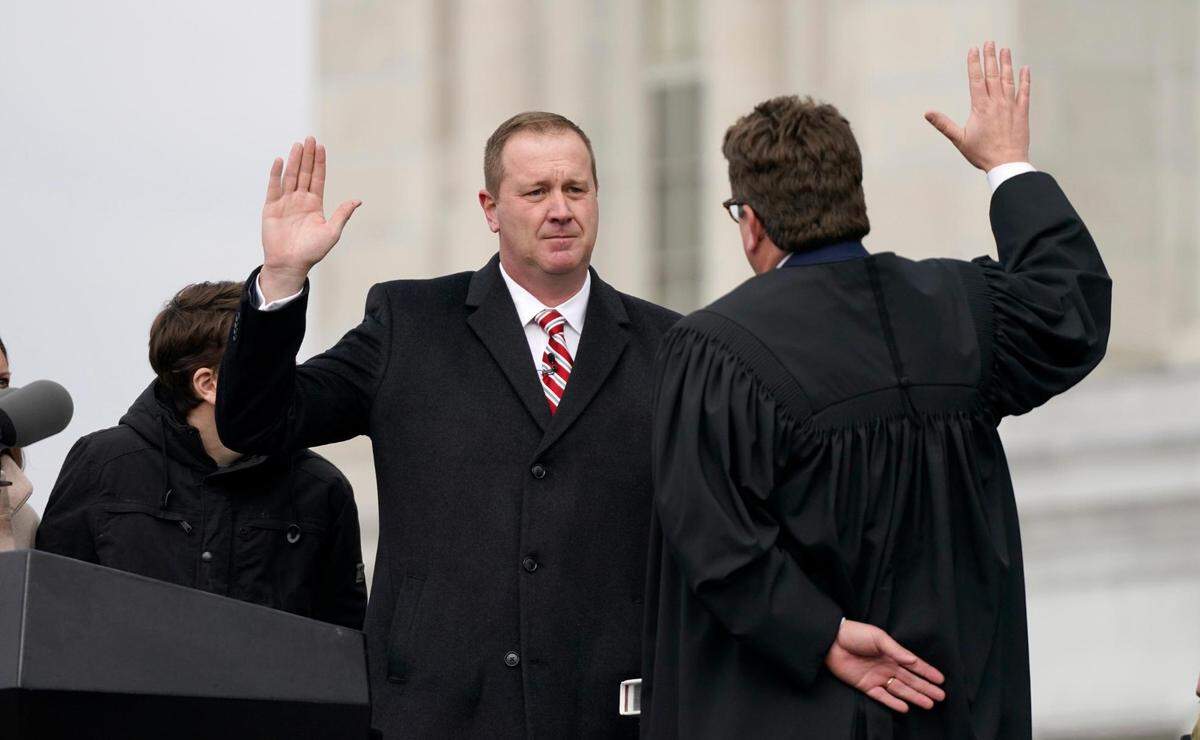
It’s the kind of unifying message that Schmitt conveyed as recently as his early days as attorney general. Gov. Mike Parson named him in November 2018 to replace Josh Hawley, who had been elected to the U.S. Senate.
Hawley had himself come under criticism over high-profile legal and public fights, including efforts to strike down the Affordable Care Act. Early on, it wasn’t clear whether Schmitt would take the same approach. And there were even hints that he wouldn’t.
“I am honored to serve as the 43rd attorney general — the chief lawyer for 6 million Missourians no matter their race, their creed, their neighborhood or their political party. Just as you all hail from different corners of the state, I represent all of you and take that responsibility very seriously,” Schmitt told Missouri Boys State in June 2019.
The lawsuits and legal filings came anyway.
As the pandemic took hold in Missouri and the rest of the United States, Schmitt filed a lawsuit in April 2020 against the Chinese government, the Chinese Communist Party and other Chinese officials and institutions. He alleged that China’s actions in arresting whistleblowers and suppressing information about COVID-19 led to loss of life and economic harm in Missouri. It took more than a year for Schmitt to simply serve the defendants.
This year, he has filed lawsuits against Kansas City, St. Louis City and St. Louis County over mask mandates. He has sued over Columbia public schools’ mask mandate and has issued guidance to Kansas City-area parents that their children can effectively ignore mask rules.
Partnering with Texas Attorney General Ken Paxton, Schmitt successfully sued to force the Biden administration to reinstate the “Remain in Mexico” policy for asylum seekers. In October, Schmitt and Paxton teamed up again to sue the Biden administration in an attempt to force resumption of construction of the wall along the southern border.
The lawsuits are at once official acts and campaign messaging. But the distinctions blur to the point that even his state government staff hasn’t always correctly said which is which. When Schmitt flew to the southern border for a news conference with Paxton in October, his office initially said Missouri paid for his trip before reversing itself.

“I think he’s very much in the mold of what we’ve seen from AGs of both parties in the last few years, which is more aggressively active in pushing back against policies of the other side, of political opponents, and using the office lawsuits to really sue up and down in the federal structure,” said Paul Nolette, a political science professor at Marquette University who studies state attorneys general.
Perhaps no action by Schmitt has been more aggressive than his support of Paxton’s lawsuit last year to overturn election results in Georgia, Pennsylvania, Wisconsin and Michigan. Biden won all those states, and Paxton went to court as Trump refused to concede.
Even as it was filed, it was clear the lawsuit, which recycled baseless claims of illegal voting, had virtually no chance of succeeding. The U.S. Supreme Court refused to hear the case.
Schmitt and other attorneys general faced withering criticism for fueling the false perception that the election was stolen from Trump — the idea at the heart of the Jan. 6 Capitol riot, when a violent pro-Trump mob stormed the building and forced a temporary halt to the certification of Biden’s electoral victory.
Huddelston, Schmitt’s campaign spokeswoman, said the candidate “absolutely” stands by the legal filing and that “he’s incredibly proud of leading the fight on election integrity.”
“Not only did he file the brief, he wrote the brief and recruited other states to join,” she said in a statement.
The Jan. 6 rampage was a reminder that peaceful transitions, long assumed in the United States, are not necessarily guaranteed. Schmitt himself had delivered a similar message on Facebook four years earlier, the day Trump took office.
“Let’s not forget how unique a peaceful transition of power is,” he wrote. “Freedom isn’t passed down through the blood stream. We’re all in this together.”
The Star’s Jeanne Kuang and McClatchyDC’s Bryan Lowry contributed reporting.
This story was originally published November 14, 2021 at 5:00 AM.