Mountain creature with orange eyes went unseen for 100 years in Ecuador – until now
Every day, new species are being discovered for the first time around the world.
Sometimes, they are easy to find once researchers know what to look for. Other times, their time in the spotlight is fleeting before the creatures return to the shadows.
In 1922, George Henry Hamilton Tate traveled to the Pacific slopes of the Ecuador Andes on an expedition for the American Museum of Natural History, according to a study published Aug. 13 in the Journal Zoosystematics and Evolution.
On his voyage, Tate discovered a new species of robber frog, Pristimantis ruidus, and collected 16 specimens nearly 8,000 feet above sea level, according to the study.
But, the frog was never seen again in the scientific record.
“Pristimantis ruidus has eluded field researchers for over a hundred years,” researchers said in the new study.
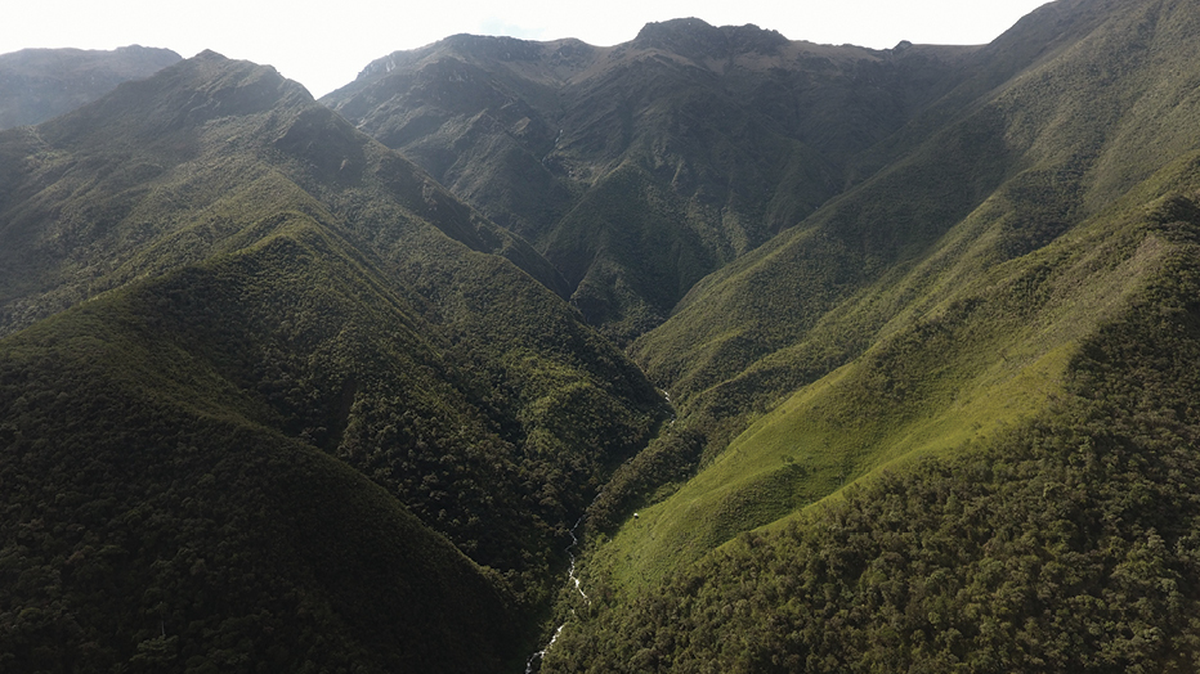
That was until a 2022 research trip to the Quitahuaycu Conservation Reserve spotted the bumpy creatures in the mountain forest.
The team collected two frogs and photographed the species for the very first time, according to the study.
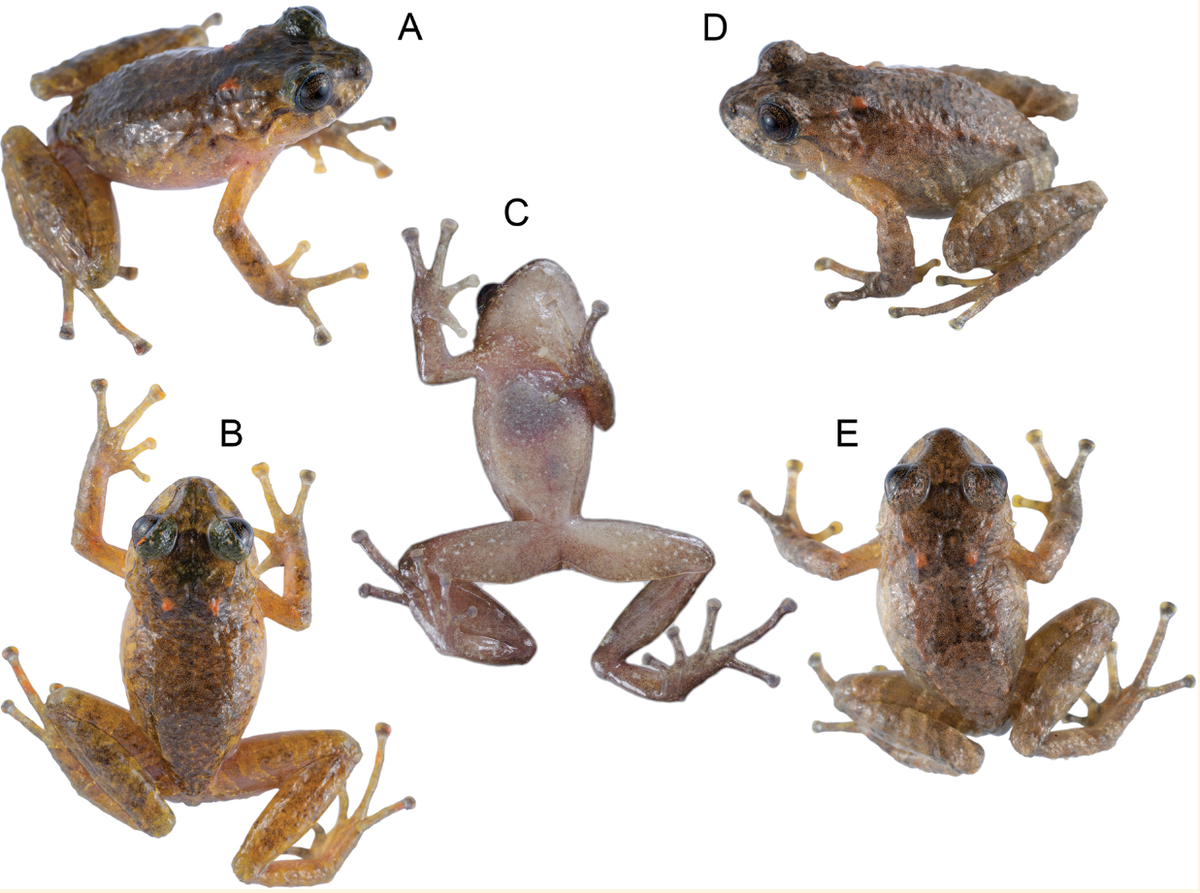
Pristimantus ruidus, or the Molleturo robber frog, was found on fallen trees and low shrubs along a stream in the reserve, researchers said.
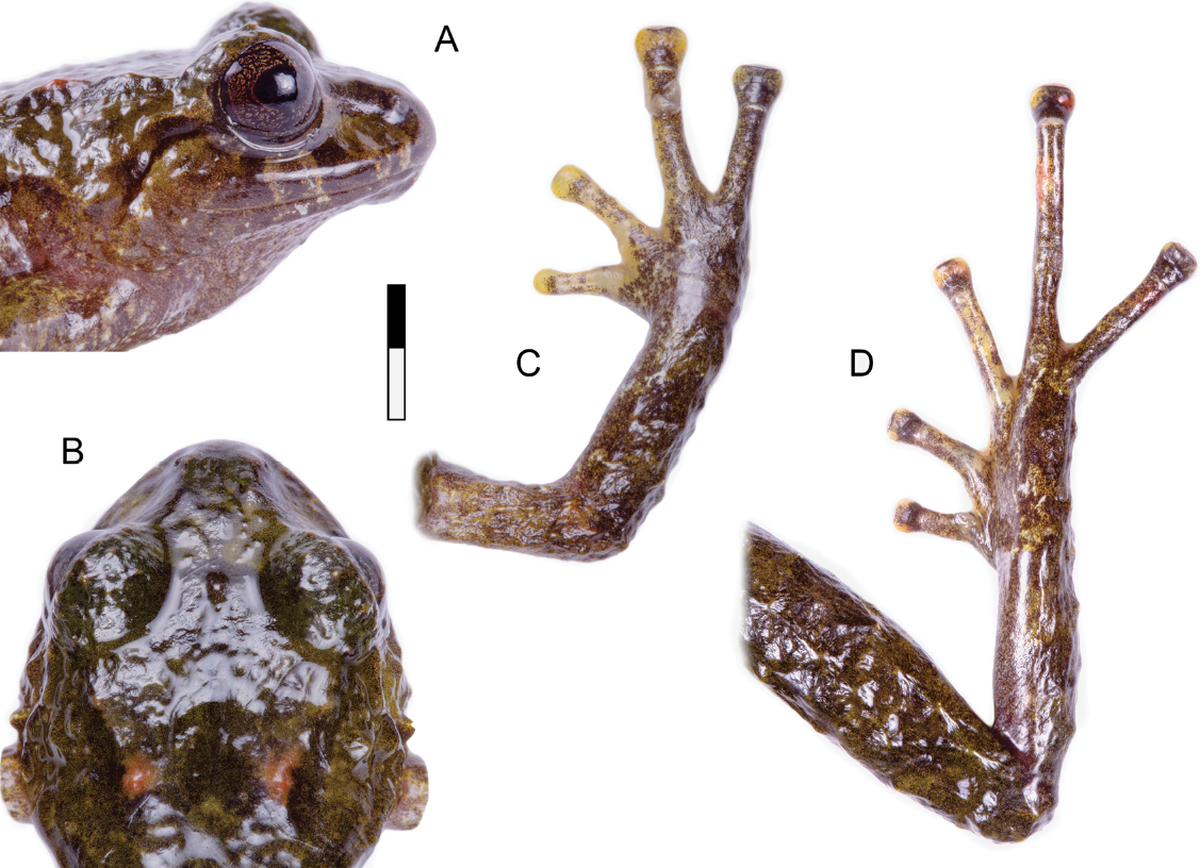
Their name, Latin for rough, refers to the warty and bumpy skin covering their moderately sized bodies, according to the study. The Molleturo name comes from the parish in which the frogs were found in 2022.
The frogs are an “olive clay” color on their backs with “verona brown blotches,” researchers said, while the frogs’ snouts are an “olive sulfur yellow” color with “lime green” eyelids.
The eyes themselves are a “light chrome orange” color, according to the study.
The new discovery also gave researchers more insight about the robber frogs’ behavior.
Previous descriptions said the frogs were found under rocks, but the searches were conducted during the day since it’s harder to do fieldwork at night, according to the study. This leads researchers to believe the frogs may take shelter under rocks or logs during the day but are active on shrubs and vegetation at night.
Researchers said there have been so few sightings of the frogs since 1922 that they believed the species may be extinct.
“The rediscovery of P. ruidus after one hundred years shows that there still exist montane forests that preserve conditions suitable for the survival of rare and threatened species,” according to the study. “Despite several unsuccessful efforts to record the species in the type locality, leading to an evaluation of possibly extinct (in 2023), we found that a population still persists in the area, emphasizing the importance of conserving this habitat, one of the last remnants of West Andean Montane Forest in southern Ecuador.”
The Quitahuaycu Conservation Reserve is in the Andes mountains in southern Ecuador.
The research team included Juan Sánchez-Nivicela, Diana Székely, Luis Salagaje M., Nicolás Astudillo-Abad, Jaime Culebras, Ernesto Arbeláez Ortiz, and Paul Székely.
This story was originally published August 20, 2024 at 3:38 PM with the headline "Mountain creature with orange eyes went unseen for 100 years in Ecuador – until now."