400-year-old tool — possibly linked to famous astronomer — found in Poland. See it
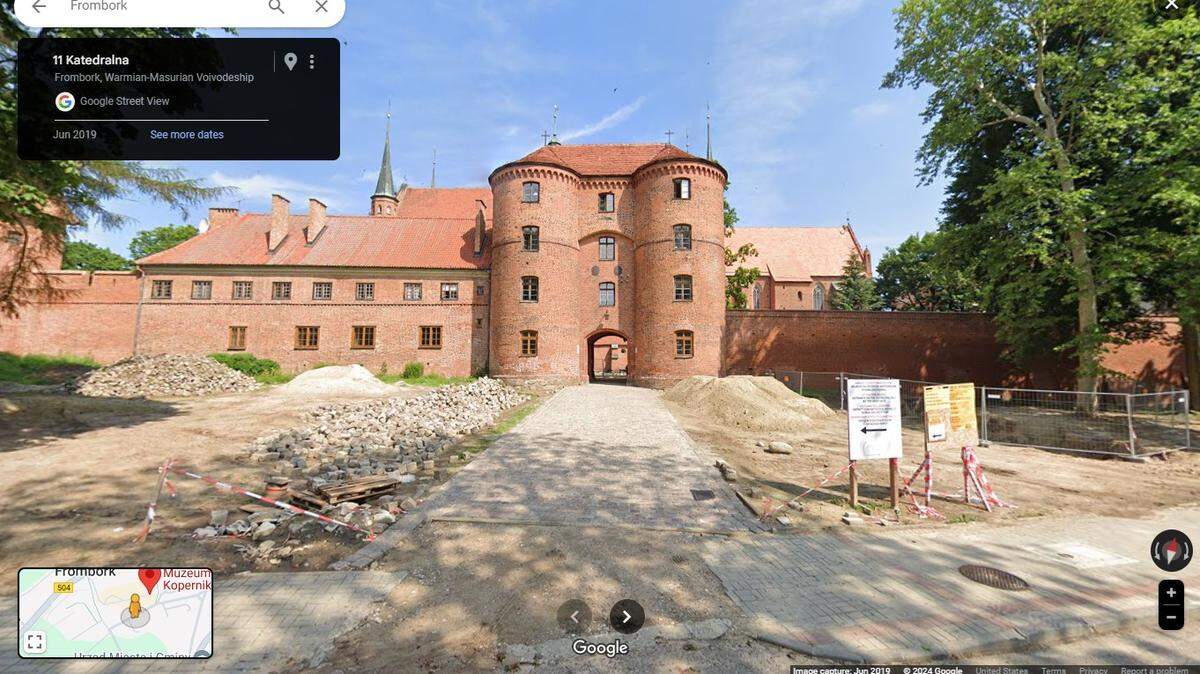
A group of volunteers and museum staff assembled on the lawn of a historic building in Poland. Their task was relatively simple: take radar scans and do a test excavation.
But what they found surpassed all expectations.
The team gathered at the garden of the former residence of Nicolaus Copernicus in Frombork, according to an Aug. 6 news release from Science in Poland. The famous 16th century astronomer lived and worked at the site for almost 30 years. Experts believe he likely set up an observation platform in the garden during this time, but no traces of the structure have been found.
The team, led by the staff of the Nicolaus Copernicus Museum, conducted ground-penetrating radar scans of the garden and picked up several abnormalities.
Digging into the soil, archaeologists found a small metal artifact identified as a 16th century compass, or measuring tool, the museum said in an Aug. 4 Facebook post.
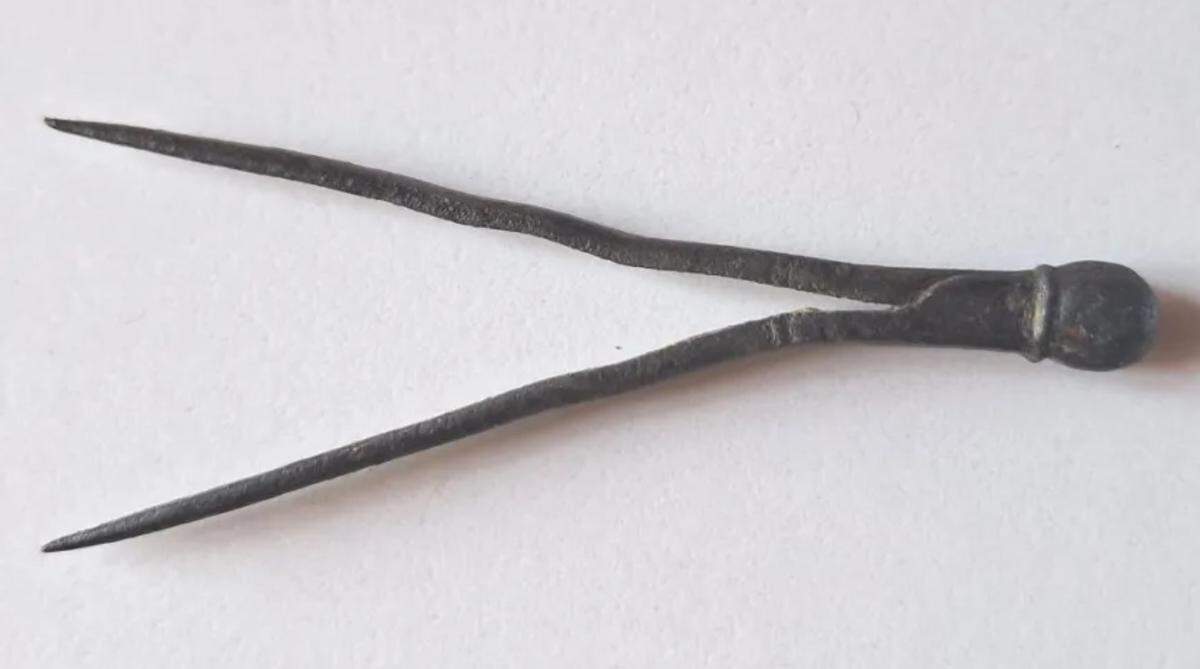
The 400-year-old tool looks similar to drafting compasses used today, a photo shows. During the 16th century, the bronze item was likely used for astronomical measurements, geometry and cartography.
Zorjana Polenik, a professor with the museum, said the compass could be linked to Copernicus because of its age and location, but the team doesn’t know for sure.
These types of artifacts are generally rare, Science in Poland said. Only two similar compasses have been found in Poland, including one found in 2016 at the same gardens in Frombork.
Initial excavations also uncovered the entrance of a partially collapsed cellar and another set of unidentified ruins, the museum said.
Photos shared on Facebook by the Warmińska Grupa Eksploracyjna, one of the groups involved in the excavations, show these finds. The cellar appears to be made of brick and relatively well-preserved.
Photos show two people standing in the large, partially excavated cellar.
The museum hopes to add the 400-year-old compass to its collection.
Copernicus is most well-known for developing the heliocentric theory, an astronomical model that placed the sun at the center of the universe, not the Earth as was typically assumed during his time.
Frombork is a town along the northern coast of Poland and a roughly 200-mile drive northwest from Warsaw.
Google Translate was used to translate the news release from Science in Poland and Facebook posts from the Nicolaus Copernicus Museum and Warmińska Grupa Eksploracyjna.
This story was originally published August 8, 2024 at 7:36 AM with the headline "400-year-old tool — possibly linked to famous astronomer — found in Poland. See it."