Chiefs bond district includes only some JoCo cities. What that means for taxes
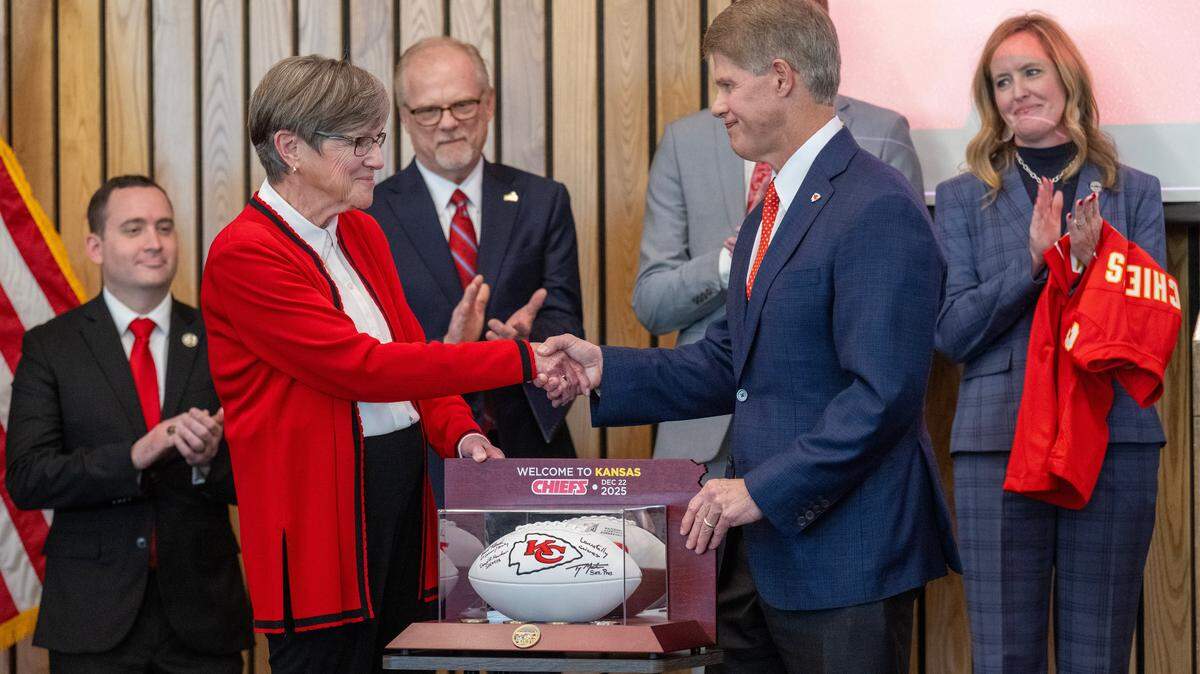
While the Kansas City Chiefs are crossing over to Kansas with the help of a massive incentive district that includes a large swath of Johnson County, most cities in the county won’t be diverting their local sales taxes to the team’s project, according to local and state officials.
In late December, state officials unveiled plans for Kansas to publicly finance $1.8 billion of construction costs for a $3 billion domed stadium in Wyandotte County and up to $975 million for a new training facility and headquarters in Johnson County using a controversial funding tool called sales tax and revenue, or STAR, bonds. The deal pledged a 60-40 funding split, with public money covering the bulk of the project.
Some experts have called it the biggest government subsidy for a professional sports team in U.S. history.
New state sales tax revenue generated within a special STAR bond district will pay back the bond debt used to build a new stadium and practice facility over several decades. As part of the incentive deal for the team, local governments could also vote to contribute their local sales taxes to paying back the bonds in addition to the state taxes.
Kansas’ STAR bond program doesn’t change tax rates and won’t show up as added charges on residents’ bill or receipts. Rather, the program changes where tax dollars go, redirecting new sales tax money from within the district that would have otherwise added to the state’s general fund to pay for highways, schools and other services to instead pay off the project’s debt and retire the STAR bonds.
A preliminary map the state published outlines the sweeping area that will redirect taxes to the Chiefs’ project, which appears to include virtually all of Wyandotte County and most of western Johnson County, specifically Olathe, Shawnee and Lenexa. The Kansas Department of Commerce would not confirm the specific cities encapsulated by the district beyond what the unlabeled map shows.
Which cities are in the district
The Star’s analysis of the STAR bond district map indicates that Olathe and parts of Shawnee and Lenexa will be a part of the district in addition to KCK, Bonner Springs, Edwardsville and Lake Quivira.
Lenexa and Shawnee spokespersons said they could not confirm if the cities are included in the district since the state hasn’t finalized the boundaries yet, but both said that regardless they will not be voting to direct their local taxes to pay back stadium debt.
“Unfortunately, I’m not in a position to confirm anything from the state, either the district or the next steps,” Shawnee spokesperson Doug Donahoo said. “What I can say is, the STAR Bonds are a state mechanism only affecting state sales tax. Local government approval would only come if that municipality were committing some of its local sales tax revenue to the district, which Shawnee is not.”
Similarly, Lenexa will not be voting to contribute local sales tax to the project, spokesperson Denise Rendina told The Star via email.
Gardner, Edgerton, Spring Hill, Mission Woods, Leawood and Overland Park officials told the Star via email that the cities haven’t been approached by the state or the team for any agreements and are not in the STAR bond district.
Roeland Park and Prairie Village officials have also stated that the cities are not a part of the STAR bonds district.
Merriam City Administrator Chris Engel said that city officials “do not believe Merriam is in the district.” Westwood City Administrator Leslie Herring said that the city “is not aware of our inclusion in any STAR Bond district at this time.”
The Star contacted Fairway, Mission Hills, Mission, Lake Quivira and De Soto for comment and hadn’t heard back before publication.
Kansas Lt. Governor David Toland, who led negotiations with the Chiefs, is responsible for setting the STAR bond district’s final boundaries. As of Jan. 2, state officials did not confirm a specific date the map would be finalized.
Johnson County taxes
A portion of state sales tax revenue within the STAR bond district, called incremental revenue, will be diverted to the stadium project for up to 30 years.
To calculate that, state officials will assess how much sales tax revenue currently comes from the area and use that to set a base amount. Then each year, any new sales tax money that comes in over that amount will go toward paying back the stadium project’s STAR bond debt.
This would affect revenue from any new businesses or entities established within the entire STAR bond district area and any increase in revenue from existing businesses.
“The state will not be raising taxes to pay for this project,” said Pat Lowry, the director of Marketing and Communications with the Kansas Department of Commerce. Instead, the state will be directing tax revenue that could have gone to other government services to pay back the stadium debt.
On top of the state sales taxes, cities can vote to commit their local sales tax revenue to paying back the stadium debt too.
So far in Johnson County, only Olathe — which will be home to the new Chiefs headquarters and training facility — has confirmed that the City Council will hold a public hearing and vote on an ordinance that would pledge all local incremental general sales tax within the STAR bond project area to pay off stadium debt.
“Wyandotte County and City of Olathe officials will now have the opportunity to approve an ordinance to pledge local incremental general sales tax within the STAR bond project area to the project,” Lowry said.
If approved, new local sales taxes in Olathe would pay back the stadium bonds instead of going toward other local government functions, in addition to the state tax money.
Olathe hasn’t set a date for the public hearing as of Jan. 2, but the city now has less than 60 days to finalize its plans for the project.
This story was originally published January 5, 2026 at 6:00 AM.