Your teen. Their trauma. Kansas City area schools struggle with students’ mental health
READ MORE
Exhausted. Overwhelmed. In crisis.
Most school districts in the KC area don’t have enough school counselors to address mental health issues. Educators and parents are stepping up to help.
Expand All
If it weren’t for the school counselor at her middle school, one Shawnee Mission teen might not be alive, her father said.
She was on track to be an academic rock star. But something changed when she entered middle school. Her grades started to slip. She turned inward, became less playful. She was exhausted and overwhelmed, struggling with anxiety.
The school counselor knew she needed help.
Her counselor was an escape hatch, “a safe place for a kid to land” when life felt scary and uncertain, the girl’s father said. But her needs were more acute than the school counselor alone could address, she helped refer them to an outside therapist.
“As attentive and invested in our kid as we are, we missed some signals that the counselor picked up,” the parent said. “Then (the counselor) helped us translate them in a way that helped us to be better parents.”
Counselors in schools, experts say, are a critical lifeline for children and teens facing mental health challenges.
But across the Kansas City area, there aren’t enough of them.
Most schools in the Kansas City area — and across the country at large — don’t meet the American School Counselor Association recommendation of one counselor for every 250 students. That means teens who are struggling in ways their parents don’t see might never get help.
Twenty percent of children and youths in school have diagnosable mental health disorders, including anxiety, ADHD and depression, according to the National Institute of Mental Health.
But only 1 in 5 of those students is likely to receive mental health services outside the school setting.
This fall, The Star spoke with school counselors, experts, parents and students from across the Kansas City metro area. All said the pandemic has exacerbated the mental health concerns that were already present and growing.
Here is what The Star found.
▪ The ratio of counselors to students in Shawnee Mission middle schools is 1-to-397 and 1-to-310 across high schools in the district.
▪ West Platte School District at 1-in-217 is the only district in the metro area, reached by The Star, that meets the recommended counselor ratio.
▪ The waiting list for all youth mental and behavioral health services at Children’s Mercy has at least doubled since the pandemic.
▪ Suicide was the second leading cause of death in 15- to 19-year-olds pre-pandemic, according to the Centers for Disease Control and Prevention.
There was a trend toward higher depression levels even before the pandemic, said Kent Reed, school counseling program consultant with the Kansas State Department of Education.
“We thought that we kind of hit a plateau, and then COVID hit and, boy, everything just began to escalate,” Reed said
If the mental health needs of students go unaddressed, he said, it’s going to have an impact on attendance and graduation rates. It’s already affected depression scales, suicidal ideation and substance abuse.
“We have made significant progress, although we have not yet reached the national recommendations for student/counselor and student/social worker ratios,” said Michelle Hubbard, superintendent at Shawnee Mission School District. “Obviously, funding is a significant challenge in this regard, but we are committed to continuing to support our students, in order to ensure their well-being and success.”
But Shawnee Mission is not alone in its struggles. Counselors in Platte County, Kansas City, Kansas, and across the metro area have noticed a rise in students who desperately need their help — but the resources are stretched thin.
Across Kansas, the ratio of students to counselors is 381-to-1. The ratio of students to social workers is 662-to-1, according to the Kansas State Department of Education.
In Missouri, the ratio of students to counselors is 327-to-1. The ratio of students to social workers is 1,670-to-1, according to the Missouri Department of Elementary and Secondary Education.
The lack of counselors to help students deal with anxiety and mental health struggles can mean learning loss, and in some cases — what Chris Oliver, a counselor at Indian Hills Middle School in Prairie Village, fears most — loss of life.
Efforts are being made at the student and parent grassroots organizer level, district and even state funding level to provide schools, parents and students the help they need.
A steady stream of students
Oliver doesn’t have enough time to see all the kids who need her help.
It’s not uncommon, she said, to have a parent call and say their child was hospitalized for trying to harm or kill themselves. Sometimes it’s a child she never had a chance to get to know.
There’s a steady stream of students who demand her attention. She spends much of her day trying to prioritize those who need to see her. In her more than two decades as a counselor, however, she’s never had a year like the current one, she said.
With her caseload sitting at 428 students, more than 170 higher than recommended, she said she doesn’t have “a fighting shot” at helping all of them.
“If there was more of me to go around, there would have been at least an increased likelihood that somebody could have had a touch point with that child,” she said. “We’re busy. Very, very busy, and we need more help.”
Zero Reasons Why
The Shawnee Mission school district was one of six during the 2018-2019 school year that came together to launch Zero Reasons Why, a student-led suicide prevention program for teens.
Since its inception, teen suicide rates in Johnson County have declined by roughly 33%.
When Blue Valley West High School senior Omar Obdelmoity lost one of his close friends to suicide, he joined Zero Reasons Why.
“Just the thought of a kid my age feeling so lost or struggling mentally in such a way that they feel like they have no outlet, no way to receive help, is just really traumatizing,” he said.
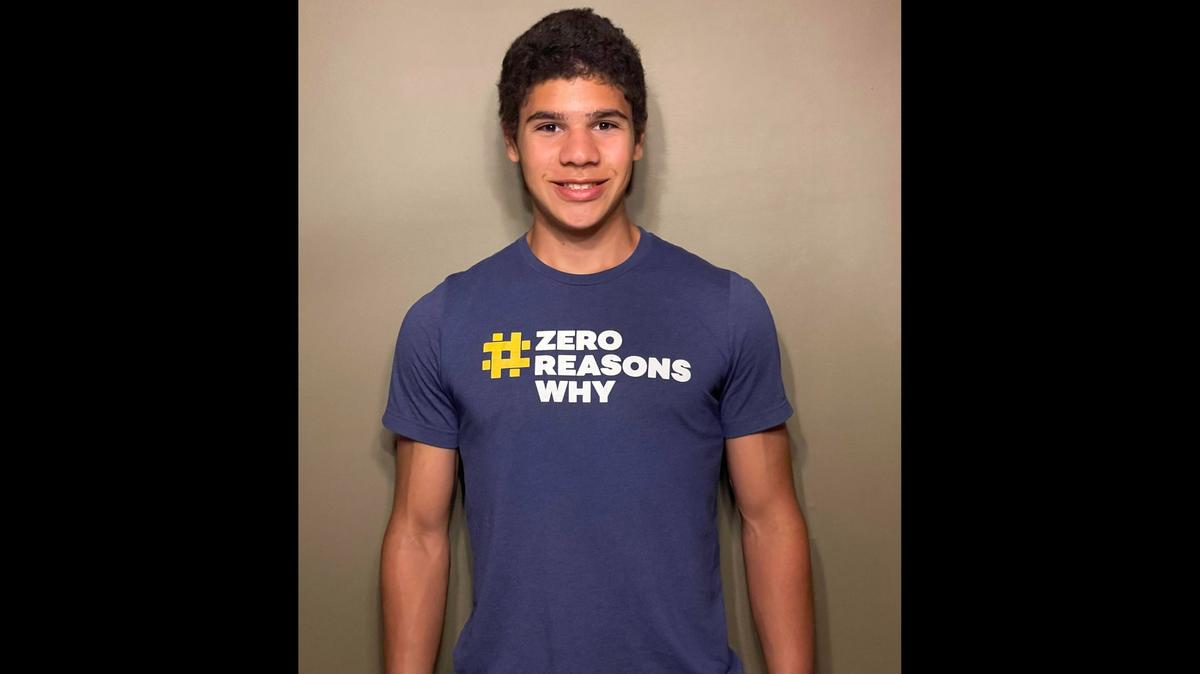
As the world shut down and classes moved online, Obdelmoity watched as his friends’ mental health suffered, then he watched as they struggled to ask for help. When he brought up mental health, they shied away from the subject, worried they’d come off as unappreciative of their privilege — afraid of being seen as “Debbie Downers.”
The stigma surrounding mental health is still too prevalent, Obdelmoity said, but with teens talking to their peers about mental health struggles, they can be more receptive and willing to listen.
“As long as you’re human, you can have a mental health struggle, and it’s completely normal to go through that — just as normal as it is to break a bone or get sick,” Obdelmoity said.
The dream is for Zero Reasons Why to set a standard mental health education program to be used in schools across the state. So far, they’ve launched a pilot program at Pleasant Ridge Middle School. Obdelmoity said it has three main focuses: destigmatization of mental health, education on addressing individual mental health and advice on how to help peers who are struggling mentally.
For a lot of youths, the fear of being a burden is at the crux of mental health struggles, said Hickman Mills Board of Education Director Cecil Wattree, who is also the founder and lead builder of the Kansas City Black Mental Health Initiative.
Since 1991, Wattree added, suicide has gone up 73% in Black children nationwide.
But that feeling of being a burden often varies based on the cultural and social-economic disposition of the child. For example, he said, a white upper-middle-class child in Johnson County might feel burdened by perfectionism, while a Black child from a lower-middle-class family in south Kansas City might find their burdens stem from simply existing.
They may be kids, but they are facing grown-up problems: parents out of work, housing insecurity, unpaid bills, bare cabinets and fridges. Fears of sickness. Violence and abuse. Some students no longer see a clear path beyond graduation. Race relations and tension aren’t just classroom discussions but lived experiences.
On top of all of that, they’re teenagers who can be lonely, unsure of who they are and where they fit in.
‘Monumental’ need in Missouri
A few weeks into the new school year, Shari Sevier, director of advocacy for the Missouri School Counselor Association, sent out a survey to school counselors across the state to gauge how they were doing this year compared to years prior.
“Busier.”
“There are a lot more mental health issues early on.”
“Teachers and students seem more stressed this year than last. I have made more hotlines (calls) in the first month than I did all last year.”
Sevier, who advocates for students and counselors, said today’s need for mental health support in schools is “monumental.”
The role of school counselors has transformed in recent years, said Marvalee Collins, coordinator of school counseling and practicum and internship at the University of Missouri-Kansas City. They now serve the entire student body, focusing on both prevention and intervention by pinpointing three domains of learning: academic, social-emotional and career.
“Having that mental health professional that is school-based is really critical,” she said. “The school counselor may be the only mental health professional a student ever worked with.”
Counselors hand students a metaphorical toolbox, then fill it with coping mechanisms and grounding activities. So when they face an obstacle — a pandemic, for example — students are better prepared to continue taking steps forward, rather than backward.
But having the staffing to fill that toolbox is challenging when better-paying counseling opportunities open up elsewhere and the demands of the school environment intensify.
For school counselors, who are with students virtually every day, it’s all about the relationship, said Sevier.
“It’s making sure that every student who walks in knows that they have an advocate at school: somebody who ... will listen to them, someone who will talk with them, someone who finds the good in them,” she said.
In September 2020, Platte County High School’s four counselors saw 600 students — double the number of the year before.
Geoff Heckman has been a counselor at Platte County High School for eight years. They’re still seeing hundreds of students each month, he said. Many days, it was too busy to tally every visit.
Pilot program in Kansas
Kansas schools are in “dire” need of more counselors, said Mallory Jacobs, past president of the Kansas School Counselor Association.
“We’re short on teachers. We’re short on substitutes. So it isn’t a surprise that we’re short on counselors and social workers in our schools,” said Sen. Cindy Holscher, an Overland Park Democrat.
Last week, a classmate of Holscher’s son at Olathe East died by suicide.
Kansas over the past decade has failed to adequately fund state schools. It won’t be until 2023 that the state is on solid footing funding-wise, she said.
“Right now we’re barely covering expenses as it is,” she said.
Kansas City, Kansas, School District is part of a statewide pilot program providing funding for more mental health liaisons in schools.
While counselors are often the first opportunity for intervention, social workers lend a hand when situations become more extreme. The district now has 58 dedicated solely to behavioral and mental health, said Angela Dunn, who serves as the behavioral health coordinator for the district.
Prior to the pilot program launching in 2018, the school district relied solely on counselors. The only social workers were designated for special education services.
Dunn noticed that hundreds of students were being referred to a mental health center in KCK by the school district, but only about 30% ever showed up for the services they needed.
She helped lead the push to bring social workers to schools, removing barriers that often prevented students from getting help, such as lack of transportation, lack of insurance and fears of undocumented students being tracked.
The KCK school district remains one of 56 taking part in the state’s expanding pilot program, along with Olathe and Bonner Springs school districts. Reed, with the state education department, is appealing to the Kansas Legislature to continue growing the program.
Some metro school districts used federal COVID-19 relief dollars to hire extra teachers, counselors and aides to work one-on-one with students. But in many cases, the positions are temporary, lasting only as long as the federal funding does.
“Having mental health in schools is just as important as having good teachers,” said Dunn. “We have to meet those needs, their safety needs, their basic needs, their health needs, including mental health, so that they can learn. If we have safe, well, educated kids, we’re going to have well educated and functioning adults in our community.”
The Star’s Sarah Ritter contributed to this report.
This story was originally published October 20, 2021 at 5:00 AM.