From Kansas City Chiefs to prison and mysterious death: What happened to Junior Siavii?
READ MORE
Life, mysterious death of Kansas City Chiefs’ Junior Siavii
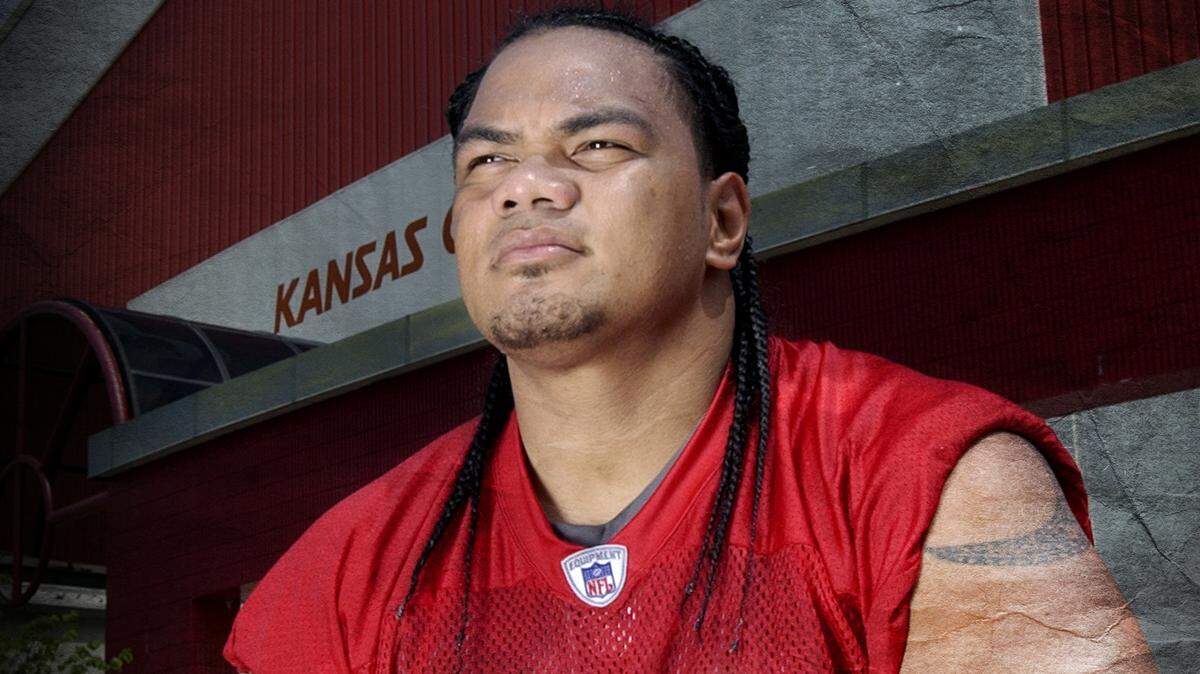
Junior Siavii came to Kansas City as a promising defensive tackle. His NFL career fizzled. He turned to drugs and crime. He was found unresponsive in a Leavenworth prison cell and pronounced dead at a local hospital in January. Did football play a role?
Expand All
Chiefs versus Broncos, Mile High Stadium. The 2004 season opener. First and 10 at the Denver 17, three minutes until halftime.
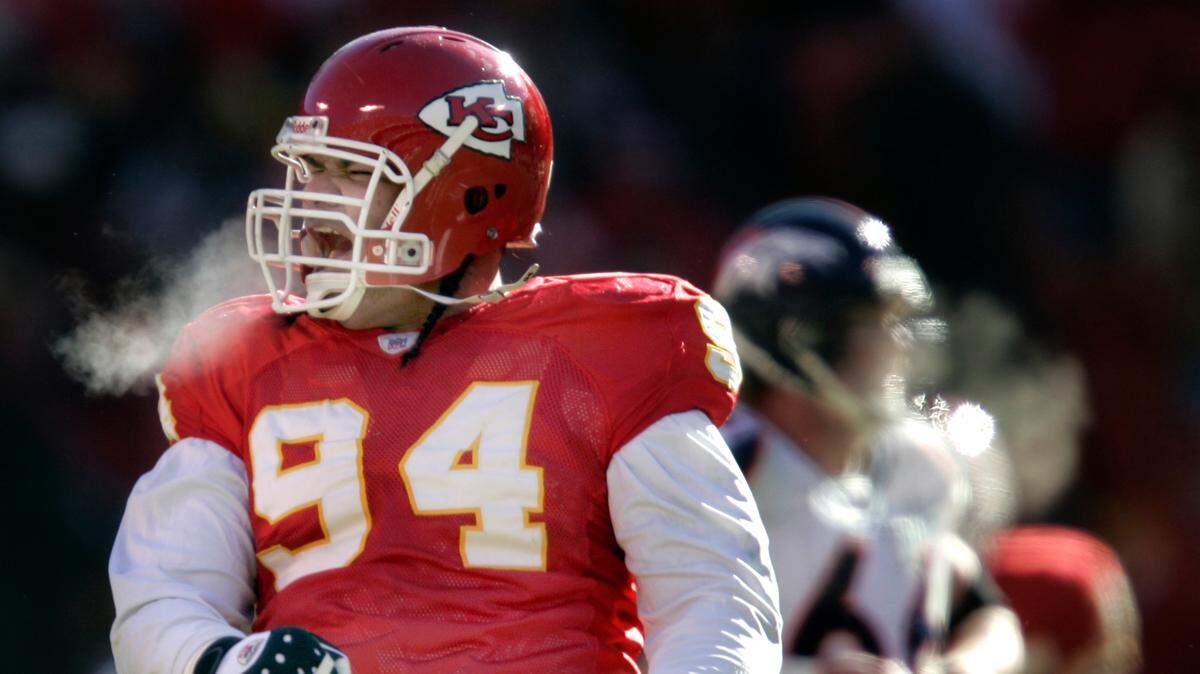
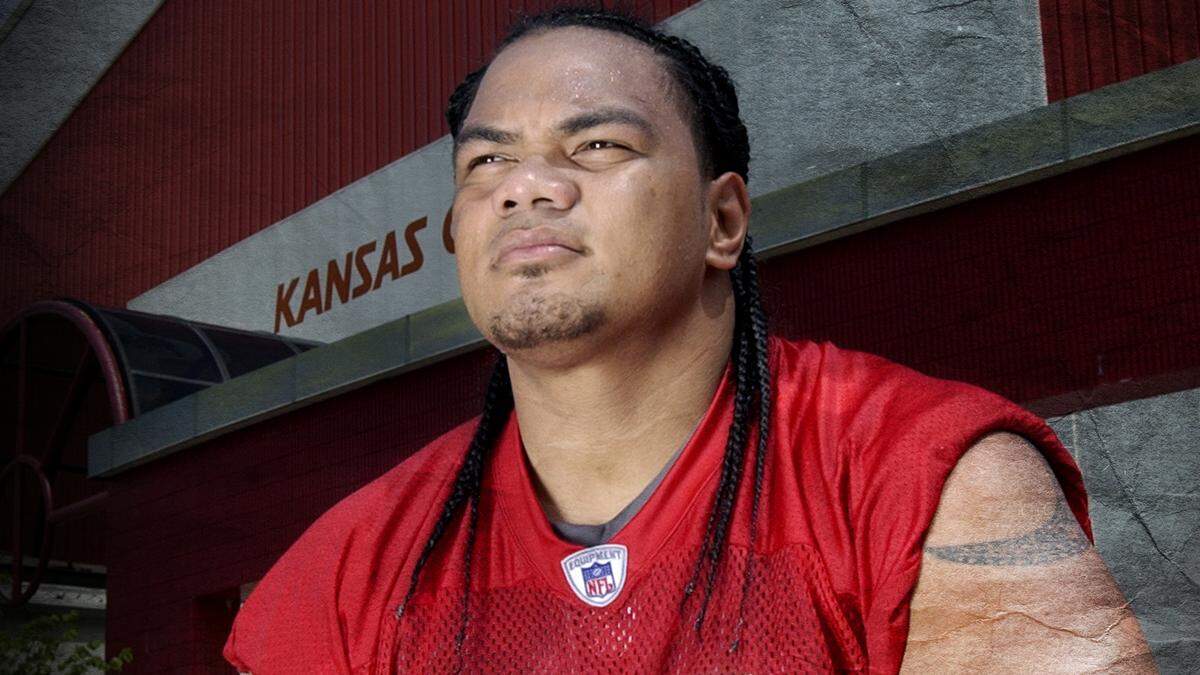
Denver quarterback Jake Plummer takes the snap, scans the field. Pushing past Denver right guard Dan Neil is a Chiefs rookie with a Samoan name nearly as intimidating as his 6-4, 335-pound frame: Saousoalii Poe Siavii Jr.
Siavii zeroes in on Plummer and drops him for a nine-yard loss, quieting the Colorado crowd.
“I remember that sack well,” former Chiefs head coach Dick Vermeil said recently. “His first game, right off the bat, and boom — man, it was a big-time play.”
Siavii’s future looked bright at that moment. And there were other flashes of promise in his first season with the Chiefs, hints that the team wasn’t wrong to spend the 36th pick of the 2004 National Football League draft on an unproven defensive tackle with a couple of red flags in his past.
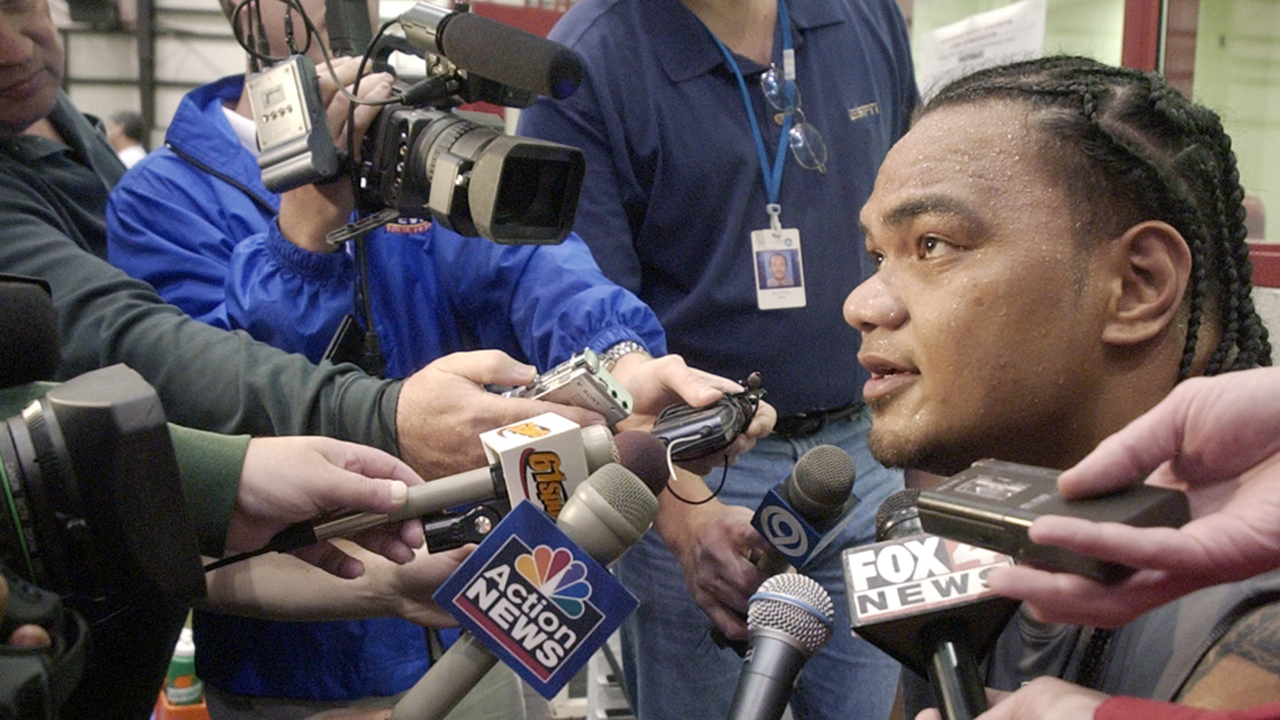
In the end, though, the Plummer play would be the sole sack of Siavii’s NFL career. He never started a game for the Chiefs and was cut from the team after only two seasons. He’d make it five seasons in the NFL, usually as a backup and often playing hurt with some injury or another: a high ankle sprain, a balky knee, a neck stinger.
Junior Siavii, to use the harsh shorthand of sports observers, was a bust. That’s the football version of Siavii’s story: a bad draft pick, a forgettable player, a trivia answer.
Skip ahead and you can tell it like a crime story: A guy who left the league and found himself hopelessly lost. Who knew there was something more to this life but couldn’t piece together what that might be. Who suffered not just physical but also mental agony. Who turned to drugs for pain, then more dangerous drugs, then more dangerous friends. Who got rolled up by the feds on gun and drug charges and shipped off to Leavenworth.
There’s a third version of the Junior Siavii story. It’s more of a rags-to-riches tale. A naive, refrigerator-sized Samoan claws his way to the mainland only to be taken in by a con man. He escapes. Graduates from a major U.S. university. Gets drafted and becomes a millionaire overnight. All for playing football. A kid destined to work in a Pago Pago cannery rewrites his story and achieves something like the American dream.
They’re all true stories, and they all have the same ending. It’s a mystery: Junior dies in the custody of the federal government Jan. 13 at the age of 43.
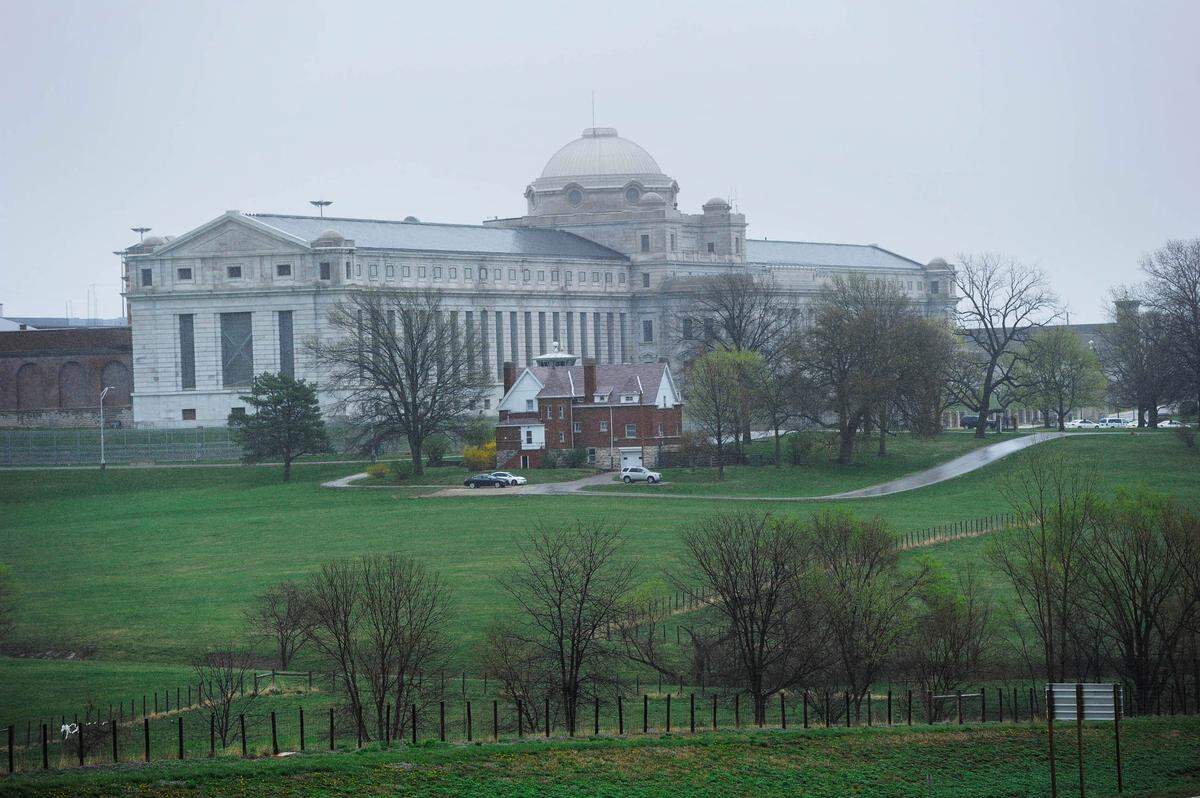
Two months after Siavii was found unresponsive in his cell at the U.S. Penitentiary at Leavenworth and pronounced dead at a local hospital, his loved ones and attorneys are still waiting on answers. The autopsy is done, but the Federal Bureau of Prisons won’t release the results, citing an open investigation into Siavii’s death.
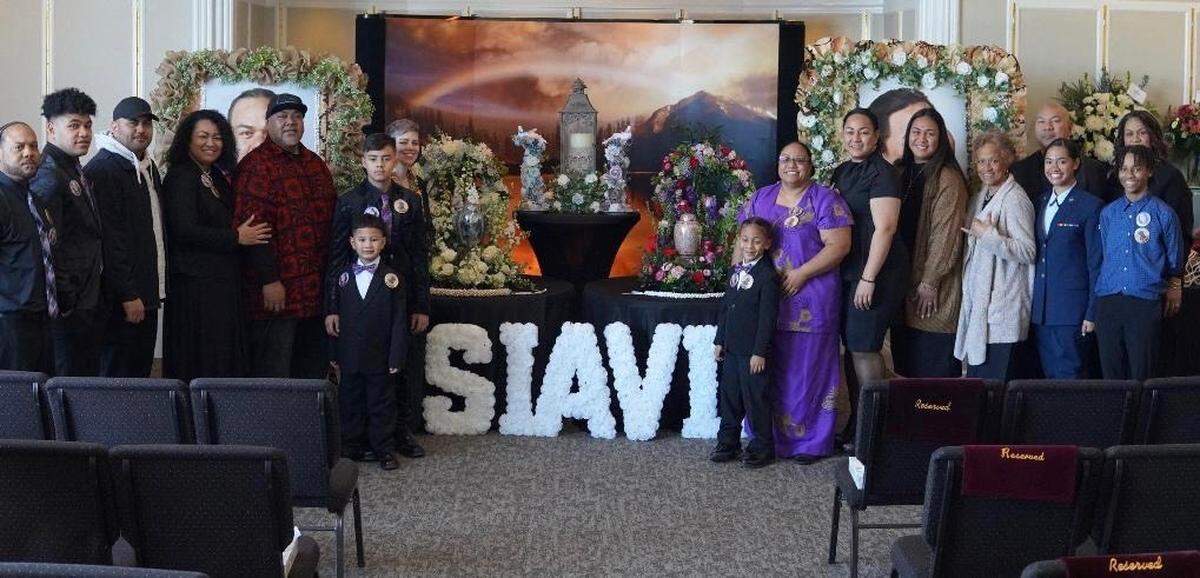
In early February, family and friends from across the country gathered at Carson-Speaks Chapel in Independence for a private service celebrating Siavii’s life. They sang old Samoan songs. An aunt from Hawaii brought fresh leis. But closure was elusive. They still had questions.
What happened to Junior in his cell that day? What led him down the path to prison in the first place? And where did football fit into all of it? The sport that had bestowed such wealth and blessings upon Junior’s life — did that same sport take his life?
From Samoa to the States
One of the first things Junior bought after signing with the Chiefs in 2004 was a big house in Lakewood, the upscale Lee’s Summit community. His family still owns it. He played for teams in other cities after the Chiefs, but the Lakewood house was always home.
“It’s the gathering place for the entire family,” his wife, Danielle Siavii, said in mid-February, sliding a box of tissues across a large sofa to Junior’s younger sister, Rezetta Siavii. “The place everyone can call home.”
Most of the seven Siavii siblings eventually landed in the Kansas City area and stayed, owing to the essentially random fact that it was the Chiefs that drafted him. Rezetta came to the mainland early in Junior’s playing career to help him navigate a world he often seemed unprepared for; she lived with him for many years at the Lakewood house and still resides there. Two other sisters, Fiamuau and Wendy, had stopped by that mid-February day, as had Sao Siavii, a nephew who plays football at Lee’s Summit North High School, and two other nephews, 4 and 5. Sao corralled the kids down a hallway, where their playful shrieks occasionally rang out from a bedroom.
Six weeks after Junior’s death, the home bore the markings of a shrine. Tragically, Junior’s sister Kathleen died of complications from COVID-19 just three days before his death, cutting the seven-sibling family down to five in the space of one cruel week. Two large portraits of Junior and Kathleen hung from the second-floor balcony, their faces framed by a square bouquet of flowers.
Collages assembled for the memorial service told a story in pictures: multiple photos of Junior with his son, Michael, who was born in 2010; a college-aged Junior posing with three other boulder-sized teammates; Junior as an awkward, overgrown teen with awkward, overgrown hair; and a golden-toned photograph of Junior with brothers and sisters in Pago Pago in the 1980s.
They grew up in the American Samoa capital; their mother was a nurse, their father a biomedical engineer.
“It was a village,” Fiamaua said. “You borrow sugar from the neighbor for cake. You know everybody’s business.”
“Our cousins lived across the street,” Rezetta added, noting that many of those family and friends had come to the mainland for the memorial service.
Junior was born in 1978. He was always big, even by Samoan standards.
“He was an intimidating figure even as a young man,” Rezetta said. “Intimidating to those who didn’t know him, but lovable to those who did. I think because of his size he was often treated as an adult even though he was still a kid.”
He played cricket, rugby. He rowed competitively. He was most drawn to basketball. “That was his real love,” Danielle said. But his hulking frame was unmistakably suited to a line of scrimmage. His father encouraged him to try football, and he excelled on Tafuna High School’s team. After graduation, options were limited for a kid who came from modest means. Find a job at the tuna cannery. Work construction. Maybe become a police officer.
“Everybody on this island knew how great of a football player he was,” Rezetta said. “But nobody had connections in the football world beyond the island.”
Then a friend from church — like many Samoans, Junior was brought up Mormon, in the Church of Jesus Christ of Latter-day Saints — put Junior’s mother in touch with a man who claimed to have connections to the University of Utah football team. If Junior came out to Salt Lake City, he could hook him up with some coaches, maybe a scholarship. A chance to play college ball? His mother booked him a flight.
But Utah wasn’t as advertised. The man he hoped would be his ticket to a better life instead instructed Junior to spend his days in a warehouse, sorting and folding T-shirts. There was no mention of football. At night he slept in a storage room in the man’s basement. He wasn’t even paid. Two months passed like this: Junior, 18 years old, alone in a foreign land, wondering when practice was going to start. Gradually, it dawned on him that the opportunity he thought he’d been given was just a scam.
“He finally just ran away,” Danielle said. “He knew a few other people in Utah who were also from back home and he stayed with them for a while.”
Junior didn’t want to go back to Pago Pago. He and a few Samoan friends began playing football in a semi-pro rec league: no pay, just for fun and to stay in shape. Inevitably, his opponents, some of whom had played college football, took notice of the freakishly powerful young Samoan on the other side of the ball. Before long a coach stopped by to see Junior up close. He said he could arrange a tryout for him at Dixie State College, in St. George, Utah. Junior drove three hours for a week of practices, exams, and physicals. When it was all over, he had a scholarship and a spot on the team.
And then he blew it.
After the season, Junior got caught drinking at a dance, a no-no at the heavily Mormon school. A little while later, he was involved in a spat with a campus security guard who’d accused his friend of stealing a CD. He was expelled.
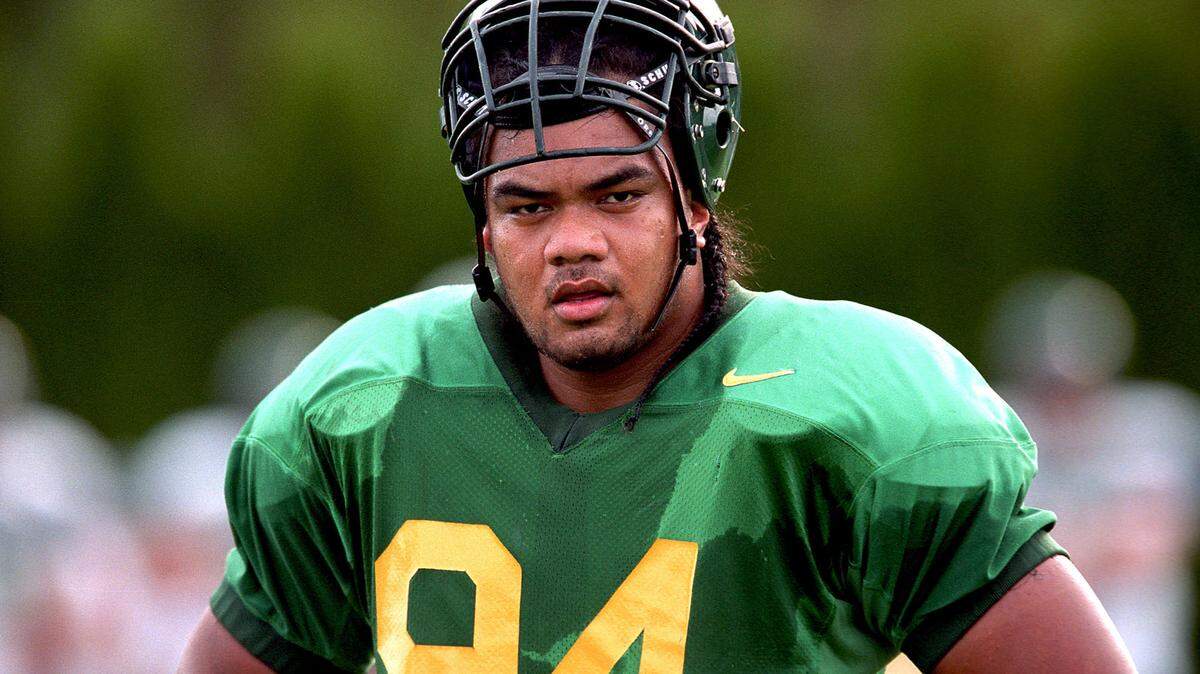
But at least now some college coaches had seen the defensive tackle play. Butte College, a junior college in Oroville, California, was willing to overlook his off-the-field troubles and let him play the following season. After a year at Butte, Junior had offers from several large schools out west. He chose the University of Oregon.
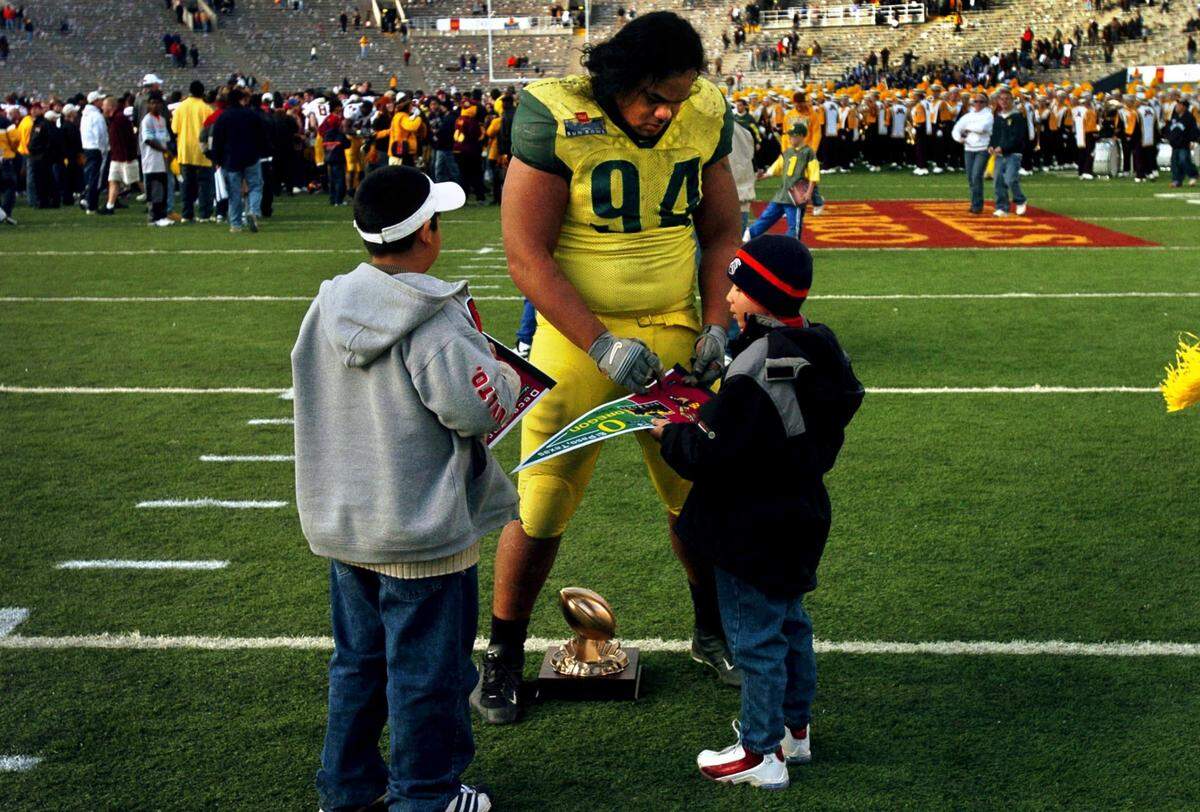
For two years, he’d been grubbing out a precarious, hand-to-mouth existence in the U.S. In Eugene, as a Duck, he could finally breathe. “When he first came up here,” his Oregon teammate Matt Toeaina told The Star in 2004, “he was more interested in the stipend checks.”
He didn’t dazzle right away. The first season, his junior year, he struggled to keep up with his teammates and opponents, several of them elite athletes destined for the pros. He often thought of quitting. Motivated by his defensive line coach, Steve Greatwood, he spent the offseason before his senior year in the gym and studying tape. When he arrived in August for practices, he surprised everybody. He’d go on to finish the season with 43 tackles and two sacks, a key cog in a powerful defensive line that also included Igor Olshansky, who would go on to become the NFL’s first Soviet-born player, and Devan Long, currently a star on the CBS comedy “Ghosts.”
Pro scouts had been dipping in and out of practices all season. Some were impressed by Junior’s play; all were impressed by his size. He was simply too big not to be drafted.
And then came one final almost-blew-it moment. Out with Olshansky at a bar near campus in Oregon, Junior was arrested for allegedly pushing a woman who poured a drink on him. When the police came — a half dozen officers — he pulled away from them repeatedly, resisting arrest. Olshansky begged him to calm down. Finally, Junior relented. They crammed him into a squad car and sent it down to the station.
The incident, which took place after the 2003 season and just a few short months before the 2004 NFL draft, threatened to derail his professional dreams. Before, he was seen as a raw talent. Now he was a raw talent with personal issues.
In the end, though, Junior faced few repercussions. The woman at the bar declined to press charges, and the NFL teams he met with prior to the draft seemed satisfied with his explanation of the events. Athletes and celebrities, after all, are often targeted by troublemakers in bars.
When April rolled around, Junior watched the draft at Greatwood’s house along with several other players. Fia and Rezetta were there too.
“The whole time, he was wiping sweat off his nose, which he notoriously does when he’s nervous or eating,” Rezetta recalled.
Olshansky was picked 35th; he was headed off to the San Diego Chargers. Many experts projected that Junior would go later, in the third round, maybe even the fourth.
“We didn’t care where he went,” Rezetta said. “And I don’t think he really did either. It was just such a blessing to be in that situation. It was an achievement on its own knowing that you were going to be drafted to play professionally.”
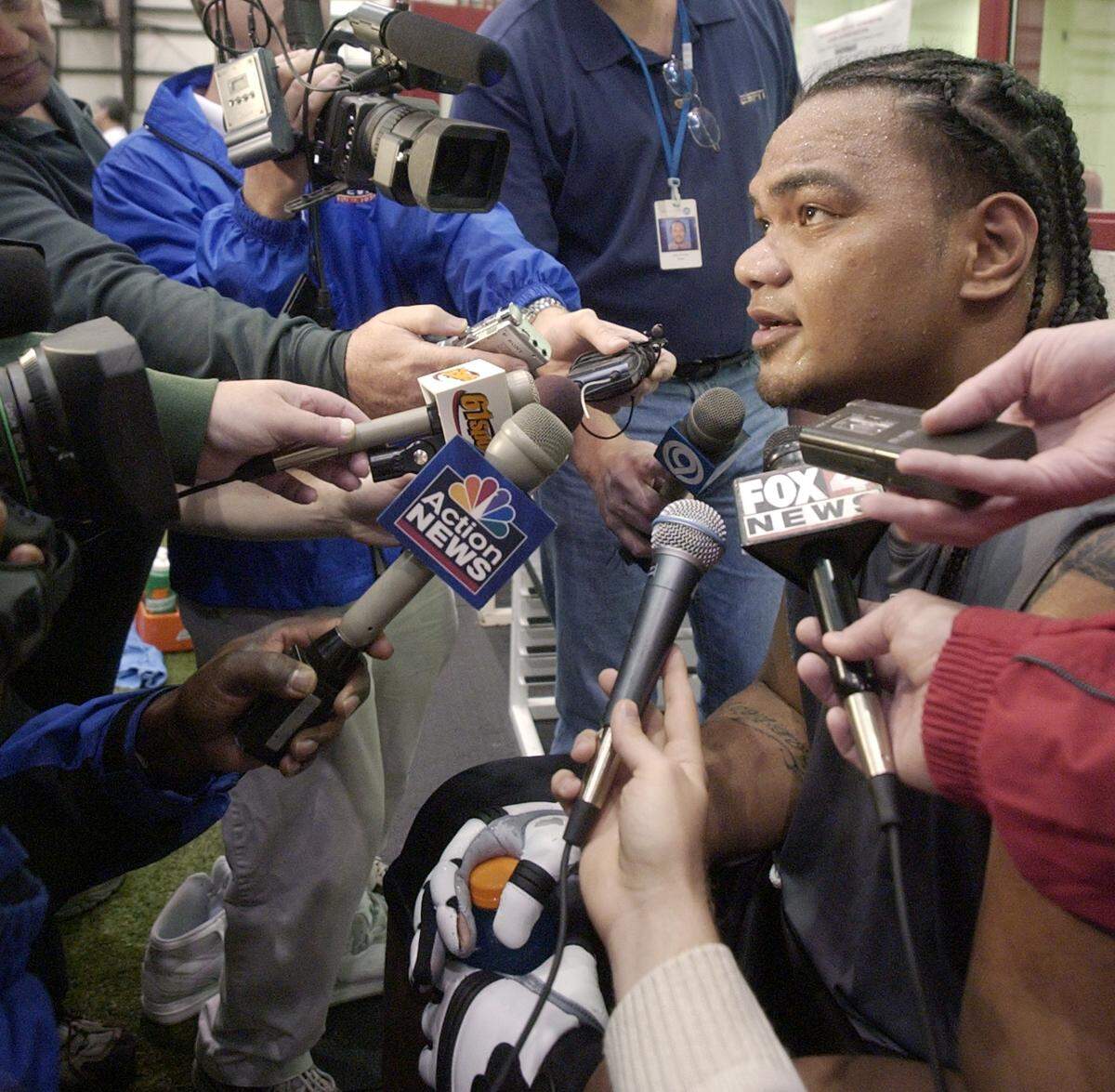
But Junior didn’t have to wait long after his teammate was chosen. To the surprise of fans and pundits, the Chiefs selected Junior with the 36th pick of the 2004 NFL draft. He was headed to Kansas City.
Signing with the Chiefs
Today, it’s now common to watch games on Sunday and see long, bushy hair covering up Polynesian names on the backs of NFL jerseys. But in the 1980s, just 23 Samoan players debuted in the NFL; 28 entered the league in the 1990s.
The next decade, Junior’s decade, 66 new Samoans made it to the pros.
“That was when you started to see a Samoan or a Tongan on pretty much every team,” said Dan Saleaumua, who arrived in the NFL in 1987 and played for the Chiefs from 1989 to 1997.
Saleaumua, a gregarious Samoan American, was still living in the area for Junior’s first season in 2004. But though they had common heritage and both played defensive tackle for the Chiefs, the two never really connected. Saleaumua remembers meeting Junior only a few times, surface-level interactions. But he said he recognized in him something he saw in many Samoan players.
“These kids that come off the islands, they go to college, they get drafted, a lot of them are being told, ‘You gotta ride this thing as long as you can, support your family, don’t waste this,’” Saleamua said. “So the door is open. But how long you stay inside is up to you. A lot of guys forget that you still gotta do the work. The NFL is hard. So to me it’s always, You got the chance: What did you do with it?”
Lionel Dalton joined the Chiefs as a defensive tackle the same year Junior did. Dalton had been in the league six years and served as a kind of mentor to him, he said.
“You have some guys in the league, they want to leave a legacy,” Dalton said. “Then you have other guys, often they’re inner-city guys, they’re playing for money. They’re trying to escape the places they came from, trying to get comfortable just to live. Junior was like that, I think. The problem is, sometimes you get comfortable and your play goes down. That’s a hard thing for some players.”
The reasoning behind Siavii’s early selection in 2004 was that the Chiefs badly needed defensive help, particularly against the run. The season before, the team had won its first nine games, finishing 13-3 in the regular season, led by an explosive offense that included Priest Holmes, Trent Green, Tony Gonzalez and Dante Hall.
But the defense was pitiful, ranked 30th in a league of 32 teams against the run, giving up an average of 146 yards per game. Thirty-one points and home field advantage in the AFC Divisional Round game wasn’t enough to keep the Peyton Manning-led Indianapolis Colts from dismantling the Chiefs defense and bouncing them out of the playoffs. Greg Robinson, the Chiefs’ defensive coordinator, resigned the following week.
Siavii had size, potential and some senior-year stats that suggested he could help the Chiefs plug some of its holes. But there was always the chance his Oregon talent was inflated, surrounded as he was by other NFL-bound teammates on the line. Maybe the whole was greater than the sum of its parts.
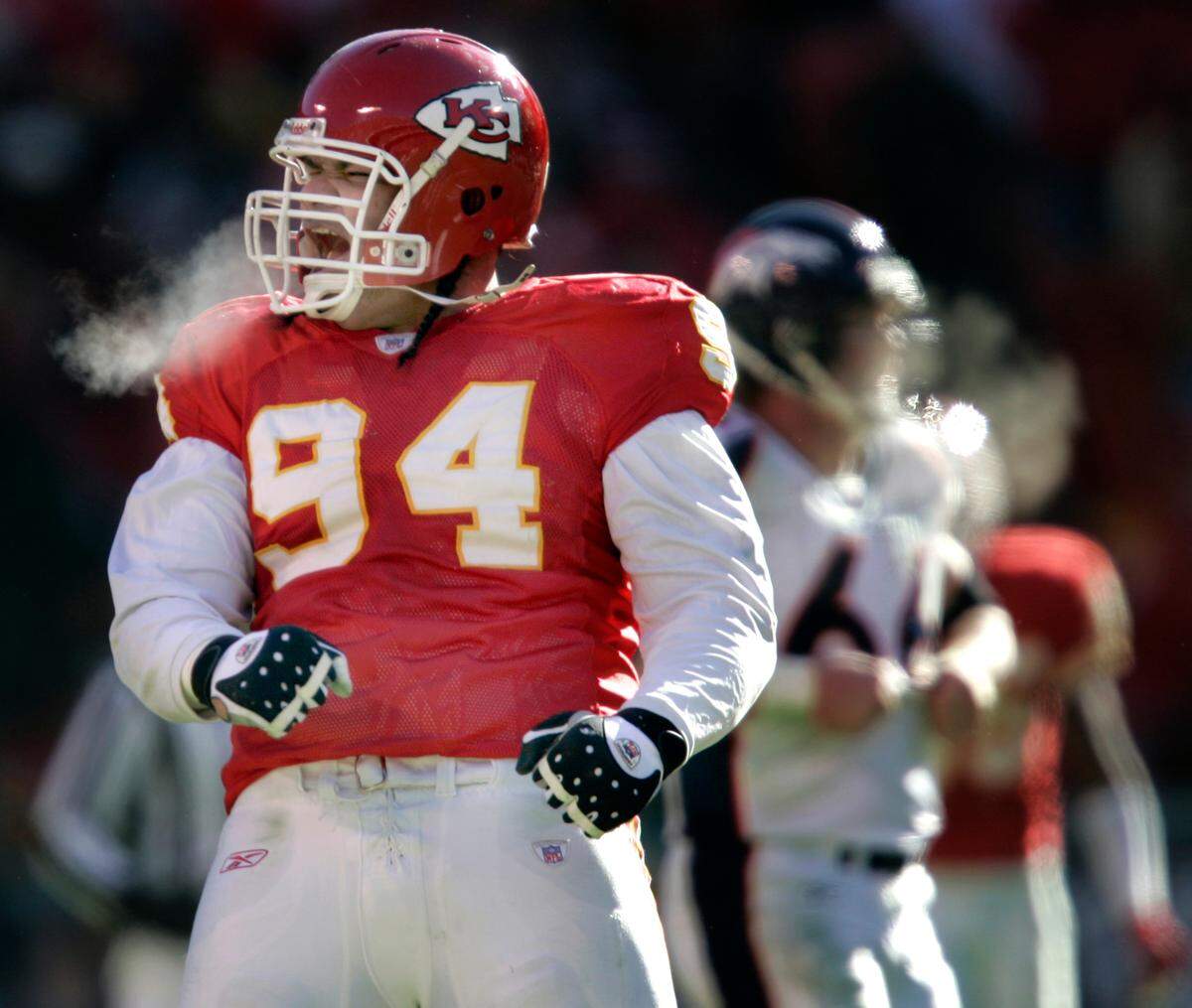
It was a risky pick, and Vermeil and Chiefs general manager Carl Peterson took heat for it. Even 20 years later, there was a detectable prickliness in Vermeil’s voice when asked about drafting Siavii.
“You’re doing a young man a disservice if you draft him high and he can’t play as well as you thought he could,” Vermeil said. “It’s a huge responsibility that I’ve always taken seriously. It affects these men emotionally for the rest of their lives.”
Still, he said, “Carl and I had flown out to Eugene to work out with Junior and some other Oregon players, including Samie Parker, the wide receiver we also drafted that year. I liked Junior because of his size and grace and potential to grow. And his coaches were telling us, basically, this guy’s best football is ahead of him. I’d also had good luck with Samoan athletes over the years, at UCLA and with the (Philadelphia) Eagles. So when the time came, we went with him.”
Bob Karmelowicz, a Chiefs assistant from 1997 to 2005 who died in 2010, would say he sensed the team was making a mistake by using such a high draft pick on Junior.
“Dick fell in love with the kid and the recommendation,” Karmelowicz said in 2007. “He had had some serious drinking issues (in college) that we just gave him a passing grade on. When I ran my reports on him, there was always a question of maturity and toughness. … But we ended up taking someone’s word that he was tough.”
Beyond the expectations loaded onto an early pick, there’s also the cash. Junior signed a six-year deal with the Chiefs: $4.2 million with a $2.1 million signing bonus. He bought the house in Lakewood, a Cadillac Escalade that he blinged out with rims and a window-rattling stereo system. “Clothes and jewelry, lots of jewelry,” Rezetta recalled with a laugh. “He hired a chef.”
She continued, “There was a guy at the Chiefs who told all the new players, you know, ‘Don’t give your money to family, you have to invest in yourself, etc.’ He didn’t listen to any of that. He sent money to my parents, they renovated our house back home. Anybody in the family who asked, he’d give them money. We didn’t grow up rich, you know? So he helped a lot of people in our immediate family.”
It eventually came time to earn that money. At training camp, he was winded early, just as he had been in those early Oregon practices. But he cut some weight and was down 10 pounds by the time he sacked Plummer in the season opener.
In October, he suffered a high ankle sprain after a dirty block by a Falcons guard. He missed four games, clocking just 12 tackles on the year, and never starting a game. Adding sting to the disappointing season was a fellow rookie on the D-line tearing it up at defensive end: Jared Allen, drafted two rounds after Junior, started in 10 games and racked up nine sacks.
“Looks like a draft failure,” Star columnist Jason Whitlock wrote in his annual end-of-season grading of the Chiefs, handing Junior an F.
Lynn Stiles, the Chiefs’ director of player personnel, seemed to be talking directly to Junior when he said, in the offseason, “We’ve got some guys who haven’t lived up to their physical attributes and have to play better. I’m not going to say these guys need to take their diapers off, but they need to jump in there and help us out. They need to look in the mirror very hard and ask themselves how long they want to be in this environment.”
‘A different person when he drank’
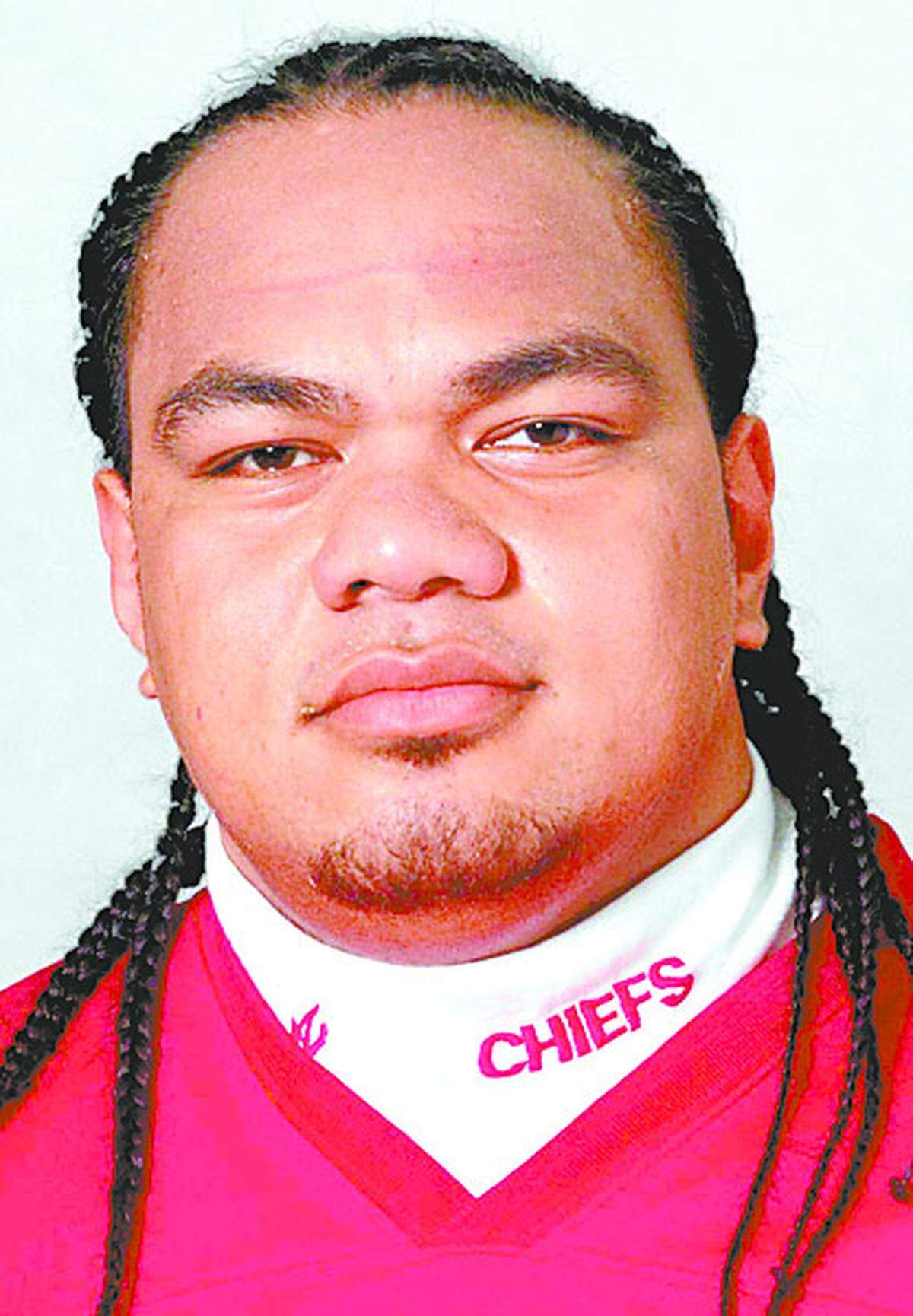
The concept of a “spit hood” was no doubt a foreign one to most Chiefs fans until 2005, when an unfortunate incident in Minneapolis introduced it into the vocabulary of many a local sports observer.
It had already been a bad training camp for Junior. He was regularly missing practices in River Falls, Wisconsin, due to tendinitis in both knees. On a Saturday night in August, he headed to Minneapolis, about a 45-minute drive, for a night on the town.
At around 1 in the morning, police were summoned to a nightclub called the Infinity Room, located in a luxury downtown hotel. Junior and Chiefs safety Greg Wesley had been refused entry, and Junior allegedly began screaming obscenities and threats at the security guards. He picked up a metal stanchion that supported the security ropes and threw it at a guard. Then he punched that same security guard.
When the police arrived and handcuffed Junior, Wesley tried to block the exit, charging at the officers. He was maced and arrested.
Junior had spat at the security guards, and now he drunkenly spat at the officers too, refusing to get into the squad car. They draped over his head a spit hood, a barbaric-looking police restraint tool that is exactly what it sounds like.
“He was one of those guys who turned into a different person when he drank,” Dalton recalled. “He didn’t always drink, but when he did he couldn’t handle it. He just turned into a grizzly bear. He would just be out of it.”
In the end, Junior pleaded guilty to a misdemeanor and was ordered to perform 80 hours of community service. But the tsunami of news coverage inflicted permanent damage to his professional reputation.
And he wasn’t lighting the field on fire, either. Junior would manage just 14 tackles and one fumble recovery in an unremarkable second year with the Chiefs.
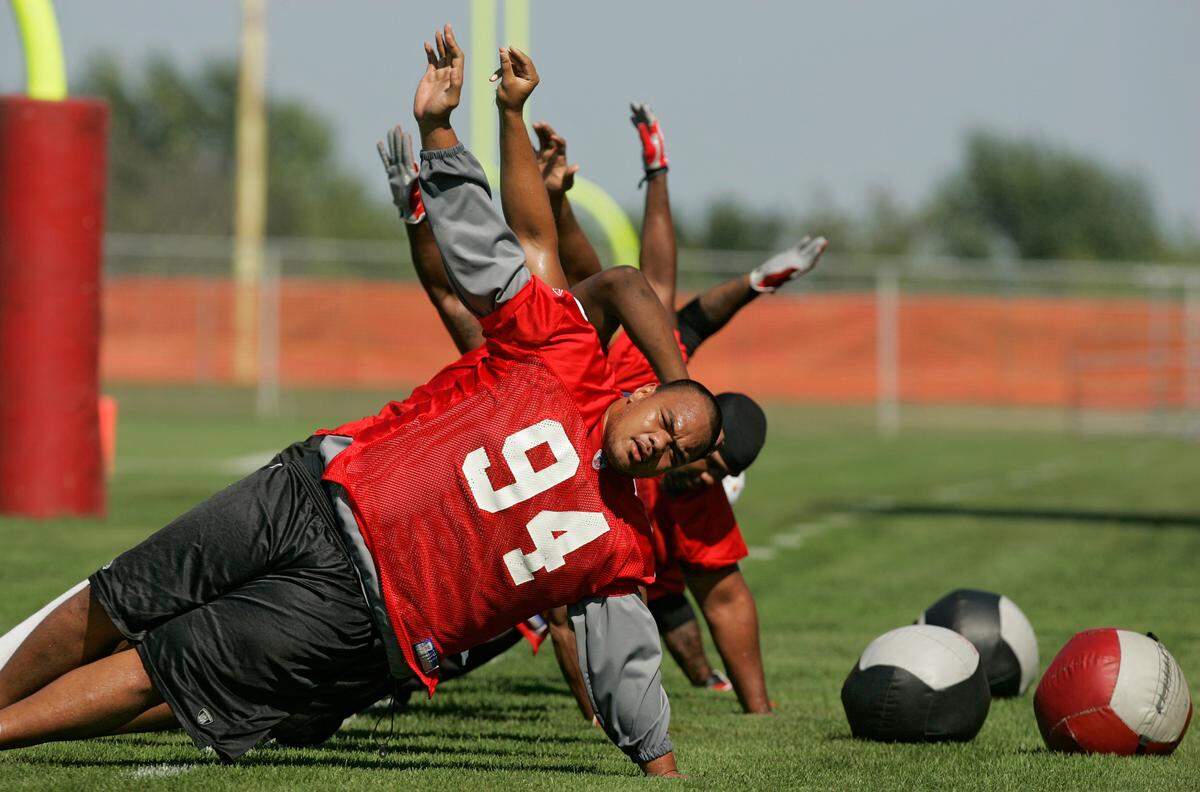
When it was time to head up to River Falls the next year, the writing was on the wall: Junior was likely to be cut from the team.
Peterson was blunt, telling The Star in 2006, “Every year you draft somebody, it’s a risk. He just hasn’t been able to put it together. You feel bad for a guy like that, but you’ve got to make decisions and move on. We haven’t made any decisions yet, but they’re coming.”
Junior projected determination and remorse at camp. He shaved his long, flowing locks for the first time in nine years, as if to signal he knew it was time to get serious. He tried to explain himself to the press.
“When everything’s going good, something bad always happens,” he told The Star. “The knee, the incident that happened in Minnesota. … I’m not using it as an excuse, but I’ve just got to change it all. I’ve got to make better judgments.”
But good intentions can only get you so far, and they don’t get you far at all in the National Football League. Junior was off the Chiefs roster by the time the season started, never to return.
“It was sad,” Vermeil said. “I liked him. I really did. And his teammates liked him. He was easy to like. But he went in the wrong direction. Rather than developing as a player, he got so he couldn’t handle the disappointments. He had enough to get by but not enough to withstand pressures from the outside world.”
Pain, anxiety, depression
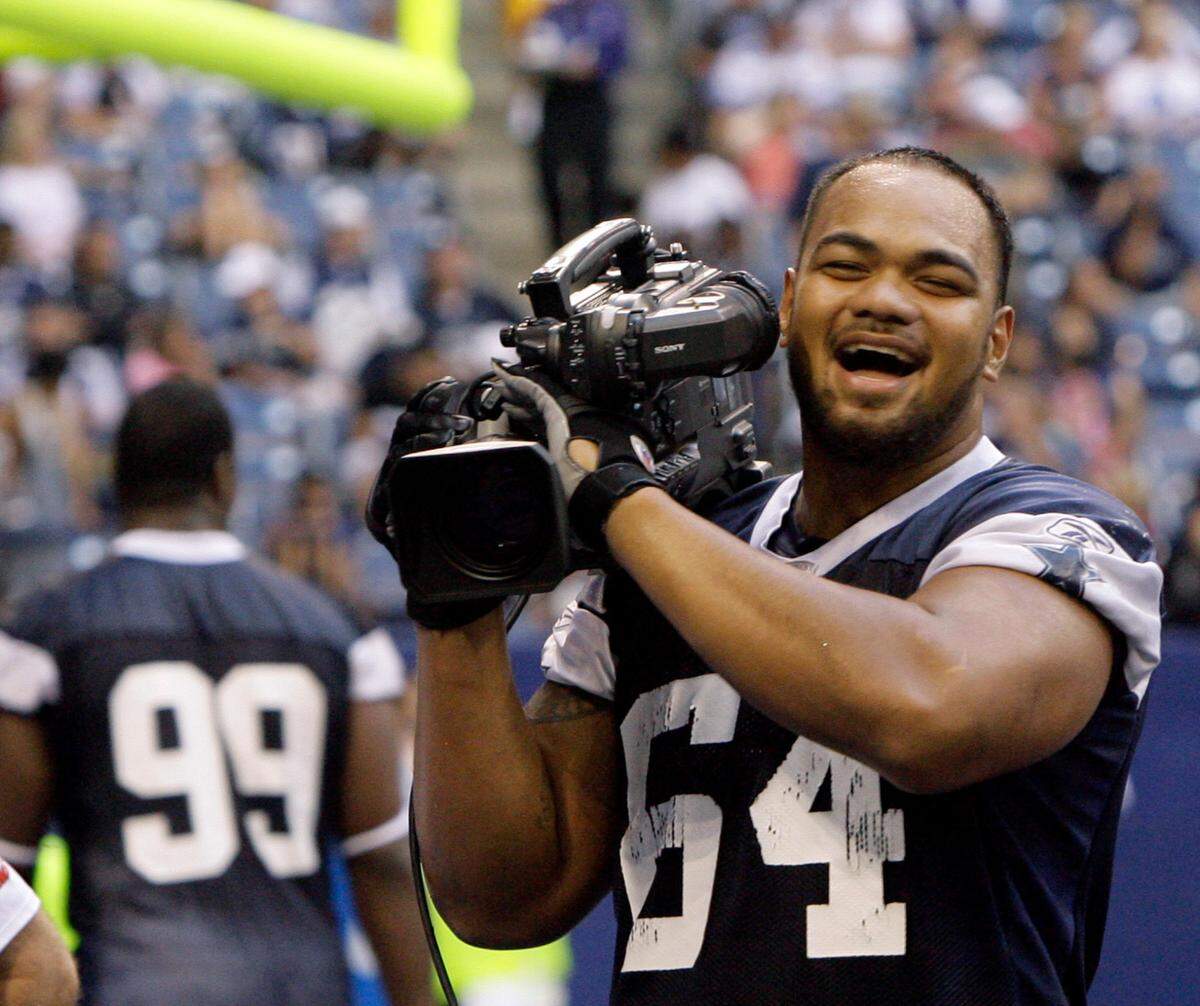
Junior did play again, eventually. After sitting out the 2006, 2007 and 2008 seasons, he played all 16 games for the Dallas Cowboys in 2009, registering 11 tackles. He was cut the next year.
The Seattle Seahawks picked him up off waivers for the 2010 season, and it’s there that he played his best season in the NFL, with 30 tackles in 14 games, including six starts. In the second-to-last game of the year, Junior bruised his spinal cord. The neck injury was a close call.
“If he had tweaked it in any tiny way he could have been paralyzed,” Danielle said. “That’s why his career ended.”
That same year, Junior’s son, Michael, was born. Junior tried to settle into a post-football life, shuttling back and forth from Baltimore, where Michael’s mother lives. (Danielle and Junior married in 2015.)
“They had several good years of father-son soccer in the backyard and basketball in the driveway,” Danielle said. “But as the years progressed there was less of that. We would play and he would have to sit and watch because his knees hurt, his neck hurt, his feet hurt.”
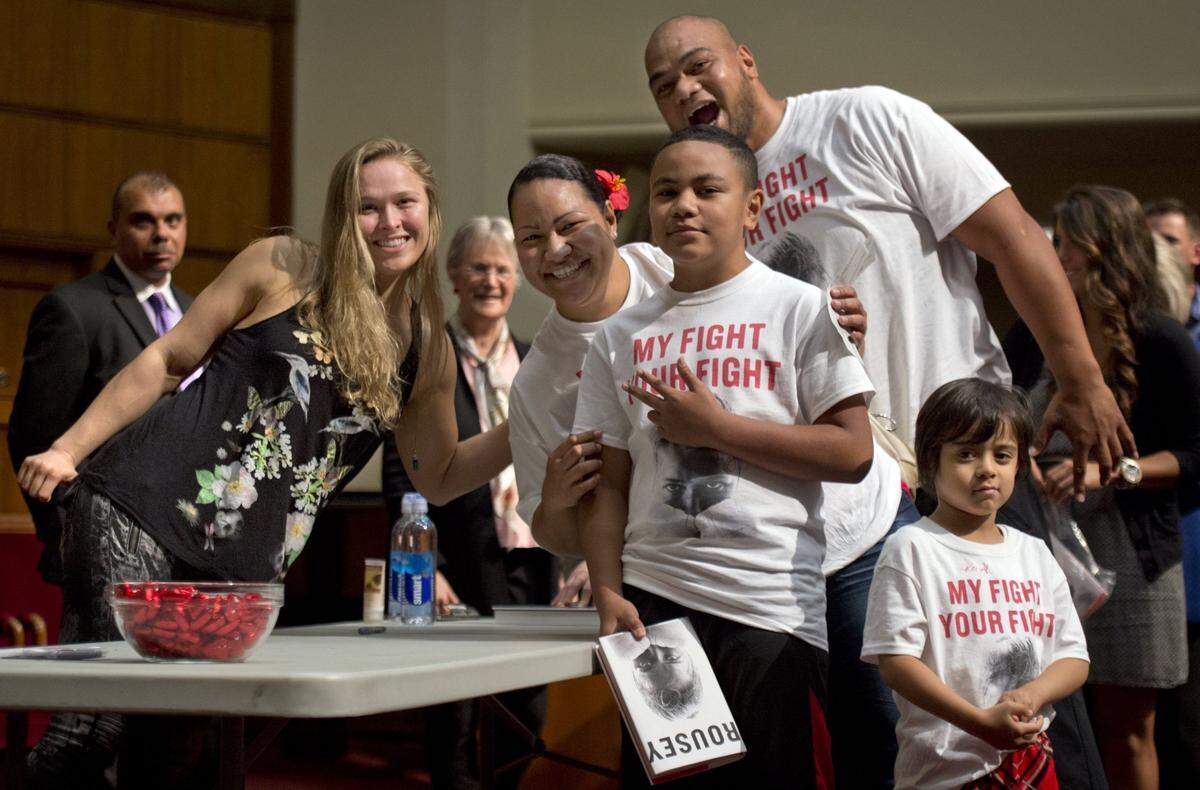
Junior sometimes golfed with Eric Hollins, a friend he’d met around 2007 at a 24 Hour Fitness in Independence.
“But it was hard for him to walk at times,” Hollins said. “He wouldn’t complain, he’d just say, after the front nine, you know, ‘E, can we take a break? My knees are killing me.’ I started to realize that his body had really been banged up since I met him years before at the gym. He’d say, ‘I have the body of a 60-year-old man, E.’”
The pain led to pain medications. Other medications too, for anxiety and depression. He’d never suffered from those twin beasts before but now they seemed to dog him daily. Doctor’s appointments began to fill his days.
“It was a lot of trying to figure out who to go to, who was covered, what specialists were needed,” Danielle said. “There were various different ways they were trying to treat or deal with the pain. Some would work for a little while and then they wouldn’t anymore. Some you had to wait a month to see if they worked and in the meantime he’s just struggling.”
It was around this time that the NFL’s concussion scandals began to break. A 2014 study of 79 dead former NFL players’ brains found that 76 of them contained evidence of chronic traumatic encephalopathy, or CTE, which can only be definitively diagnosed after death. Danielle and Junior took a trip to a clinic at Tulane University that specialized in diagnosing former NFL players.
“They looked at his whole body, and they had psychiatrists and psychologists there who were really trying to figure out what was going on with him,” Danielle said. “They helped us find a doctor here (in Kansas City) that could continue to assist us. But I think that was the beginning of us starting to understand what CTE was. I remember Junior saying, you know, ‘You think I could have that?’”
He didn’t like to talk much about football. Entire NFL seasons would pass without Junior having watched a game. He would attend his nephew Sao’s football games to root him on, share his knowledge of the game. But as the migraines became a daily torment and his awareness of the effects of CTE became clearer, he soured even on youth matches with his loved ones.
“There was a whole year when every Saturday it was like, ‘Are you coming?’ And he would say no, that he was ‘on strike,’” Rezetta said.
“He loved that the game gave him a connection to Sao,” Danielle said, pulling up a photo of Junior in a tracksuit, leaning over a sideline barrier talking to Sao during a game. “Sao mimicked him, idolized him, wanted to be so much like him. But it became complicated.”
By 2016, Junior barely got out of bed many days. When he did, he tried to convey to the family that he was fine.
“I kept telling him that nobody’s telling you you have to be OK anymore,” Danielle said. “But he still had this mindset of, ‘I can’t show weakness, I can’t show that I’m hurting.’ He would try to manage everything internally.”
Hollins said Junior occasionally confided in him during a round of golf or out in the driveway afterward.
“He wanted to do the next thing, but he didn’t know what it was,” Hollins said. “I said, ‘You’ve got money. You could try anything in the world. Or you could just be a volunteer coach. You just gotta try some things.’ But he felt nothing fit for him.”
One day after golf, Junior grew silent in the clubhouse.
“He said, ‘I don’t know how long I’m gonna be here, E, and I just want you to know that I love you, that you’ve been a true friend, I appreciate you,’” Hollins said. “I said, ‘What in God’s name are you talking about?’ This is a little while before the trouble started, probably 2017. To me it was more like, ‘Oh, he had a few drinks, he’s probably just feeling emotional or something.’ And we saw each other the next week and nothing else was said. He was his usual self.
“Now I look back and think, that was a sign for me to ask more questions. That was a cry for help. But I didn’t see it. I just thought at the time, everybody probably feels a little lost after playing.”
Drugs, guns and arrests
He’d leave for days at a time.
This started around 2018. A man his loved ones knew to be an utter homebody would vanish for 48 hours, 72 hours, returning with vague explanations of hanging out with friends.
“We didn’t know who these friends were, or where he was,” Rezetta said. “And when he came home he was so tired, he’d just sleep for a day. Two days. And then pretty soon he’d go right back out, wherever he came from. It was devastating.”
Junior was on and off his meds: on while at home, off while on his mysterious excursions. “When you’re not taking these anti-anxiety and antidepressants regularly, it makes a person erratic,” Danielle said. “And we saw a lot of that.”
One day, the sisters recalled, Junior returned to the Lakewood house with a stranger — a pregnant homeless woman he’d met. “He wanted to bring her inside,” Fia said. “He said she needed a shower.”
Danielle and Junior’s attorney, Lisa Nouri, both recall Junior mentioning going with his new friends to a barn somewhere under vaguely religious pretenses.
“I believe that’s where he tried meth for the first time,” Nouri said. “They were speaking the word of God, and I think since he was raised LDS, maybe it resonated with him somehow. But really, it’s just a bunch of people in a barn doing dope.”
Rezetta said she believed his pain medications stopped working at some point. “Whatever dosage he was on wasn’t doing the job,” she said.
“I think whenever that was, is when he started seeking out other things that would make him feel — that would numb the pain,” Danielle said.
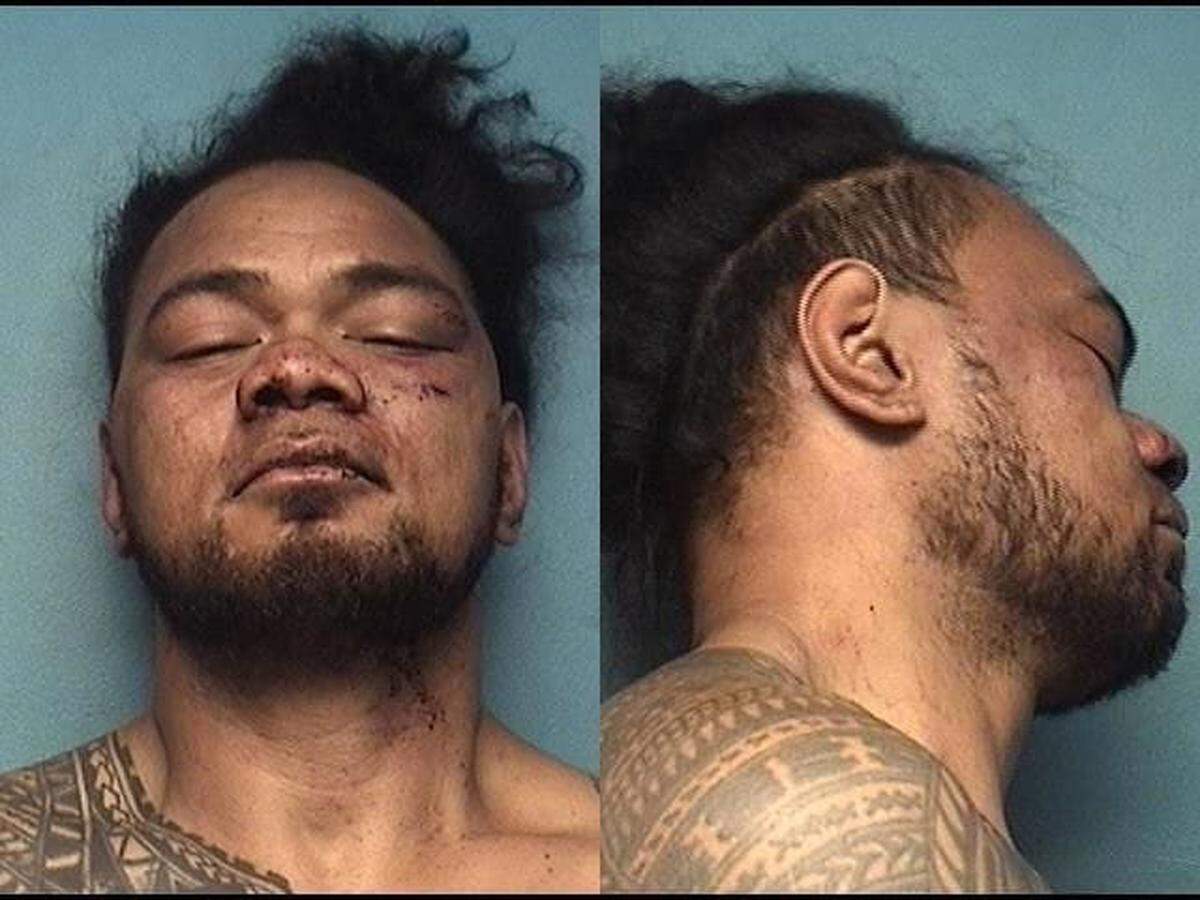
The drugs would lead to scrapes with the law. Over 2018 and 2019, incident reports involving Junior would proliferate across Jackson County law enforcement agencies.
Junior booked for driving under the influence; he was swerving between lanes and wearing sunglasses at 1 a.m. after leaving a Twin Peaks in Independence.
Junior found hiding in a basement with eight people after police were called about gunshots outside a drug house.
Junior searched at a traffic stop and found to be in possession of marijuana and “a small can with 2 straws and a white substance inside.”
Junior speeding up rather than slowing down when an Independence officer turned on his sirens behind him, gunning a Ford Fusion up to 101 miles per hour and then scrambling out of the car in an attempt to escape.
That one seemed to mark a turning point. In his car, police found evidence of a life escalating from drug abuse into something darker and more criminal. Not just marijuana and pills. Meth. A scale. Lots of small baggies. Syringes. A gun.
He was arrested but not charged. Recently, Detective Steve Cook, who had investigated the case for the Independence Police Department, explained why Junior continued to be released, even after his offenses became more serious. “The time that it took to get charges filed is strictly dependent on the federal prosecutor’s office,” Cook said, “and we have no control over when they file after the cases are presented.”
Don Ledford, a spokesman for the U.S. Attorney’s Office in the Western District of Missouri, which eventually filed charges against Junior and others, said, “Because this remains an open case, we are not able to provide any additional information beyond what is in the public record.”
Nouri suggested the delay in filing charges could be due to law enforcement building a case against Junior.
“He seems like a big fish, a former Chiefs player. But really he’s a little fish,” Nouri said. “It’s just a lot of drugs and petty burglaries.”
Nouri continued: “He fell in with this group of what I’d say are mostly lifelong addicts. And for 18 months he’s the only guy with any money. So they all gravitate toward him. I do complex drug cases. He wasn’t the big drug dealer that law enforcement perceived. This is just a guy surrounded by hangers-on type of people who, they knew, could keep them high.”
The family felt helpless. He was their leader, and in many ways their provider.
“I met him at a time in his life when everything was big and extravagant and there was so much happiness,” Danielle said. “Sure, there were times when he was disappointed with his play or some other part of his life. But there was a lot of happiness. And the stark difference in that person versus the person that was getting arrested. … I know it was still him, that he was still in there, but I couldn’t reach him.”
Vermeil said he heard about Junior’s troubles and tried to get in touch but wasn’t successful. “The last time I tried to contact him, I went to the Samoan community. I thought he needed emergency help from the people of his culture. But no one got back to me.”
There would be two more incidents before Junior was finally charged, both of which had the potential to turn deadly. In early August of 2019, he was seen exiting a stolen car outside the Great Western motel in Independence. He ran away when he spotted approaching officers.
While resisting arrest, he repeatedly reached toward his waistband, officers said. When they at last subdued Junior, a loaded handgun was found underneath him. They also found four grams of meth and, back in the car, a scale, a glass pipe and another gun.
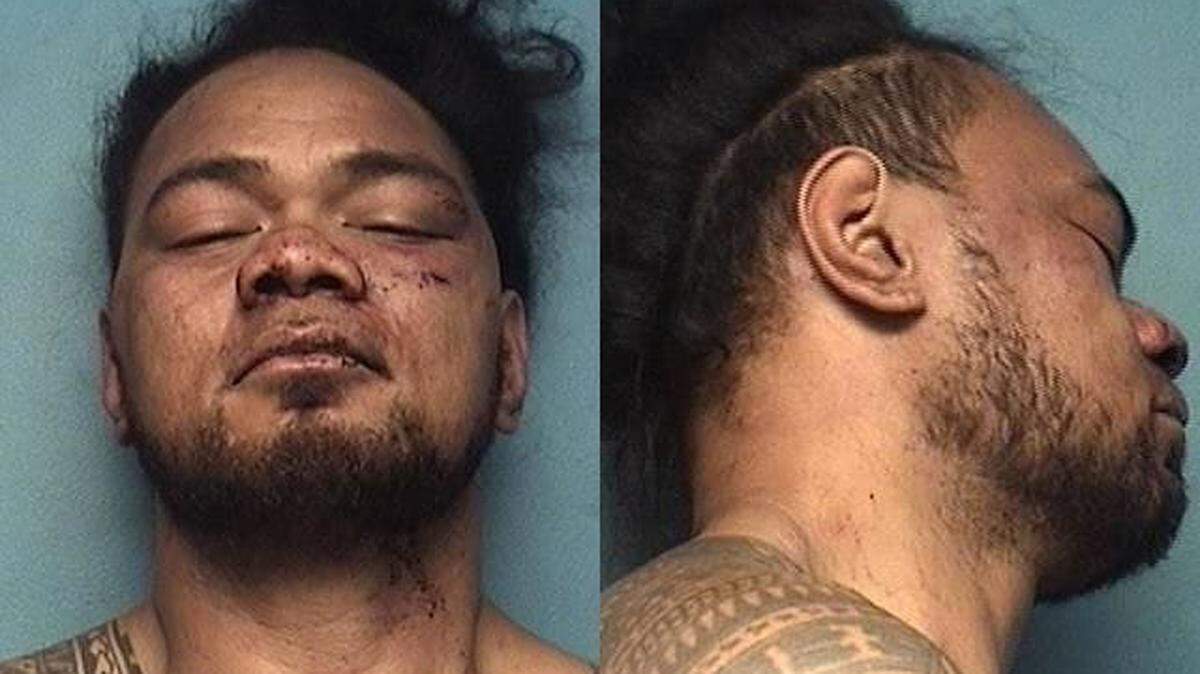
Later that month, Junior drew his last breaths as a free man outside what was once called Noland Fashion Square, a commercial graveyard off U.S. 40 highway where the faded stencils of sign lettering stain abandoned blue buildings. A few businesses remain. One is a cash-for-gold shop, where, on Aug. 24, 2019, Junior was again seen exiting a stolen car and again fled on foot when officers approached.
When they caught up with him, he denied having stolen the car. He backed away from them with his arms raised but refused to get on the ground. They tased him once, twice, three times. Still the big man wouldn’t stay down, wouldn’t submit to the arrest. “It was nearly ineffective,” one of the officers would later state in a deposition.
In the scramble, a gun dropped off Junior’s body. They kicked it away. He continued to resist. The officers punched him in the face, repeatedly. They put out a metro-wide assist, a rare call that goes beyond the Independence Police Department to any and all law enforcement that might be nearby. Finally, one of the officers got him in a neck restraint that knocked Junior unconscious long enough to cuff him.
After the arrest, Junior was charged with three counts of being an unlawful drug user in possession of firearms. At a detention hearing a month later, Robert Smith, the federal prosecutor, argued against pretrial release.
“This is an individual who possesses guns, who uses guns, and then fights with the police when he’s in possession of firearms,” Smith said, according to a trial transcript.
The judge agreed that Junior presented a danger to the community. There would be no bond.
Two months later, federal prosecutors unsealed a new, superseding indictment with additional charges against Junior and eight co-defendants. He was accused of participating in a conspiracy to distribute methamphetamine in Eastern Jackson County. He was facing 20 years in federal prison.
How did Junior Siavii die?
Junior spent more than two years at a CoreCivic-run federal prison in Leavenworth, waiting for his trial. His already complicated case — court records reference thousands of Facebook communications in addition to dozens of media files, interviews, medical files and law enforcement reports — was compounded by the procedural difficulties of the pandemic. The need for additional discovery related to Junior’s anticipated CTE-related defense pushed the trial date further out, from October 2021 to June 2022.
But even if it felt like forever since he’d gone in, the family felt he had turned a corner in prison.
“I went twice a week,” Danielle said. “He was getting good medical attention at CoreCivic. They had AA meetings. He had a psychologist and a counselor. They regulated his medication. He would talk about how he was going to come home and prove himself and do things right and make everyone proud of him again.”
“We took Sao with us once,” Rezetta said. “He was smiling, telling jokes. He was optimistic. Telling Sao to stay on the right path. He was his old self.”
“I think he knew he was on the road to destruction,” Nouri said. “I think he felt that finally getting charged was God’s intervention or something of that sort.”
Then on Dec. 17, 2021, Junior was transferred to the U.S. Penitentiary in Leavenworth, the result of an executive order issued by President Joe Biden that terminated private prison contracts with the federal government.
The switch was rocky from the jump. It was two weeks before Nouri could even get in to see him. At CoreCivic, Junior had been issued a tablet that allowed him to make daily video calls with the family. At the new prison, there were no video calls, and just 15 minutes for a phone call, Danielle said. It was hot and overcrowded, Junior told her.
Danielle also worried that Junior might not be getting his medication, that his records and prescriptions could be fumbled in the transfer. Junior had told both Danielle and Nouri that he’d been having chest pain since early December, when he was still at CoreCivic.
“He mentioned it to me three times,” Danielle said. “He said it radiated down his back and in his chest and that he couldn’t really tell what was causing it.”
On the morning of the day he died, Jan. 13, Junior called home.
“Our sister had just passed,” Fia said. “And he was trying to, I guess, hype us up a little, cheer us up. He was saying that we’re survivors and all this.”
“And then he called back right after that,” Danielle said. “He just had a few seconds. And he said, I just wanted to say I love you one more time.”
Alex Ojeda was in the prison that day. Released in February, he told The Star that Junior had “gone to medical” three times in the weeks prior to his death, complaining that his heart hurt and that he sometimes couldn’t breathe. He also mentioned Junior having a large cyst on his back that “had something to do with nerves.”
They were friends. “I talked to him every day,” Ojeda said. “He was my homeboy.”
Junior lived in a small cell with a toilet, a sink, two lockers, a bunk bed, and a little window in the back that’d been blocked out to prevent prisoners from seeing the light of the day or the glow of the moon. Ojeda said Junior’s cellmate had been sleeping and woke up in the afternoon to find him unconscious. The cellmate called out for help, Ojeda said, “for at least 30 or 45 minutes” before prison staff arrived.
“The units (at the penitentiary) are really long,” Ojeda said. “There’s something like 250 people in each unit and only two guards. They have to walk that whole length of the unit and back. You’re screaming for help but you’re locked in a room far, far away.”
By the time the guards got there, it was too late.
“They tried to say he died at the hospital,” Ojeda said, “but when he left he was already blue.”
The medical examiner hired by the Leavenworth County Coroner’s Office told The Star that Junior’s autopsy report cannot be released due to an open investigation by the Federal Bureau of Prisons into his death. The bureau has not fulfilled The Star’s Freedom of Information Act request for records concerning the death investigation.
The family has fared no better. “We haven’t received any of the medical records we’ve requested,” Rezetta said.
“When they called me, all the guy said was, ‘Your husband has passed,’” Danielle said. All they said was, ‘They did everything they could.’ What is everything? Did you administer CPR? Had he been checked in on? How long was it before somebody found him? Why don’t we know anything?”
There was also the matter of Junior’s brain.
“We had hoped that through Junior’s death some good could come of it by donating his brain to the Boston University CTE Research Center,” said John Lorentz, a Minneapolis attorney who represents hundreds of retired players, including Junior, for disability claims that are caused by concussive hits from playing in the NFL.
The cutoff point for a brain examination is 72 hours after death, according to Maria Ober with Boston’s CTE Center. So Lorentz made an immediate request to Bureau of Prisons officials to preserve Junior’s brain tissue. The requests were met with silence, Lorentz said.
“As a result, the opportunity was lost and the family will never know the extent of Junior’s brain damage that resulted from his play in the National Football League,” Lorentz said.
Maui
There’s a Polynesian folk hero, a kind of demigod, named Maui. He has long existed in the mythology of several island cultures but was depicted most recently in the 2016 Disney animated film “Moana.” Voiced by Dwayne “The Rock” Johnson in the movie, Maui is massive, with long, curly hair and Samoan tribal tattoos. He looks a little like Junior.
In the years before he fell into the life, before he was sent to prison, kids would often approach Junior in public, pointing and shouting “Maui!”
“He would act like he didn’t know what they were talking about,” Danielle said. “Then he’d wait a second and smile and flex at them all big like Maui.”
Maui can shape-shift. At the end of “Moana,” he transforms into a hawk. A few weeks after Junior’s death, his mother sent the family a photo she’d taken of a hawk that was hanging around outside her window. It kept looking at her.
“We keep saying,” Rezetta said, “maybe Junior and Kathleen, they turned into hawks too.”
The Star’s Bill Lukitsch contributed reporting.
This story was originally published March 13, 2022 at 5:00 AM.