Kansas City police should focus on violence, not minor drug crimes, prosecutors say
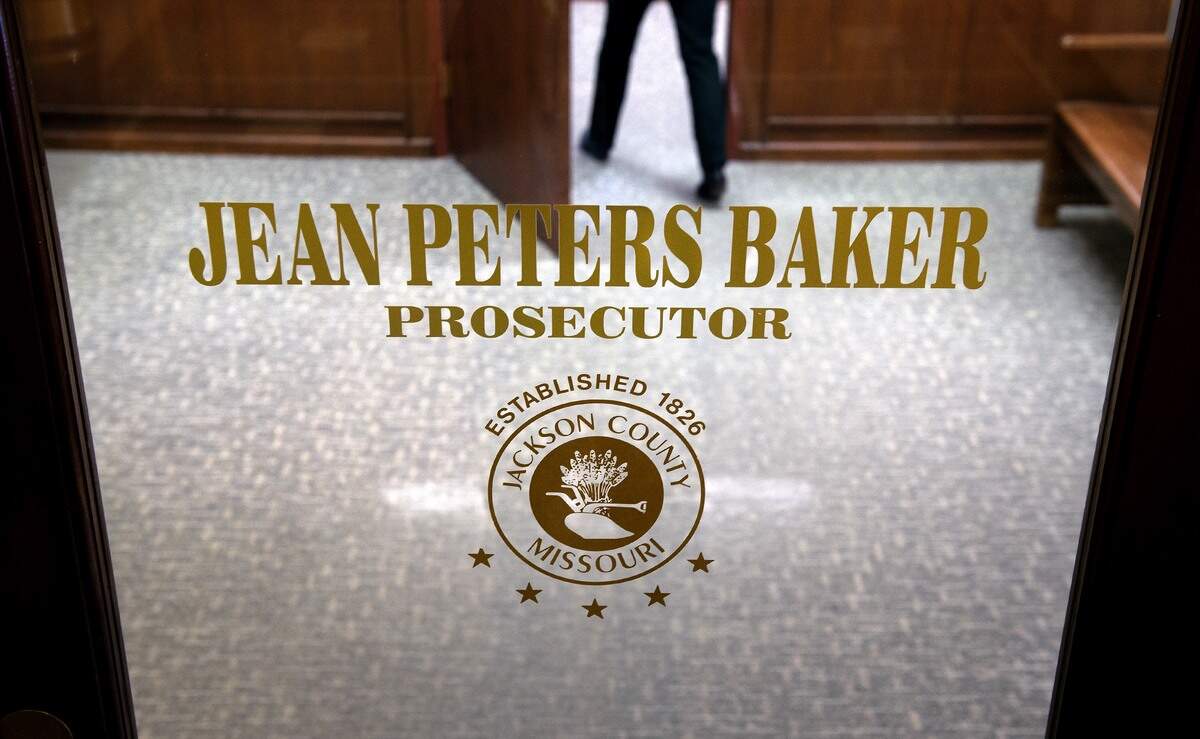
Jackson County’s top prosecutor is calling on Kansas City police to stop sending her office hundreds of low-level drug crimes and instead shift focus to the city’s “epidemic of violence.”
In a letter to the Board of Police Commissioners, Prosecutor Jean Peters Baker said her office has created more narrow guidelines and will consider charging drug crimes when a defendant poses a risk to public safety or is disrupting an otherwise calm community.
Baker also took issue with how long it took to get meetings with the Kansas City Police Department to explain an analysis her office conducted about racial disparities in drug arrests and prosecutions. But after making the data-informed guidelines with KCPD drug commanders, they were re-assigned in the department, which recently submitted cases that don’t follow the new protocols.
It appeared to Baker that the police department will “continue to ignore these guidelines.”
“Wherever KCPD lands on this important issue, I am not going back to a system that is based on gut feelings, is inefficient and most importantly, unfair,” Baker wrote last week in her letter, which was recently obtained by The Star through a Sunshine Law request.
Sgt. Jake Becchina, a police spokesman, referred a request for comment to the police board, which did not immediately comment on the letter. The reassignments referred to by Baker were simply routine transfers of command personnel, Becchina said.
In an interview Thursday, Baker gave an example of a drug case her office does not want referred for felony charges.
Officers had stopped a car, potentially to ask about a license plate, and brought out a dog, Baker said. They learned that a passenger in the car, a woman, had a single pill of Oxycodone in her backpack. She did not have a prescription for it.
The woman did not have a long criminal record, but the police department referred the case for a felony charge amid “epic levels of violence” in Kansas City, Baker said.
“Think about the resources that went into that,” she said.
Prosecutors declined to charge the woman.
Amid the COVID-19 pandemic last winter, and during a push to reduce the jail’s population, the Jackson County Prosecutor’s Office analyzed drug cases sent to them by Kansas City police — “by far the single largest set of cases in our system,” Baker wrote.
The department refers more than 1,400 felony drug cases to Jackson County prosecutors each year.
That analysis showed that while Black people make up 39% of the population, they accounted for 54% of drug suspects referred for charges by the police department from 2017 to September 2020 in Jackson County.
White residents, on the other hand, were referred for charges in 42% of drug cases, while making up 48% of the population.
The racial disparity was even greater in “buy bust” cases, in which undercover detectives buy drugs before a dealer is arrested.
“This enforcement strategy regarding drugs actually makes us less safe,” Baker said Thursday. “It makes us less safe because people know that drug enforcement policy is not fairly and evenly enforced across the city.”
“And because of that, it’s a greater distrust than not just the police but me too. And not just to me, but the court system too.”
In 2019, about 80% of those defendants were Black — more than double of the “percentage of their population in Kansas City,” Henry Chapman, a data analyst in the prosecutor’s office, said at a December meeting. Meanwhile, 14% of those suspects were white.
In her letter, Baker said such disparities create more public safety concerns because for residents to trust the criminal justice system, it “must actually be fair.” Studies have shown that arresting and prosecuting in an unfair way “delegitimizes” the system, she said.
“Our analysis showed that our outcomes (and yours) were not tied to public safety, were ineffective, were expensive and were racially imbalanced, therefore, not fairly enforced on this community,” Baker wrote.
Baker wrote that she would be happy to answer questions about or present the drug guidelines to police board members. On Thursday afternoon, Mark Tolbert, the board’s president, invited Baker to attend a closed board meeting session.
“I’m really pleased and excited to get the invitation,” Baker said.
Lora McDonald, executive director of MORE2, a local social justice organization, called it necessary for every public office holder to do a similar analysis to Baker’s.
“And use that data, as well as community input, to make changes and reduce these racial disparities,” she said.
‘Staggering’ cost of drug cases
As part of their drug case review, prosecutors wanted to know if drug defendants had other cases tied to violence. They took a broad view of what to consider violent, Baker said, considering, for example, if kids were nearby and whether it was child endangerment.
Prosecutors concluded that in 2019, about 25% of drug cases within four years had a nexus to violence, when considering factors such as gun crimes or physical violence. That meant that 75% had “no discernible connection” to violence, Baker wrote.
Additionally, a gun was not recovered in more than 92% of drug possession cases in 2017 and 2019, prosecutors determined.
“The vast majority of suspected drug users and dealers didn’t have guns at the time of arrest and a majority didn’t have prior violent convictions,” Baker told the police board. “This data undermines longstanding notions that drugs somehow equals violence.”
Most drug possession cases referred for charges occurred south of Independence Avenue and east of Troost Avenue, their review found. The majority of those cases begin with a traffic violation or a minor crime.
Not only does it take too long to get defendants into drug treatment, Baker added, but the cost of such cases are “staggering.”
Prosecutors are trying to determine how much drug cases cost to get through Jackson County courts. But nationally, Baker wrote, a single case can cost $146,000.
Baker’s letter to the police board comes months after Kansas City suffered its highest number of homicides ever with 182 killings in 2020. More than 630 people were also shot and survived.
Following the violent year, Mayor Quinton Lucas last month urged the police board to focus on violent crime with detailed reports on killings and non-fatal shootings during its monthly meetings.
In 2018, Baker announced that her office would stop prosecuting most marijuana possession cases. Baker said her decision was based on a statewide vote to legalize medical marijuana by constitutional amendment.
In Jackson County, three in four voters favored passage of the state medical marijuana amendment, she noted at the time.
Baker has said her office will still charge cases in which a dealer moves onto a street and, overnight, the block becomes unsafe with gunfire. But she does not want officers spending resources buying dope off people addicted to drugs.
“That is not a good use of taxpayer dollars,” Baker said.
This story was originally published July 8, 2021 at 3:07 PM.