Kansas bill would transfer Shawnee Indian Mission site — but not to Shawnee Tribe
For the fourth time in recent years, legislation that would transfer the ownership of the Shawnee Indian Mission historic site in Johnson County to a Native American nation has stalled out in the Kansas Legislature.
This time around, a different tribe’s request to assume ownership of the present-day Fairway site received a cold reception in Topeka.
Senate Bill 518 calls for the Kansas Historical Society to convey the nearly 12-acre site over to the Prairie Band Potawatomi Nation. Sen. Adam Thomas, a Republican who represents Spring Hill, parts of Gardner and Olathe, introduced the bill on behalf of the Prairie Band Potawatomi.
Similar to last year’s bill, SB 518 would restrict gambling or gaming on the property and require the Potawatomi Nation to provide a report every two years for a 10-year period to the Legislature’s joint committee on state-tribal relations regarding rehabilitation efforts on the site and consultation with other tribes impacted by the site’s history.
“This action is essential and an overdue step toward justice, healing and honoring the sovereign relationship between the state of Kansas and Prairie Band Potawatomi Nation,” Prairie Band Potawatomi Nation Chairman Joseph Rupnick said at a hearing on the new bill earlier this month.
That hearing featured a parade of opponents testifying against the bill, including the executive director of the Kansas Historical Society and Johnson County officials. The hearing ended with the chair of the Senate Commerce Committee asking Rupnick to sit down with the Kansas Historical Society to discuss an alternative path forward that would preserve state ownership of the Mission.
The bill has not received further attention from lawmakers in the waning days of the 2026 legislative session.
Historic ties
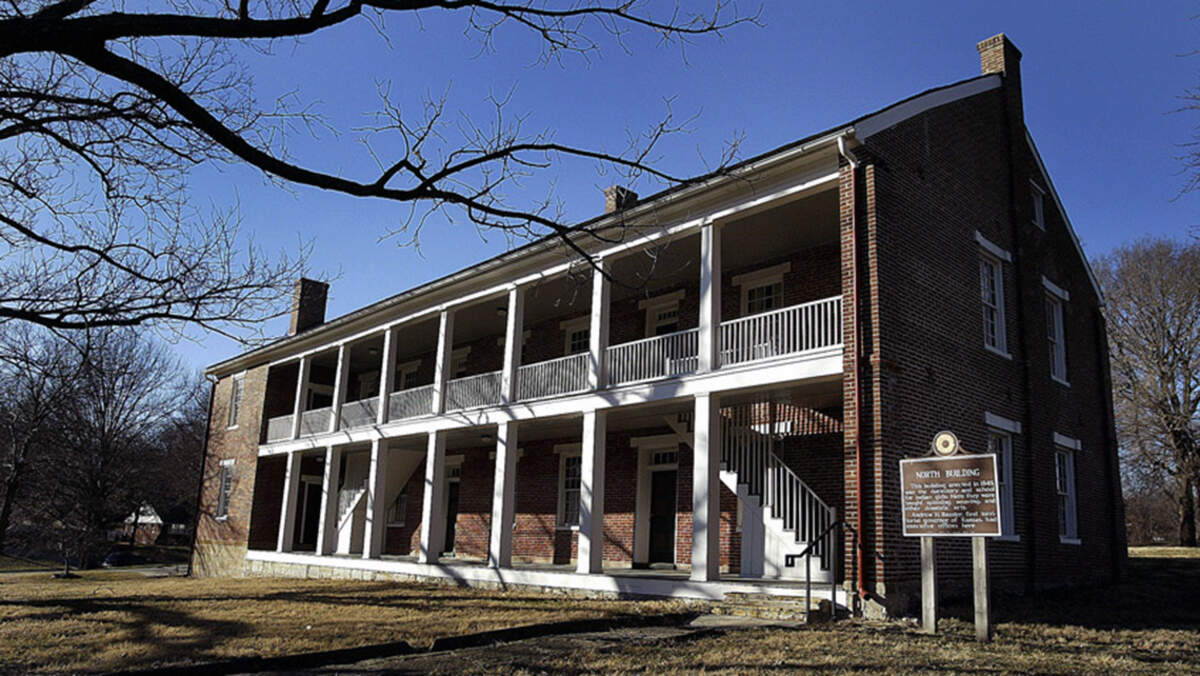
Originally located near Turner in present day Kansas City, Kansas, the Shawnee Indian Mission moved to present day Fairway in 1839, where a branch of the Santa Fe Trail passed through Shawnee land.
The former boarding school was established by Rev. Thomas Johnson — for whom Johnson County is named — and housed students from at least 22 tribes, requiring them to perform manual labor and assimilate into white Christian culture. The Mission also served as barracks for Union troops during the Civil War, and a field hospital was set up there during the battle of Westport.
Ownership has been a point of tension and debate for several years.
Before SB 518, the Shawnee Tribe attempted several times to obtain ownership of the site, claiming that the state’s ownership has left the three remaining buildings deteriorating, and that the historical interpretation offered in exhibits on site leaves out key pieces to the site’s history.
Sen.Thomas, who introduced the bill, did not respond to The Star’s request for comment about why he introduced the bill or why the Prairie Band Potawatomi Nation was selected, instead of the Shawnee Tribe, for ownership. In 2023, when he was a member of the House, Thomas introduced a bill that would have transferred ownership of the site to the Shawnee Tribe.
“While the school operated on Shawnee land, its impacts fell on many tribal nations whose families were forcibly moved to Kansas, including the Prairie Band Potawatomi Nation,” Rupnick said. “Tribal children across the region were taken from their homes, families and forced into institutions where assimilation was prioritized over care.”
The Shawnee Tribe said in a statement that it fully supports the bill and ownership transfer to the Prairie Band Potawatomi Nation.
“Those currently responsible for the care and maintenance of this national landmark have failed in their duty to protect this sacred place and have repeatedly demonstrated a hostility to treating it with the respect and dignity it deserves,” the tribe said in a statement.
Representatives of the Prairie Band Potawatomi Nation couldn’t be reached to comment on the tribe’s interest in the site nor its specific plans for the site if the bill passes.
‘The apex of history’
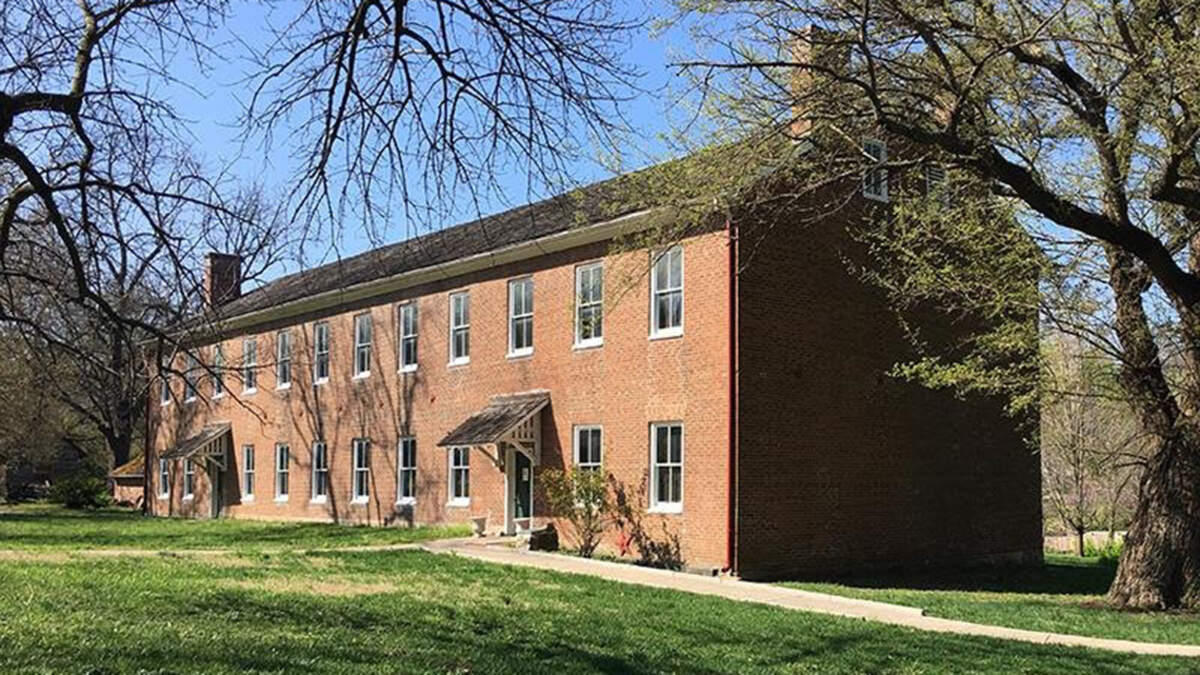
Currently, the Kansas Historical Society owns the site, the city of Fairway oversees its daily operations and The Shawnee Indian Mission conducts fundraising. It’s one of 16 historic sites in the state and the second-most visited site in Kansas, with 12,000 visitors per year, according to state data.
The only historic site busier than the Shawnee Indian Mission is the Kansas State Capitol building in Topeka.
Within the last year, Fairway oversaw completion of new roofs on the north and west buildings, Fairway City Administrator Nathan Nogelmeier said. In the fall of 2025, the historical society earned a $412,500 grant to help open the west building, which has never been open to the public. The foundation is raising money for a local match.
To develop more educational opportunities at the site, Nogelmeier said that the city invited more than 80 tribes, including the Prairie Band Potawatomi Nation, to be a part of the work.
“Both of those meetings were attended by representatives from the Potawatomi Nation. So, outside of that, we know that some of the Prairie Band Potawatomi members have come to the Mission just on their own to learn about the site,” he said. “But outside of that, we’ve had no other formal conversations with the Prairie Band Potawatomi.”
Similar to previous bills, Fairway officials remain concerned about public access and accountability for the site’s management, Nogelmeier said.
“This land is important to a lot of people and when you look at the possibility of taking the site out of the public’s hands and in a private group, you risk losing that connection,” Nogelmeier said. “This is considered the apex of history here in the region … and that needs to be preserved for everybody to see.”
“(The bill) just reaffirmed there are a lot of different people who believe this is important so why should the state give it to one party?”
A shared agreement?
The question of shared ownership came up during the Senate Committee’s discussion.
Holly Zane, an enrolled citizen and former general counsel for the Wyandot Nation of Kansas and longtime volunteer at the historic site, said she opposed the bill because no one tribe should be in charge of preserving the site’s history and telling its many stories.
“You think they can rep my history, my culture? They can’t. … That Mission has not only my history and 24 tribes altogether,” Zane Told lawmakers. “If you decide to pass this bill, you have victimized us. You have taken our history that’s so sacred.”
Larry Alley, a Winfield Republican who chairs the Senate Commerce Committee asked if the Potawatomi Nation would consider an agreement among the tribes, foundation and Historical Society to give the nations “significant space to document your history” and maintain that history.
Rupnick, the Potowatomi’s chairman, responded by saying that would be something they would have to try and hammer out.
“There has to be some sort of an agreement that makes sure that we are not erased, the sacrifices there were not erased. Part of that was built by our kids’ backs,” he said. “Our labor was (what) made those buildings, so we want to make sure that we have a very strong voice in whatever is adopted or pushed forward.”
A representative for the Kansas Historical Society said Friday afternoon that no such meeting has taken place yet
“I believe it will happen, but there is no tentative date,” said Caryn Kramer, the historical society’s executive assistant.
This story was originally published March 14, 2026 at 5:30 AM.