Johnson County city may ban pet monkeys. The only owner is fighting to keep hers
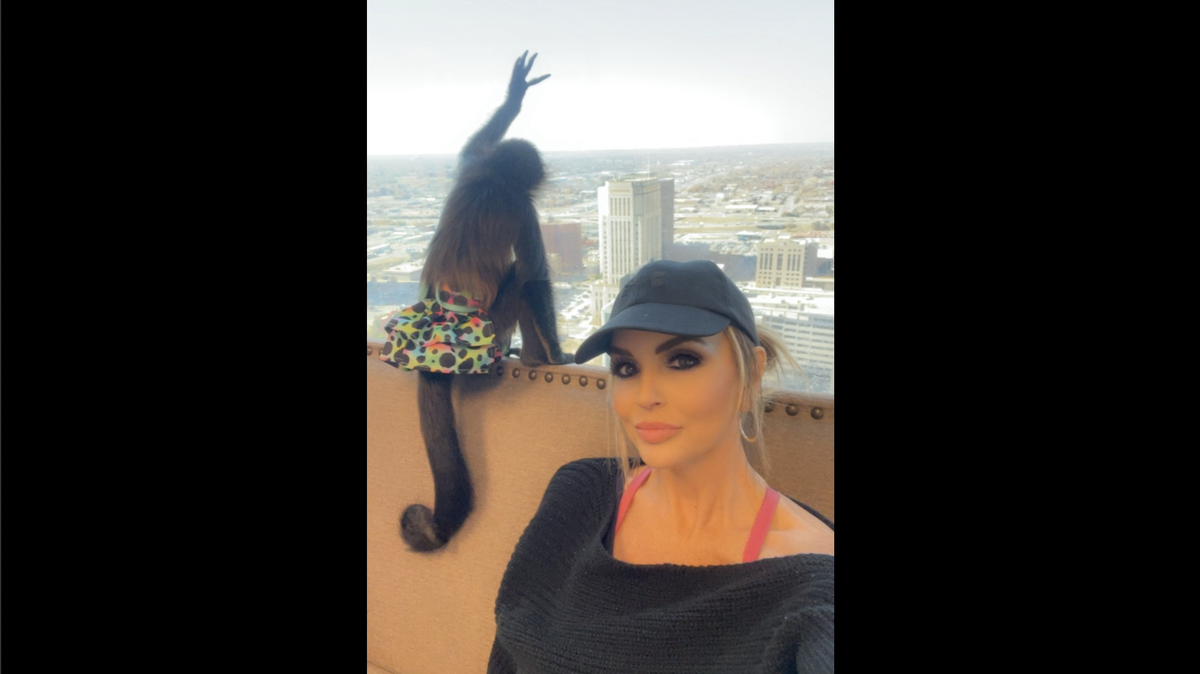
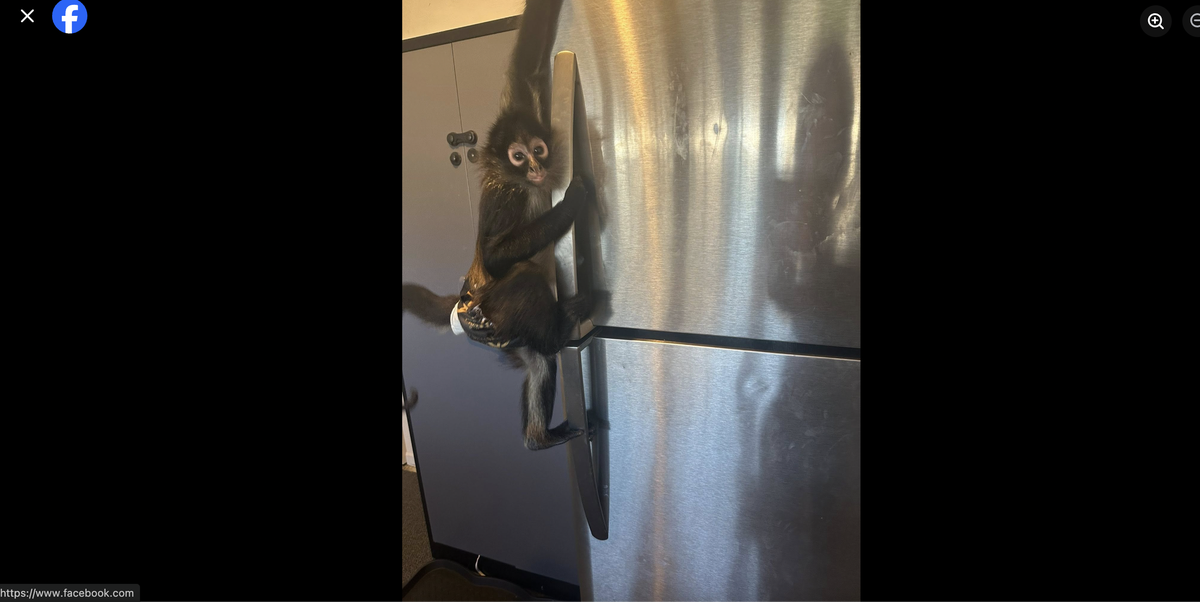
By the looks of her social media, Toni Skelton seems to bring her pet monkey with her everywhere — in the car, to the park and to the highrise office building where she works.
Earlier this month, Oakley Reign the spider monkey went somewhere new: Prairie Village City Hall.
As the northeast Johnson County city considers changing its definition of dangerous wild animals to include all monkeys — which would outlaw keeping the animals as pets — its sole monkey owner is fighting to keep hers.
Prairie Village is looking into a possible ban months after Skelton’s spider monkey reportedly scratched a child at a public playground while it was off leash. The scratch did not break skin, according to Prairie Village police records, which also show that the monkey later scratched a police officer.
An officer and Skelton, in police records, said the animal wasn’t being aggressive at the time and was playing. But now, city officials are taking an opportunity to close a gap in Prairie Village’s code — which currently excludes monkeys under 20 pounds from its definition of dangerous wild animals.
The change would match the rules in nearly all neighboring cities and best practices according to animal control experts.
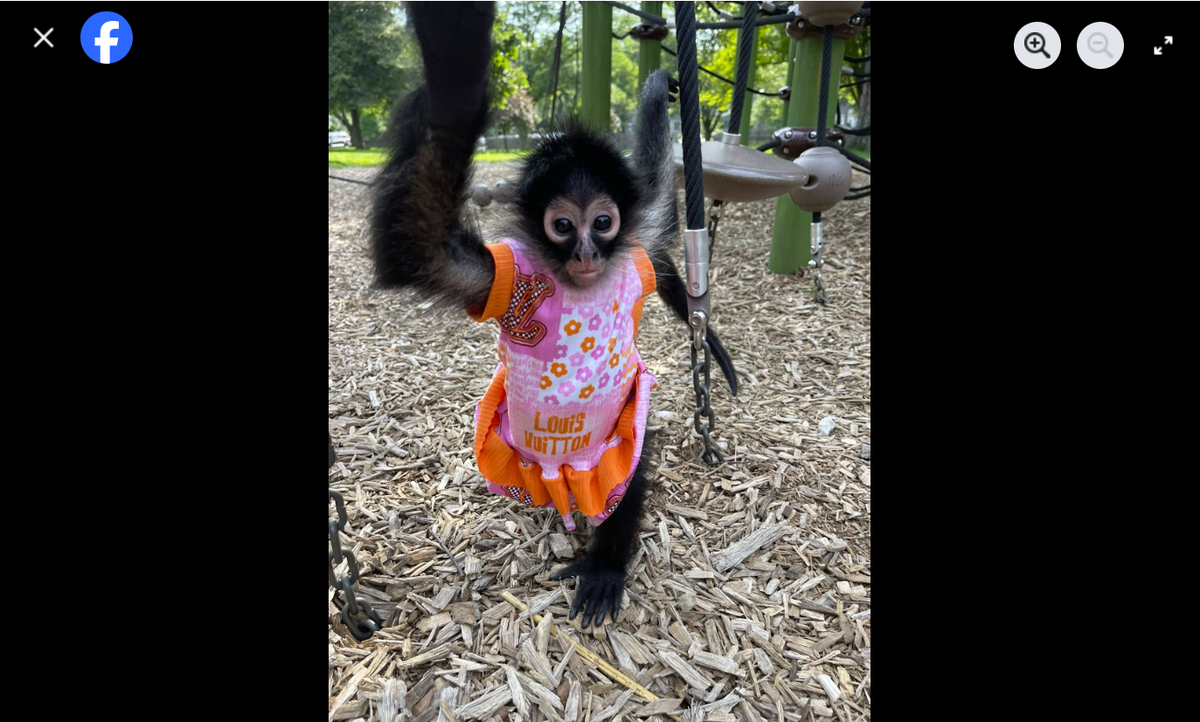
Skelton is asking for an exception to any new city rules for her pet, Oakley the spider monkey.
“When I applied for the permit, the ordinance allowed primates. The city issued the license. I relied on that approval financially, emotionally and practically,” Skelton said during public comment during the Dec. 1 City Council meeting.
Instead of requiring her to remove Oakley as city staff had initially proposed, Skelton requested a grandfather clause that would let her keep the monkey.
“Applying a new law retroactively to someone who followed every rule under the old one creates a devastating situation for the family that trusted the city’s process,” she said during the city meeting.
Debates similar to what’s happening in Prairie Village are playing out in comments sections across social media, where monkey owners living in cities and states that allow them as pets, including Skelton, post videos and photos about their daily lives as “monkey moms.”
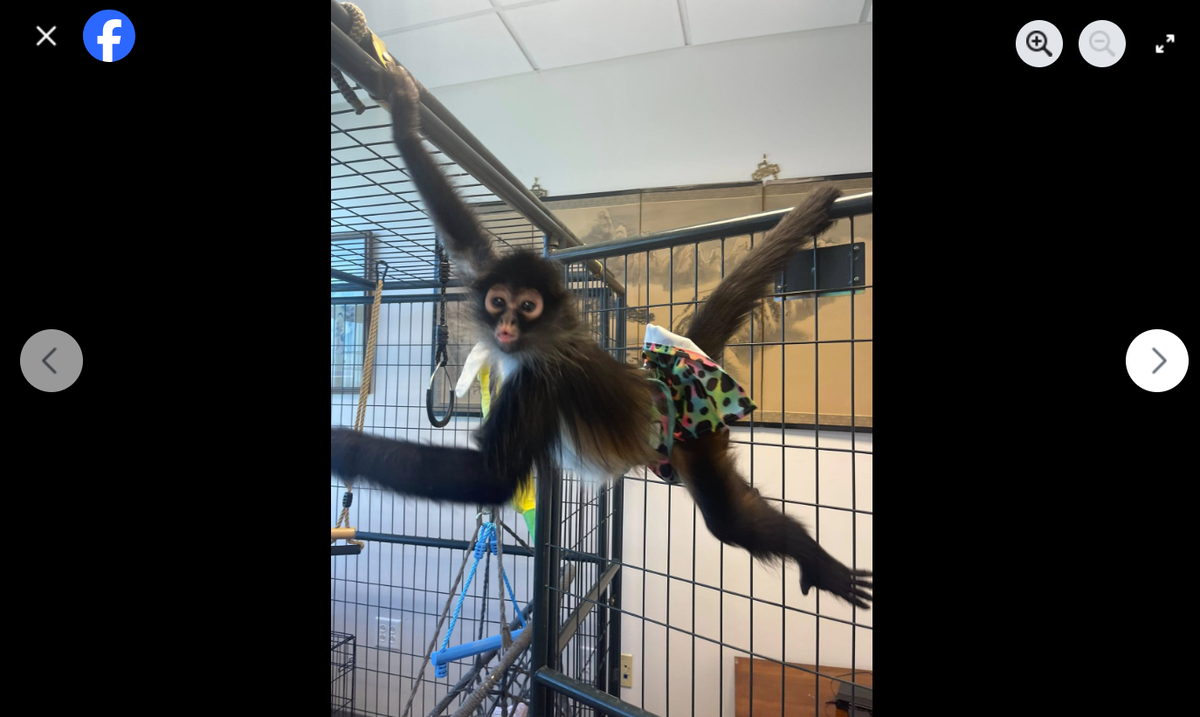
While the photos on social media show primates in skirts, playing around and snuggling with their owners, experts and onlookers at the national and local level have raised concerns about the potential danger of not only keeping monkeys as pets, but also how the animals enter the U.S. and private homes in the first place.
Professional animal control, veterinary and zoo associations all recommend prohibiting personal ownership of primates, including monkeys of all sizes, because of the injury and disease risk and the challenges of meeting the animals’ needs outside of their natural habitats.
During the city meeting, Councilmember Ian Graves said officials needed to have an “extended discussion” before making a decision.
Skelton declined to speak with The Star about Oakley until the City Council finalizes any changes to its animal control ordinance. She referred a reporter to her attorney David Smith.
“The 14th Amendment prohibits governments from depriving any person of life, liberty, or property without due process of law,” Smith said in a statement. “Ms. Skelton has a property interest in her monkey Oakley, and the city is on thin ice if they arbitrarily change an ordinance retroactively banning Oakley without having evidentiary hearings.”
‘A lifelong responsibility’
Oakley accompanied Skelton to the city meeting in a locked animal stroller and was bouncing around inside during the discussion. Some of the family’s neighbors testified about how much of a delight the monkey is.
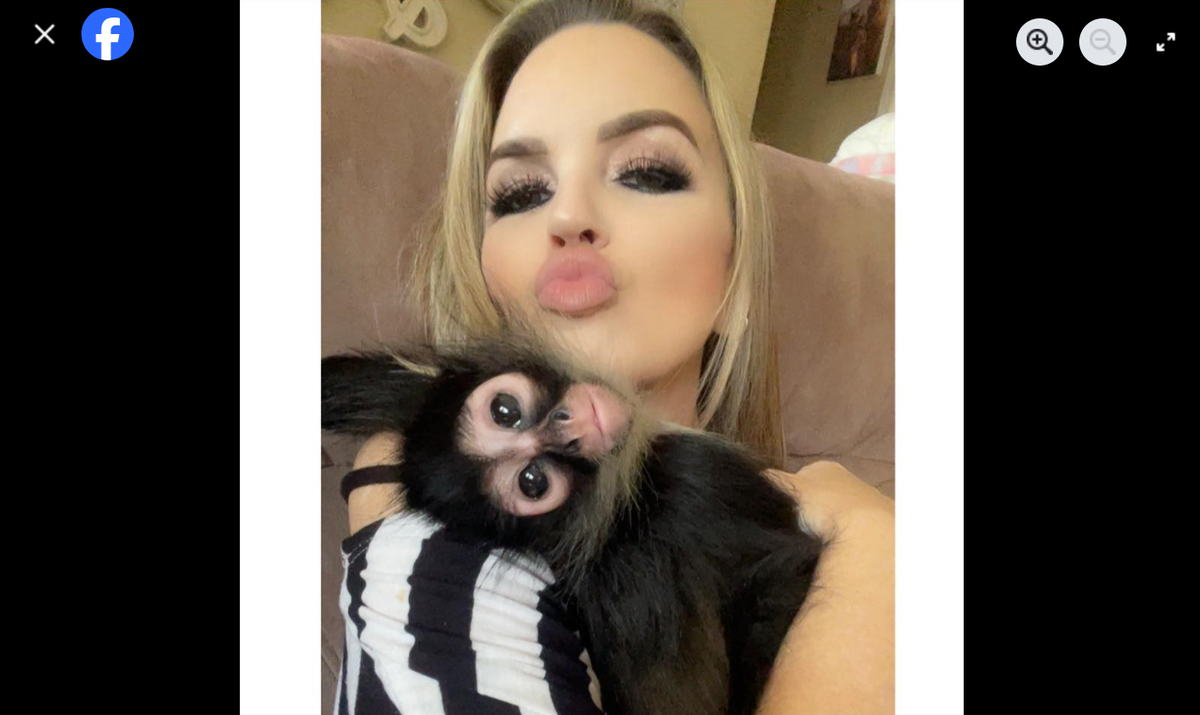
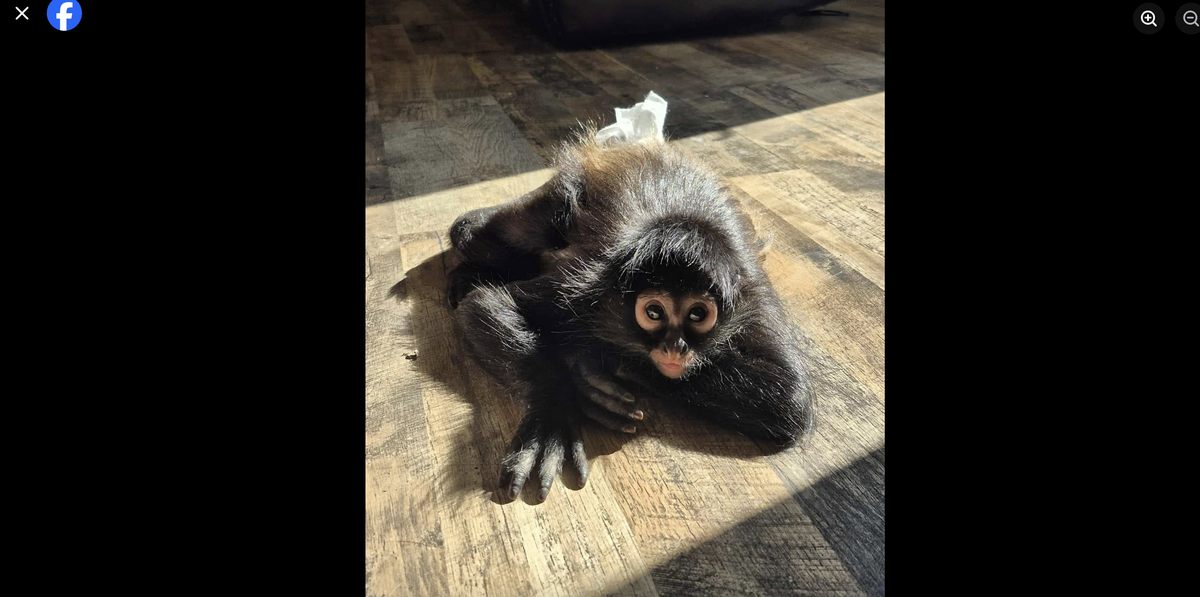
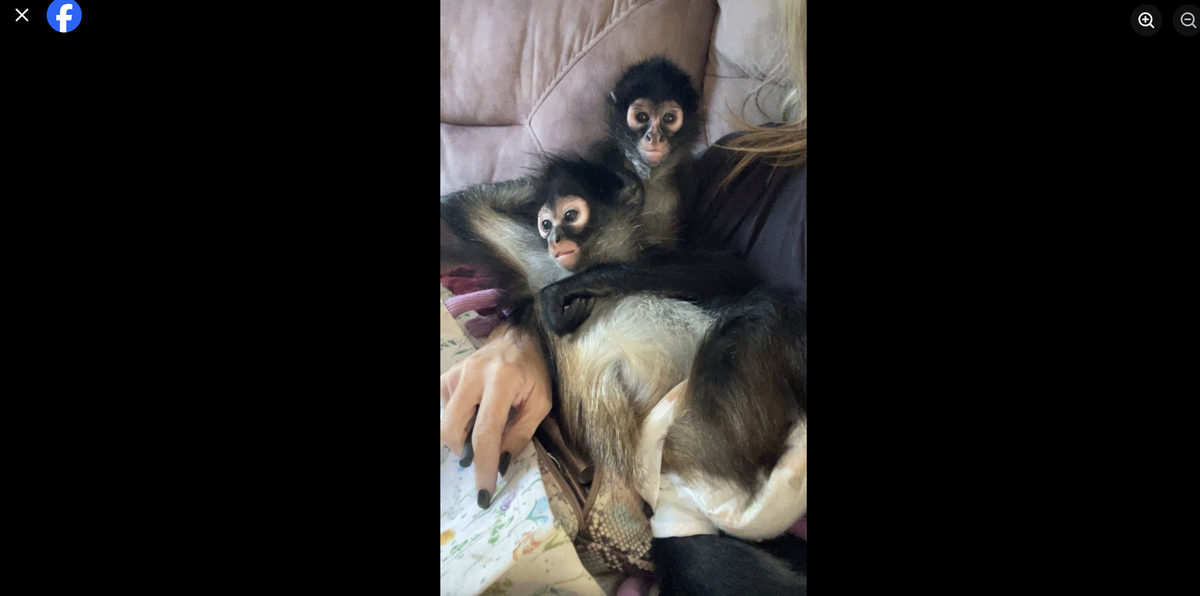
Skelton’s social media has dozens of photos and videos of the black and white monkey wrapped around her neck, dressed in bright skirts and diapers, asleep on the couch, eating tuna salad and climbing on playground equipment installed in Skelton’s backyard.
Prior to bringing her home, Skelton and her fiancé, Tony Wallace, spent “countless hours” learning about primates, visiting and volunteering at sanctuaries and “talking to monkey owners across the country,” Wallace said during the council meeting.
“We wanted to understand the emotional, social, medical, environmental needs of primates on a deeper level before ever committing to this lifelong responsibility,” he said.
Wallace said that they’ve found veterinarians that specialize in primates, complying with all state regulations to ensure she’s safe to go out in public.
The family told the City Council that they’ve obtained a $30,000 bid to remodel the downstairs of their home to accommodate Oakley’s needs and give her more space to play.
“Taking her away from her family now will be devastating to her and to us,” Wallace said. “Oakley is bonded to us, she knows us as her troop.”
Pet license
During the meeting, Skelton said that she’s scared to lose Oakley “after a full year of compliance” with city rules. While several City Council members seemed to support Skelton’s request, some had further questions, including about how long Oakley has lived here. The monkey has had a city pet license since the spring.
“I will also say I have been trying to understand the timeline of Oakley being in town,” Councilmember Graves said during the meeting.
According to Shawnee Mission East High School’s student newspaper, which published a feature about Oakley attending school basketball games, Skelton drove to Texas to pick up Oakley in September 2024, which coincides with when records obtained by The Star indicate the monkey was born.
Last December, Skelton posted on Facebook announcing that she had a 10-week-old “baby girl spider monkey.”
In January, a representative from People for Ethical Treatment of Animals (PETA) filed a request with Prairie Village seeking proof of the monkey’s pet license, according to city records.
Cydnee Bence, counsel for the PETA Foundation, told The Star that at least one person submitted a complaint online about seeing a spider monkey out in public in Prairie Village, which prompted the nonprofit to take action.
“In looking at the ordinance, there were some restrictions on primates — mostly that they needed to be licensed,” Bence said. “That’s why PETA sent in those requests to see if that monkey was licensed.”
Smith contends that the city’s ordinance “did not require a license for small monkeys.” He said the law only requires them for cats and dogs.
“Yet, the city required Ms. Skelton to get a license although there was no legal basis for that requirement, and she willingly complied,” Smith said.
While the city’s website specifies that dogs and cats must be vaccinated for rabies and licensed with the city, its full animal ordinance seems to cast a wider net about licenses.
“No person shall own... any potentially dangerous or dangerous animal, or any safe animal... without obtaining permits and licenses,” the ordinance reads. It then lists eight different types of animals that don’t require a pet license in Prairie Village including hamsters and rabbits. Monkeys aren’t on that list.
Records obtained by The Star show Oakley received her first rabies vaccination shot in February.
PETA filed another complaint and requested an investigation into Skelton for “apparent unlicensed possession of a spider monkey” on March 10, Bence said.
Skelton submitted an application for and received a pet license for Oakley from Prairie Village on April 1, according to city records.
Varying rules
Johnson County’s cities each have slightly different rules when it comes to owning primates.
Eighteen cities prohibit primate ownership entirely. Alongside Prairie Village, Overland Park, Gardner, Westwood Hills and Mission Woods allow private ownership of some kind, according to Prairie Village’s staff report.
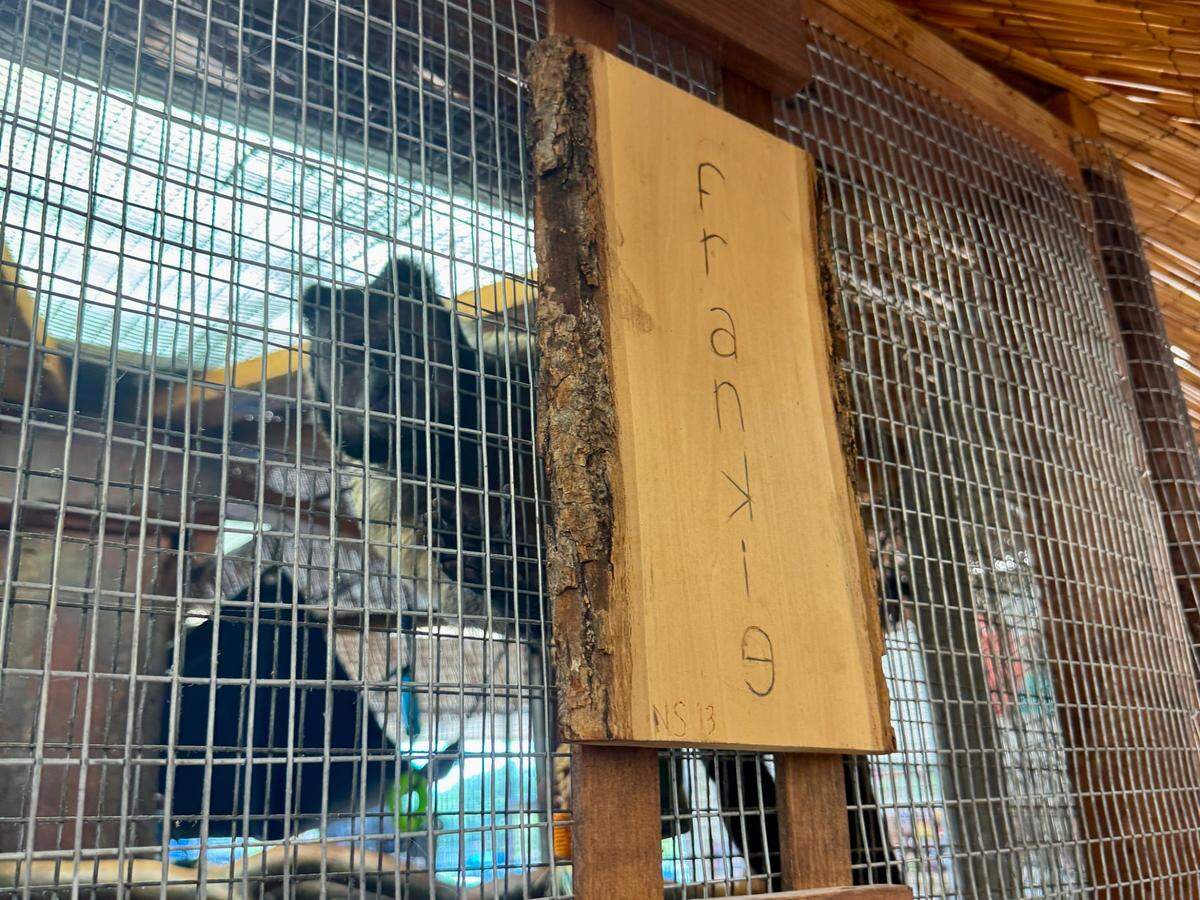
Shawnee has a special permit carved out for Frankie, a capuchin monkey that’s lived in a pet store for nearly two decades.
Over the summer a group of residents advocated for Frankie’s release, claiming he suffers psychological trauma from being kept in a cage for so long and not interacting with other monkeys.
The group has now weighed in supporting a ban on monkey ownership in Prairie Village and statewide.
“We’re hoping bans like this will spread around Kansas in the near future, freeing monkeys like Frankie from a life of confinement and solitude,” the post read.
No state law
The various rules across municipalities exist because Kansas is one of several states that doesn’t have a law about primate ownership, Kansas Animal Control Association Vice President Kendra Anthony told The Star via email.
“Without statewide standards, municipalities are left with inconsistent ordinances and limited authority, creating gaps in enforcement and oversight,” Anthony said. “Even smaller primates can be unpredictable and capable of serious injury.”
The responsibility of responding to incidents often falls to police or code enforcement officers who may not have background in handling exotic species, she said, “placing both the animals and responding personnel at unnecessary risk.”
Complex social creatures
Spider monkeys have very similar needs to humans, said Mandy Fischer, wildlife confiscations coordinator for the Association of Zoos and Aquariums (AZA), a nonprofit dedicated to the advancement of conservation, education, science and recreation for zoos and aquariums.
“They have significant social, mental, and emotional needs. It makes it very complicated to care for them appropriately in human care — (whether it’s) professional care or in someone’s home,” Fischer said.
According to her paperwork, Oakley is a Black-handed spider monkey, a subspecies of the Mexican spider monkey, commonly found in the tropical rainforests of southern Mexico, Guatemala, Honduras and El Salvador, according to Fischer. In captivity, spider monkeys can live until they are almost 50 years old.
“In the wild, they have dynamic social groups. It’s parents, grandparents, aunts, uncles, nephews and nieces,” Fischer said. “They are going to spend their time freely choosing who they spend time with. They might hang out with different groups, choosing different food items based on the time of year and what they need at this time of year.”
Zoos do their best to meet spider monkeys’ needs by working with veterinarians, nutritionists and animal behaviorists to build special habitats and ensure that they have access to several other monkeys to allow them to socialize, according to Fischer.
“Socially, these animals have to learn from parents and siblings,” she said. “If that animal is not able to grow up in a normal social group they will not be welcomed into a normally functioning social group and they can’t go back to the wild.”
Monkeys can share diseases including herpes, hepatitis and other viruses that could cause significant harm to humans, Fischer said. If a monkey bites or scratches a human and breaks skin, it has to be euthanized in order to test for rabies.
And with monkeys having similar hormonal development as humans, they too hit sexual maturity in order to reproduce. Once they hit puberty at 2 to 3 years old, many in domestic settings can start to show aggression, Fischer said.
“That’s because they can’t show their natural behaviors with humans in a home,” she said.
During the Prairie Village meeting, Skelton’s family said they plan to spay Oakley before she hits maturity to prevent aggression.
Poaching fears
Alongside the challenges of caring for spider monkeys in captivity, animal advocates like Fischer are concerned about ways the animals get to people’s homes in the first place.
The International Union for Conservation of Nature classifies all spider monkeys as threatened or endangered as their habitats and populations are shrinking “at alarming rates” due to human activity, including illegal trafficking and poaching.
Oakley’s origins aren’t clear, and how Skelton acquired the monkey hasn’t come up as a matter of concern in Prairie Village. Advocates’ concerns apply more broadly across the country to what they describe as a growing trend of people keeping monkeys as pets, beyond the scope of what could come from domestic breeders.
“When you think about the number of infant spider monkeys available for sale or in private homes in the U.S., there are not that many breeding pairs in the U.S.,” Fischer said. “You can’t go to the monkey store and buy one. There are some people breeding these animals, but they are not producing the numbers we are seeing.”
Mexican spider monkeys have become one of the most trafficked species crossing the U.S.-Mexico border, according to the AZA. The nonprofit credits an increased demand for spider monkeys and other wildlife as pets largely to social media glamorizing the practice.
“They’re all over the internet, they’re just everywhere,” Fischer said.
“Social media makes it look super fun and cute but the reality is these animals are being taken from the wild in extremely inhumane manners with no regard for the impacts it’s having on family groups or this infant.”
About 100 individual baby spider monkeys have been seized by border authorities in the last two years, Fischer said. Once monkeys are inside the U.S., it gets harder for authorities to identify if they have been trafficked illegally because some states and cities permit them, she said.
For Oakley, most of the Prairie Village City Council members seemed to be on board with letting her stay in her home since she’s already here, opting to direct staff to create a special permit to grandfather her into the new rules.
The discussion is set to come back before the City Council in January, a city spokesperson told The Star, but a date hasn’t been specified yet.