Homelessness calls spike in Johnson County city. Leaders don’t want a camping ban
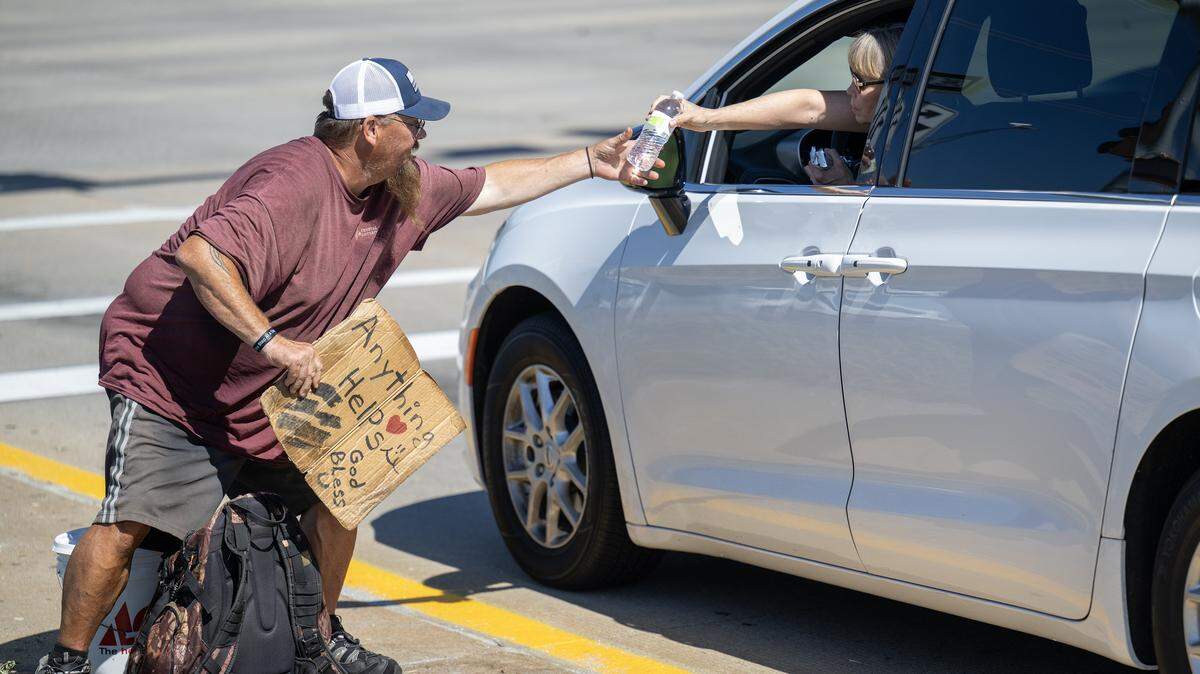
As Mission sees an increase in calls for services related to those experiencing homelessness, the northeast Johnson County city wants to see if it can do more to serve its homeless population.
“As we all know this is not an issue that’s an easy one to solve, but the current systems and structures don’t really provide meaningful support to balance all the needs,” City Administrator Laura Smith said during the Nov. 5 Finance and Administration Committee meeting.
In 2023 and 2024, the Mission Police Department responded to 98 calls related to individuals sleeping outside, or one call a week, Smith said. So far in 2025, the police department has responded to 95 calls relating to homeless individuals, equating to 2.4 calls per week, or more than double.
Smith said that the increase in calls has to do with the fact that homeless individuals have “become more visible over the last several years.”
“The increasing number of calls, questions, police reports taken there just because of the unease that people are feeling with some of that activity,” Smith said.
Following conversations with the City Council in February, staff came back to the committee to see if they would like to create new ordinances or regulations similar to neighboring communities — which restrict camping on public property and sleeping in cars — or other actions.
But instead of creating an ordinance banning those activities, the committee wanted to explore programs or partnerships that could better assist those experiencing homelessness.
“I think city services and city land are for the enjoyment of everybody, however they safely and legally see fit,” Councilmember Ben Chociej said during the meeting. “I won’t vote to criminalize existing on public land in any fashion, but I think there’s a lot of room to deal with issues that come with that.”
Why is Mission seeing an increase?
The increase in reported activity may have to deal with Mission’s public and private property that’s available, Smith said.
“We’ve made a very specific and concerted effort in transit and that makes our community accessible in ways others might not be,” Smith said. “We have access to public restrooms and walkable access to a variety of goods and services — prepared food, grocery stores.”
While the city doesn’t allow camping in its parks and requires people out by 10, many individuals who are experiencing homelessness are spending time in the city’s parks, like Broadmoor Park. The city has also found that people are sleeping in dumpster enclosures on private property, laundry rooms in apartment complexes and highway underpasses, among other areas.
As Mission continues to grow with new development and more construction projects on the way, the city needs to figure out how to move some of those people staying near the highways.
In particular, the Kansas Department of Transportation is beginning Metcalf Bridge repairs soon. Part of KDOT’s agreement with the city includes that Mission is responsible for the removal of all encroachments either on or above the limits of KDOT’s right of way.
Additionally, the city will begin repairs on Johnson Drive after a stormwater system-related sinkhole opened up earlier this year.
“Those two things in addition to a larger Johnson Drive construction project will make this area a pretty active construction zone,” Smith said. “That’s not a safe place, regardless of whether or not KDOT says we need to remove encroachments, that’s not a safe place for someone to live or exist.”
The city cannot cite someone for being on public property, but Smith said that staff is working with the legal team to see what notices are appropriate to begin a move for at least one individual living in that area and site cleanup.
Staff is also exploring coming through the area to clear some of the underbrush “in the hopes of creating a situation that maybe isn’t as inviting in the future.”
‘I wish we had an answer’
But the bigger question of where people can go and what Mission can continue to do is still unclear, Smith said.
The city offers access to services both through the police department and its mental health corresponder. To date, no one has agreed to use the offered services, which is “not uncommon,” she said. They’ll also offer the community center as a warming or cooling center during periods of extreme temperatures, but that’s not always a readily available option.
Johnson County has no temporary shelter available for individual adults after the project to build a shelter in Lenexa failed last year. But the need continues to grow as county data shows a steady increase in its homeless population.
Councilmember Wanda Vaughn asked if the city could use one of its vacant buildings for a homeless shelter to operate, but Smith said that the city isn’t equipped financially or from a human resource standpoint to begin services.
“This is a situation that we’ve talked about many times, and it’s so sad because we don’t have a lot of options to house people,” Councilmember Lea Loudon said. “I don’t know if Mission is big enough or has the resources to solve the homeless problem in our area, but I appreciate that we seem to walk the line of not criminalizing being unhoused.”
“It kind of ties our hands because there’s not a whole lot that the city is doing to fix the situation, but I don’t think that’s a fix — moving them from one place to another and tying them to a system to pay fines. I wish we had an answer.”
Councilmember Chociej agreed that it wouldn’t be practical for Mission to build a shelter alone, but he said he hoped “we never lose sight of what we can do, anything to make the situation better.”
He advocated for the city to explore more partnerships with the nonprofit world or faith-based organizations in addition to seeing what other areas in the metro are doing to tackle the issue.
“Even if it’s something we figure out is impractical, I want to take a genuine look if we can provide direct assistance to people,” Chociej said.