He couldn’t pay rent after accident. Then he learned Johnson County has no shelter
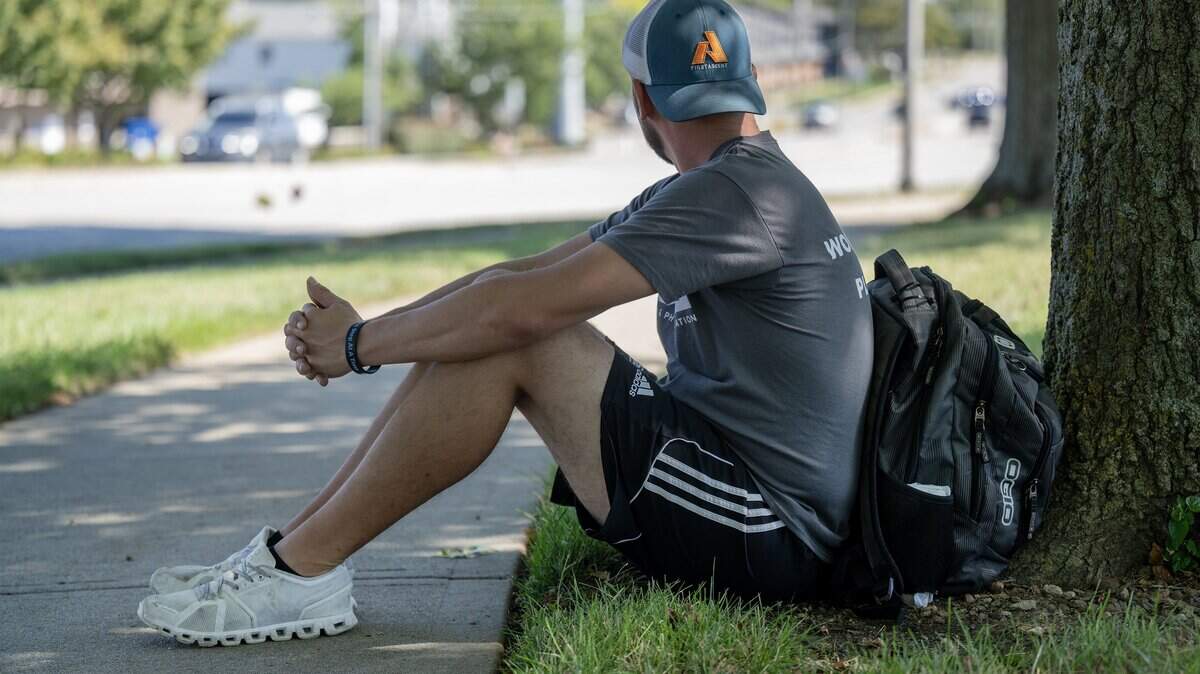
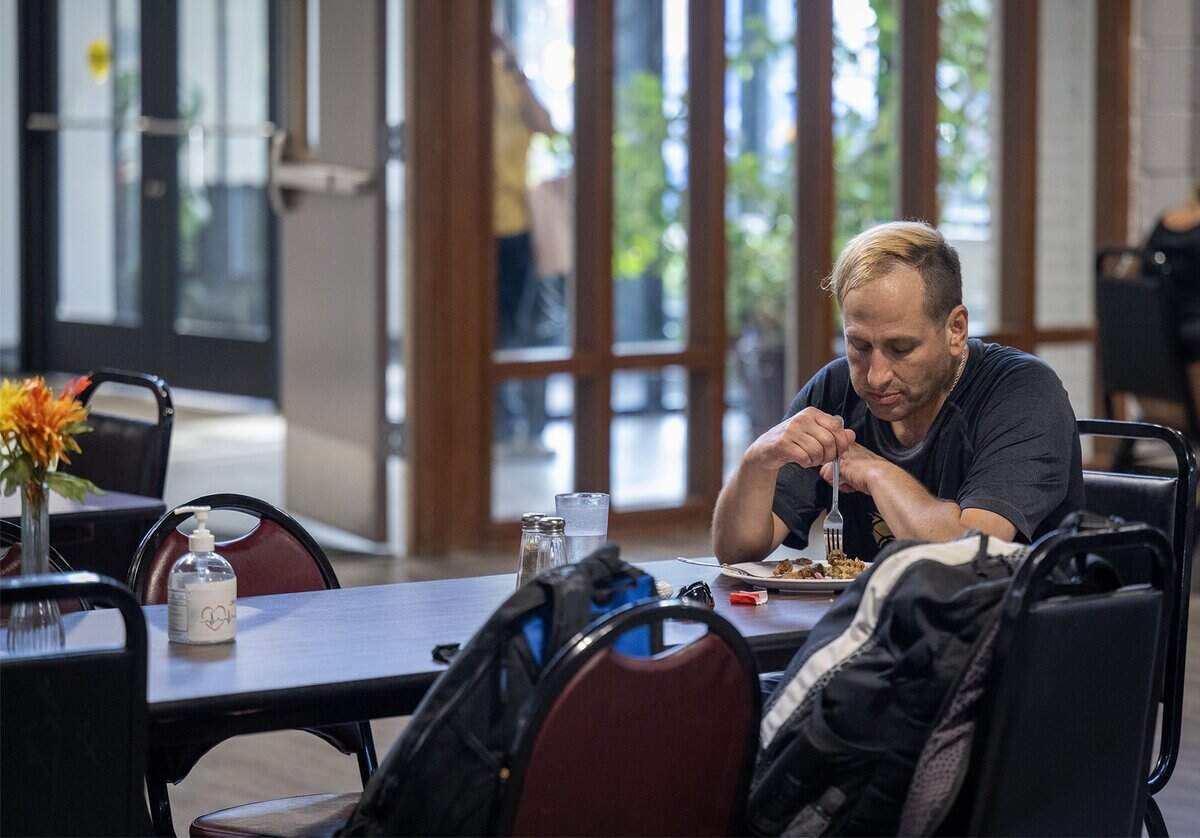
After staying in a hotel for several months, Brian checked out with $22 in his pocket and no place to go.
Brian had been T-boned by another car while delivering packages for Amazon and came out with several back, neck and bone injuries. Still recovering and unable to work, his worker’s compensation wasn’t enough to be able to keep paying his rent in Johnson County.
“I was looking for shelters in Johnson County and found nothing,” said Brian, who requested we only use his first name because of privacy concerns. “I was shocked because Johnson County was where I’d lived for 17 years.”
He ventured over to the Missouri side and took the last bed available at City Union Mission, but ended up leaving.
“All I knew was Johnson County,” he said.
When Brian tried to return home, he found that Johnson County lacks some key services. In particular, it desperately needs a year-round shelter for individuals experiencing homelessness, Brian said.
It’s something local leaders and advocates have echoed for years.
“This is a crisis … It’s not about my story, it’s really just that we need to help the most vulnerable population. There is so much that’s needed,” he said.
As the population of homeless residents has been steadily increasing over the years, Johnson County laid the groundwork to use more than $10 million in state and federal COVID-19 relief dollars to transform a hotel in Lenexa into the county’s first year-round, temporary shelter for adults last year.
But, the project never came to fruition. After months of back-and-forth, the Lenexa City Council blocked it from moving forward. And Johnson County still lacks a low-barrier shelter.
As a result, the county went back to the drawing board to reallocate those dollars toward other affordable housing projects or organizations serving homeless individuals by the end of 2026 in order to keep from losing the funding.
But while Johnson County officials avoided squandering the money completely, some community leaders and officials saw the denied project as a missed opportunity.
“That was kind of once in a lifetime to have the funds necessary to acquire and renovate a facility and make it appropriate for shelter,” Johnson County Commissioner Julie Brewer said. “What we lacked was the will and the buy-in.”
Where did those dollars go?
While Brewer doesn’t think a temporary shelter is totally off the table for the county, she said it’ll be more challenging to find the kind of money they had last year to be able to pay for it.
“That’s the biggest thing we missed. We had a dedicated funding source and we didn’t get across the finish line,” said Brewer, who worked for housing nonprofit United Community Services before winning the election as the Third District Commissioner last year.
As a result, $2.47 million went to a 50-plus home development by Habitat for Humanity of Kansas City and $3.1 million to Friends of Johnson County Developmental Supports to purchase and renovate properties to create affordable multifamily units.
More than $467,000 went to the Salvation Army for its Family Shelter expansion in Olathe; $137,654 to support Project 1020 operations as the county’s only cold-weather emergency shelter for adults; and $175,000 to United Community Services.
The county allocated these dollars last year, but there are ongoing efforts to get some projects off the ground. The City of Olathe approved the Salvation Army’s request to expand its family shelter this summer.
Alongside the state and local recovery funds, the county is reallocating nearly $4 million in one-time U.S. Department of Housing and Urban Development funds as part of the American Rescue Plan Act. In August, the commissioners approved $2 million in funding for Metro Lutheran Ministries to purchase, rehab and create 16 low-income housing units for those who are chronically homeless. A location has yet to be determined.
With the dollars dispersed, Brewer isn’t sure where funding like that could come from again.
“There are foundations here in this metro who have prioritized brick and mortar operations, but ongoing operating dollars are going to be the hardest to find. You need to find renewable grants.”
An increasing need
In the meantime, Johnson County still has no temporary shelter for individual adults as more people are losing their housing.
The 2025 Point in Time Count data shows that 253 individuals were experiencing homelessness on one night in January, an increase from 250 people in 2024 and 235 people in 2023. In 2016, Point In Time Count data shows 153 people.
Olathe resident Brian could have been one of those additional individuals.
After making his journey back to Johnson County, Brian made a home in the Lenexa City Center, sleeping in parking garages as close to the wall as possible — using his breath to keep him warm. He slept in the elevators of parking garages and under overpasses on rainy nights.
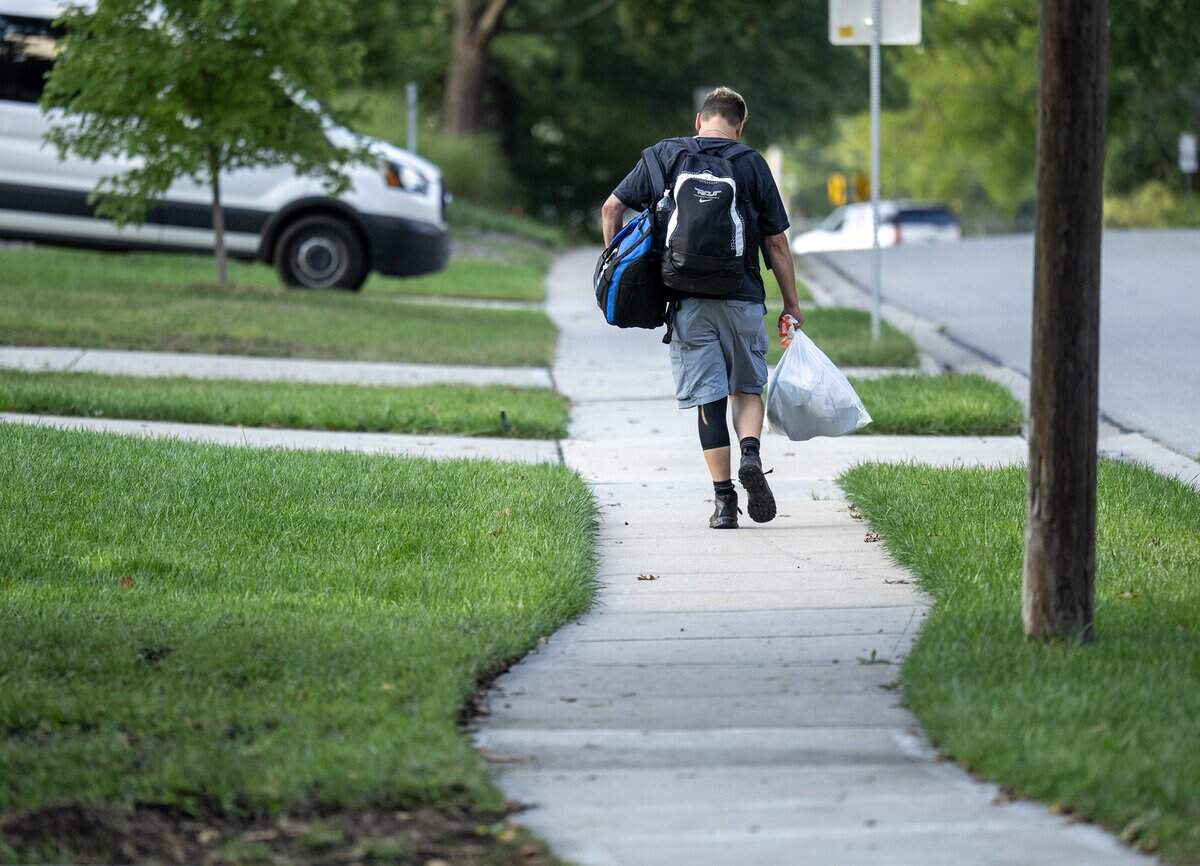
He took three buses to get to physical therapy for his injury and three buses back to Lenexa. He had to learn about the organizations that provide meals and water to help with his survival.
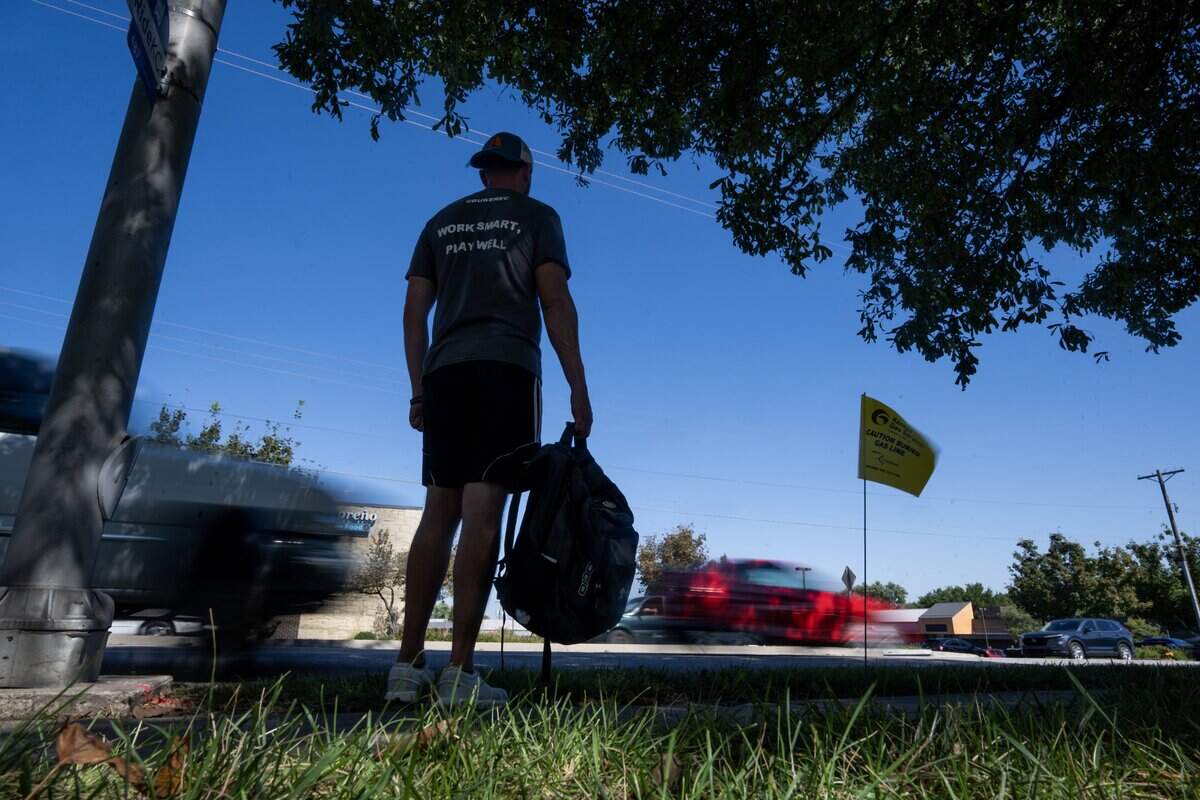
Earlier this month, Brian came up on his one year mark of living outside. Within the year, he walked just over the width of the United States, a little under 3,000 miles.
“You’re living with … anxiety and depression, uncertainty, I mean just genuine fear. Physical, mental exhaustion — just keeping your hope and faith alive to keep going,” he said. “You’re managing the weather, you’re hoping you’re not going to get woken up by an officer. You have all of this you’re managing, but you still have to keep going.”
While he’s now found a job and a temporary place to live in Olathe, he recognizes that the county has a long way to go.
He’s come forward to share his experiences with the Johnson County commissioners in order to advocate for the need of a temporary shelter — citing the impact that Project 1020, the temporary winter shelter in Lenexa, had on his outcome.
“Barb McEver saved my life,” he said about Project 1020’s co-founder and president. “It’s a safe place, a home, an environment where you know you’re going to be OK.”
Brian said he’d like to see Johnson County partner with Project 1020 or establish something similar that’s year-round and catered to meet individuals’ needs.
“No one’s asking for a handout,” he said. “We’re asking to work with us and help us, lead us somewhere.”
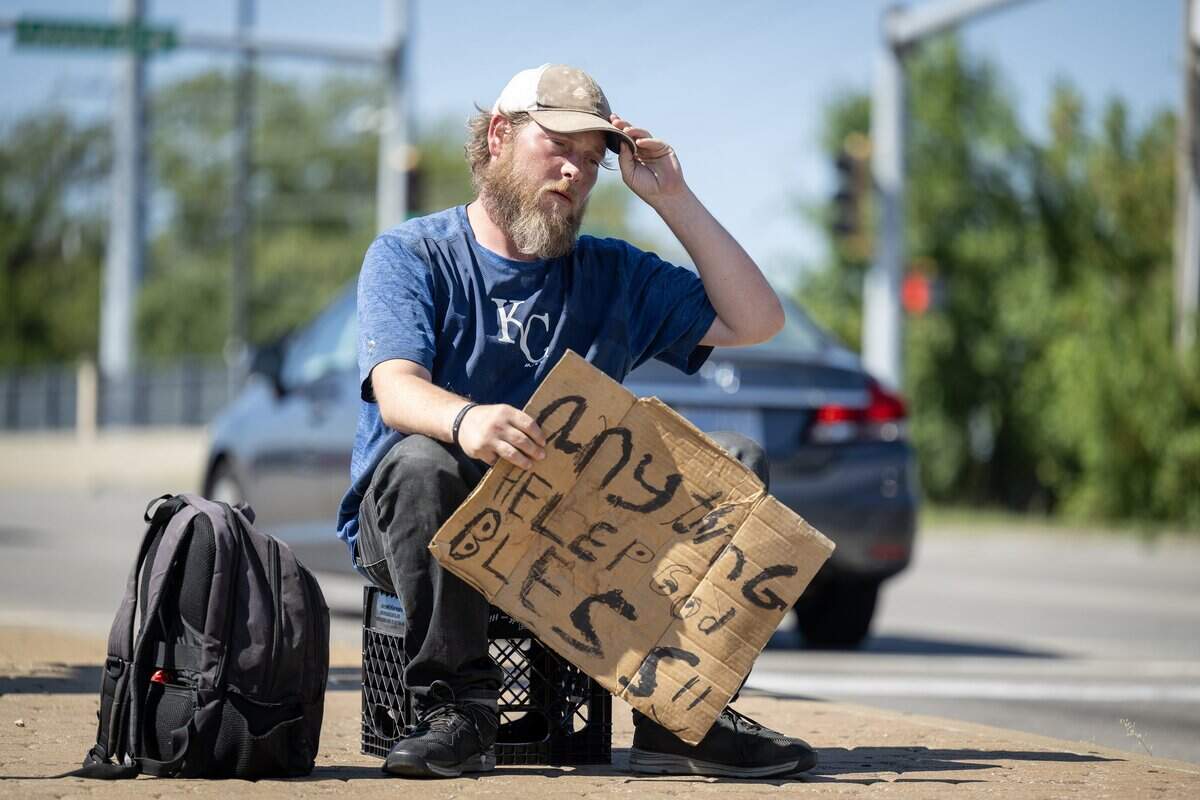
Thomas West, 52, grew up in Olathe and says he’s “been homeless off and on for periods of time.” He stayed in Project 1020 during one of those periods, but most recently found himself without a place to live in April, after the shelter closed for the season.
“Generally I stay in the downtown Olathe area,” he said. “There are a lot of people living out off the tracks, in the woods, behind grocery stores, Walmarts.”
West has a caseworker helping him through Johnson County Mental Health, whom he said is, “very supportive.”
“But they can only do so much.”
Early efforts to build a year-round shelter
McEver did try to open a temporary shelter in Johnson County a few years ago, but was met with road blocks.
In 2018, she and her husband bought a building in Olathe to create a shelter for individuals experiencing homelessness. She communicated with the city before buying the building to receive reassurance that the zoning was allowed and that the site on West Park Street could be used as an emergency shelter. The city gave her the greenlight.
Shortly after the purchase closed, the city came back and informed her that the zoning changed and she now required a special use permit — which means she had additional thresholds to pass in order to get approval.
But, like the proposal in Lenexa, McEver’s efforts didn’t make it past the finish line, and the building was torn down a couple years later.
While McEver’s still interested in opening a year-round shelter, it would require county and city support, and the ability to hire employees — a shift from her volunteer-run temporary shelter.
“We’re willing to do whatever it takes to make this work, but as I said there’s no place at this time, no one is stepping up to say we could use this space,” she said, adding that there hasn’t been space she’s found for purchase. “It’s not happening.”
She thinks the county’s allocations have been strong – citing the Metro Lutheran project in particular as a way to keep families and individuals off the streets – but there’s still several people “sleeping outside with nowhere to go.”
“They’re waiting for Project 1020 to open. Yesterday (Wednesday) I had about 13 calls from people asking, ‘What time do I need to get there on December 1 to make sure I get a bed?’”
Where do we go from here?
McEver said she wants to make sure the county keeps the momentum going.
“It has to be in the forefront of people’s minds that this is an important issue,” she said. “You can’t just try one thing and it didn’t work and just group it. You have to keep the momentum going and growing,” she said.
Part of the needed changes stem from city policies and funding toward housing solutions, commissioner Brewer said, not just the county as a whole.
“So you think about Johnson County, most of your housing solutions and shelter solutions are going to fall within a city’s boundary because the county has jurisdiction when it comes to land use over the unincorporated area,” she said, adding that a lot Johnson County cities require a special use permit in order to establish a shelter.
But special use permits are typically more expensive and more challenging to move through the approval process, Brewer said.
“We’ve got to have policies that contemplate shelter solutions, just like we have to have policies that contemplate attainable housing solutions, which we’re seeing more cities move to that,” she said. “And then at the end of the day, priorities show up in how you budget.”
A lot of cities and private developers recently have moved to address missing middle housing — which refers to a gap in access to a range of homes like duplexes, townhomes and multiplexes that fit the market between single family homes and larger apartment buildings.
The term can also include more affordable single family homes. The idea is to help increase the housing supply and present more affordable options – including “attainable housing,” or homes that cost $300,000 or less.
As cities shift into creating more attainable housing options, it can help more families make forward progress.
“Anytime there’s a piece missing, it not only impacts the person who’s ready for the next step, it impacts the person who’s coming behind,” Brewer said.
While the county and cities are making strides, “we cannot forget that there’s still this missing puzzle piece.”
“It doesn’t diminish any of the things that we are doing, it just still centers us that there’s still something that we’re not doing and shelter is one of those things that we’re not doing.”
This story was originally published September 28, 2025 at 5:58 AM.