JoCo rental help got her off the streets. Now, the program faces uncertainty
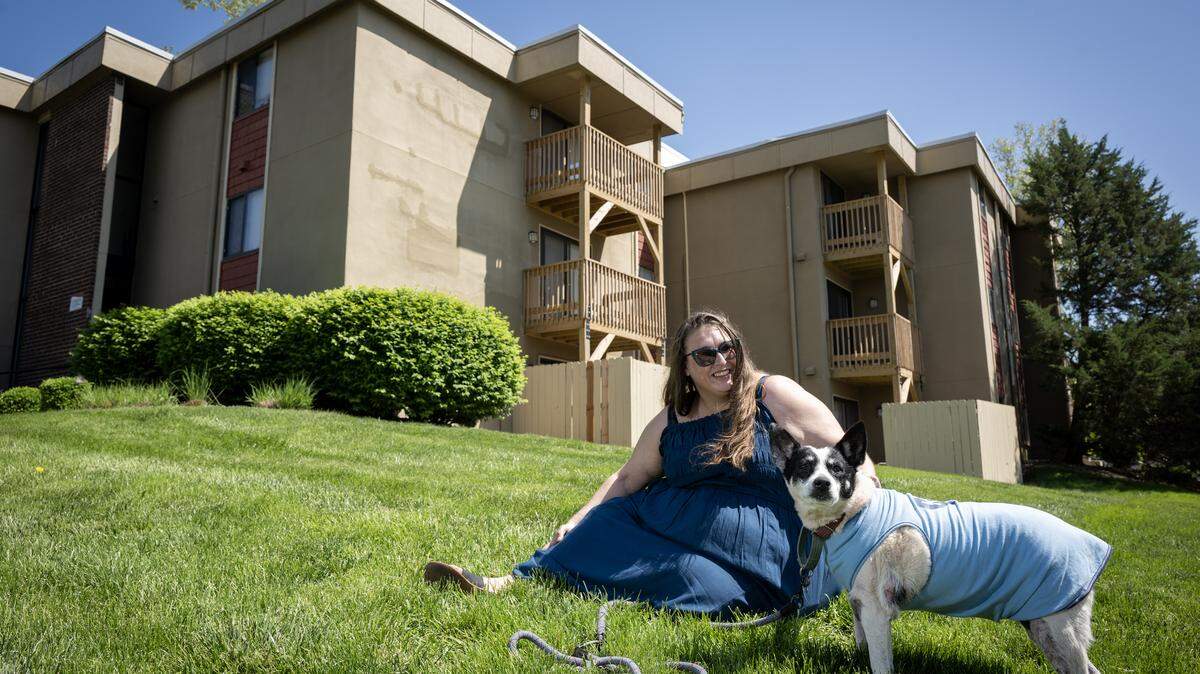
After a bank seized her family’s home in the Kansas City metro area during the 2008 recession, Jessica Ecord ended up living on the streets in Wyandotte County.
She lived under the James Street Bridge, in parks and sometimes in abandoned houses, she said. She occasionally went to temporary shelters, but after someone attempted to suffocate her with a pillow and stole her belongings, she felt safer on the streets.
During that time she lived unhoused, she applied for Section 8 housing — a federal Housing and Urban Development (HUD) voucher program that helps low-income individuals afford housing options in their communities.
However, there’s often long waiting lists to get one of the few vouchers available.
Ecord waited for three years. After living in subsidized housing in KCK for several years, she moved to Johnson County, where she encountered new challenges trying to find her new home .
She isn’t alone in the wait and hunt for housing assistance.
Last year, Johnson County saw historic levels of demand for housing assistance. As the cost of living continues to rise in the area, Johnson County housing officials now worry about how they will get residents off Section 8’s waiting list and into housing as the federal government pauses any funding increases.
“Our costs are going up, our funding is leveled — could be cut — and we have higher expenses than we’ve ever had,” said Heather McNeive, the director of Johnson County Housing Services.
While Ecord got her voucher and still qualifies for assistance, she still worries that she could lose it all again.
“My biggest fear is being homeless again and I refuse to be homeless again.”
Higher prices, higher demand
Once she decided to cross county lines in order to be closer to her family, Ecord said she had a hard time finding a place to live in Johnson County.
“They give you 90 days from the date you get your voucher to find a place,” she said. “I was on the list, just calling and calling and everyone was saying, ‘We don’t accept anymore, we’ve updated our units, and we’ve upped our rental price.”
She eventually landed at her current apartment in Lenexa, but she wished the county’s apartment list was updated on a more regular basis and there were more options available to have made her search easier.
“I was actually really worried that I might not be able to find a place and then I would lose the voucher,” she said. “I just want to live in a better apartment, you know, and I’m glad for (my apartment complex), but I shouldn’t have had to have such a difficult time.”
She hopes that she doesn’t have to move again because she likes her place now and “it’s very hard to find anything” in Johnson County, Ecord said.
HUD sets the number of vouchers each municipality can receive. Johnson County is authorized to offer 1,466 Section 8 vouchers to serve its cities, except for Olathe, which has its own authority.
Landlords have to opt into the program and residents have to apply and meet a certain set of income standards in order to participate. Once a resident gets a voucher, they pay 30% of their income and the voucher will cover the remaining cost for as long as they qualify for assistance.
As costs for rent rise, so has the demand for Section 8 vouchers.
Between 2018 and 2023, the median rent in Johnson County increased by 35% while the median household income only increased by 18%.
In 2024, there was an unprecedented demand for rental assistance and the Johnson County Housing Authority received over 2,100 applications for only 600 spots on the waiting list — a 52% increase from 2023, according to county data.
In April, McNeive said there were still 500 people on the waitlist and they are looking at 24 months of waiting.
“If we get a robust budget from congress and we’re more optimistic, we will offer more spots,” McNeive said. “We have no plans to open the waitlist this year because we have to serve the 500 we currently have.”
“From what I understand nobody is opening up their waitlists this year just because you don’t want to give false hope that you’re going to be able to help a family out and make them wait on the waitlist forever.”
Trump impacts to Section 8
But funding increases are unlikely.
In April, McNeive said that the federal government isn’t granting any increases in funding for the subsidized housing program.
“I hope the funding is reserved, I don’t expect it to grow … maybe minor cuts, but I think it would be wildly irresponsible to back out of these contracts with the private sector,” she said.
The housing authority hasn’t lost funding, but higher costs and limited funding make it challenging to serve constituents, she said.
Federal legislation, known as the “Big Beautiful Bill” is anticipated to cut several other safety net programs for low-income residents, like Medicaid and food stamps.
There haven’t been confirmed cuts to HUD programs at this time and the federal funding allocations process remains ongoing, Johnson County Spokesperson Anne Christiansen-Bullers said in a follow-up email.
“Our priority is providing essential services to our community, and we remain dedicated to advocating on our residents’ behalf at the federal level,” Christiansen-Bullers said in the email.
Still, the local Housing Authority is “holding our breath” as it waits, McNeive said.
“Our costs are going up, our funding is leveled — could be cut — and we have higher expenses than we’ve ever had,” she said. “Funding uncertainty makes us unable to maximize our resources and help as many people as we’re allowed to.”
“I wish we could do more, but we are limited.”