Former Embassy Suites hotel is imploded with dynamite as crowd looks on. See the video
AI-generated summary reviewed by our newsroom.
- The 266-room Embassy Suites at 220 W. 43rd St. was imploded off Mill Creek Pkwy.
- Saint Luke’s bought the land in the 1970s and cited safety risks and costs.
- The City Plan Commission approved a 157-space lot with a three-year permit limit.
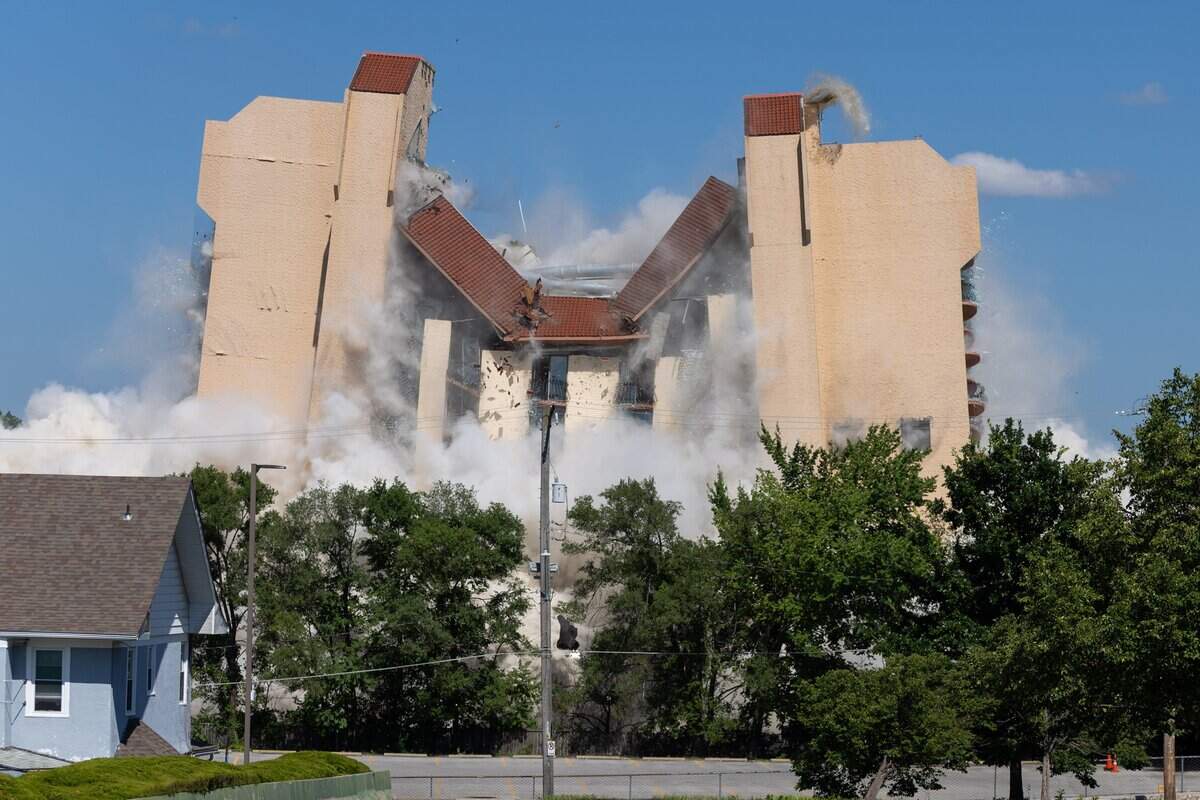
With two booms heard through the Plaza and Westport neighborhoods, the former Embassy Suites transformed from a hotel to a pile of rubble.
The structure off of Mill Creek Parkway at 220 W. 43rd St. was demolished Sunday in an implosion.
The 266-room hotel closed in September after the operating company decided to end its lease after it ran out.
Industrial Salvage and Wrecking Co. used 676 sticks of nitroglycerine explosives to take down the building, according to a representative with Buckley Powder, which transported the explosives.
Saint Luke’s Hospital of Kansas City and its affiliates have bought and razed much of the properties between the Plaza and Westport, including the former Temple Slug building and houses constructed as part of the Steptoe neighborhood, a historic Black enclave.
Embassy Suites implosion
A crowd of families, cyclists, skateboarders and assorted Midtown residents gathered in the summer afternoon sun to watch the implosion. Law enforcement kept people more than two football fields away from the structure. At the intersection of 43rd and Main, people chanted with an officials’ radio.
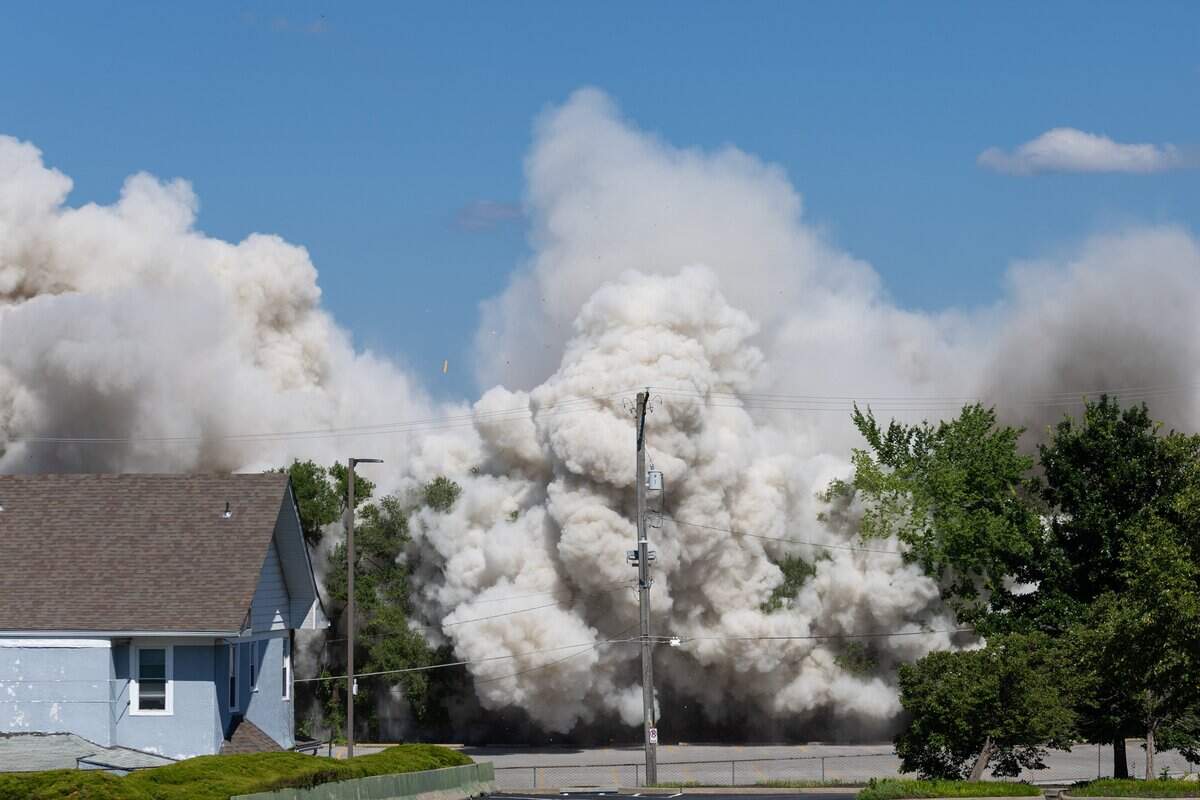
At “zero” they felt a huge boom, but the building stayed still.
Then came the second boom. The hotel crumpled inward, spewing out an expanding cloud of dust. When the gray cloud cleared, a midtown staple for about 50 years was gone.
Kimberly Kircher watched the demolition. She worked at the hotel for more than 30 years, starting at age 17.
Kircher described the destruction as “a little melancholy.”
“I think the cockroaches right now are building their own apartments.” she added.
The Lee’s Summit resident said she worked almost every role in the place, from singing at the piano bar to working the front desk.
She remembers “really nuts” New Year’s parties and meeting Earth Wind and Fire, who were staying at the hotel. At one point Kircher got stuck in the elevator while delivering room service.
“I just kept banging on the door saying ‘Help!’ So I ended up eating somebody’s shrimp.”
The elevator shaft was the only part of the building left standing after the implosion.
The newly renovated Dr. Jeremiah Cameron Park appeared unaffected, other than hotel receipts and pieces of insulation and strewn on the grass. A fine layer of dust coated the grass, sending up clouds where people stepped.
Why was the building demolished?
Saint Luke’s Hospital said safety risks and the high costs of maintaining an “inoperative” building, prompted the healthcare system to seek demolition.
Saint Luke’s looked into other uses for the building, a spokesperson previously told The Star previously, including converting it to multifamily apartments or senior housing.
The hospital system purchased the land in the 1970s, and leased it for the hotel, which opened in the late 1970s.
Spanish-style building
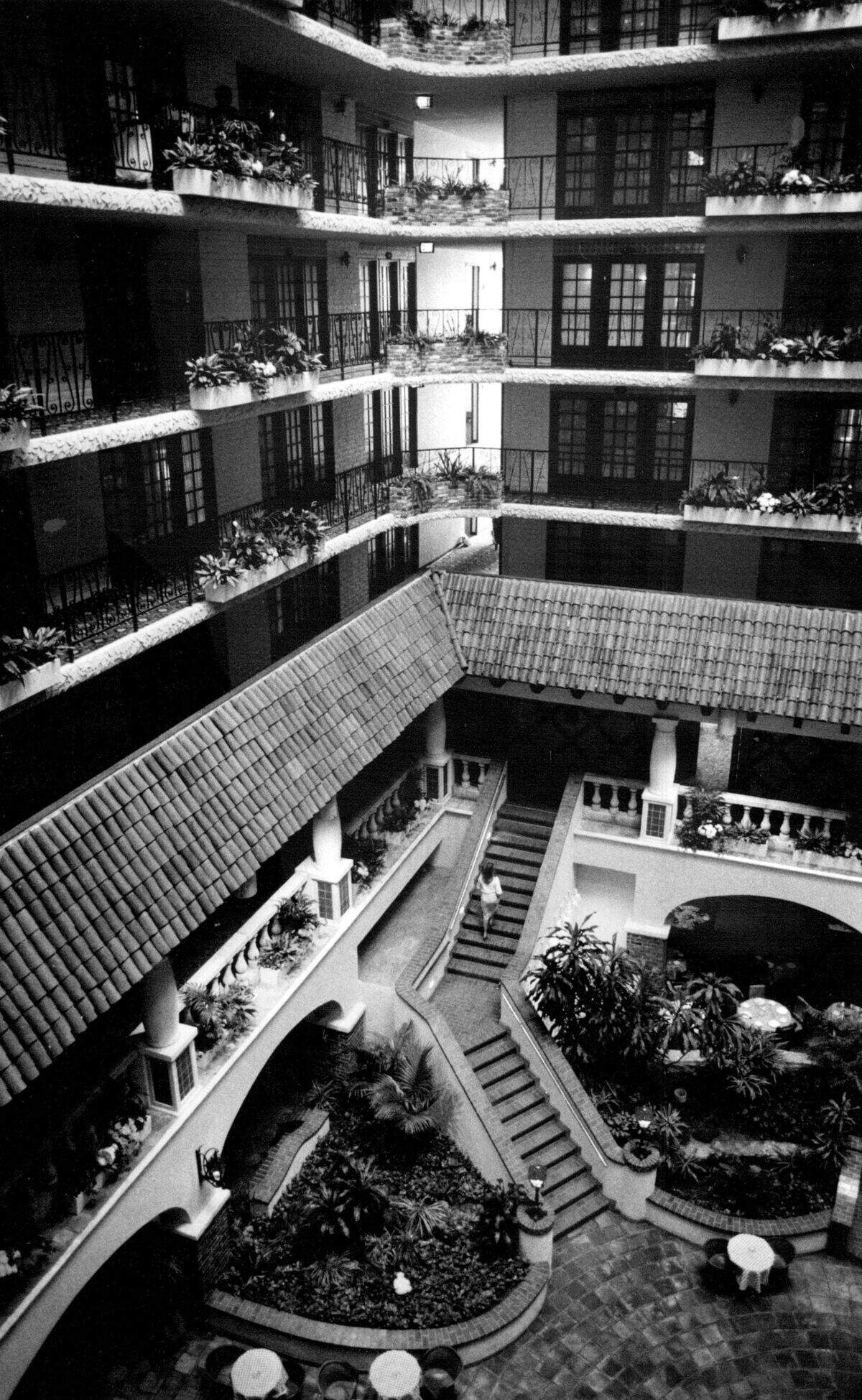
Coordinating with the nearby Country Club Plaza, the building featured a Spanish style with a soaring 12-story atrium, interior greenery and fountains.
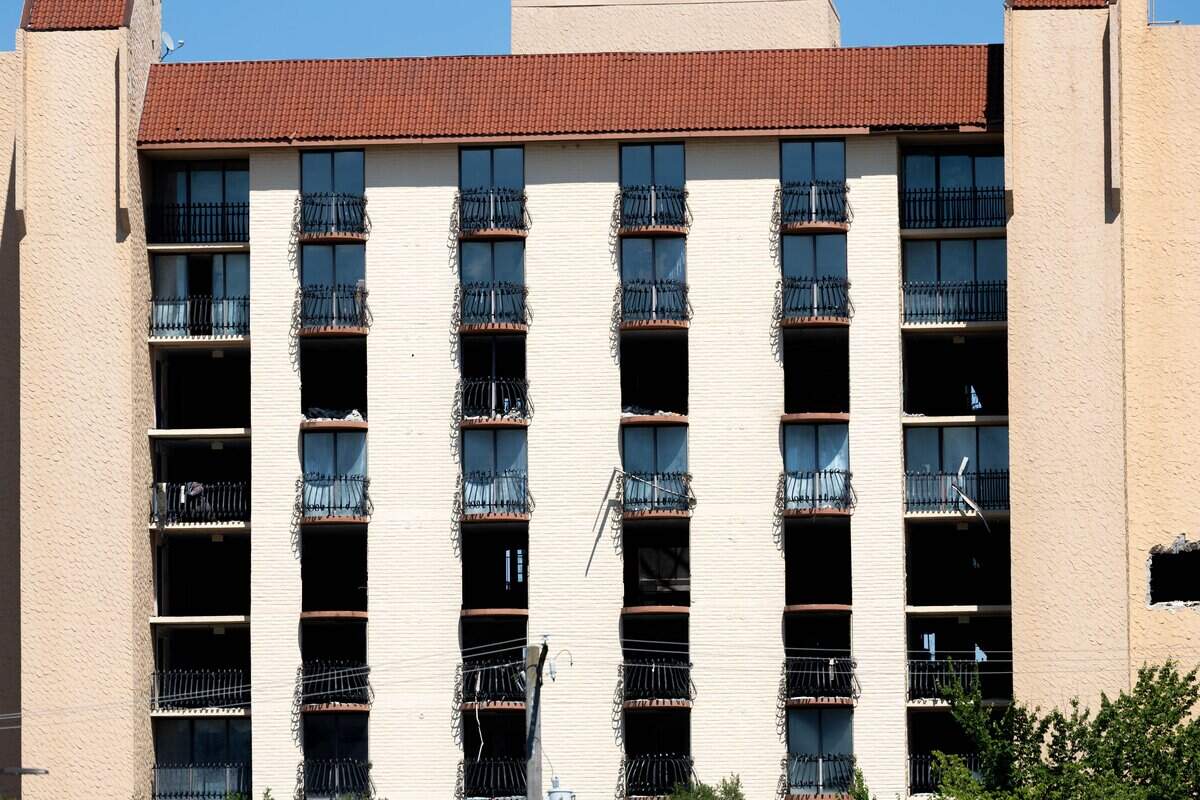
Terra cotta-style tiles covered an interior roof in the plaza-like lobby, with a tiered fountain in the center. The Spanish theme continued into the two-level pool and hot tub area with wooden doors and arched windows. Semi-circle shaped wrought iron balconies perched on the stucco exterior.
Throughout the years, the hotel hosted events including charity balls, weddings, proms, high school reunions and conferences.
The hotel was originally constructed in the late 1970s for the now-defunct chain, Granada Royale Hometel. In the mid-1980s, the brand was acquired by Holiday Inn’s Embassy Suites, which was later sold to Hilton.
According to a 1981 article in The Kansas City Star, a room at the hotel typically cost $65 a night, which is about $230 in 2026 dollars. At the time, commercial travelers made up almost 80% of guests, The Star reported at the time.
What comes next?
Saint Luke’s proposed a 157-space, gated parking lot for employees on the site, which the City Plan Commission approved in April. The surface lot is set to include new landscaping and fencing.
But the parking lot might not last long.
The plan commission set a limit of three years on the parking lot’s special use permit to help make sure Saint Luke’s comes back to the city swiftly with a plan for how the hospital will develop its campus in the years to come.
The hospital’s current master plan dates back to 2009 and does not include the hotel property because it was not expected to close at that time. The updated version will include the former hotel and ideas for what to do with it long-term, officials said.
“We believe we will be coming back to the community and to you all with a plan that shows what this use will be,” Aaron March, attorney representing Saint Luke’s, said in April.
Parking lot critiques
In the April City Plan Commission hearing, city planning staff were skeptical about the parking plan.
“There has been a pattern in this neighborhood already of destroying buildings in favor of surface parking, which is the opposite of what the Midtown/Plaza Area Plan calls for,” city planner Luke Ranker said during the hearing.
“There has been a pattern in this neighborhood already of destroying buildings in favor of surface parking, which is the opposite of what the Midtown/Plaza Area Plan calls for,” city planner Luke Ranker said during the hearing.
The Plaza Westport Neighborhood Association said in an April letter that it understands that the building will be demolished and that redevelopment needs to occur. The site is near a streetcar stop.
But the association wants to ensure that Saint Luke’s comes forward with a plan for future development phases.
“Our neighborhood has been decimated by acquisition and demolition of structures by Saint Luke’s or their affiliates,” said Amelia McIntyre of the neighborhood group.
“It is carving out an area that was once populated. We respect Saint Luke’s as an institution, but they do need to be a good neighbor, and a plan with some measured phases is an important part of being a good neighbor.”