Another Westport building is coming down. Neighbors keep waiting for a plan | Opinion
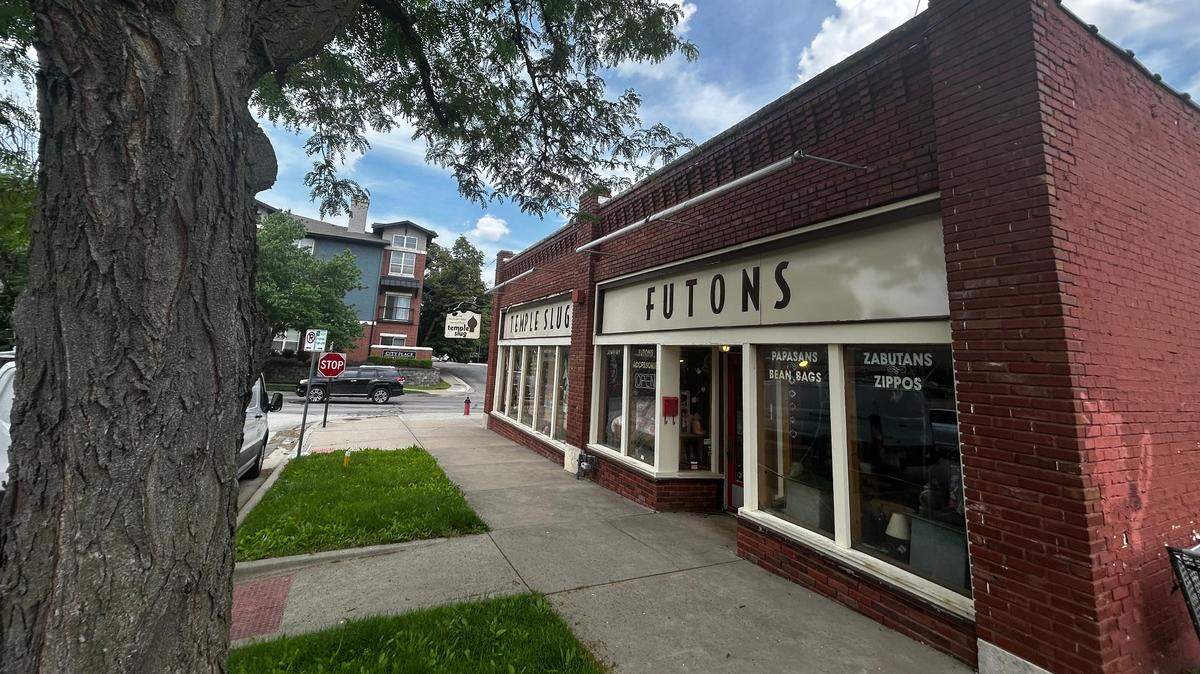
First, the news: the Temple Slug building is headed for the bulldozer.
The one-story brick storefront at 43rd and Jefferson has more than 100 years on the books in Westport. Temple Slug, a hippie hangout as much as it was a business, took residence in the space in 1970. It outlasted the waterbed boom, the futon craze and the slow-burning market for imported incense.
But it could not outlast the absence of a succession plan.
Temple Slug shuttered during the pandemic. For five years, the inventory of dreamcatchers, Buddha statues and tie-dyed tapestries remained inside, visible through the windows, gathering dust. Speculation about its future intensified last spring when founder and building owner Bob Gamer died at 86. His stepson Keith Buchanan, who managed the shop, died two days later.
The property was then placed under the control of a trust company, which liquidated the shop in July.
In addition to the Slug building, Gamer owned six other buildings adjacent to it: four houses and two duplexes, all empty, and most of them along 43rd Street between Jefferson and Pennsylvania.
In December, the Slug and those six buildings were sold to Westport Today, the real estate arm of St. Luke’s Foundation, the hospital that has already gobbled up much of the ground between the Plaza and Westport and has shown a healthy appetite for what remains.
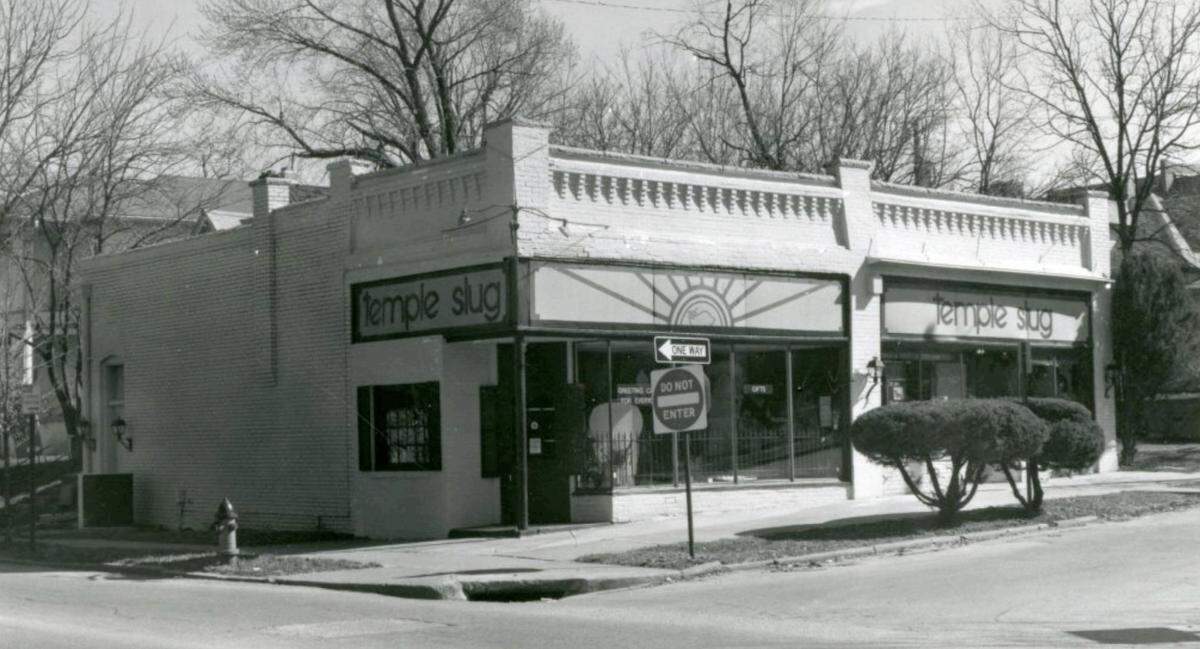
To the surprise of nobody in the neighborhood, Westport Today quickly set in motion a process that would allow it to knock down the old Slug. It commissioned an independent inspection of the building that found “high levels of mold and substantial structural deterioration of the roof, exterior walls, flooring and foundation — including the risk of a possible collapse,” a St. Luke’s spokesperson told me Thursday.
Westport Today submitted the report to the city, which deemed the building dangerous and ordered it repaired or demolished within 30 days. Demolition is the plan. It’ll be rubble by St. Patrick’s Day.
From Temple Slug to what?
What phoenix will rise from the ashes of Temple Slug? And will St. Luke’s also seek to tear down the other homes it bought?
No one’s offering specifics.
The hospital spokesperson said only that “Westport Today is in the process of evaluating the condition of the six surrounding residences” and that “long-term plans for the sites have yet to be determined.”
That was more or less the same answer neighborhood groups got Wednesday night during a public engagement meeting about a completely different property St. Luke’s is preparing to demolish a few blocks away: the Embassy Suites building at 43rd and Broadway.
Opened in 1977, the hotel had been operating under a 50-year ground lease that it recently opted not to renew. It closed in September.
“The hotel was turned back to us earlier than expected,” said Aaron March, an attorney representing St. Luke’s. “We’re not hotel operators, so we’ve had to figure out quickly what to do with the property.”
The hospital has since settled on a plan: tear down the 12-story building and replace it with … a surface parking lot for hospital employees.
March described that course of action as temporary. St. Luke’s is seeking a 10-year special use permit for the lot while it revisits its broader campus master plan. (The request is scheduled to go before the City Plan Commission on March 18 and the Board of Zoning Adjustment on March 25.)
“This is simply too important a piece of property for us to leave as surface parking,” March said. “We’re volunteering a 10-year time frame for this. It could very well be less. We just don’t have a building designed for the site because it came back to us relatively recently.”
But neighbors say they’ve been hearing some version of “interim” or “details to come” from St. Luke’s for so long they no longer find it reassuring. The hospital has bought up all of Steptoe Street, a block south of Temple Slug, and cleared houses that remain empty ground.
“There’s a lot been a lot of ‘evaluating’ going on for a long time about the properties St. Luke’s has bought in our neighborhood,” Tom Davis, a board member with the Plaza Westport Neighborhood Association, told March at the meeting. “And nothing seems to be happening except you guys letting the properties deteriorate.”
Amelia McIntyre, a former city attorney who now serves on the board of Historic Kansas City, noted that Gamer’s properties provided affordable housing stock in the neighborhood. She asked Matt Hanson, Westport Today’s director of real estate, if the hospital planned to give notice to the residents there. Hanson said the duplexes were no longer occupied.
“Is there any intent to lease them up?” McIntyre asked.
“We’re currently evaluating that,” Hanson said.
“So you’re not telling us,” Davis said. “That seems to be a theme with you guys.”
“We’d rather be honest with you and say that than lie,” March said. He said there’d soon be an updated master plan from the hospital that would share details. How long until that’s available?
“Six to 12 months,” Hanson said.
Kansas City Life Insurance Co.
There are strong parallels here to what is happening a few miles away in the Valentine neighborhood, where Kansas City Life Insurance Co. has lately been busy converting longstanding housing stock into dirt and weeds.
There, too, the bulldozers showed up before the blueprints. There, too, neighbors have been told some unspecified broader plan is on the horizon.
KC Life and St. Luke’s are venerable Kansas City institutions. No one begrudges them the right to grow. Few are saying that a squat old brick storefront, an aging hotel tower or a tired multifamily unit in Valentine is sacred and must absolutely be preserved. Cities change and buildings fall. But this is also a city woefully short on housing. Good neighbors don’t let homes sit vacant, knock them down and let whole blocks go quiet without a clear explanation of what follows. That’s a pattern we typically associate with absentee landlords.
Yes, these institutions have done a lot of good for Kansas City. They’ve also prospered here. They owe Kansas City more than vague, distant promises that something thoughtful will eventually materialize in the neighborhoods they’re reshaping.
This story was originally published March 1, 2026 at 5:03 AM.