
Plaza Westport bungalows are Kansas City’s historic legacy. Don’t bulldoze them all | Opinion
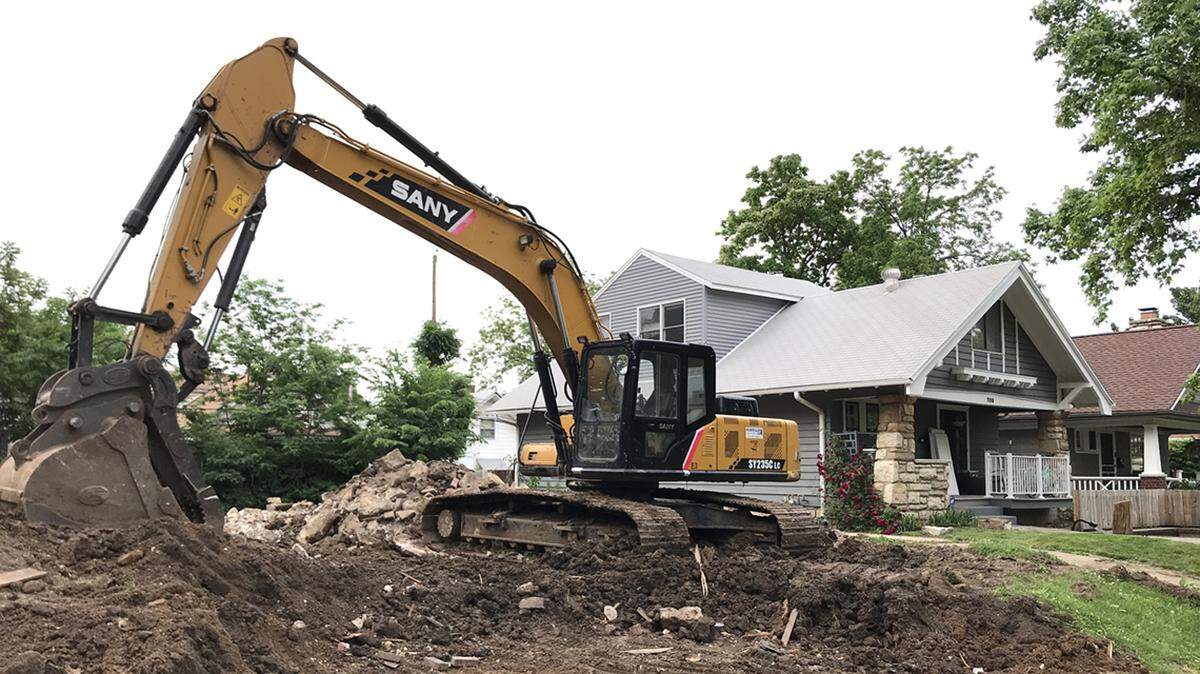
Here is a familiar story: An urban neighborhood becomes part of a so-called “revitalization” project. Old houses are torn down and replaced by luxury homes. Longtime residents leave, the neighborhood becomes less diverse, and the community is changed.
I accidentally witnessed one such story when I moved to the Plaza Westport neighborhood in 2020. I walked the same loop nearly every day for a year and watched the streets change in slow motion. I started asking questions and stumbled on an important piece of Kansas City history.
Plaza Westport is a pocket of residential streets north of the Country Club Plaza, south of Westport, and east from Madison Avenue to Mill Creek Parkway and St. Luke’s Hospital of Kansas City. In 2018, the Saint Luke’s Foundation announced plans to build 30 new single-family homes “designed to enhance and revitalize the neighborhood.”
I arrived amid the construction. Dust billowed from one side of West 44th Terrace, while across the street a man swept back debris from a sky-blue house with a small sign reading, “Built in 1910.” I later learned from Mary Jo Draper’s book “Kansas City’s Historic Midtown Neighborhoods” that many bungalows and two-story houses were built in Plaza Westport around that time. The houses were “built to be affordable,” but also “featured many amenities.” Draper notes that even in earlier phases of development, “Plaza Westport homes were intended for a working-class, immigrant population.”
On West 45th Street, I saw several new houses were already complete. Modern and sleek, they dwarfed the remaining bungalows. I wondered how many old houses had been torn down and what was being lost with them.
Zillow estimates the cost of one of these new houses at just under $675,000. An active listing for another is $725,000. The site touts the “walkable neighborhood, just a few blocks from the Plaza,” calling it “Plaza Heights.”
Plaza Heights? Isn’t this Plaza Westport? Street pole banners confirm “Plaza/Westport Hill” in yellow writing. Google Maps shows “Plaza Westport” in a red dotted outline. “Plaza Heights” is nowhere on the map.
Yet the development website reads, “Welcome to Plaza Heights. A rare collection of newly developed, sophisticated homes offering owners a privileged address.” It mentions proximity to both the Plaza and Westport. But words such as “premier” and “designer finishes” emphasize the high-end, luxury feel that Kansas Citians often associate with the Country Club Plaza. It refers to the area as “rich in history” but Westport, originally a frontier trading post and later the site of a decisive Civil War battle, was dropped from the name, while Plaza was retained.
Plaza Heights is not alone in trying to rebrand the neighborhood. Signs advertise “Plaza Terrace Apartments,” “Plaza Townhomes,” “44 Washington-North Plaza Residences” and “Jefferson on the Plaza”— all located in Plaza Westport. It may be effective marketing, but it does little to preserve the area’s history.
As Robert Martin, president of the Plaza Westport Neighborhood Association, put it, “Westport has always been a more funky, old-school neighborhood with greater diversity than the Plaza. One isn’t better than the other.” He added, “Cities that aspire to greatness preserve areas with unique character and iconic landmarks.”
In that spirit, the neighborhood association works with a group called Steptoe Lives, a coalition that formed to commemorate the area’s pre-Civil War, African American neighborhood called Steptoe. The small but historic enclave was centered around West 43rd Terrace (known as Steptoe Street until 1933), and the community grew into “a safe haven for Black families to thrive” in the early 1900s, as The Star put it.
In June 2022, “an entity affiliated with St. Luke’s Health System” demolished three of the last remaining original Steptoe houses, according to a September letter to the city from the neighborhood association. It warned, “the physical legacy (of the neighborhood) is being lost.” The coalition urged the city to change the name of West 43rd Terrace between Jefferson and Washington streets back to the original name: Steptoe Street.
In January 2023, following moving testimony from several community members, the City Council approved an ordinance doing just that.
Reclaiming Steptoe Street’s name is just one of the coalition’s several initiatives. In September 2022, Westport Presbyterian Church dedicated a mural to the neighborhood’s history. In October, St. James Missionary Baptist Church, one of its original churches, hosted a celebration marking 152 years serving the community. The coalition aims to further memorialize Steptoe with historical markers and a commemorative park.
As Mary Jo Draper has documented, “working families and freed slaves built historic Plaza Westport.” That fact needs to be acknowledged and remembered especially as more historic homes are lost to development.
Historic Kansas City has proposed that the city “allow pre-demolition review for historic structures.” This would allow historic neighborhoods, such as Plaza Westport and Steptoe, a better chance to “preserve the history and character that is important to them” and protect the legacy that makes Kansas City unique.