New Kansas City mural a ‘testament’ to music past and present in 18th and Vine
A new mural behind Vine Street Brewing Co. is turning a retaining wall in Kansas City’s historic 18th and Vine District into a visual timeline of Black music, tracing the evolution of musical traditions that have shaped both the neighborhood and the city itself.
Created by artists JT Daniels and Phil Shafer of Sike Style Industries, the approximately 250-foot mural stretches across the wall at 2000 Vine St. The project was commissioned by Shomari Benton, Tim Duggan and the 2000 Vine Group as part of ongoing development in the area surrounding Vine Street Brewing and Vine Street Chicken & Mac Co.
The finished work celebrates the people, traditions and musical movements that continue to define 18th and Vine as one of the nation’s most significant Black cultural districts.
“With projects like this, there’s always kind of a common intent that we’re going to do something of the space,” Shafer said. “The way JT and I approach public art is that we want to make sure that the piece that we’re creating fits the location. We knew we were going to do something that had something to do with 18th and Vine, music, culture, something like that. The soccer is going to be happening around it. Let’s let the mural live as more of a testament to the neighborhood, not a testament to the event.”
At the center of the mural is the phrase “Laissez les bons temps rouler,” or “Let the good times roll.” The phrase ties together themes found throughout the wall, including music, celebration and community.
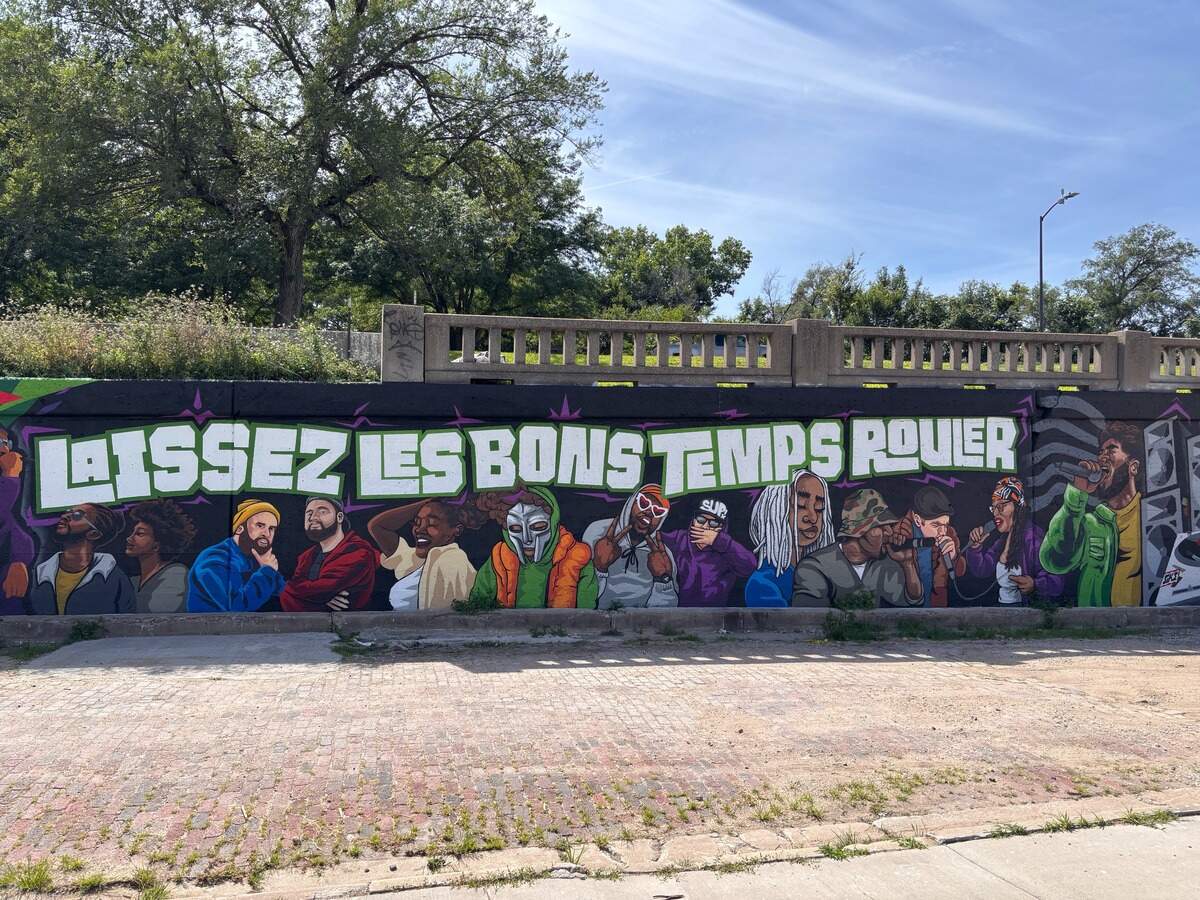
The mural begins with references to African musical traditions. A tribute to African drummer Bird Fleming serves as one of the earliest points in the visual timeline, while imagery inspired by Chiwara headdresses from the Bamana people of Mali reinforces the connection between African cultural traditions and the music that followed. Abstract patterns throughout the mural draw inspiration from African textiles, creating a visual thread that carries viewers from one era to the next.
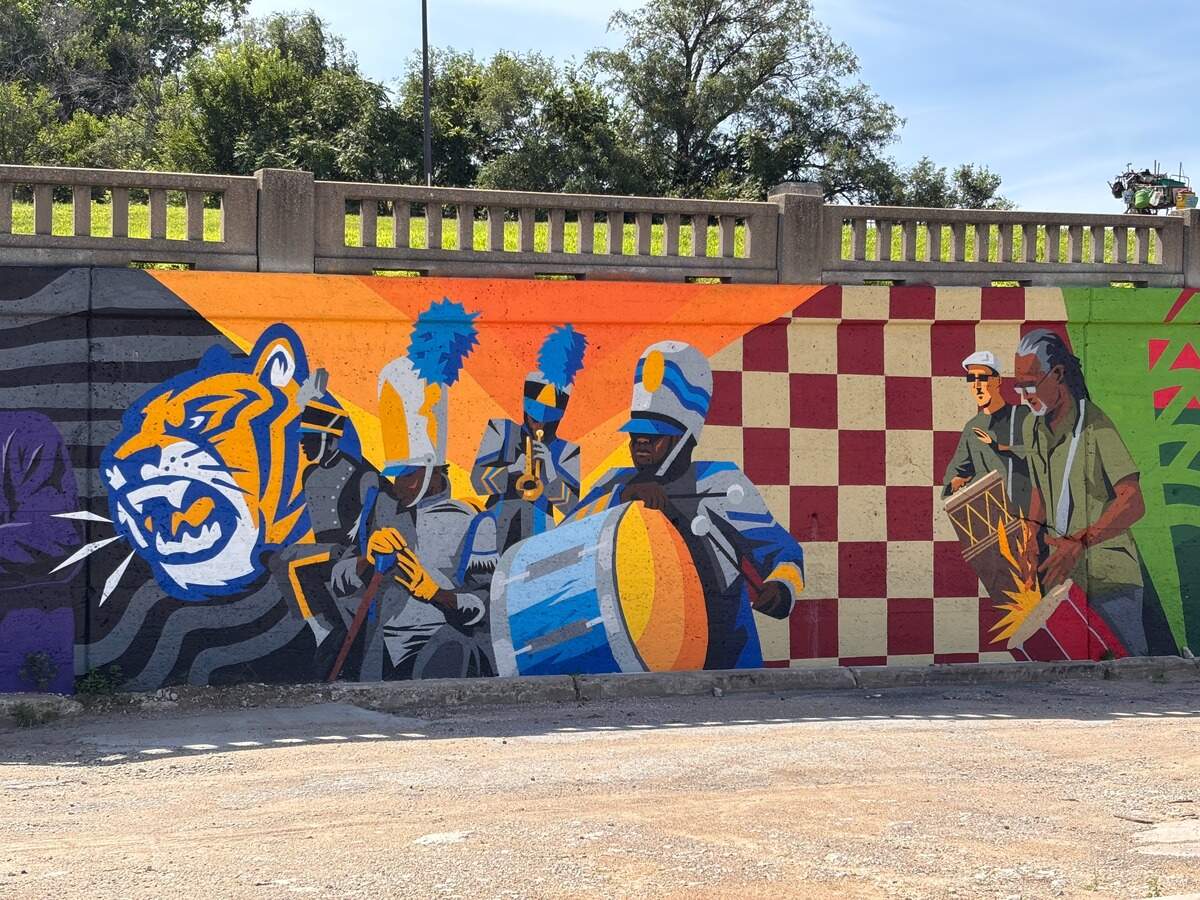
From there, the artwork transitions into marching band culture. References to Lincoln High School, HBCU band traditions and Florida A&M University highlight the importance of band programs in Black musical life. A large tiger head anchors the section while serving as a nod to generations of musicians who developed their skills through school and community bands.
The jazz portion of the mural reflects the district’s most recognizable legacy but avoids relying solely on the figures most commonly associated with Kansas City music history. Instead of centering the mural around Charlie Parker, the artists chose to spotlight a wider group of contributors, including Mary Lou Williams, Bobby Watson and Anita Dixon, whose efforts helped Kansas City earn its designation as a UNESCO Creative City of Music.
“We like to give people flowers while they’re still around, but also kind of shout out the ones who have passed recently,” Shafer said. “Charlie Parker is in all kinds of documentation and representation of KC jazz. We didn’t need to say the same person over and over again. We have way more things that really accentuate the culture.”
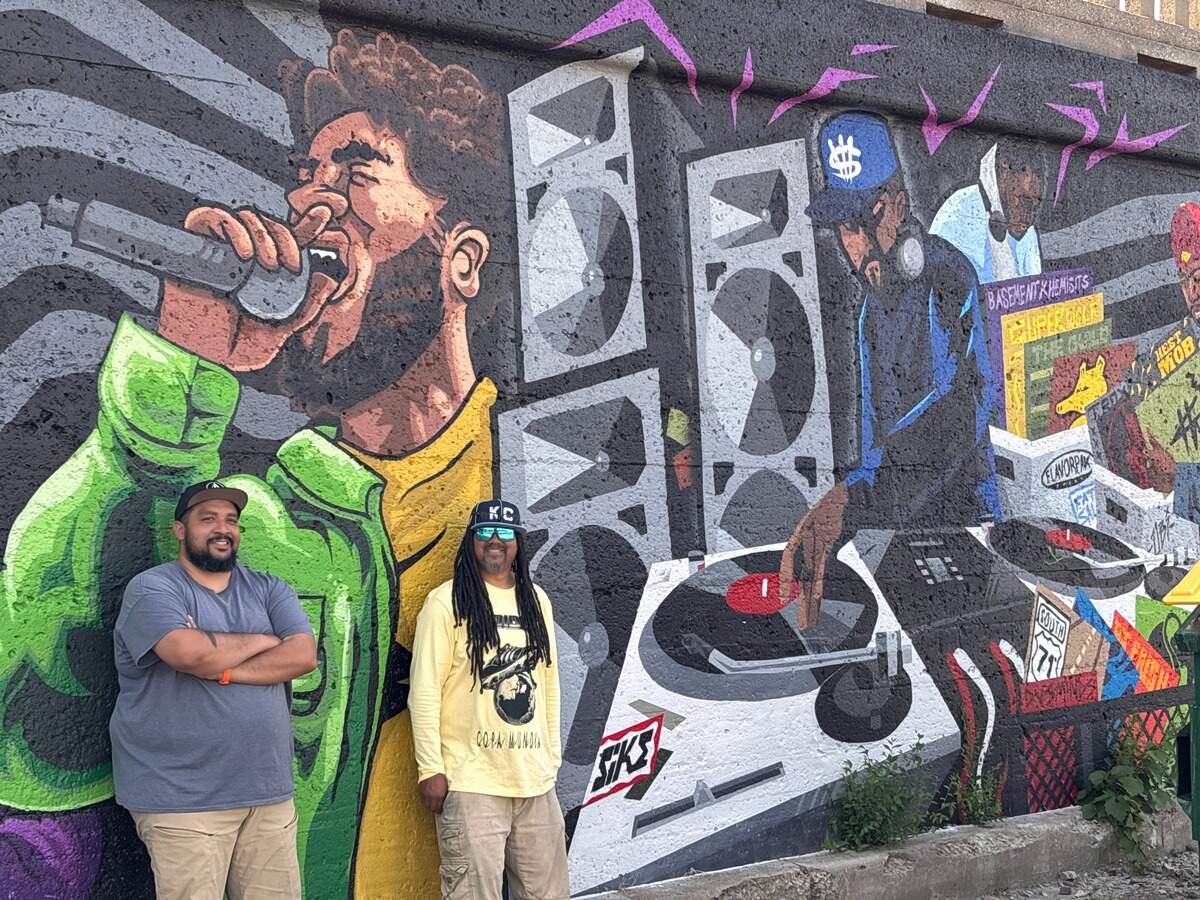
The mural’s largest contemporary section is dedicated to Kansas City’s hip-hop community. For Shafer, who spent years involved in the scene as a DJ, event organizer and visual artist, it was important that hip-hop be treated as a continuation of the district’s musical story rather than an afterthought.
References throughout the section include Nisha Gandy, Joe Good, Miles Bonny, Jock Max, DJ Fresh, Strange Music and other artists who helped shape local music culture during the past several decades. The section also contains personal tributes to friends and community members whose influence extends beyond music alone.
Among the most meaningful additions is a portrait of Craig Hughes, a friend of Shafer’s whose family later visited the mural. The artist said seeing their emotional reaction reinforced the power of public art to preserve community memories and tell stories that might otherwise go untold.
Daniels also incorporated personal references throughout the mural. Several figures are based on educators, fellow muralists, friends and people connected to the neighborhood. The inclusion of recognizable community members reflects his broader philosophy that public art should create a sense of ownership and belonging among residents.
“When I got into mural work, it was all about beautifying my city around me and working in areas that had blight and that were kind of glossed over,” Daniels said. “The basis for why I do cultural work anyway is representation and inclusion. How can I breathe life into something and do a design that feels organic and natural and then make something that people like me or people from my part of town would look at and see themselves included in?”
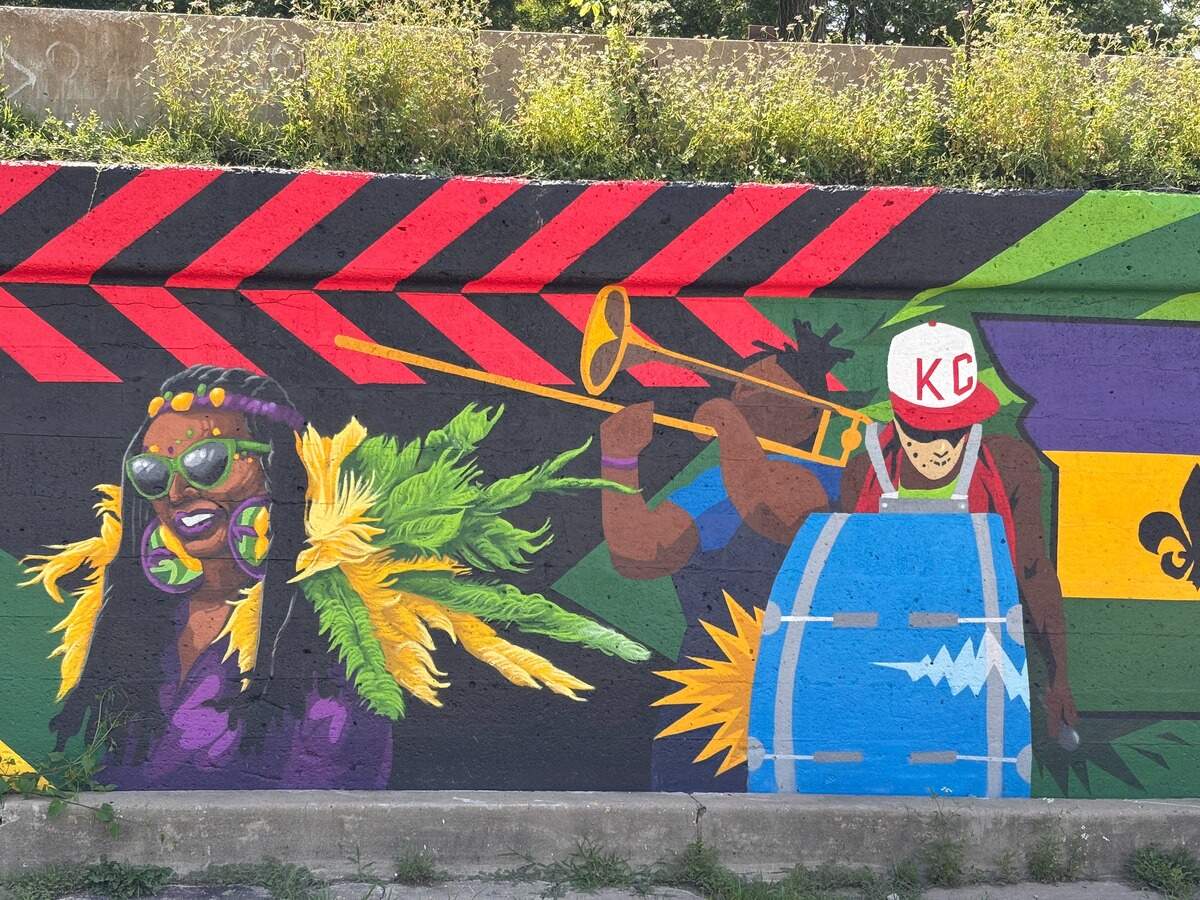
The collaboration marks the third major mural project between Daniels and Shafer, but it is the first where both artists’ character styles are prominently featured side by side. Shafer’s graphic and geometric forms blend with Daniels’ more fluid and character-driven approach, creating a mural that feels both structured and spontaneous.
The result is a mural layered with references that reward close observation. Visitors can discover tributes to musicians, educators, cultural leaders, friends and institutions that have influenced generations of Kansas Citians.
For Daniels, the mural’s ultimate success will not be measured by its artistic details alone, but by whether people feel connected to it.
“My biggest concern is that they’re able to walk by and see themselves in it,” Daniels said. “Whether they’re Black, brown or something else, you can come by and see yourself and what’s depicted and the vibe and the music that’s there.”