During World Cup, Kansas City shootings put gun violence under a microscope
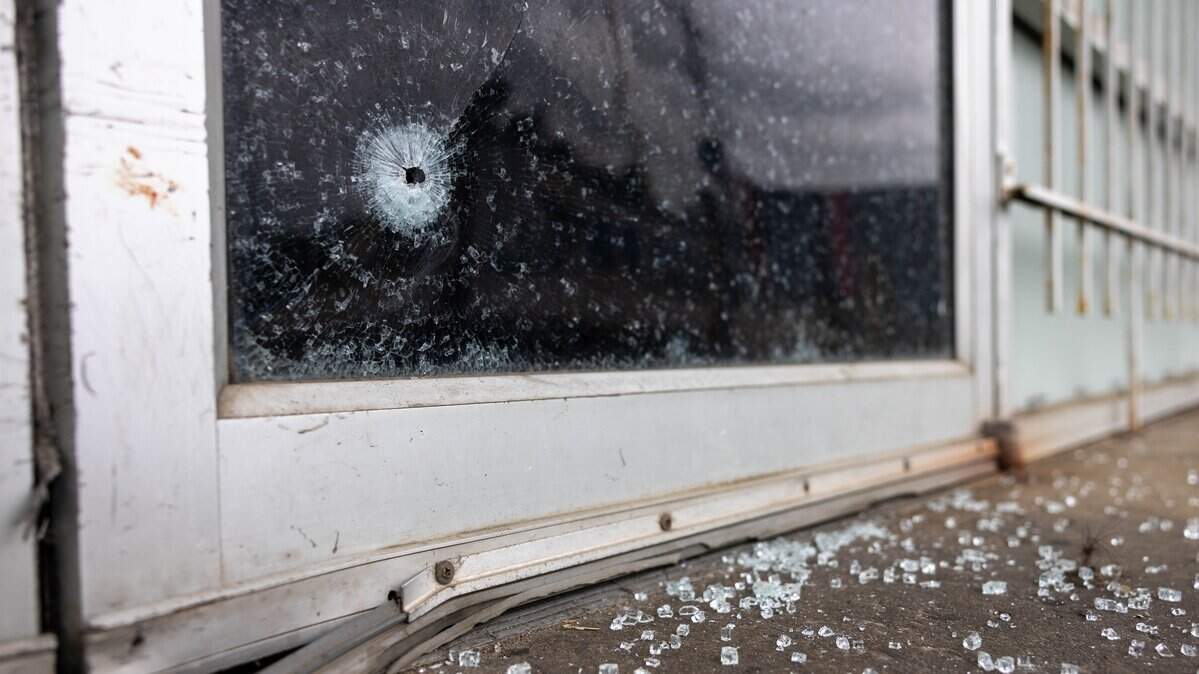
Michael Kelley worries about gun violence in Kansas City.
When he hears gunshots at night, he thinks about whether an errant bullet might pierce through his home in Midtown. And when his two young daughters head to school, he worries about their safety.
For Kelley, a 35-year-old policy advisor, gun violence often overshadows the positive sides of the city he’s lived in for more than a decade. It’s a side of Kansas City that’s been under an international microscope in recent weeks.
“It’s just really unfortunate that Kansas City is getting negative attention for something like gun violence,” Kelley said in an interview. “But it also shouldn’t surprise us because we don’t really have control over how we can handle gun violence as a city.”
As Kansas City plays host to the World Cup this summer, the sprawling international event has thrust the city onto the world stage. A national TV commentator recently touted the city’s growth in U.S. soccer. Fans from across the globe have also praised the city’s friendliness and shared photos partying around the Country Club Plaza or near the National WWI Museum and Memorial.
But a series of high-profile incidents over the last few weeks has also laid bare the plague of gun violence in the city. The shootings have highlighted a protracted debate over Missouri’s gun laws, among the loosest in the nation, and local leaders’ yearslong struggle to combat homicides and fatal shootings.
On Tuesday, ahead of the highly anticipated matchup between Argentina and Algeria, four people were wounded in a series of shootings along major highways that police believe were connected to the same suspect. Another man, who died after his vehicle crashed at Truman Road and Bennington Avenue, is also believed to have been shot by the same suspect.
The Kansas City Police Department did not release information about the shooting until early Wednesday morning, roughly seven hours after the department was first notified about it.
Last week, nine people were shot in a spray of gunfire at a weekend party on Troost Avenue. Later that same day, two men were killed inside a QuikTrip near Westport.
Those violent incidents came roughly two years after a mass shooting at the Kansas City Chiefs Super Bowl rally in 2024 that injured more than 20 people and killed Lisa Lopez-Galvan, a beloved mother, wife, sister and local DJ.
The Chiefs rally shooting — a highly public event witnessed by hundreds of thousands of fans and lawmakers of both major parties — sparked the loudest outcry for changes to Missouri’s gun laws in recent history. In the aftermath of that shooting and the lead up to the World Cup, however, nothing changed.
KC shootings in spotlight
In the wake of the shooting that injured nine last week, national and international media immediately seized on the incident with exaggerated reports about its proximity to the World Cup. In an interview, Mayor Quinton Lucas acknowledged the sensational way the shooting was covered by some, but also said that it illustrated an “indictment on gun violence in America.”
“I could scream for the mountaintops that it doesn’t have to be this way,” Lucas said last week. “I’ll keep doing that, but I don’t know if I’ll be persuasive (with) the Missouri legislature.”
Over the last five years, there have been an average of 30 homicides each June and July in Kansas City, Missouri and roughly four for the same two-month period across the state line in Kansas City, Kansas.
Between 2021 and 2025, both cities have logged a combined 40, 32, 48, 31 and 35 number of homicides for those two months.
City leaders, Democratic lawmakers and others have often pushed to enact stricter gun regulations in an effort to curtail the violence. Those efforts have languished in the Republican-controlled Missouri General Assembly, which often asserts its dominance over the Democratic-leaning city.
Guns are both pervasive and fiercely defended in Missouri, where political ads are often awash in firearms. Missouri law allows 19-year-olds to carry concealed weapons without a permit and the state also does not have a minimum age requirement to possess a firearm.
Remarkably, state law also severely restrains cities and counties from setting their own regulations, giving local leaders little sway over local gun policies. At the same time, Kansas City and St. Louis are two of the only cities in the country with police departments under state control.
Missouri gun laws
For state Sen. Maggie Nurrenbern, Tuesday’s matchup between Argentina and Algeria, the first of six matches in the city, was a historic event. International superstar Lionel Messi scored his first ever hat trick — three goals — in a World Cup and thousands of fans flooded Arrowhead Stadium.
Nurrenbern, a Kansas City Democrat who attended the match, said she wants to continue to see that history unfold and “for the rest of the world to be able to experience the Missouri that many of us know and love.”
But the city and state have to get a handle on its gun violence, she said. Nurrenbern pointed specifically at the fact that Missouri legislators have barred city leaders from enacting stricter gun regulations, including how firearms are purchased and transferred.
“I’m very concerned that unless we get a grip on this, that it is going to be detrimental to future success in the state of Missouri,” she said.
Missouri Republican lawmakers, however, have moved quickly to beat back potential restrictions. In the wake of a shooting that killed two women inside a nightclub earlier this year, one state senator said he saw nothing in the state’s gun laws that needed to change.
Those comments broadly illustrate the Republican resistance to gun restrictions. At the time, Sen. Joe Nicola, a Grain Valley Republican, emphasized a need to both protect law-abiding citizens’ Second Amendment rights and “keep guns out of the hands of others that are doing it.”
“Every time there is a shooting, a mass shooting or whatever, that’s the word that goes out, right? We need stricter gun laws,” Nicola said in February. “Well, stricter gun laws really only affect the law-abiding. The people that are using it for crimes and things like that, they’re still able to get guns.”
In a remarkable move two years ago, a top Republican lawmaker scrapped plans for two gun rights bills in the aftermath of the Chiefs Super Bowl rally shooting.
“Now is not the appropriate time to be taking up those bills and therefore they will not be brought up this session,” now-House Speaker Jonathan Patterson, a Lee’s Summit Republican, said at the time.
However, those bills — which would have allowed guns on public transit and inside churches and exempt firearms and ammunition from sales taxes — were refiled the following year.
Governor weighs in on safety
Republican Gov. Mike Kehoe, who built a major part of his campaign for governor around boosting public safety, had also largely sidestepped the issue of gun regulations. A spokesperson for his office did not immediately respond to a request for comment for this story.
On Tuesday, however, a reporter asked Kehoe how he planned to grapple with the state’s role on an international stage. He broadly predicted the World Cup would be successful.
“My prediction is that there’s going to be great experiences had here at the games and we’ve met many international visitors in the last couple of days,” he said. “Many more will be coming and they’ve all expressed to me how open and friendly Kansas Citians have been.”
The Republican governor also praised efforts from law enforcement to provide a safe event and touted cooperation between local, state and federal police agencies.
“(Those agencies) have all worked together — not to make it feel like we’re some sort of prison — but that we are absolutely keeping fans safe and a welcoming experience,” Kehoe said. “A lot of effort has gone into making sure we achieve that balance.”
As thousands of fans descend on Kansas City for a once-in-a-lifetime international event, the World Cup also appears to have renewed a focus on the region’s gun violence problem. It’s an issue virtually certain to generate more attention in the coming weeks.
Kelley, the 35-year-old policy advisory, said he just wants his city to be safer regardless of the politics surrounding the state’s bitter gun debate. He said he hopes that’s something everyone can agree on.
“We should, at the very least, be able to acknowledge that the status quo isn’t working,” he said. “It is my sincere hope that our local legislators continue to search for ways to fix things, but also that our state legislators enable Kansas City to be able to take the steps that they need to keep residents like myself and my family safe.”