Should Jackson County put the brakes on data center zoning? What residents want
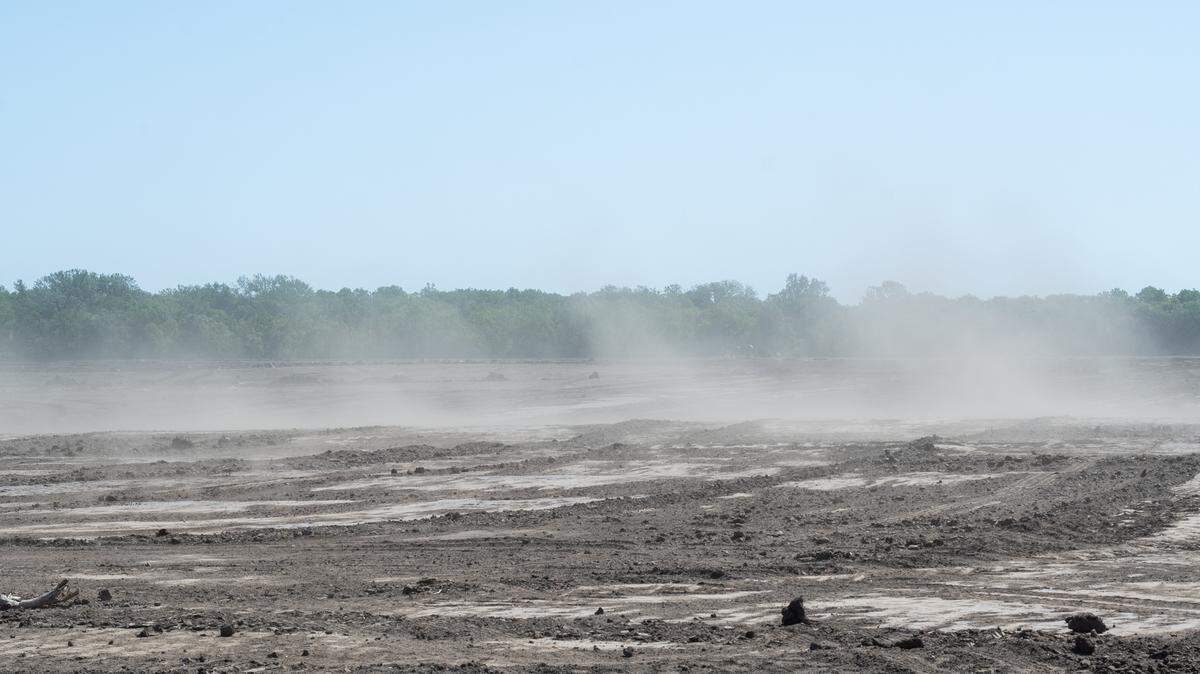
As Jackson County continues to consider taking a step against the future of data centers, residents from all across the metropolitan area had one last chance this week to weigh in.
Several residents hailing from Kansas City to Buckner attended a Monday public hearing of the Jackson County Legislature to share their perspectives on whether the county should welcome or repel future data center and Battery Energy Storage System (BESS) sites.
The legislature has been weighing a temporary ban, which would limit the construction of new data centers in unincorporated areas of Jackson County, since early April.
The proposed ordinance would set a 120-day moratorium on any land use applications that propose building a data center in county limits. It would also enact a ban of the same length for applications regarding BESS sites, facilities that capture energy from various sources and store them in batteries.
Ultimately, legislators decided to hold the issue for one more week in order to potentially expand the moratorium from 120 to 180 days.
Legislative Vice-Chair Sean Smith, who is sponsoring the proposed ordinance, said the proposed 120-day moratorium period was intended to give adequate time for public input, research and proposals without creating lengthy uncertainty for either residents or potential developers. Legislators previously noted the ordinance was inspired by “widespread community opposition and resident concerns related to large industrial technology facilities.”
At least 10 “hyperscale” data centers, including five projects that will use over 100 megawatts of capacity, are in progress in the Kansas City metropolitan area. The largest project currently in the works, a $150 billion hyperscale AI factory from Dutch company Nebius, is under construction on 400 acres in northeast Independence and will be sustained by its own power plant.
Smith said some community members around Jackson County “felt a little jilted when they didn’t have a good opportunity” to express their concerns directly prior to Monday’s hearing.
“That’s what this is intended to do – have a little pause, not too long, “ Smith said. “...What we have right now is no rules, really, so people who apply don’t even know what we might require of them.”
Legislator Donna Peyton spoke in favor of the 60-day extension, which Smith said has been supported by several legislators.
“Our community would like for this to come to a conclusion,” Peyton said.
Following local examples on data center limits
Jackson County is not the first local body to consider setting limits on approval for data center and BESS sites.
The Kansas City Council passed legislation in late 2025 placing more limits on where data centers can be built. The council also increased the requirements for public hearings and special approvals associated with any proposed data center development project.
Similar conversation has taken place on the state level, with restrictions on data center zoning recently passing across the state line in Leavenworth, Kansas.
Kansas City resident Beto Martinez, executive director of Kansas City environmental health and justice organization RiSe4EJ, urged the county to continue following the Kansas City Council’s example in setting policies limiting data center development.
“I think the moratorium is reasonable,” Martinez said. “It’s needed to introduce transparency, accountability and responsibility to the residents of this community.”
Martinez and others shared several public health concerns around the potential development of further data centers in unincorporated Jackson County, including possible impacts to air and water quality.
“If [residents] oppose it, we need to respect that,” Martinez said. “...We don’t have any policies in place here at the local level, at the county level, to move forward at the moment.”
Industry versus lifestyle
Monday’s meeting drew a mix of outspoken residents presenting concerns about data centers’ direct impact on their rural communities, and commercial leaders portraying the data center economy as an essential growth opportunity for Jackson County’s economy.
Support for individual data centers already approved for zoning across the county has fallen along similar lines, attracting construction unions and school systems while alienating neighbors.
Jackson County resident Greg Nauman moved into a more rural area of the county with his wife and daughter in order to purchase land as a financial investment. The potential for data centers to move into the area without any county regulation, he said, threatens his lifestyle and future financial stability.
“What am I going to do if the person across the road from me all of a sudden decides to sell their property for half a million dollars a year?” Nauman said Monday. “...Let’s put a halt on this. Let’s get together with the public.”
Meanwhile, Former Missouri State Representative Mike Talboy, currently the political director for Greater KC Building & Construction Trades, criticized data center opponents for standing in the way of industry growth and relying on what he described as “fear tactics of the unknown.”
“Battery storage facilities are not new. Data centers are not new,” Talboy said. “We’ve heard the same kind of things with all kinds of technology as we advance… the safety and the efficiency and the ecology of them has gotten better through time.”
Talboy said that data center projects, if welcomed in Jackson County in the future, would present career growth opportunities to longtime residents even if construction jobs at individual data center sites were temporary.
“The skills that folks learn from one project, they take to another project,” Talboy said. “...The information that they glean, and the careers that are born out of these projects, are massive.”
Environmental concerns remain
Nuanced concerns around the long-term ecological impacts of these sites have also been a concern regionally, and continued to dominate airspace at Monday’s hearing.
Makenna Nickens, a Jackson County resident the Community Outreach Specialist for the Missouri Coalition for the Environment, said that while she supports a moratorium on the data center, she’s wary of legislation that combines policymaking for data centers and for BESS sites.
Nickens described BESS systems as crucial to the expansion of renewable energy in Missouri.
“Missouri is behind when it comes to our power grid and energy innovation, and we collectively need to push for more – and better – renewable energy sources,” Nickens said. “Battery energy storage sites do not have the same adverse environmental impacts that data centers do, and they should not be lumped together with them.”
Buckner resident Kelli Jabs said that she’s become accustomed to unions, businesses and corporations touting the positives of data centers, while those who live nearest to these development sites tend to speak out about feeling unsure and unsafe.
Jabs said she worries about the youngest residents of unincorporated Jackson County becoming the “guinea pigs” for the personal, public health and economic impacts of both data centers and BESS sites.
“We just need parameters, and we need them quickly,” Jabs said. “We want our future to be protected and healthy.”