Another KU fraternity was just sanctioned for hazing. Here’s what we know
AI-generated summary reviewed by our newsroom.
- The University of Kansas placed Delta Upsilon fraternity on probation through May 2028.
- Delta Upsilon committed three student conduct violations, KU’s investigation found.
- Alpha Tau Omega’s student organization status was revoked through spring 2031 on March 20.
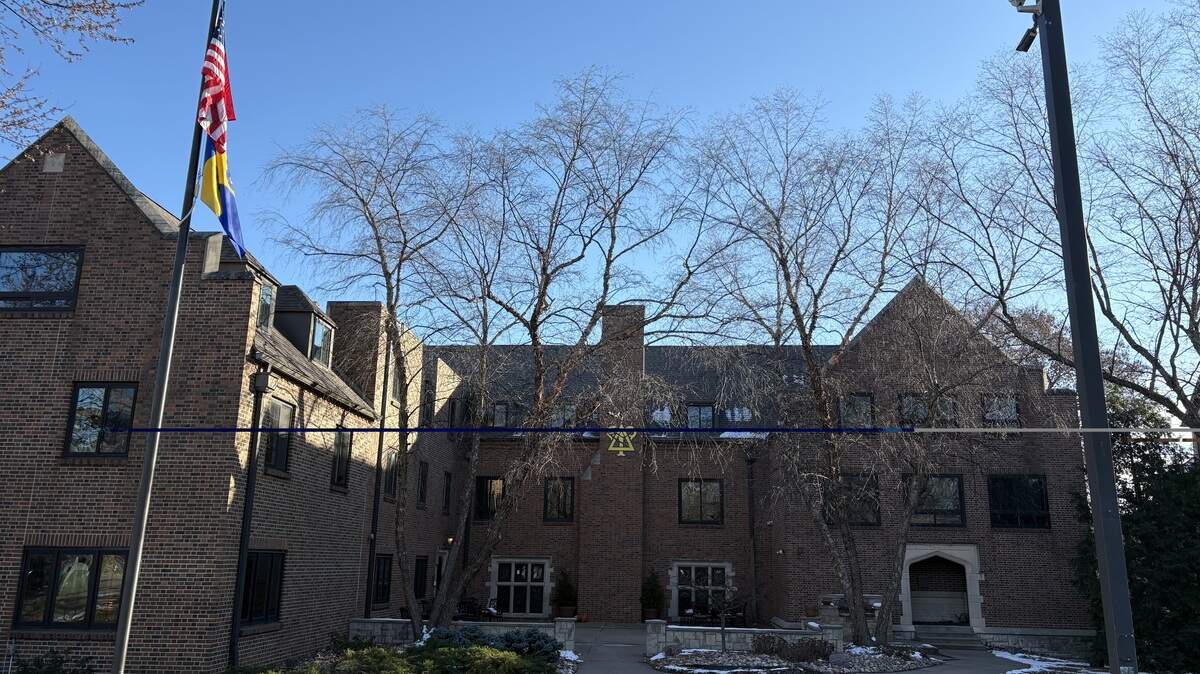
The University of Kansas has placed Delta Upsilon fraternity on probation through May 2028 following a six-month hazing investigation.
The sanctions were handed out April 10, according to an online database maintained by the university that logs student organizations’ conduct violations.
It marks the second hazing-related punishment levied by KU in the span of three weeks. On March 20, another fraternity — Alpha Tau Omega — had its student organization status revoked through the spring semester of 2031, according to the database.
The log makes no mention of specific investigative findings that triggered the most recent sanctions. Delta Upsilon International (DUI) and student officers of the fraternity’s Lawrence chapter did not immediately respond to requests for comment Thursday.
Delta Upsilon at KU
The fraternity was first informed of a formal investigation in an Oct. 6 letter that The Star obtained through an open records request.
That letter included no specific allegations against fraternity members but outlined three potential student conduct violations, including “hazing,” “harm to persons” and “registered organization” — a provision that allows the university to punish student organizations for conduct violations committed by individual members.
In December, DUI Executive Director Justin Kirk told The Star in an email statement that the organization “proactively placed the (KU) chapter on reorganization status” in November. That means a committee of non-student leaders assumed oversight of chapter operations, approving all activities and conducting membership reviews, Kirk said.
The exact terms of KU’s probationary agreement with the fraternity remain unclear. In response to a detailed list of questions about the scope and outcome of the hazing investigation, KU spokesperson Erinn Barcomb-Peterson directed a reporter to the online database that lists the date of the sanctions, the length of the probationary period and the three conduct violations that Delta Upsilon was found to have committed.
“Disciplinary probation shall have as its purpose the rehabilitation of the student or organization and may include suspension of specified privileges for a definite period not to exceed two years,” says an explanation on KU’s Student Conduct & Community Standards webpage.
“Disciplinary probation may also require the student or organization to participate in specified activities, including one counseling information session, or may prescribe any program which is deemed just and fair under the circumstances of the case,” it continues.
According to the Student Conduct webpage, the university is responsible for appointing a probation supervisor charged with providing regular updates on whether the student organization in question is fulfilling its probation requirements. Failure to meet those requirements can result in additional sanctions.
KU shields hazing records from public view
Delta Upsilon, originally chartered at KU in 1920, has had a checkered record in recent years.
The international organization disbanded its KU chapter in 2018 after a scandal where pledges were urinated on, spat on and hit repeatedly for coming forward with hazing reports, according to a story in The Kansan, the university newspaper.
The chapter was revived in the fall of 2022 with all new members, and it officially regained its charter in December 2023.
Delta Upsilon is not the only KU fraternity that has been punished for hazing and other behavior since 2018, the online database shows. But increasingly, the details of university hazing investigations have been shielded from public disclosure by KU officials.
In response to The Star’s request for records related to the hazing investigation that led to Alpha Tau Omega’s five-year suspension, the university provided a letter with a heavily redacted account of the allegations against fraternity members.
“The (redacted) instructed (redacted) inside the chapter facility over the course of six consecutive nights. The (redacted) also instructed to (redacted),” the letter read in part.
Another KU fraternity, Sigma Alpha Epsilon, was sanctioned last September for lying to officials during a hazing investigation into an incident on the first day of fall semester, when paramedics were called to the fraternity house to give emergency life support to a young member who had lost consciousness.
Those examples from this school year fit into a pattern of fraternity hazing, investigations and punishments that have played out repeatedly in recent years.
Alcohol, drug complaints go back years
Sigma Phi Epsilon was suspended by its national office in 2018 while it investigated allegations of hazing, and the fraternity was placed on probation by the university in March 2018. The probation was to end March 15, 2019.
In January 2019, Pi Kappa Alpha was removed from campus until the fall of 2023 for “harm to persons,” hazing, and alcohol and drug use. And in November 2020, the university shut down Pi Kappa Phi until Dec. 31, 2025, because of repeated violations of the university’s hazing ban and “an open culture of illegal drug use.”
Numerous other fraternities and a handful of sororities have received probation and warnings for hazing in the period from 2018 through the spring 2025 semester. Most of those sanctions had a duration of one year or less. Organizations that are currently under investigation are not included on the list.
Those placed on probation for hazing during that time frame included Theta Chi, Zeta Beta Tau, Alpha Kappa Lambda, Delta Chi, Delta Tau Delta, Sigma Chi, Sigma Pi, Delta Upsilon, Sigma Phi Epsilon and Beta Theta Pi. Kappa Sigma was cited for “harm to persons.”