KC lost the Chiefs to a STAR bond. The city made its own kind to keep the Royals
Kansas City lost the Chiefs to Kansas thanks to a historically generous subsidy built around the state’s fairly unique public financing tool known as STAR bonds. They use sales tax revenue generated by the stadium and a surrounding taxing district to pay off the financed debt.
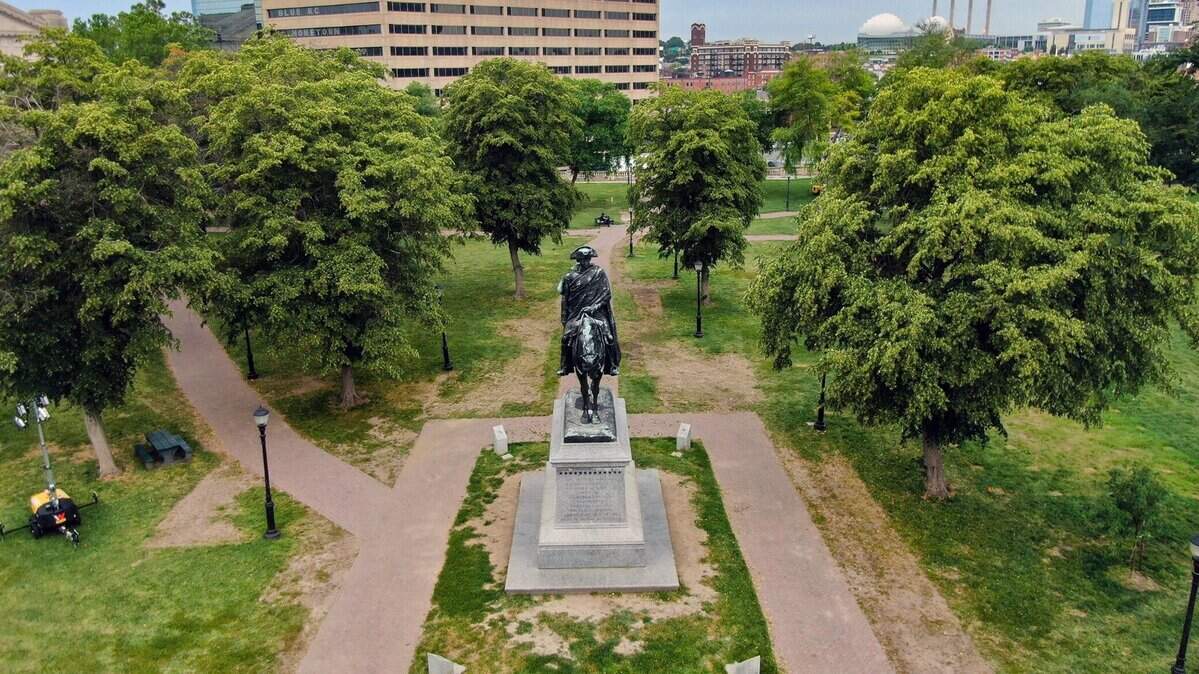
To keep the Royals, city officials crafted a similar tool of their own that plans to use an increase in tax revenue around Washington Square Park that they hope is generated by a new Major League Baseball stadium to pay back the city’s debt used to help build it.
The City Council on Thursday approved a plan that allows the city to provide up to $600 million to help fund a $1.9 billion Royals stadium just south of downtown, near Union Station. The plan directs City Manager Mario Vasquez to negotiate with team officials and other government agencies to hammer out a deal that will determine how much the city will provide and where the taxes will come from to pay back the bond debt.
That’s a shift from a proposal in 2024, when Jackson County voters rejected a countywide sales tax to help build a new Royals stadium in the Crossroads area. City officials have said their new plan for the Royals stadium will use tax revenue generated by the stadium and an entertainment district around it to pay off the bond over a 30-year period.
Compare that to the Sales Tax and Revenue, or STAR, bond that Kansas offered the Chiefs to build a $3 billion stadium in Wyandotte County. That plan includes the state offering $1.8 billion in bond financing that will be paid off with sales taxes generated in a sweeping district around the stadium.
Zach Mohr, a public finance expert at the University of Kansas, said Kansas City’s plan is using the same logic as STAR bonds to keep the Royals on the Missouri side of the metro.
“You have a tax base surrounding an amenity, and you’re using the increase in value of that tax base to pay the bonds,” Mohr said of the Kansas City plan. “This really makes a lot of sense.”
Not a copy
There are some key differences between the city’s funding proposal and Kansas’ STAR bonds. For instance, the Kansas approach only uses sales tax revenue. The Kansas City project appears to allow for a larger array of local taxes to cover the cost, such as use taxes, tourism taxes and utility taxes. Still, Vasquez told The Star that sales taxes would likely be the major contributor.
Mayor Quinton Lucas has said the stadium would not require the creation of additional taxes because the revenue to pay for the bonds would be generated by economic activity spurred by the stadium.
He also noted that the city’s taxing district around the Royals stadium would be much smaller than what Kansas is using for the Chiefs, which could pull state sales taxes from a broad area covering nearly all of Wyandotte and much of Johnson County.
Lucas told reporters on Thursday that he’s confident that the plan for the Royals is a good deal for the city.
“I’m proud of the city manager and his staff and what they’re building up,” Lucas told reporters after the City Council approved the plan. “I think that’s how we can deliver a good, fiscally responsible project that is based largely on people who are spending at a baseball stadium, not an entire city, not entire county, not a third of the state.”
The city would also be backing the bonds for the Royals itself, unlike STAR bonds, meaning it would be on the hook for paying off the stadium debt if the tax revenues fall short. That’s a detail that critics suggest is financially risky and threatens the city’s ability to pay for core services in the future.
Mohr said the approach shows the city is serious about keeping the Royals. While the final financial details still need to be worked out, the general guidelines of the plan looks like a good deal, he said.
“With the city aggressively saying, ‘Yeah we can help and help in a big way,’” Mohr said, “It makes it, one, more likely and, two, a sound project.”
Lessons learned
In Kansas, STAR bonds have mixed outcomes. Sporting Kansas City used STAR bonds in 2010 to build its soccer-specific stadium in Kansas City, Kansas. The sales taxes generated by that stadium helped pay off the $150 million of debt early, according to the state’s annual report on STAR bonds.
Meanwhile, other projects have not been as much of a financial boon. The state is still paying off more than $7 million of debt for the $24 million bond awarded in 1999 to build the Kansas Speedway racetrack, which sits across the street from Sporting Park.
Mohr said a major reason the Speedway bonds are not paid off yet is because it was one of the first to ever use the financing tool in Kansas, and the state made the taxing district too small. It only includes the race track, while newer projects include surrounding businesses that are believed to be benefitting from increased foot traffic from the new attraction.
Mohr said Kansas City officials could learn from that and ensure the boundaries around the new Royals stadium are large enough to collect the taxes needed to afford the bond payments. He said that’s likely because the Royals stadium is planned for an area that is already established and generates taxes.
“The speedway was out in a corn field,” Mohr said. “The Royals stadium is downtown, surrounded by hotels, surrounded by Crown Center. If you put another major amenity like that, it is going to raise the value of all of those hotels and restaurants and other businesses around it.”
This story was originally published April 17, 2026 at 12:06 PM.