KC officially opens door for Royals stadium near downtown. What needs to come next
Kansas City has cemented a significant step in its effort to bring a new Royals stadium just south of downtown near Union Station.
But the city — and the team — still has plenty more to accomplish before the first pitch is thrown in what is now Washington Square Park.
The City Council on Thursday approved an ordinance that gives the city the green light to strike a deal with the Royals and pitch in up to $600 million toward a $1.9 billion Major League Baseball stadium in the “Washington Square Park/Crown Center area.”
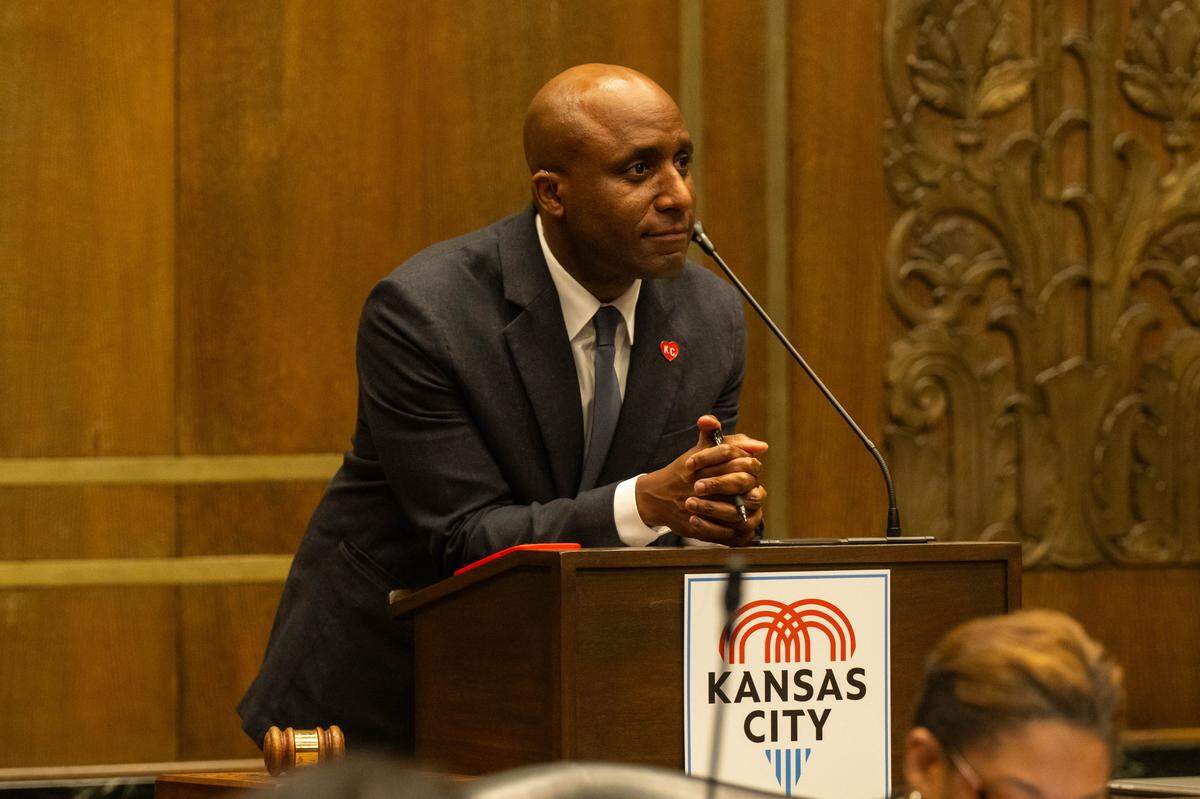
Mayor Quinton Lucas said after the City Council meeting that negotiations can begin to hammer out the details.
“We’re delivering baseball to Kansas City,” Lucas said, “and the Royals will be around Kansas City for another 30 years.”
The vote was 11-1-1, with 1st District Councilmember Nathan Willett as the only no vote. Crispin Rea, who represents the 4th District At-Large, abstained.
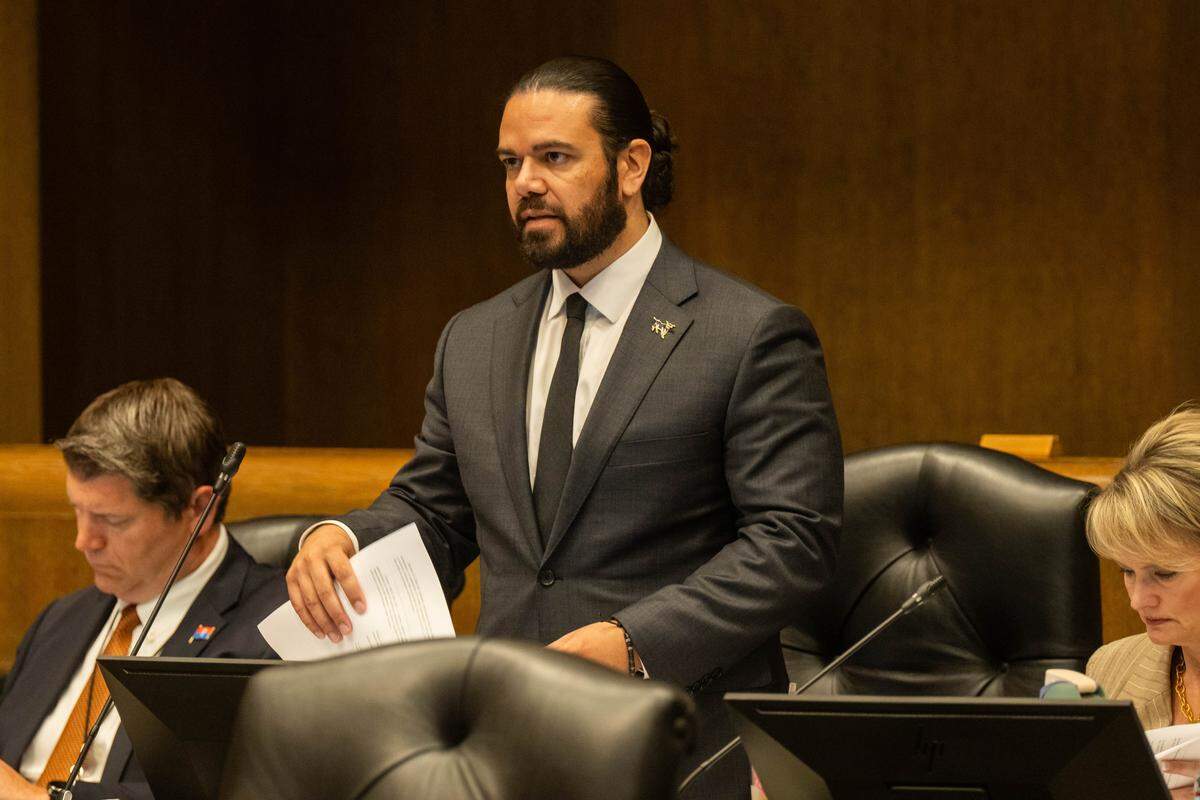
Johnathan Duncan, 6th District, who previously criticized the stadium proposal publicly, voted in favor of the plan after he added language ensuring that development agreements and community benefits agreements would come back to the council for review.
Duncan told The Star that the amendment provides for more transparency as the project progresses.
“It ensures that every step of the process comes back to the City Council,” Duncan said.
The City Council’s move does not yet commit any city money to the stadium project, except for $250,000 for predevelopment expenses like research. It mostly sets up a general framework and roadmap for city officials to reach agreements with the Royals and other government agencies who would all be involved in bringing the stadium to life.
Getting the project any further along will not only require buy-in from the team and the state, but the City Council will also still need to approve any funding promises, a lease and other details at a later date before construction can begin.
Here’s what needs to be done before the Royals have a new home farther west in the city:
Negotiations
First, the city needs to negotiate with the Royals on how this deal would actually work.
That would include the exact amount the city would provide to help fund the construction of the stadium, offices and nearby infrastructure upgrades. It would also include a lease agreement between the Royals and the city, and any development agreements that lay out who owns what and how much each entity owes toward the project.
City officials expect the city would own the stadium and lease it to the Royals for an initial 30-year period. That suggests the city would need to acquire any property it doesn’t already own that would be part of the stadium.
The city and the Royals also might need to determine some legally binding commitments to seal the deal. That could include a community benefits agreement, where the Royals pledge contributions to the local area, or even to the area around Truman Sports Complex that is losing the team as neighbors.
It could also include requirements around employment and wage promises, such as the team promising to “create” a certain amount of jobs and paying those employees a certain amount.
The city may even try to include claw-back provisions in these agreements, which would allow for reducing the city’s contribution or ask for money back if the Royals do not meet those commitments.
TIFs
Simultaneously, the city will need to apply for and determine parameters around a Tax Increment Financing, or TIF, agreement.
That is the incentive agreement that will lay out how tax revenue, such as sales taxes, generated in the stadium area would be redirected to help pay back the city-issued bonds used to help build the stadium.
This agreement would also determine the boundaries and definition of a “stadium district” that will contribute those taxes toward paying off the debt. City officials estimate the bond will take 30 years to pay off.
These details would likely be sorted out by the Tax Increment Financing Commission of the Economic Development Corporation, which would need to vote to approve the plan. The City Council would also need to approve the plan.
State money
The plan City Council passed on Thursday also directs City Manager Mario Vasquez to apply for additional state money to support the project.
A portion would come from a sweeping funding package signed into law last summer. The law, called the “Show-Me Sports Investment Act,” allows Missouri to pay for up to 50% of a new stadium for the team.
However, the exact dollar amount is still unclear and is likely to fall short of that 50% threshold. The administration of Gov. Mike Kehoe, a Republican, is expected to settle on a number after reviewing last year’s withholding tax, sales tax and athlete and entertainer tax revenues generated by the team, a Kehoe spokesperson previously told The Star.
Additionally, the plan also authorizes the city to apply for up to $50 million in state tax credits from the Missouri Development Finance Board.
State officials have not yet committed to providing any funding for the stadium.
Public engagement
The city plans to take steps to garner support from residents before it approves its pieces of the stadium deal. The plan passed Thursday promises the city will host public engagement over the project so residents can weigh in on both its development agreement and the TIF plan to redirect tax money.
It’s unclear what form that engagement will take.
While representatives of business and trade associations have backed the project, plenty of critics have argued against it too.
Duncan has criticized the financing plan. He emphasized that the bonds would be backed by the city, which means it puts the city’s funding for core services at risk if the stadium doesn’t generate the taxes needed to make regular bond payments.

Additionally, dozens of Kansas City residents expressed opposition to the proposal when it was reviewed in committee earlier this week. They repeatedly mentioned that Jackson County voters rejected a proposal in 2024 that would have funded a new Royals stadium in the Crossroads and paid for upgrades to Arrowhead Stadium through a countywide sales tax.
Several critics, including Duncan, also suggested the city would be wasting public tax dollars on a stadium when it should be focusing on improving city services and infrastructure.
Duncan voted to approve the plan because of the added City Council oversight he inserted into the language of the proposal. He said he also wants to make sure that the City Council can have a say on what a community benefits agreement entails, like adding worker protections and requiring affordable housing support.
“This is a generational project. I want to ensure that folks aren’t left behind simply because I philosophically disagree with providing subsidies to billionaires,” Duncan said, referring to billionaire John Sherman, the Royals’ chairman and CEO.
Final City Council approval
Finally, the City Council would need to sign off separately on all of the steps that involve city money. That includes voting to issue the bonds to fund the project, entering a lease and development agreement with the Royals and approving the TIF arrangement for paying back the bond.
Council members have repeatedly noted that they will get another look at the plan before it’s all said and done.
“There’s nothing written in stone,” 6th District At-Large Councilmember Andrea Bough said when a City Council committee advanced the ordinance last week. “This is just the beginning of the discussion and the plan.”
But even if the City Council approves all of those steps, more may be needed.
The city’s proposal only deals with the stadium itself and offices for the team. It does not include the development of a surrounding entertainment district that local and team officials have touted previously.
And even for just the stadium and offices, the city’s financing plan accounts for about 32% of the $1.9 billion bill. Financial commitments from the state and the team would need to be solidified before the proposal is viable.
Once all of those steps are met, construction can finally begin. City officials expect that to take up to four years. The Royals’ lease at Kauffman Stadium expires in 2031.
The Star’s Kacen Bayless and Chris Higgins contributed reporting.
This story was originally published April 16, 2026 at 3:31 PM.