Jackson County official promises property tax relief. But how, when is less clear
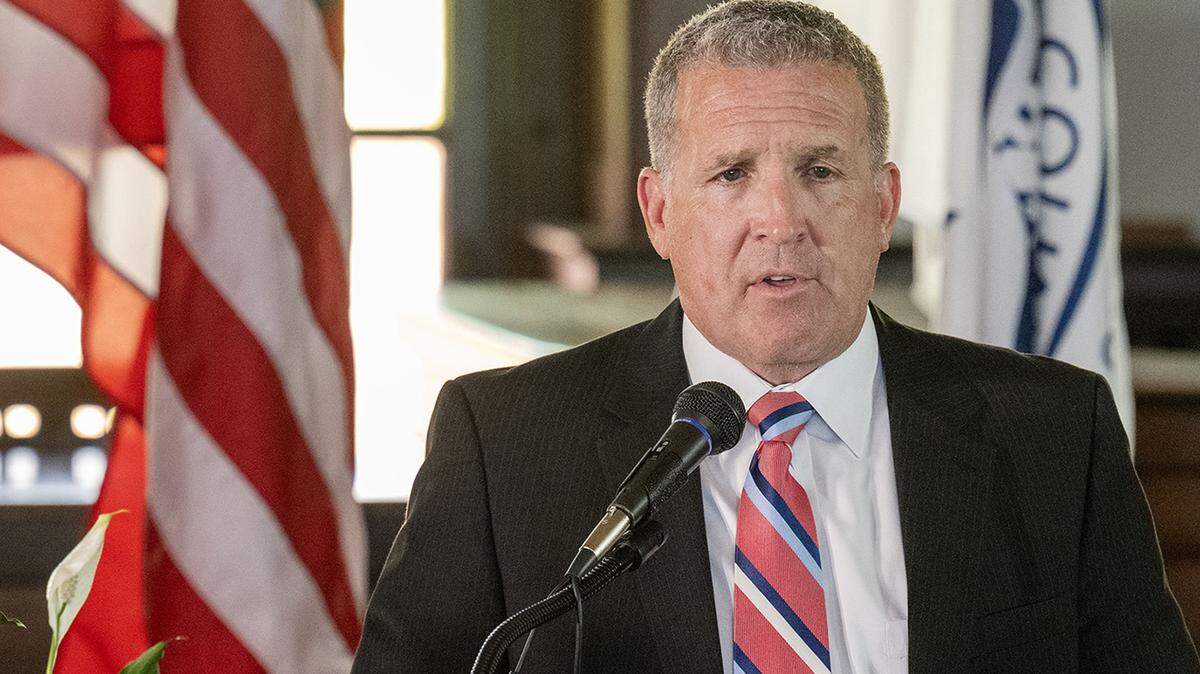
As Jackson County residents prepare to receive their property tax bills this week, county officials are doubling down on ambitious promises intended to address ongoing issues with the 2023 and 2025 property tax assessment cycles.
Interim Jackson County Executive Phil LeVota has said he feels public outrage over tax assessments was one of the driving forces behind the recall of his predecessor, 10-year County Executive Frank White Jr.
Over the past several weeks, LeVota and members of the Jackson County Legislature have proposed programs intended to offer new forms of retroactive relief to owners of both residential and commercial property in the county. But the details of how those programs would be executed and when residents could get any money back remain unclear.
The promises come in the wake of a legal back-and-forth between the Missouri State Tax Commission and Jackson County over the county’s assessment process. In August 2024, the state ordered Jackson County to roll back a majority of its 2023 residential assessment values over concerns about how and when the county notified homeowners during its assessment process. The county initially resisted implementing the rollback, bringing — and losing — a lawsuit against the State Tax Commission.
But even after Jackson County came to an agreement with the state, residents didn’t get any money back from the ordeal. Those 2023 tax bills had long been paid, and that money had already been distributed and spent by taxing jurisdictions like area school districts and cities.
Now, LeVota says he wants to find a way to give homeowners back some of that tax money they paid based on those assessment values that the state later ruled incorrect.
And commercial property owners could also soon benefit from a similar rollback, LeVota told reporters at multiple news conferences in September and October.
“If you’re one of those property owners who saw a big increase in ‘23 you don’t have to do anything,” LeVota said. “The county is going to handle it.”
Residential credits
LeVota announced this month that the county plans to issue tax credits to homeowners whose residential property values increased by more than 15% in the 2023 assessment cycle.
But that doesn’t mean homeowners should expect a check anytime soon.
These reimbursements will not appear on 2025 tax bills, which the county advised residents to pay in full order to avoid delinquency. Instead, LeVota said, eligible homeowners could receive one or more credits in the form of reductions on future property tax bills, within the next one to three years.
“This is not going to have anything to do with 2025 tax bills that Jackson County people are going to get in the next few weeks,” LeVota said at a Nov. 5 press conference, “because there was already a State Tax Commission order of 2025 that this administration did follow that corrected those.”
Though LeVota said the county is still unsure exactly how future tax credits would work, he proposed sending out documents to qualifying residents letting them know what their 2023 tax bills should have been according to the terms of the 2024 state order to roll back values.
The soonest homeowners would receive such documents would be in the spring of 2026, LeVota said.
These mailed documents from the county would let residents know exactly how much the county determined they overpaid in taxes in 2023, per the state order that came later. That amount would then be credited against future property tax payments to the county, at the earliest in the 2026 assessment cycle.
Details about the exact process for issuing credits to residential property owners are still forthcoming, LeVota said, pending discussion with both legislators and state officials.
Commercial caps coming?
Another of LeVota’s current goals, he said, is to see a 15% cap implemented on the assessed value of commercial real estate in Jackson County – focusing on the results of the 2025 assessment cycle.
But while LeVota aims to reduce some of this year’s values retroactively, it’s still unclear how that would happen, or if it could happen, before the county collector’s office sends out tax bills this month.
“We will keep acting,” Levota said at the October news conference. “My goal is to target anything that’s been increased, commercial property, and cap that at 15%.”
According to county data, the value of the average commercial property in Jackson County increased by around 24% in the 2025 assessment cycle.
Last month, the County Legislature passed a resolution in support of a cap on 2025 commercial property values. The resolution proposed an adjustment process, co-signed by LeVota, in which the office of the county executive would manually review the assessed values of those commercial properties valued under $5 million in 2023.
“The Jackson County Executive and Legislature find it necessary to establish a local policy limiting commercial property tax assessment increases for 2025 to promote economic competitiveness, provide stability to business owners, and ensure fair taxation,” the resolution reads.
The resolution directs LeVota, along with the county director of assessment, to “review the financial impact” of a proposed 15% cap and report back to the Legislature. That report has not happened yet, and the county has not issued any further guidance about how such a revision process would work.
LeVota previously said that owners whose commercial properties qualify for revision would receive a letter instead of a tax bill. He has suggested that owners who have already gone through the appeals process with the Board of Equalization would likely not be eligible for revision.
But the initiative is still in an internal review process, LeVota said.
LeVota said in September that he has been “working collaboratively” with the Missouri State Tax Commission to make sure that “there is a path for this to be lawful.”
“There’s been ongoing discussions, including a review by their legal counsel, of our charter and how it fits and matches with state statute,” LeVota said.
The Jackson County Legislature passed a similar resolution in September under previous County Executive White, which did not lead to any direct action or refunds on tax payments.
Commercial controversy
Though the parameters of the assessment process are largely directed by the Missouri State Tax Commission, LeVota and legislative chair DaRon McGee have said that local policy around commercial assessments is necessary to show local businesses that the county is publicly invested in retaining them.
Multiple small business owners, particularly in the West Bottoms, have said in recent months that they are considering moving their operations out of Jackson County in the face of impending hikes to their tax bills.
“These businesses have suffered for many years in Jackson County, not because they built a new wing or made major upgrades to their facilities, but because the system has been broken,” McGee said at the September press conference. “[A cap] creates predictability, encourages long term investment here in Jackson County, it gives people fighting chance to plan for the future.”
McGee said that the Legislature feels that assessments should be corrected individually and manually because they were allegedly mishandled on a similar, case-by-case basis.
“There were just so many defects in commercial assessments this year,” McGee said. “When we looked at the data, we saw huge numbers of values that were overridden by the assessment department without the appropriate backup to demonstrate how they valued them.”
County vacancy
LeVota has been vocal throughout the last several weeks about using the powers of the county executive to work through what he deems previous assessment errors.
LeVota is empowered by the Jackson County charter to “correct errors in assessment and tax records,” a clause that he criticized his predecessor Frank White Jr. for not utilizing directly.
These new efforts could be hard to implement quickly, however, as the county works to fill a vacancy at the top of the assessment department.
The day after Jackson County residents voted overwhelmingly to make the assessor an elected position, LeVota told Jackson County Assessor Gail McCann Beatty that she had 24 hours to resign — which she declined to do — or the county would fire her.
LeVota said that White’s recall had represented a “public mandate” to oust Beatty and a sign of public loss of confidence in the Jackson County assessor.
Other relief options
As the county’s messaging and plans around property tax abatement efforts continue to evolve, some Jackson County residents are eligible for other forms of program-based tax relief.
Residents 62 or older who own property in Jackson County can apply for the Senior Property Tax Exemption Program, which freezes their property tax payments against future hikes. For example, if a resident applied now, their future property tax bills would be frozen at their 2025 rate in 2026 and beyond, even if their tax bill would otherwise be higher those years based on assessed value, state policy or local levies.
However, if a resident’s projected tax bill in a given year came out lower than the 2025 rate, they would be able to pay the lower bill instead. The senior property tax freeze program debuted in other Missouri counties in early 2024 before spreading to Jackson County.
About 43,000 residents are currently signed up for the program, LeVota said in September.
Older residents can also apply for the Senior Quad Payment Program, which allows applicants 62 or older to pay their property tax bill in four quarterly installments without hitting penalties or accruing interest.
Otherwise, missed tax payments can result in heavy fines, incentivizing many Jackson County residents to pay their tax bills in a timely manner even if they’re still in the process of appealing them.
This story was originally published November 17, 2025 at 5:40 AM.