160-pound tuna cutting in Overland Park turns dinner into a cultural experience
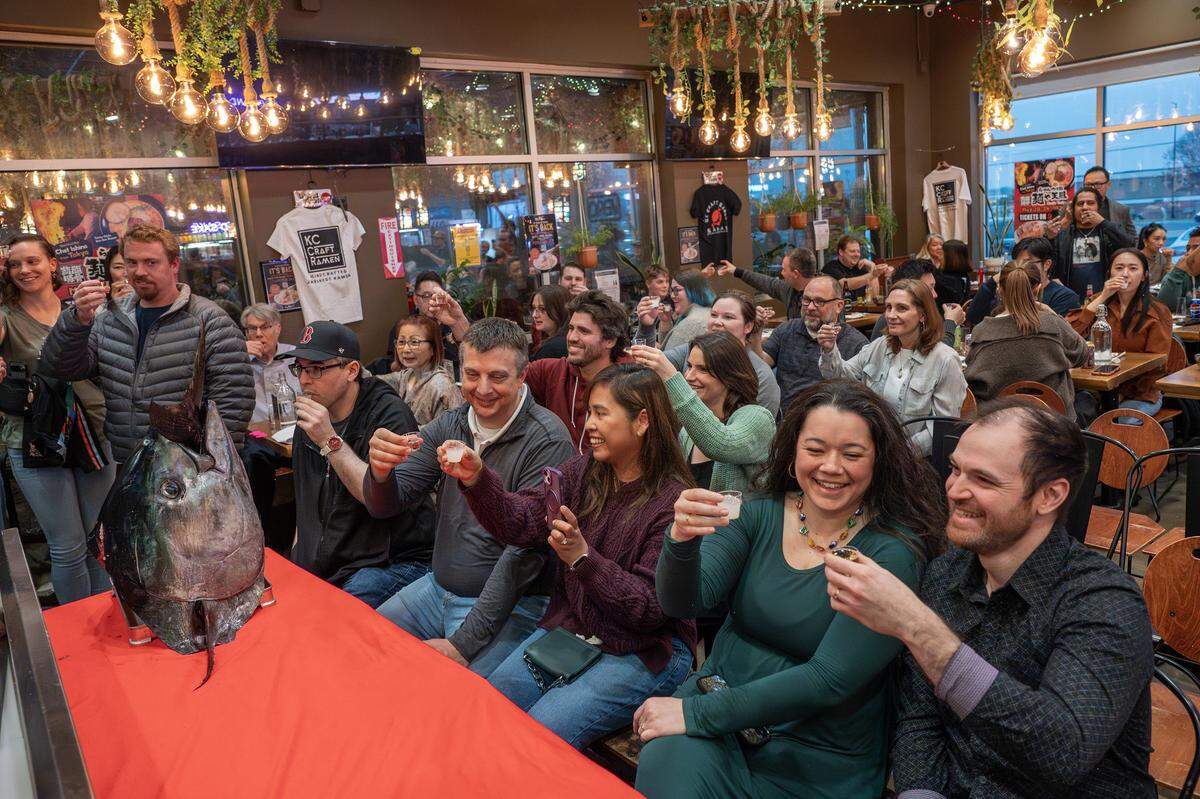
More than 70 people filled KC Craft Ramen on Monday night, crowding around tables and lining the walls. They were not there for ramen.
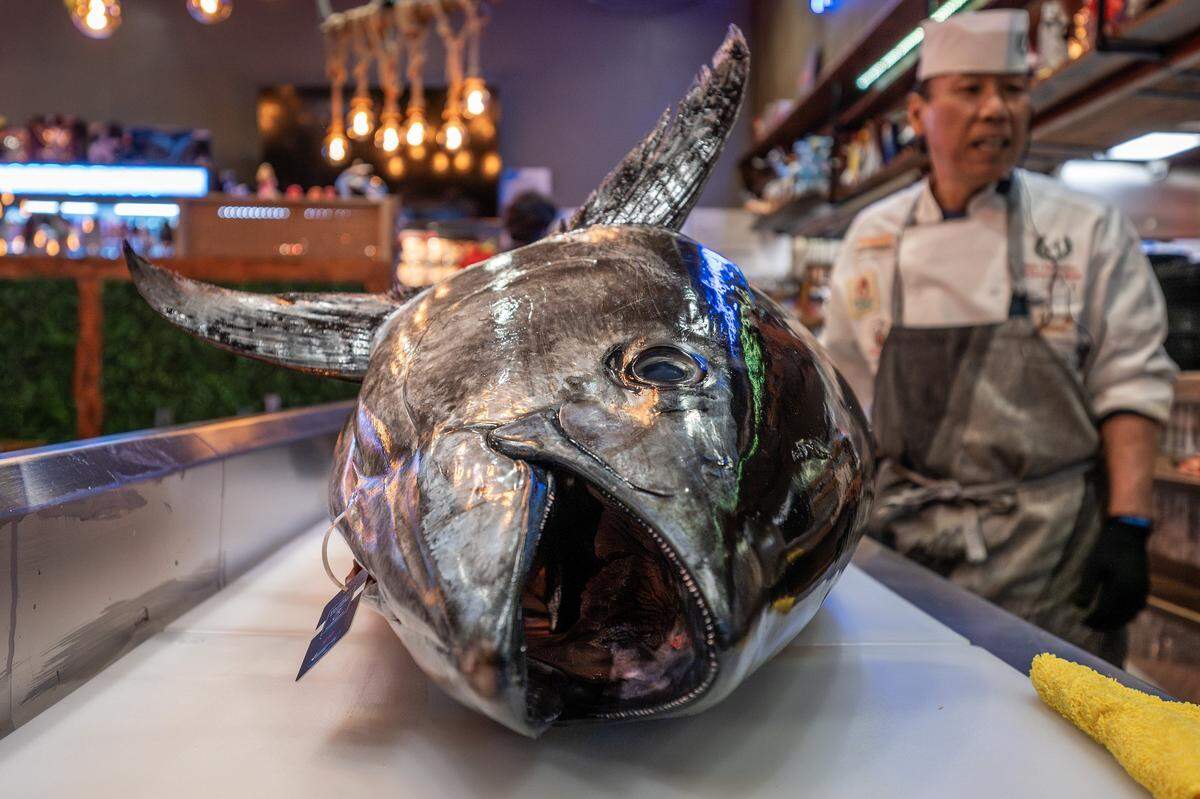
At the center of the room sat a 160-pound bluefin tuna stretched across a prep table, its silvery body nearly spanning the length of the space. For one evening, the restaurant transformed into a live demonstration of Japanese culinary tradition.
Since opening, KC Craft Ramen has aimed to do more than serve bowls of noodles. The Overland Park restaurant has built its identity around cultural exchange, regularly inviting chefs from Japan and hosting limited events that introduce diners to techniques and customs rarely seen in the Midwest.
This time, the focus was a full bluefin tuna cutting, paired with the Kansas City debut of Kubota sake from Niigata, Japan.
“You’ll be watching a whole tuna being prepared live and enjoying different cuts throughout the evening,” Madoka Koguchi, public relations representative for KC Craft Ramen, told guests before the demonstration began. In Japanese culture, she said, food and sake go hand in hand, particularly when seafood is involved.
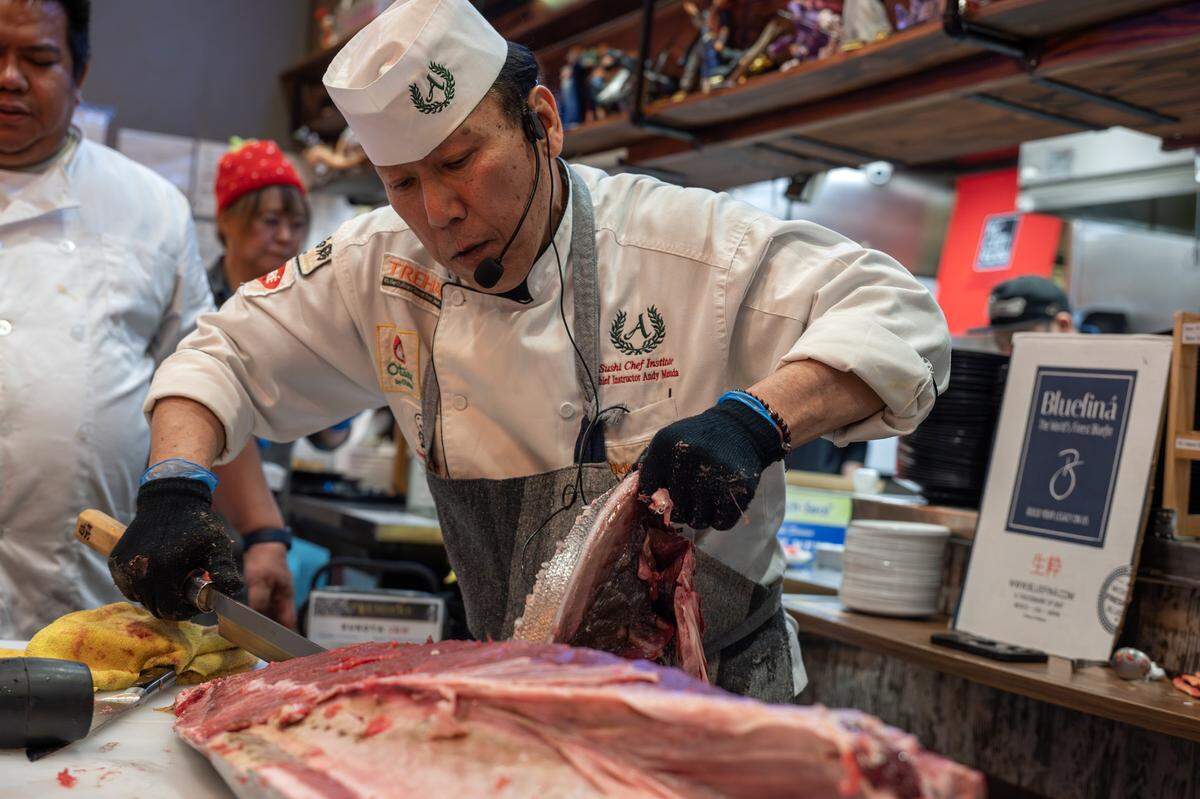
When master sushi chef Andy Matsuda stepped forward, the room quieted.
“All you can eat, right? Happy sake and tuna and ramen. What else do you need?” he joked before turning to the fish.
The tuna, sourced from Ensenada, Mexico, had arrived fresh and had never been frozen, Matsuda said. At roughly 10 years old and 160 pounds, the fish was “still a baby,” Matsuda said, compared with bluefin in Japan and Spain that can reach 800 or even 1,000 pounds.
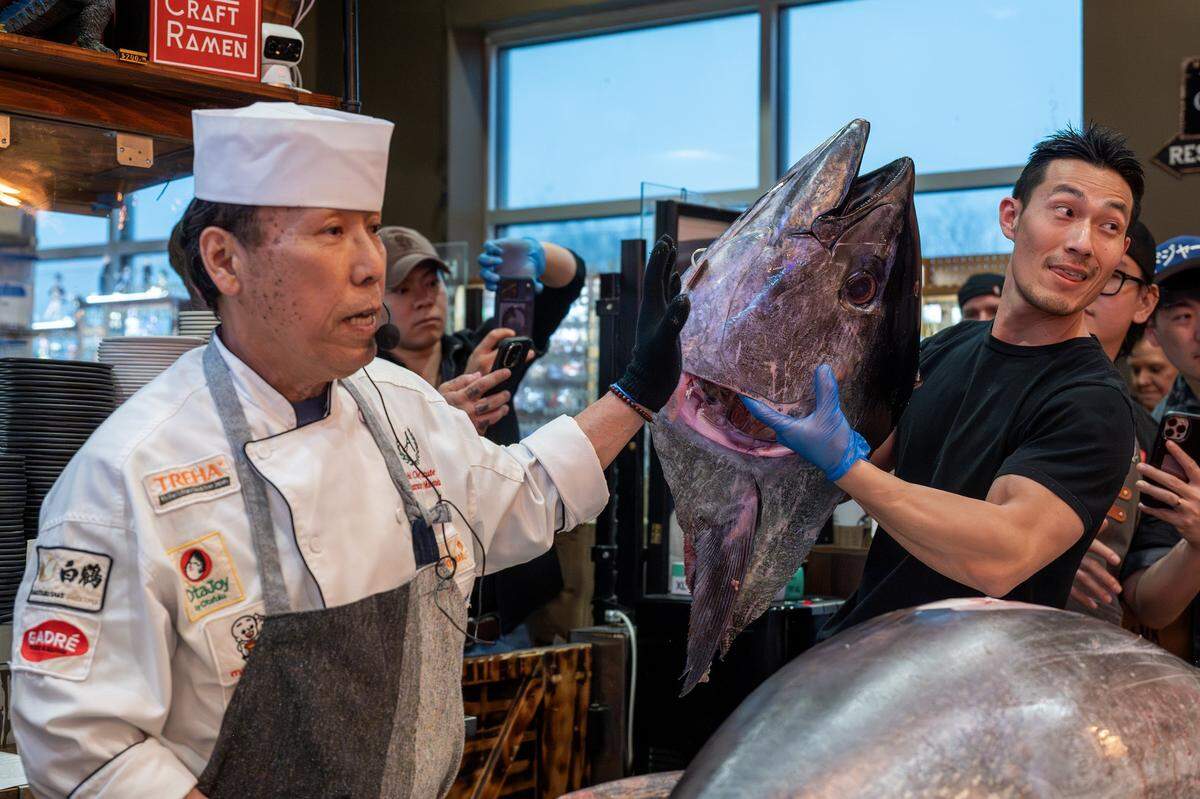
He began by removing the head and lifting it for the audience before methodically quartering the fish. Each section was raised and rotated for guests to see as he identified the prized cuts that would appear throughout the meal.
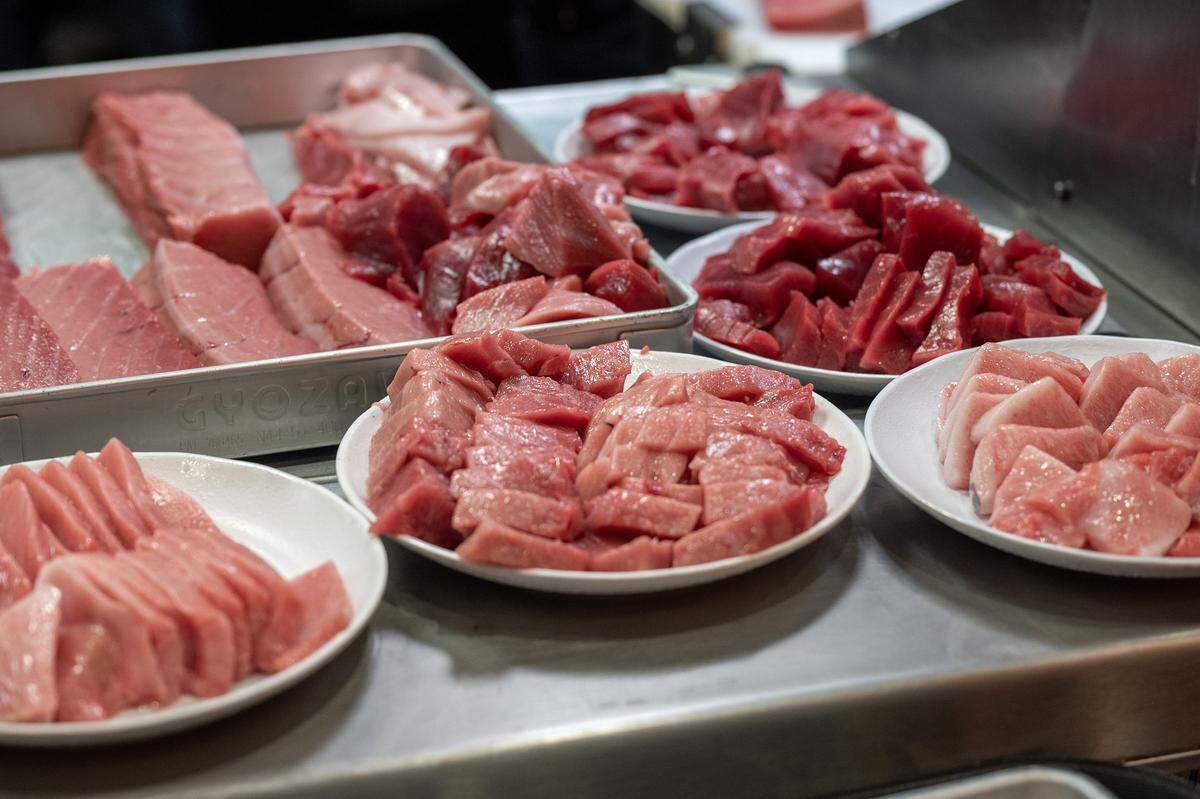
From the belly came otoro, the richly marbled portion considered the most luxurious part of the fish. In Japan, Matsuda noted, a single piece of otoro can sell for about $40.
“Lucky for you today,” he said, drawing laughter from the crowd.
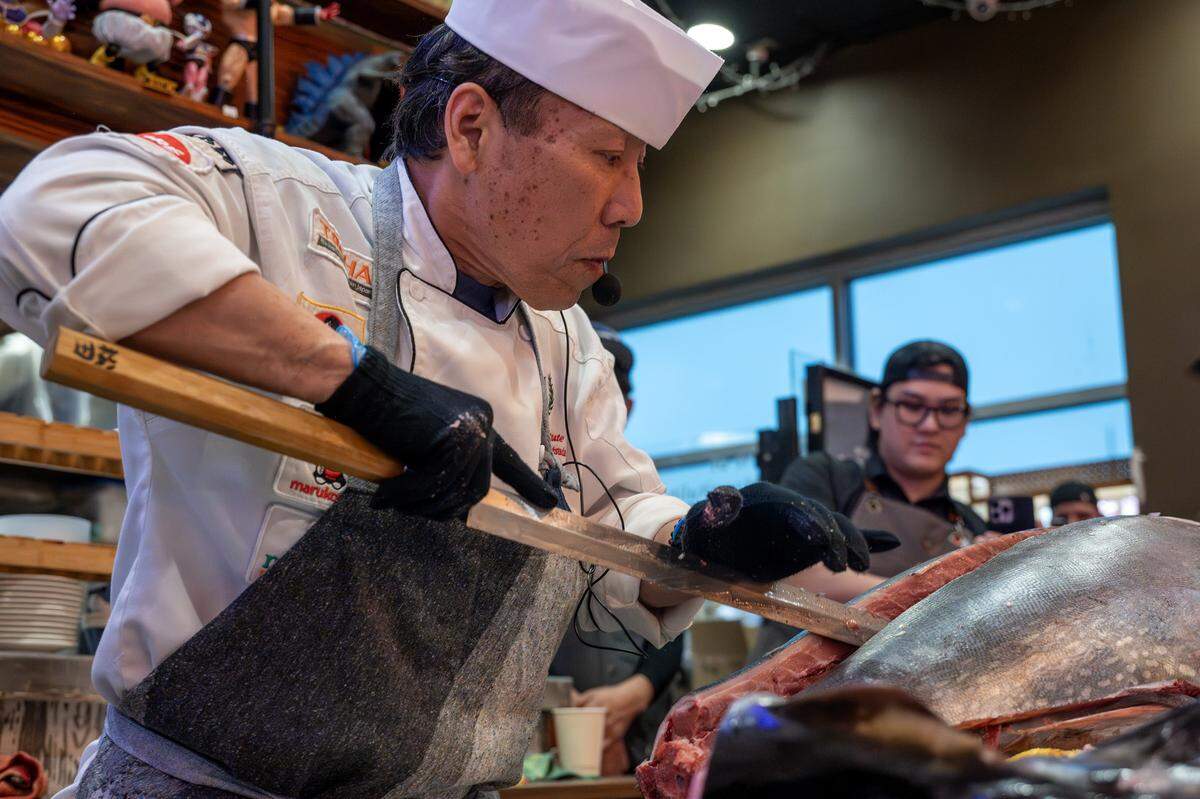
He also pointed out akami, the lean red cut and naka-ochi, meat scraped from along the bone that is often used for spicy tuna rolls. The demonstration functioned as both performance and lesson, with terminology and technique explained in real time.
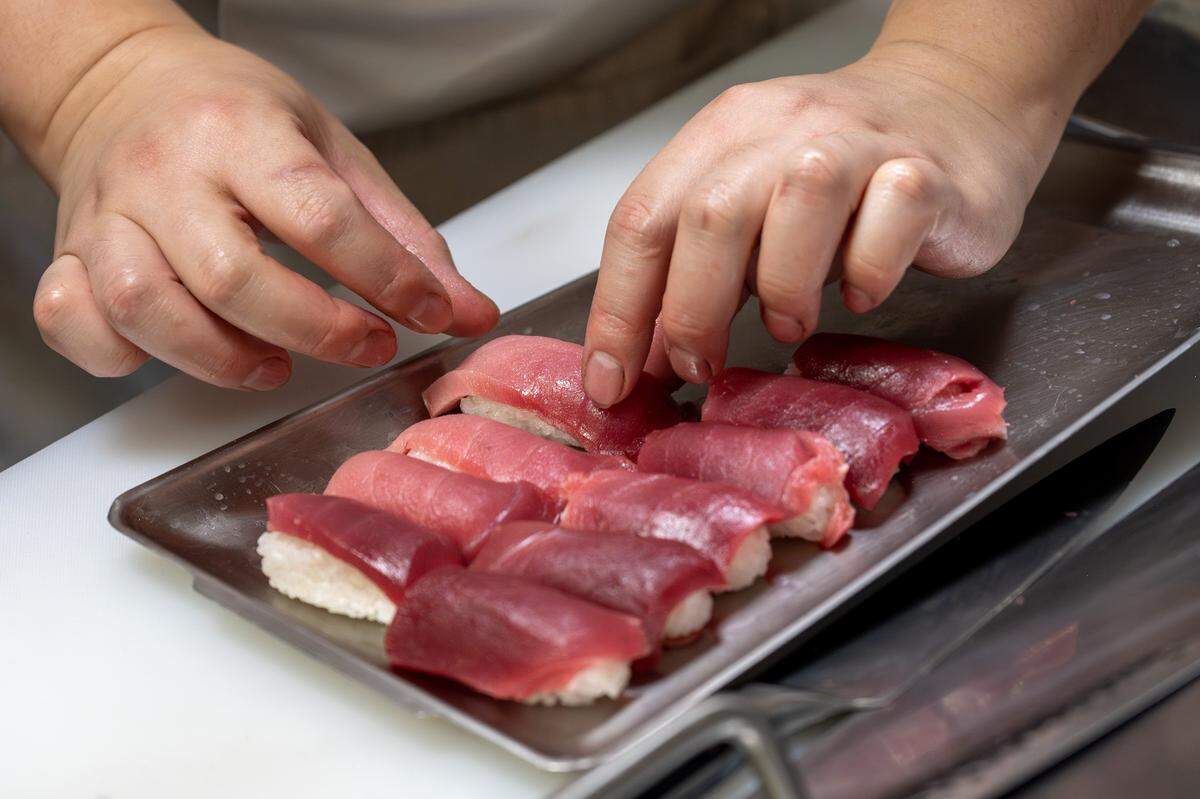
As the cutting continued, servers delivered courses to tables: soup, edamame, small starters, rice bowls, and eventually sushi and sashimi prepared from the freshly carved tuna.
‘Very, very impressive’
For many in attendance, the experience was a first.
“I thought it was incredible,” said Alex Omorodion, a freelance food writer who contributes to KC Magazine and The Pitch KC. “It was my first time seeing something of that nature.”
Beyond the spectacle of a 160-pound fish being broken down, Omorodion said he was struck by the chef’s precision.
“The expertise he showed, the technique with the knives and all the tools, very, very impressive to see,” he said.
Omorodion described the evening as immersive, noting the Japanese greetings and communal toast. “It’s a huge experience. You want to get here early, get a good viewing angle and really take part in not just the cutting but the traditions in general,” he said. Asked to describe the event in one word, he chose “cathartic.”
Mindy Hargesheimer, an Overland Park native and content creator behind Kansas City Bucket List, also attended for the first time.
“As a local foodie and someone who loves unique experiences, I was like, this is going to be really fun to watch live,” she said.
Hargesheimer said she was drawn to the artistry of the demonstration and the opportunity to eat ultra-fresh seafood in the Midwest. “From the art form of it and the opportunity to create a really cool, unique experience for people to see what they offer here is what I’m most excited about,” she said.
‘The finest sake’
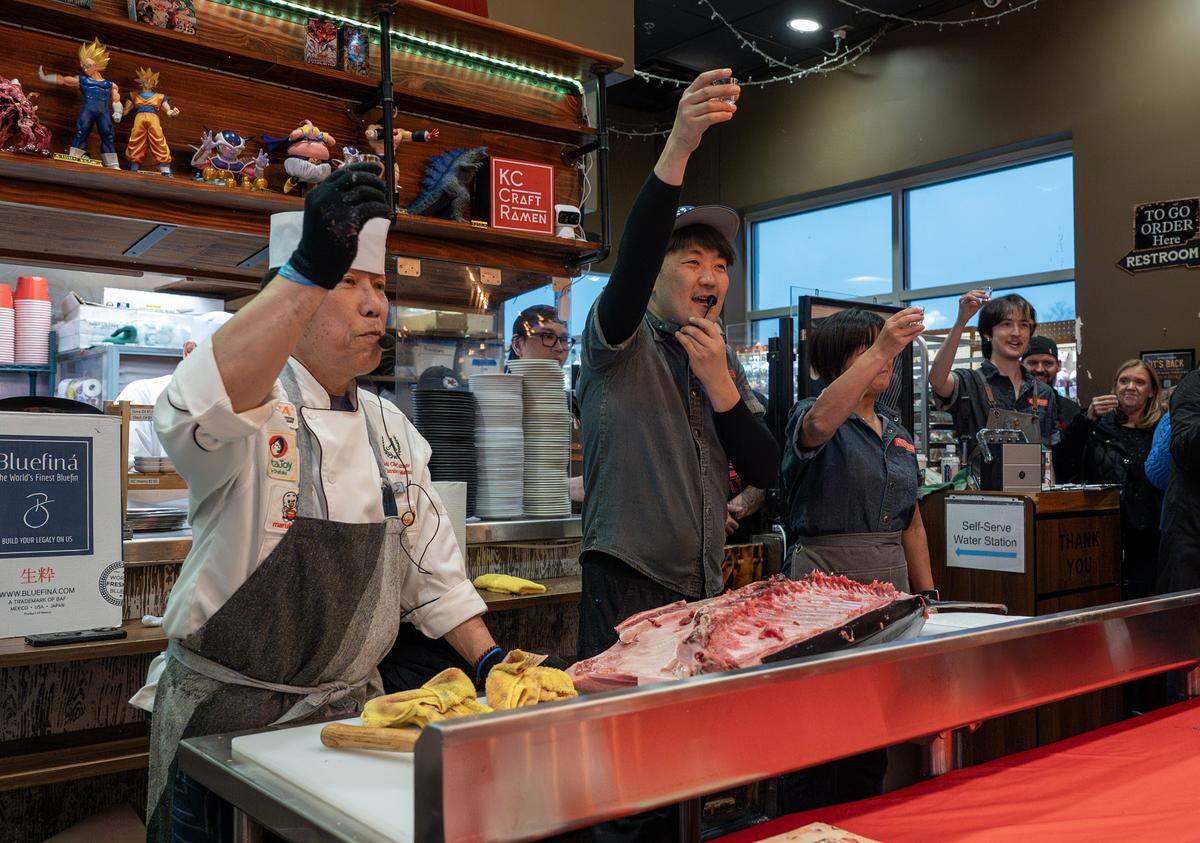
The evening also marked the first official appearance of Kubota sake in Kansas City. Nao Matsushima, a sales representative and brand ambassador who flew in from Los Angeles, introduced the brand before the cutting began.
“The finest tuna deserves the finest sake,” she said.
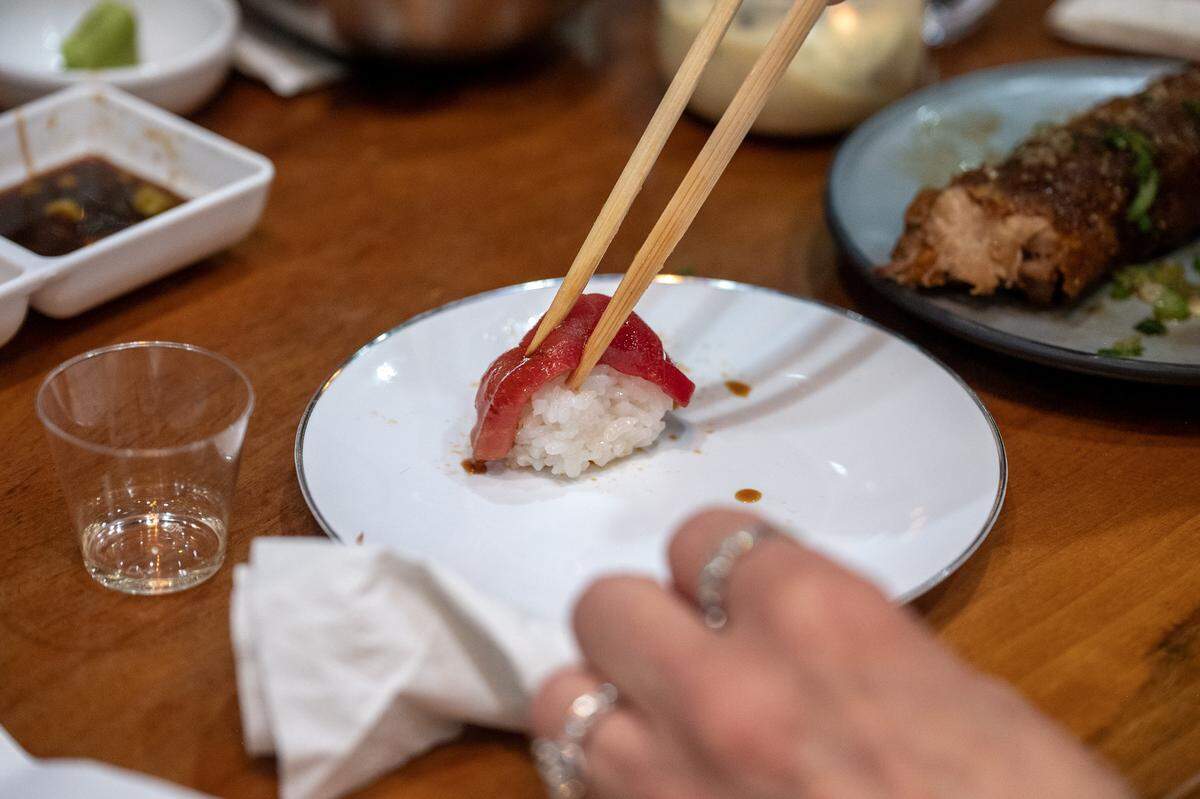
Kubota, brewed in Niigata since 1830 and still family-owned, is considered one of Japan’s premium sake producers. Matsushima described the Junmai Daiginjo served that night as semi-dry and clean, designed to enhance the tuna’s natural flavor.
“Sake culture goes back almost 500 years,” she said. “It enhances every meal that you eat, especially food that is rich in umami.”
She added that her company hopes to expand beyond traditional sushi pairings and into broader American dining culture. While sake is often associated with being served warm, the selections that night were chilled to complement the bluefin.
“Drinking alcohol has been on the decline in Japan,” Matsushima said. “We want to bring sake into new markets. Why not have barbecue and sake?”
‘Create a community’
The night concluded with an auction for two coveted pieces: the tuna head and the collar, known as the kama, a cut prized for its flavor and tenderness.
For a few hours, dinner in Johnson County became demonstration, tasting and cultural exchange, anchored by a fish rarely seen whole in the Midwest and a tradition more commonly associated with Japan’s morning markets.
For owner Kenichi Ota, the evening represented more than a sold-out event.
“We have started to create a community here,” Ota said. “I want people to think of Overland Park when they think of Japanese culture.”
This story was originally published March 3, 2026 at 3:30 PM.