Artist outcry prompts KC to reopen art project with focus on locals: ‘Powerful’
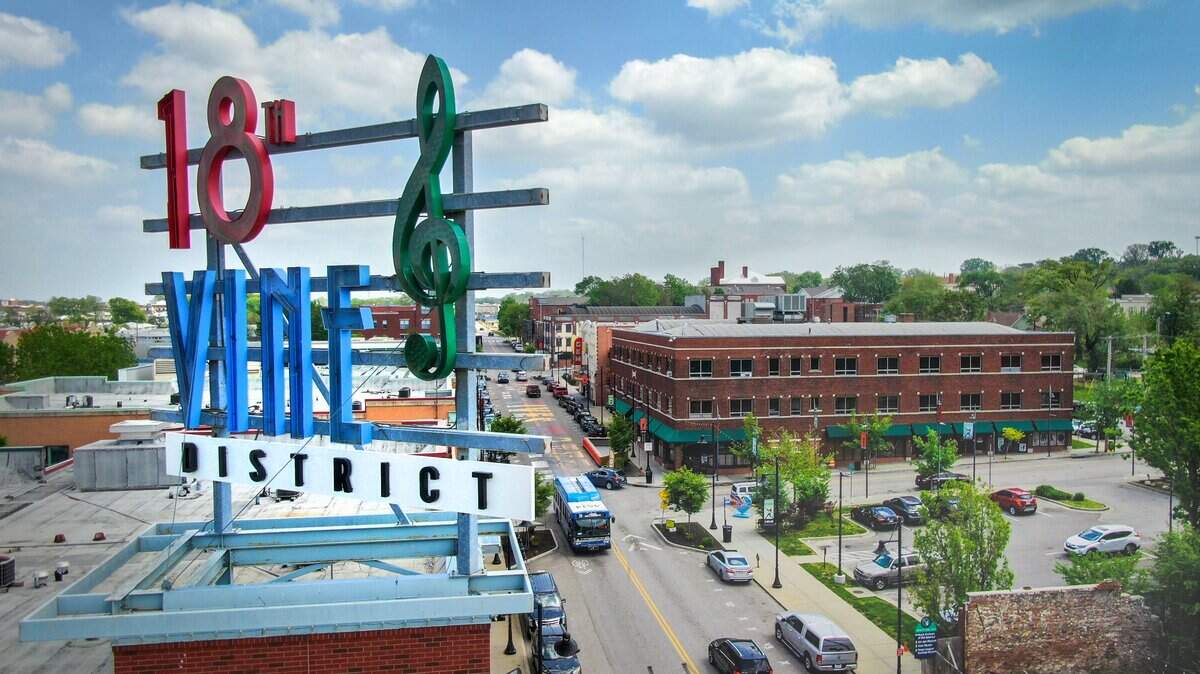
The Kansas City Municipal Art Commission unanimously voted to end the current finalist round for the public artwork planned for the 18th Street and Lydia Avenue parking garage in the historic Jazz District. Following questions and concerns about local participation in the first round, the commission agreed to restart the process with an emphasis placed on local artists.
The city’s selection panel recommended rejecting the three semifinalist proposals and reopening the competition.
“The recommendation of the selection panel is to reopen the call for artists and to decline the three semifinalist proposals that were made,” James Martin, non-voting staff liaison to the commission, said at the meeting held online via Zoom.
The decision resets a high-profile project tied to a prominent wall on the new garage near the historic 18th & Vine Jazz District with a budget of $185,000. In the meeting, held Friday, Feb. 6, commissioners fielded questions from residents and artists about why the process produced three out-of-town semifinalists and how local artists can compete for large-scale, taxpayer-funded work.
The commission proposed a three-member subcommittee to review the selection process and communicate with local artists.
While the new call will be focused on local artists, Martin said the term will be used broadly, using the Census Bureau Combined Statistical Area for Kansas City, with 22 counties included Lawrence and Ottawa, Kansas, to Warrensburg and St. Joseph, Missouri.
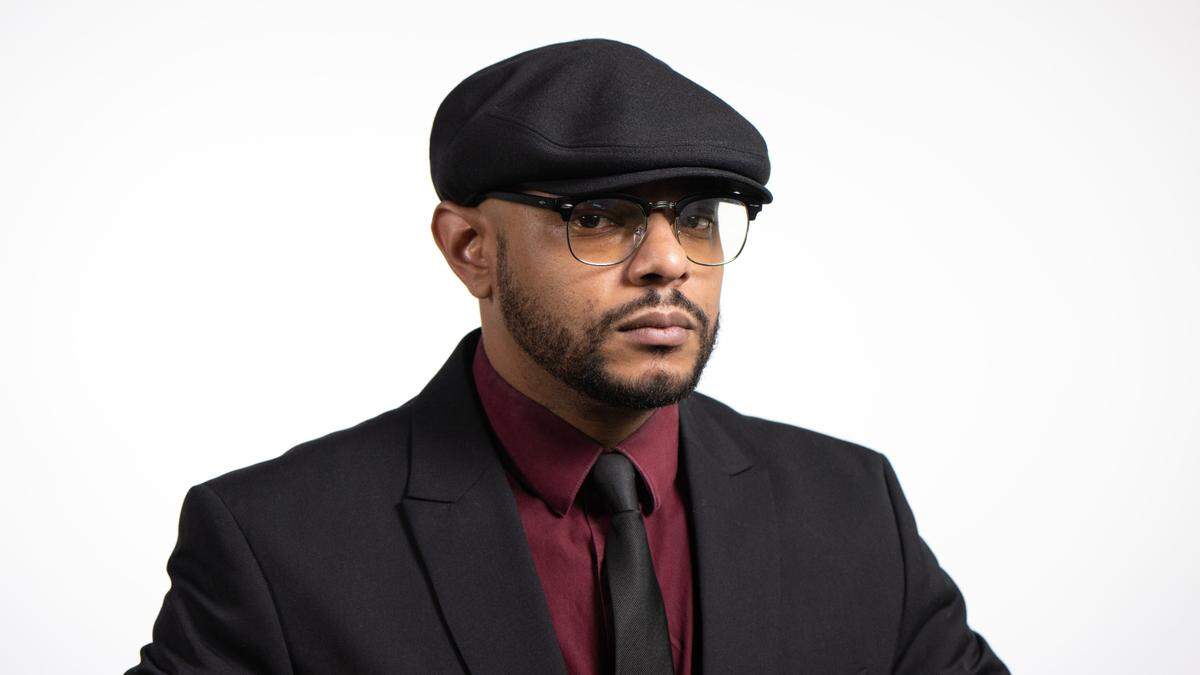
Kansas City artist Deaunte Thomas said the decision to reopen the call as a local-only competition marked a shift he had not seen in previous city public art decisions. For Thomas, the reset was evidence that public pressure changed the outcome.
“It feels powerful,” Thomas said. “Because of the magnitude of our voices and our ability to show up.”
Explaining the process for city art projects
A question was asked on how many Kansas City artists applied in the first round. Martin said the call drew 218 applicants and that about 30 came from the Kansas City area.
Thomas asked the commission and panelists what local applicants were missing and what the semifinalists’ portfolios had that stood out.
“What was Kansas City or Kansas City regional artists lacking in as far as their applications and what made you consider those three out-of-town artists?” Thomas asked. “What did they bring to their portfolio that we can kind of be more intentional with providing for y’all as local artists so that we don’t miss the ball on this one?”
Commissioner Tyler Enders said the first stage of review is limited to an artist’s background materials including portfolios and does not include evaluating a concept for the site.
“We cannot evaluate what someone’s idea or concept is for the space,” Enders said.
Enders described the panel’s process as a scored review completed individually over time, with totals determining which applicants advance. He said the move to restart could be handled with clear communication to the semifinalists whose proposals are being declined.
“If the commission decides to accept the recommendation of the panel to close this process out and restart the process, I think that if there’s good communication between the three finalists that it’s been determined that through the public engagement process and through the process, there’s an interest in making this a locally focused call,” Enders said.
Martin said he contacted the three semifinalists directly as attention around the project increased.
“Because there was media coverage, I wanted to ensure that the artists heard from me rather than from the media,” he said. “I’ve actually been in contact with all three of them, and they do understand the situation.”
How to improve access for local artists
Public commenters also questioned whether the city’s approach makes it difficult for local artists to break into large public commissions. Harold Smith, a local artist compared the situation to entry-level hiring barriers in other industries and asked whether the city could offer support to artists who have not yet built public art resumes at that scale.
“You can’t get a job without experience, and you can’t get the experience if you don’t have a job,” Smith said.
Smith said choosing highly established national artists can reinforce careers that are already developed and argued that taxpayer-funded projects can be an opportunity to build local capacity. He asked whether artists with less experience on projects of that size could receive assistance, including working alongside experienced public artists, rather than being screened out by resume strength alone.
As the commission discussed participation and contracting requirements, Martin said artists do not need city vendor registration or other compliance steps just to apply, noting those requirements come later if an artist is awarded a contract.
“To apply, we ask for a resume, portfolio and a letter of interest and that’s it,” Martin said.
Next steps for art project
The commission announced there will be a workshop scheduled Feb. 7 at 3:30 p.m. at the Keystone CoLab for an informational presentation on applying for projects through the One Percent for Art Program. Commissioner Branden Haralson announced that ArtsKC will host a session on demystifying the public art application process on at 5:30 p.m. March 31.
After discussion, Enders made the motion to accept the selection panel’s recommendation to terminate the current call and restart as a local competition.
The commission approved the motion, clearing the way for city staff to issue a new locally focused call for the 18th and Lydia garage artwork.
Thomas described the moment as bigger than a single project, tied to the district’s history and the responsibility local residents feel about representation near 18th and Vine.
“We’re not just fighting for the present, but we’re also fighting for the past that was able to lay the groundwork for here,” he said.
Thomas went into the meeting expecting movement because he believed momentum had been building since the prior commission discussion. He sees the moment as history in the making, hoping that this leads to more local artists obtaining city contracts.
“It shows the power of our voices,” Thomas said. “We’ve got artists here that can be able to fit that bid and do the work. All we need is a chance and support.”
Looking ahead, Thomas said the reopened call puts responsibility back on local creatives to deliver a proposal and finished work that meet the moment and the district’s visibility. He described the site in the Jazz District as a place where community history, identity, business life and personal relationships intersect, and he said the selected artist should bring those core values to life.
“It’s more than a site for a mural,” Thomas said. “It’s the opportunity to tell our story and whoever gets that chance to put their artwork on that wall should know that story.”