KC was set to give major art project to non-local artist. Then community spoke up
On the north face of a new parking garage rising at 18th Street and Lydia Avenue, Kansas City has reserved a blank rectangle nearly the height of a three-story building, 29 feet tall by 20 feet wide. The space is slated for a permanent, wall-based public artwork intended as a gateway into 18th and Vine, a district tied closely to Black cultural life, jazz history and long-running community institutions.
Before work begins, the selection process has become a public dispute. Local artists and advocates have criticized the city’s decision to open the call nationally and say the process has left Kansas City creators feeling shut out of a taxpayer-funded commission located in a culturally significant neighborhood.
A central point of contention is the outcome of the first round.
James Martin, the non-voting staff liaison to the Kansas City Municipal Art Commission, said the initial call for artists went out July 16 and closed Sept. 1. The city received 218 applications, including approximately 30 from Kansas City or the metro region. A separate selection panel reviewed portfolios and application materials and narrowed the field to three semifinalists.
None of the three selected were from the Kansas City area or artists of color.
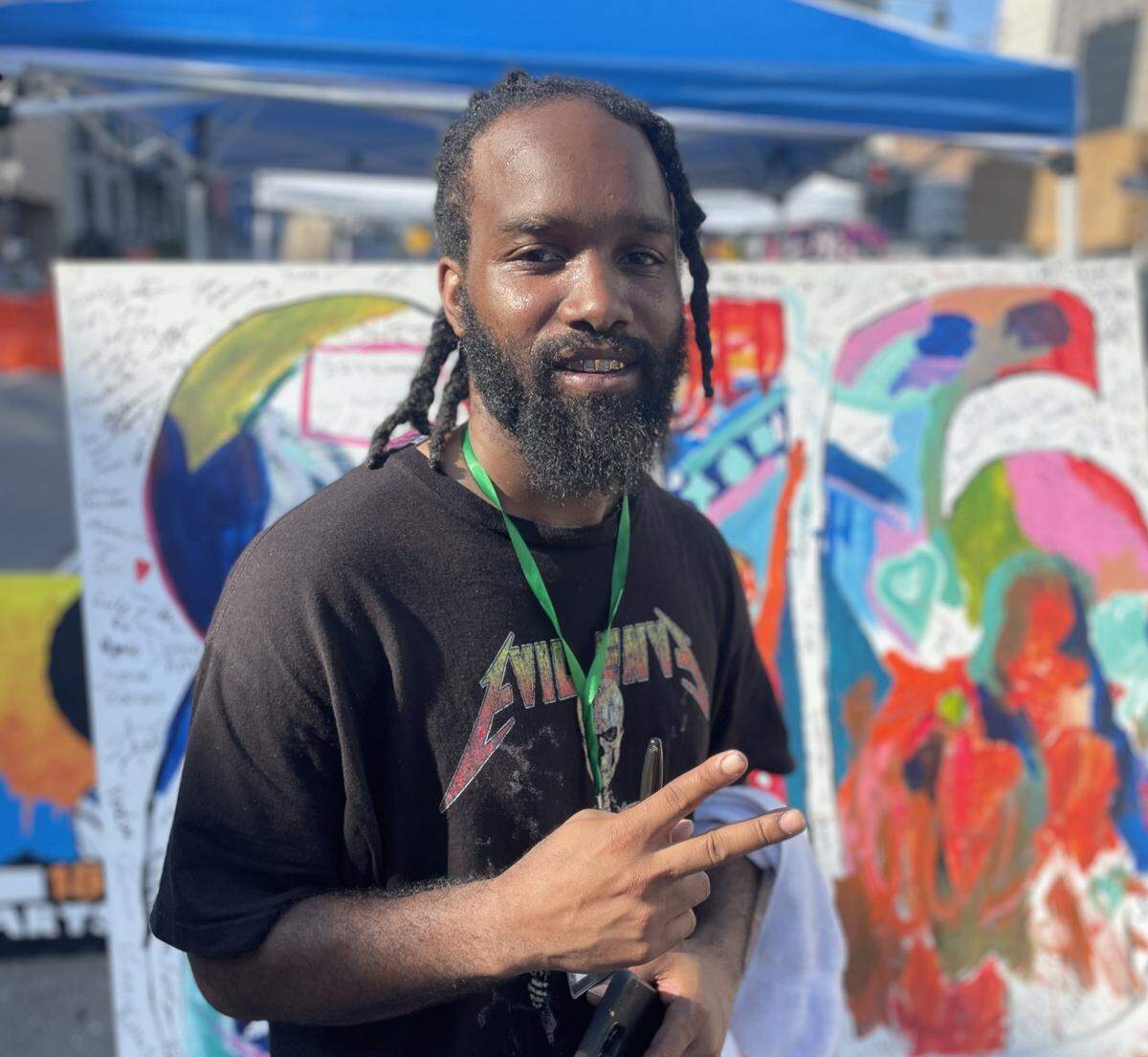
Kansas City artist Deaunte Thomas, who has been tracking the selection process and the community reaction, described artists as “feeling unseen, unvalued, unappreciated.” He said the frustration is not only that the call was national, but that the results did not align with what many expected from a public artwork placed at the entrance to a district tied to Black history and cultural identity.
Thomas said the conflict sharpened around the possibility that public funding and a symbolic role could go to an out-of-town artist while local artists were passed over.
“$185,000 going to somebody in Minnesota or Texas,” Thomas said. “When you have a plethora of artists, not even just Black artists, but Black, white, Chinese, Mexican, whatever, right, in Kansas City.”
The city’s open call set a maximum all-inclusive budget of $185,000 as part of Kansas City’s One Percent for Art program. The call overview says can cover the artist’s fee, travel, fabrication, installation, permits, insurance and equipment rental.
Martin has overseen 45 of the One Percent for Art program art commission projects since he began his position in 2019. He said this is the first time a selection has produced this level of dialogue and commentary. He says that the selection process of the commission was based on feedback presented by the selection panel.
“There is a separate selection panel. The selection panel makes recommendations to the Municipal Art Commission.,” Martin said, with the commission anticipating some possible pushback. “There was a concern that there were no local artists amongst the semi finalists.”
The panel’s recommendation now under consideration would reset the process. Martin said the city held a public open house Jan. 7 after concerns were raised, followed by a Municipal Art Commission meeting Jan. 9 that drew about 40 attendees.
The selection panel met Jan. 14 and recommended reopening the call. The Municipal Art Commission is scheduled to vote Feb. 6 on whether to reopen it. If the commission voted to reopen, Martin said, “I would hope to reissue the call for artists in February.”
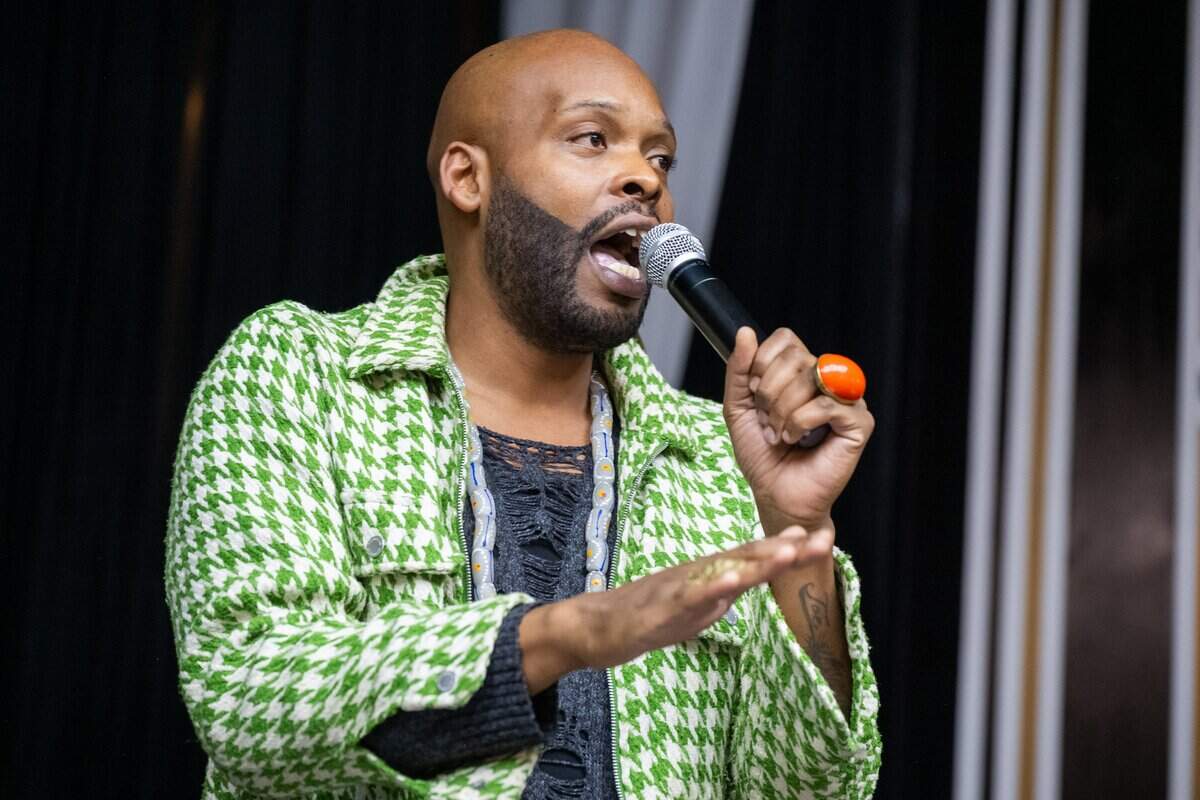
Marquez Beasley, director of the 18th and Vine Art Festival and a member of the committee reviewing submissions, said the early review required sorting through hundreds of applicants.
“I had to go through about 260 artists,” Beasley said. “It took me like two to three days.”
Beasley said city officials selected members of the selection panel and that he did not know who else was on the committee until the group was connected through email. He said the first time the committee met together online was during the meeting in which the three selected artists were interviewed and he said there were no earlier panel deliberations.
He described what he called a lack of transparency in the voting process, with the votes of the full committee never being disclosed. Beasley said he found out after the selection that everyone on the committee was supposed to vote, but not everyone did. He said since the selection announcement he has spoken to others on the panel who felt their votes were not reflected in the selection.
Beasley said his objection centered on outreach and on whether a district-specific project can be separated from local knowledge. Beasley began emailing city officials and board members to express disagreement with the direction of the selection. He said the open house helped turn private concerns into wider public pressure.
“Number one, I don’t think enough Kansas City artists got a chance to sign up,” he said. “Number two, I don’t think that any artist that’s on the selections should be from outside Kansas City, especially to know our culture. And it’s not even a Black thing. It’s just an artist from Kansas City should be chosen for this project.”
How KC calls for artists work
Martin said the city’s calls are posted to callforentry.org, which he described as a well-known public art platform, which likely drove national participation. On outreach to local artists, he said the city distributes calls through an email list he maintains and through outreach to arts organizations and news releases.
“There’s an email list that I maintain that anybody on the email list would have received it in their inbox,” Martin said. “I also do outreach to various arts organizations in the Kansas City region for them to forward that to their constituency.”
Sherae Honeycutt, press secretary and city spokeswoman, says that the city has been listening to local concerns and is not against reevaluating the selection.
“We are listening to the community, we hear their concerns,” she said. “We have no aversion to opening it up again. We want to make sure that we are doing the right thing and listening and making sure that this piece of art is a part of the neighborhood and feels a part of the neighborhood.”
The draft call overview includes evaluation criteria emphasizing excellence, durability and relevant prior experience, including an ability to coordinate with architects, contractors, engineers, fabricators and other stakeholders. It also lists “appropriateness to the site and project,” stating that an artist’s work should indicate sensitivity to the district’s social, economic, cultural, historical and physical context. Beasley said that point is central to the concerns.
“The culture of Kansas City can’t be taught,” he said.
How the artist search process could change
If the call is reopened, Martin said staff is considering changes to scoring. He said prior experience at a similar scale or budget is currently one of four criteria and is intended to be weighed equally with the other criteria. He said he is evaluating a suggested scoring rubric in which the evaluation would expand from four equally weighted criteria to seven equally weighted criteria.
“Instead of equally weighted four criteria, there would be equally weighted seven criteria so that less emphasis is placed on prior experience, for example,” Martin said.
Martin also wanted to emphasize that though many have referred to the project as a mural, the opportunity is open to various forms of artistic design that is wall based such as projections or sculptures.
“The word mural does not actually appear in the call for artists,” he said. “So there has always been an openness to considering something three-dimensional for that space and I want to make sure that we’re not putting out there in the public that this is a mural only opportunity because it has been conceived as being broader than that.”
Many local artists like Thomas and community figures like Beasley are happy to hear that their concerns have not gone unheard. They both anticipate that with the admissions being re-opened there will be an influx of local submissions from metro artists.
“This would have never happened if we would have sat silent and not even asked a question,” Beasley said. “We need to show artists in Kansas City that they can be artists and make money from it here. They just need to have the resources available.”
This story was originally published January 31, 2026 at 5:00 AM.