One of KC’s oldest open mic nights finds a new home in Raytown
On a Monday night, Kansas City’s workweek is still stretching out in front of most folks, but for the past 15 years, it’s been the perfect evening for a night of arts and entertainment at a popular weekly open mic event called Soul Sessions.
As has happened for over a decade, potential performers and their audience pour through the doors of the hosting establishment as the house band starts to play and one person after another steps forward to put their name on the sign-up list.
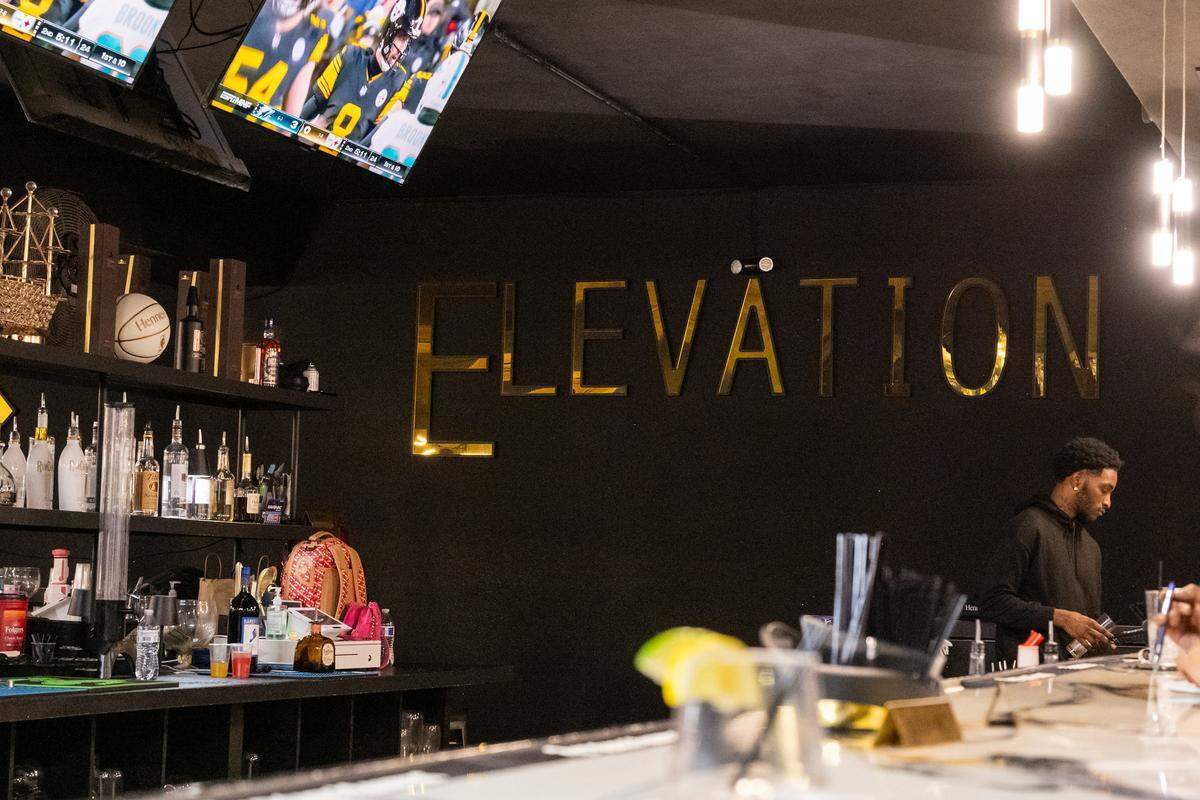
But this winter, Soul Sessions, said to be one of Kansas City’s longest-running open mic nights, began staging shows at its new home. The event, which began at The Kansas City Juke House, a bar and grill in the historic 18th and Vine Jazz District, has moved to Elevation Grille, at 6141 Blue Ridge Blvd., a roomy Raytown spot owned by former Chiefs player Alphonso Hodge.
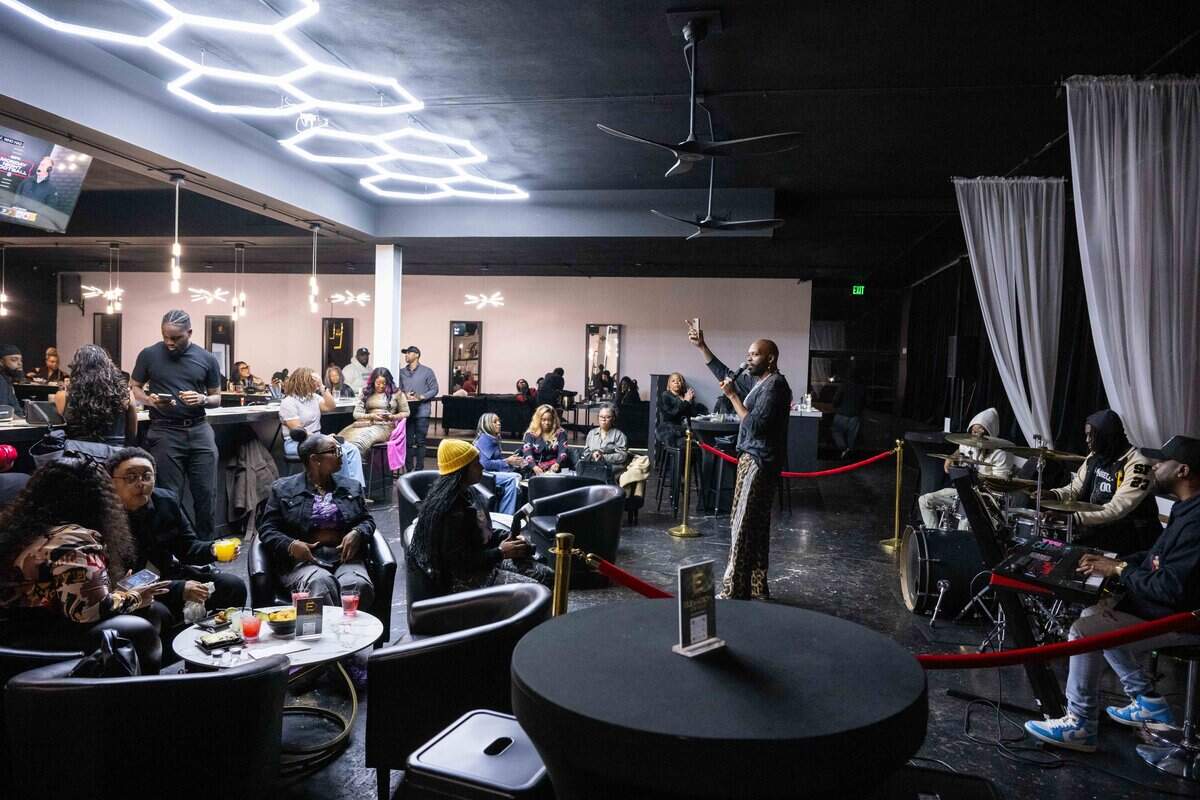
The address changed, but the mission hasdid not. For years, Soul Sessions has served as a proving ground for singers, rappers, poets, musicians and performers still shaping their sound, their confidence and their identity on stage.
“It is the longest open mic in the city,” said Mark Mulmore, a local promoter who created Soul Sessions alongside poet Simeon Taylor.
Over the years, Mulmore said, the stage has drawn a wide mix of Kansas City talent, including artists such as Kim Keys, John Lewis and Tech N9ne. More than a weekly show, he sees it as one of the city’s rare mixing pots, where different genres, generations and creative circles regularly share the same room.
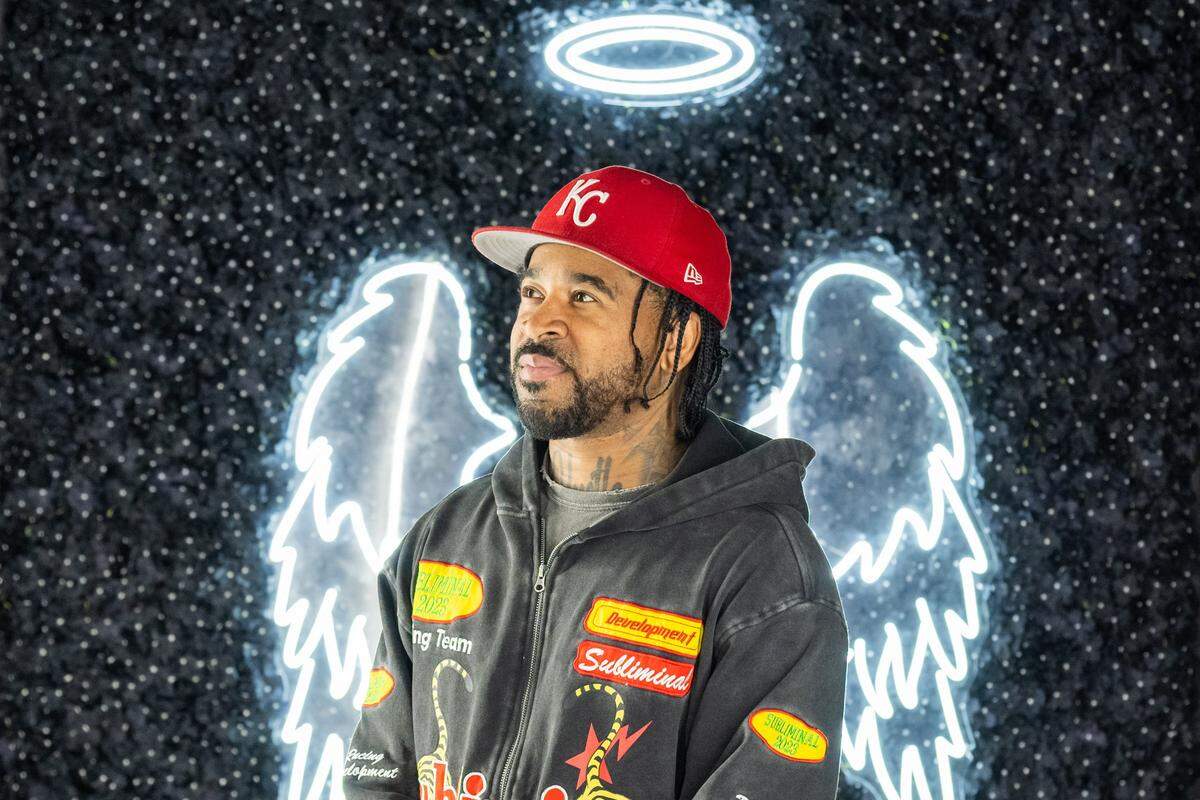
Mulmore said the move was not about leaving the cultural weight of 18th and Vine behind. It was about creating room for the event to keep growing.
“It’s a lot of construction going on down there in 18th and Vine,” said Mulmore. “We want to expand in Soul Sessions as well. Make it a bigger, broader, more fulfilling entertainment space for open mic artists, live music artists, singers, poets of the city, stuff like that. Put them on a bigger stage.”
At Elevation Grille, that stage is surrounded by an atmosphere that merges open mic culture with a full nightlife setting. Mulmore said the goal is not to “dilute the artistry,” but to make the night feel complete, drawing loyal regulars and curious first-timers into the same space.

The event took a two-month hiatus while organizers prepared for the move. That was the longest stretch of inactivity since the show began. After more than a decade at the old location, Mulmore said he felt some apprehension about changing venues, but he was relieved to see the shift did not trim the night’s crowd.
“Our first night we had 250 guests, almost 300,” said Mulmore. “They loved the vibe and the atmosphere in here, and they got good food, hookah bars, like combining the nightlife with open mic at the same time.”
The range is part of what makes Soul Sessions a weekly grind, and part of what has kept it honest. Some weeks are packed. Some are not. The show still has to happen.
Theresa Moore came to the performance with friends for the first time at the new location. She had attended several Soul Sessions nights at the previous venue and said Elevation felt like a pleasant surprise.
“I think I wasn’t sure how I would feel,” said Moore. “Everybody is so used to it being at the Juke, and you don’t really know how to imagine it anywhere else.”
Moore said she enjoyed the more upscale atmosphere at Elevation. She ordered wings and a drink at the bar and tried to convince a friend to sign up to sing.
The night moved through a wide selection of artists and entertainers, including singers, poets and rappers. Moore said that while Soul Sessions has long been tied to the feel of 18th and Vine, the heart of the event travels with the community that built it.
“I know that people will miss it being on Vine, but Soul Sessions is about the people, not the place,” she said.
The endurance of Soul Sessions is rooted in a structure that is both open and curated. Mulmore described the open mic portion as a true community lane, where people can come in, sign up and perform. But he also builds in featured performers, giving celebrated local talent a dedicated slot that raises the ceiling and keeps the night feeling like a show, not just a list.
“To keep them entertained, I do features, and I highlight them every Monday by giving them our stage. They get their own 15 minutes,” he said.
That balance between access and excellence is also the responsibility of the host, Marquez Beasley, who guards that job like he’s protecting tradition. Beasley, who has hosted for more than a decade, sees Soul Sessions as a rare stage where performers cannot “hide behind hype.” They have to connect.
“It is like the KC Apollo,” said Beasley, comparing the night to an old-school New York proving ground. “It’s one of the hardest stages here in Kansas City, actually, the hardest stage, I would say.”
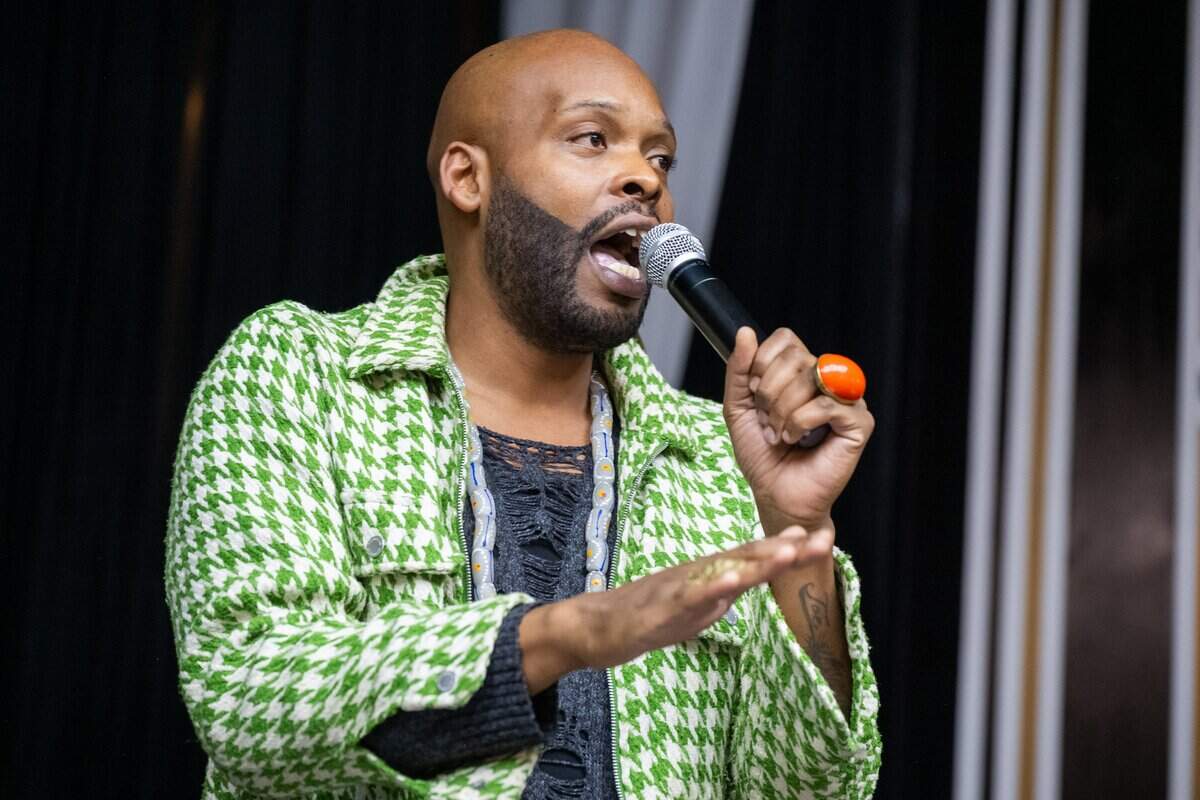
Beasley’s philosophy is simple. The room has to respect the mic. The crowd has to respect the person who steps into the spotlight and risks being seen.
Known for his high-energy hosting style, Beasley, who also is a singer, keeps the momentum moving. He has built other platforms in the city, including Brunch with Quez and the 18th and Vine Arts Festival, and he approaches Soul Sessions with the same focus on tone and accountability.
“No, I don’t play that,” said Beasley, when asked about heckling. “You might go somewhere else. Not if I’m hosting.”
The long run of Soul Sessions, Beasley believes, comes down to consistency, even when the numbers fluctuate. He said newer events often get caught watching attendance instead of committing to the work of building community week after week.
“No matter if it’s two people in the audience or 10 people in the audience, I still perform like it’s 5,000,” said Beasley. “I think it’s just consistency.”
For performers like ElJay Williams, a vocalist, that consistency is not just a weekly calendar item. It is a training ground, a checkpoint and sometimes a financial lifeline. Williams said he started singing at Soul Sessions when he began making music independently and estimates he has been performing there for about seven years.
“The word I use is vibe,” said Williams. “I thought it was just a great opportunity for artists like myself, independent artists in the city, to get what I consider practice and just to get out there and exercise their voice, exercise a gift.”

Williams isn’t alone with his description. “Vibe,” is used often by other artists and attendees when talking about Soul Sessions.
The stage also forces growth, Williams said. Regular Soul Sessions performers learn how to command a room because the crowd changes week to week.
“You don’t know the night, you don’t know the crowd,” said Williams. “If you sing at Soul Sessions regularly, it’s like being on tour.”
That unpredictability, he said, teaches an artist how to adjust, connect and demand attention, even when the energy is uneven.
The move from the Juke House to Elevation Grille, albeit smooth, carries a bit of cultural tension that everyone involved seems to acknowledge.
The 18th and Vine Jazz District is not just a location. It is a symbol, and it is where Kansas City’s Black music history is anchored. For many, it is where Soul Sessions felt like it belonged. Williams said the original home matters and should not be forgotten, but he also sees value in spreading opportunity across a growing city.
“Soul Sessions being on 18th and Vine has always been important for the city and that’s where it was created, curated,” said Williams. “But as the city continues to grow, it’s important to kind of place these opportunities around the city and not just in one spot.”

Mulmore frames the move as a continuation of a Black-owned pipeline, not a break from it. What happens next will help determine how Soul Sessions is remembered in this era.
Beasley wants respect for the mic to remain non-negotiable. Williams wants to see the platform grow toward a more concert-level experience, with staging, lighting and production that matches the talent Kansas City keeps producing. Mulmore wants the room to keep expanding without losing the feeling that keeps people come back every Monday.
“Everybody’s grown here,” said Mulmore. “We have no issues as far as violence or people getting into it, because everybody really takes care of everybody, and we are a family.”
This story was originally published December 26, 2025 at 6:00 AM.