As KC pushes a 7-OH ban, a local lab finds ‘concerning’ spread of the drug
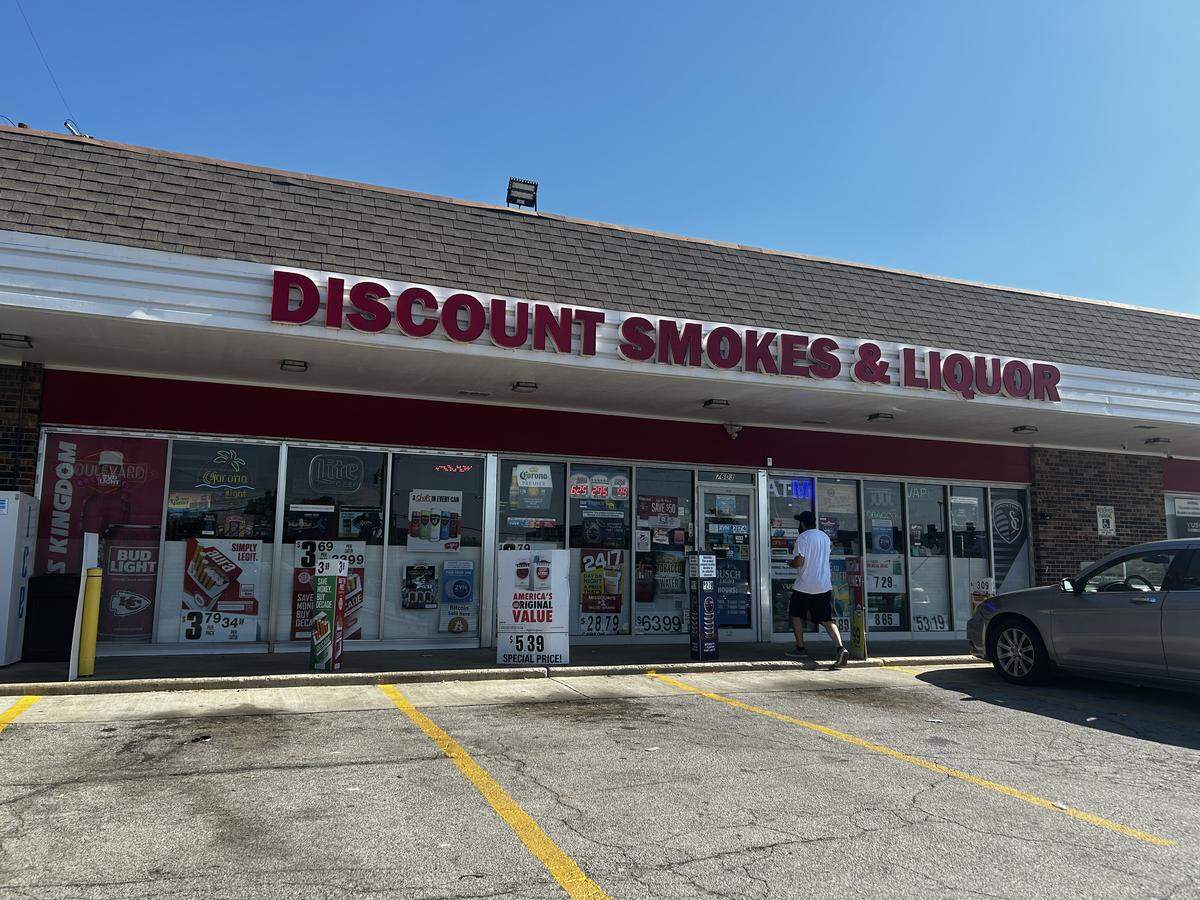
There’s a vape shop next door to one of Robert Thompson’s favorite Chinese restaurants in town. Earlier this year, he was finishing up a call before going in to pick up his order and noticed a flashing neon sign that said “KRATOM.” He’d never heard of kratom before.
“Then I started to see signs for it everywhere,” Thompson told me this week. “So I finally go home and research it a little, and I learn about 7-OH, and it’s like, Oh, this is just an unregulated opioid.”
If you’ve ever had to pee in a cup for a workplace drug test, there’s a good chance your sample passed through Thompson’s company. He is the CEO of the Clinical Reference Laboratory in Lenexa. It’s one of the country’s largest federally certified drug-testing labs — a quiet hub for the routine screenings employers rely on to vet new hires and investigate on-the-job incidents.
“Truckers, railroad workers, people who work at nuclear facilities, people who work in heavy industry, some healthcare workers,” Thompson said. “We do about five and a half million specimens a year.”

Part of Thompson’s job is also to make clients aware of emerging drugs in case they want to test for them. So this summer, he asked his team to pull a random batch of 1,000 samples from across the country and test them for 7-OH. They set the cutoff high enough to avoid sweeping in people who use natural kratom leaf, and instead flag only the synthetic, concentrated products like 7-OH that have come to dominate the market in recent years.
As someone who has been reporting on 7-OH for the last several months, I was not surprised by his findings. But you might be.
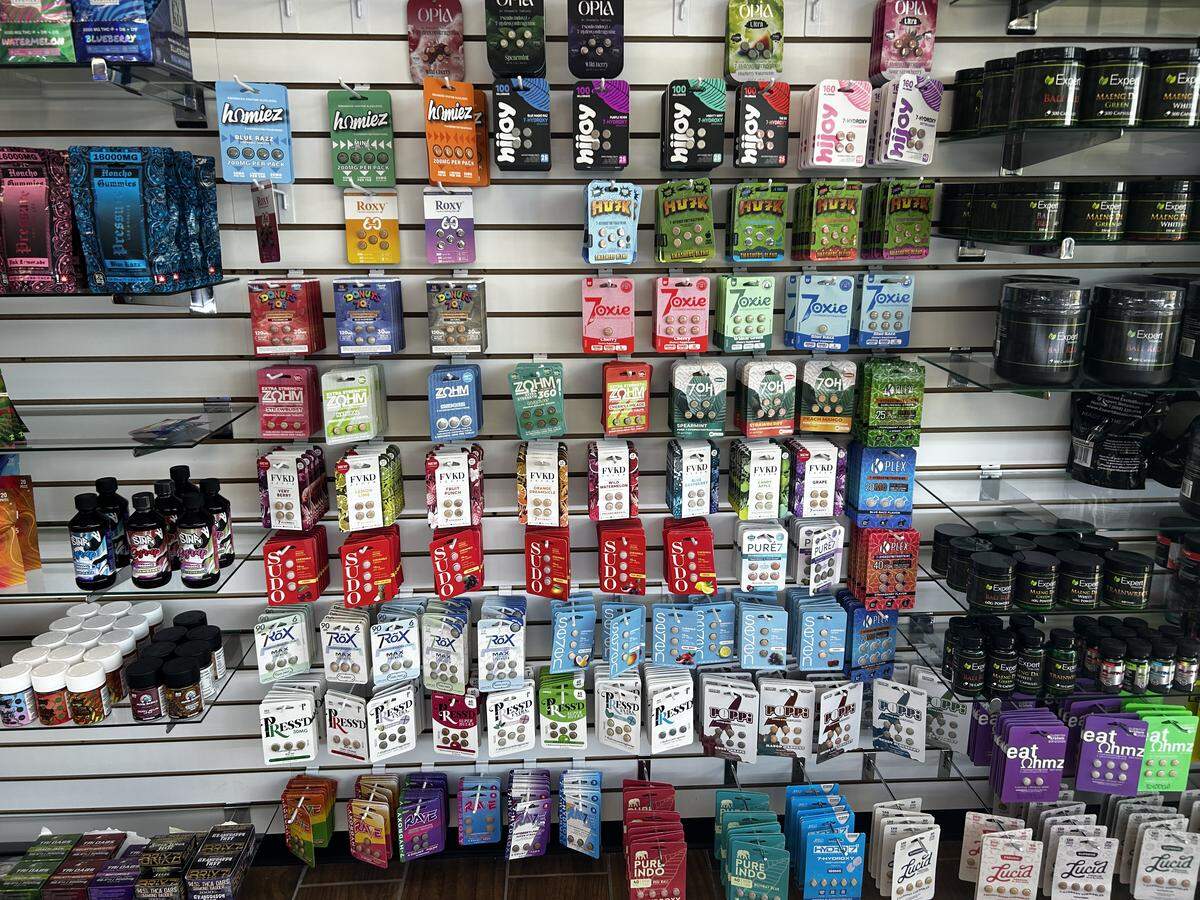
Based on the laboratory’s study, 7-OH — a drug that basically did not exist two years ago, and which is sold unregulated at gas stations and smoke shops — ranks third among illicit substances detected in workplace drug tests, behind marijuana and amphetamines.
“We found a 1.09% positive rate, which is, depending on the population, higher than all the other opiates we test for combined,” Thompson said. “That was pretty concerning to me.”
A little more on those numbers: fentanyl positives in CRL’s tests peaked around 1.5% in 2024 but have since fallen to an average of 0.44%. Traditional prescription opioids — oxycodone, hydrocodone, morphine and the rest — together make up another 0.28%. Cocaine comes in at 0.38%. Marijuana has a 4.5% average, and amphetamines are 2.3%.
But those numbers may actually understate the rise of 7-OH, Thompson said.
Every positive test goes to a Medical Review Officer — a physician who contacts the donor to determine whether there’s a legitimate medical explanation. Amphetamine positives, for example, are often overturned because the donor is taking a prescribed ADHD medication; the same is true for many opioid positives and even marijuana in some states.
“If you adjust for the number of positives that get thrown out because of valid prescriptions,” Thompson said, “7-OH might be equal to or even above amphetamines.”
7-OH enforcement ramping up
One caveat: CRL has only run that single study. Thompson said the firm hasn’t continued broader population testing for 7-OH — although a handful of rehab centers have recently asked CRL to add it to their panels after seeing more patients dependent on it.
“Our approach was to say, basically, hey, we have a piece of data here, and we’re happy to share it with whoever’s interested,” Thompson said.
U.S. Senator Roger Marshall took Thompson up on that offer in October, visiting CRL’s headquarters and afterward urging the Drug Enforcement Administration to classify 7-OH as a Schedule I narcotic.
“By exploiting regulatory gaps and flooding communities with synthetic compounds, the manufacturers of these (7-OH) substances are contributing to a potential fourth wave of the opioid epidemic,” Marshall later wrote in a subsequent letter to DEA chief Terry Cole. “Marketed as ‘natural’ supplements despite their high addiction potential, these substances are dangerously operating in an unregulated market.”
The scheduling question now sits in a federal holding pattern — the FDA’s July recommendation to ban 7-OH on one side, a DEA process with no visible timeline on the other. 7-OH is still on shelves.
But while federal regulators deliberate, law enforcement is already moving.
Last month, federal agents with the FDA and Department of Justice seized roughly 73,000 7-OH products from three Kansas City warehouses in a coordinated action. Two belonged to Shaman Botanicals, owned by Vince Sanders, CEO of CBD American Shaman, who manufactures 7-OH for dozens of brands across the country. The third, operated by Relax Relief Rejuvenate Trading, LLC, distributes 7-OH under the brand EDP.
Around the same time, Missouri Attorney General Catherine Hanaway opened a statewide investigation into several kratom manufacturers and retailers — including Sanders’ companies — citing concerns about addiction and deceptive marketing.
There is pressure coming from the civil side, too. A federal class-action lawsuit filed in September accuses CBD American Shaman and related entities of running a racketeering scheme to market Advanced Alkaloids, a chewable 7-OH product, while concealing its dependence and withdrawal risks. The complaint alleges mail and wire fraud, deceptive advertising, and consumer-protection violations in both Kansas and Missouri.
Kansas City Council moves on 7-OH
Now the Kansas City Council is joining the effort. Mayor Quinton Lucas — along with Councilmembers Nathan Willett and Johnathan Duncan — last week introduced an ordinance that would prohibit the sale of so-called “gas station drugs”: kratom and its derivatives including 7-OH, Delta-8 and Delta-9 THC edibles, nitrous oxide, synthetic cannabinoids, and other unregulated psychoactive products.
In rolling out Kansas City’s ordinance, the mayor’s office pointed to a recent local fatality involving kratom. I requested more details on that this week. Spokeswoman Megan Strickland said the city’s Overdose Fatality Review Board — established in 2023 to track fentanyl deaths — collaborates with the Jackson County Medical Examiner’s Office to review overdose cases and toxicology results.
“In late September, the Overdose Fatality Review Board reviewed one case involving a polysubstance overdose that included mitragynine, the primary psychoactive component in kratom,” Strickland said. “This marks the first overdose death involving detected kratom that the Health Department has reviewed or highlighted.”
Strickland said HIPAA privacy laws prevent the city from releasing any identifying details about the deceased, including the person’s age, date of death, or other substances detected.
Officials in Los Angeles apparently interpret HIPAA differently. There, county health authorities have linked six recent deaths to kratom or 7‑OH. In five of the cases, medical examiners listed the cause of death as “mixed drug effects,” reflecting the presence of multiple substances including alcohol, prescription sedatives, and muscle relaxants; the sixth death was attributed to a cocaine overdose. Those reports also note the decedent’s names and ages.
The lack of reported overdose deaths involving only 7-OH is the main argument proponents make against banning the drug. They say 7-OH has potential to help people wean off harder substances like fentanyl and claim that it doesn't work on the brain receptors that cause respiratory depression — the primary cause of opioid-related deaths. That may be true. But it is also true that 7-OH is ruining a lot of people’s lives. The evidence is in subreddits like r/quitting7oh and at rehab centers, where doctors are reporting dramatic upticks in patients that arrive hopelessly addicted to 7-OH.
“I’m not a scientist, I’m just a business guy,” Thompson said. “But my feeling after seeing the numbers from that study and reading up on it is, let’s study this. Maybe it does have some applications to help people quit opioid addictions. But schedule it in the meantime. Because as we’re seeing, the potential for abuse here is ridiculously high.”
Kansas City’s 7-OH ban could come before the federal government acts. The ordinance was slated for a committee hearing Tuesday but has been pushed to January 6. Public comments can be sent to public.testimony@kcmo.org until then.
This story was originally published December 10, 2025 at 12:14 PM.