More 7-OH seized in Kansas City as feds target the growing drug market
Federal authorities announced Monday that they seized approximately 73,000 products containing the synthetic kratom derivative 7-hydroxymitragynine from three Kansas City warehouses last month.
The actions against two of those warehouses, operated by Shaman Botanicals, were previously reported by The Star.
The Department of Justice’s announcement Monday revealed that a third facility was also targeted during a coordinated enforcement action Nov. 12.
That facility, at 1449 N. Topping Ave. in Kansas City, is operated by Relax Relief Rejuvenate Trading, LLC, which sells 7-OH under the brand named EDP, among others.
The Food and Drug Administration issued a warning letter to Relax Relief Rejuvenate Trading’s owners, Dustin Robinson and Ajaykumar Patel, in June about concerns related to its marketing of 7-OH. The FDA said the products were illegal under the Federal Food, Drug and Cosmetic Act.
Robinson declined to comment on the seizure.
7-OH is a lab-created form of kratom that is sold without oversight in smoke shops and convenience stores. It is said by researchers and regulators to be as much as 13 times more potent than morphine and is sometimes referred to as “gas station heroin.”
In a previous interview with The Star, Robinson said he got started in the supplements business working for Shaman Botanicals CEO Vince Sanders at one of his CBD American Shaman shops. Sanders then suggested they start a 7-OH brand together, with Robinson owning the company and Sanders manufacturing the product through Shaman Botanicals.
“We were one of the first companies to sell (7-OH) shots,” Robinson told The Star in September.
Robinson said then that his company was continuing to sell 7-OH products despite a July recommendation by the FDA and the Department of Health and Human Services that the Drug Enforcement Administration classify 7-OH as a Schedule I substance alongside drugs like heroin and cocaine. The DEA has yet to act, though, leaving 7-OH businesses in something of a legal gray area.
Sanders, who also received an FDA warning letter in June, continued to sell 7-OH at his CBD American Shaman shops and manufacture it for other brands through Shaman Botanicals as well. Federal agents visited his facilities at 1501 Iron St. in North Kansas City and 2461 NW Tullison Road in Riverside and issued seizure complaints for all products containing 7-OH.
“Products containing 7-OH are illegal under federal law,” Assistant Attorney General Brett A. Shumate of the Justice Department’s Civil Division said in a news release Monday. “We have seen numerous reports of harmful health consequences in consumers, including children, who have taken 7-OH products. Working with our partners at FDA, we will take action against anyone participating in the illegal distribution of these products.”
7-OH products seized
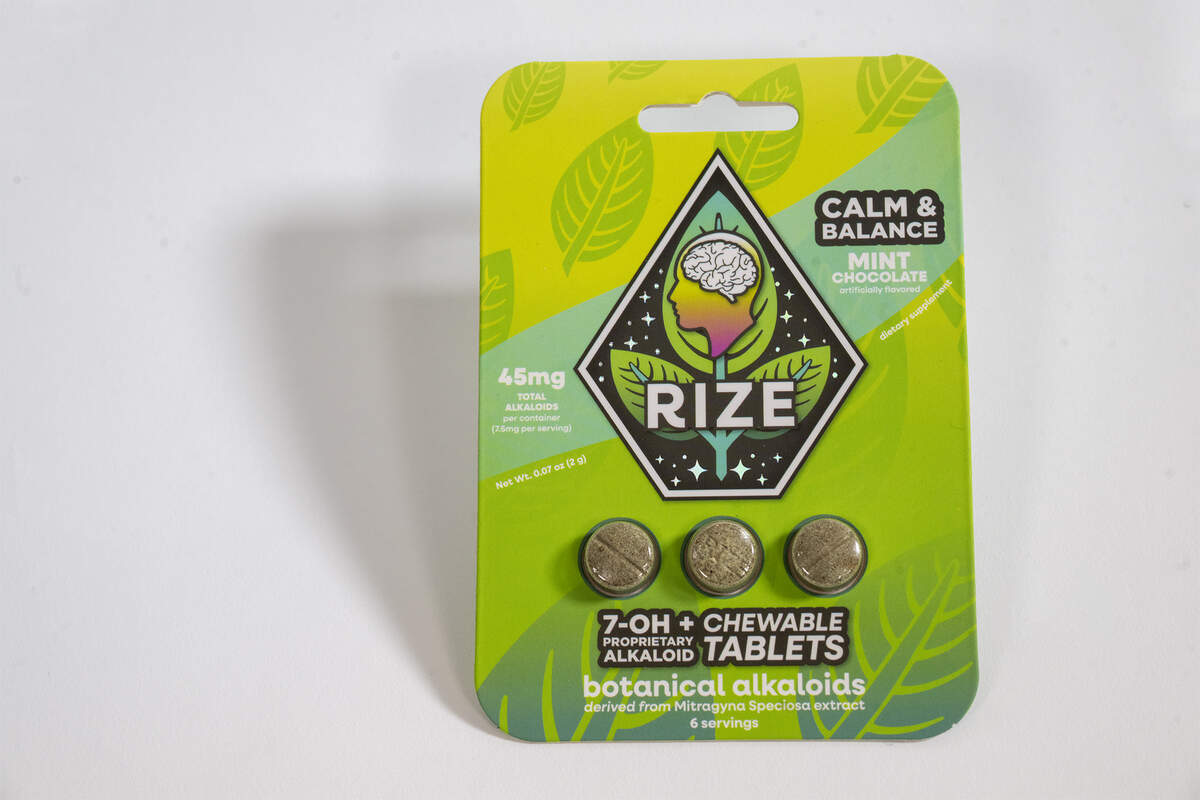
Court records show that the government is seeking forfeiture of roughly 17,000 units of 7-OH from Relax Relief Rejuvenate Trading. The three brands cited in the complaint — Rize, EDP and Luxx Aura — were also among the products found at Shaman Botanicals.
As in the Shaman Botanicals action, FDA investigators issued detention orders for the 7-OH products, preventing their sale or distribution, and the Justice Department is now seeking court approval to formally seize the items.
Relax Relief Rejuvenate Trading could contest the forfeiture, as could Shaman Botanicals. It is not clear if either company will. Sanders has not responded to requests for comment.
Sanders and other 7-OH sellers have argued that the products are safe when used as directed. They point to research suggesting that, unlike traditional opioids, 7-OH has not caused widespread overdose deaths. Advocates of the drug also say it can serve as an off-ramp from stronger opioids like fentanyl, helping users taper down without experiencing severe withdrawal.
But growing subreddits like r/quitting7oh tell a different story. There, users describe severe withdrawal symptoms from 7-OH, including nausea, sweating, insomnia, and anxiety, as well as intense cravings that make it difficult to stop using 7-OH. Local rehab centers have also reported a rise in patients struggling with 7-OH dependence, according to a three-part series published by The Star in September.
Missouri Attorney General Catherine Hanaway announced last month that her office had launched a statewide investigation into several 7-OH manufacturers and retailers, including Shaman Botanicals and CBD American Shaman.