In both Missouri and Kansas, these recent movements are targeting 7-OH
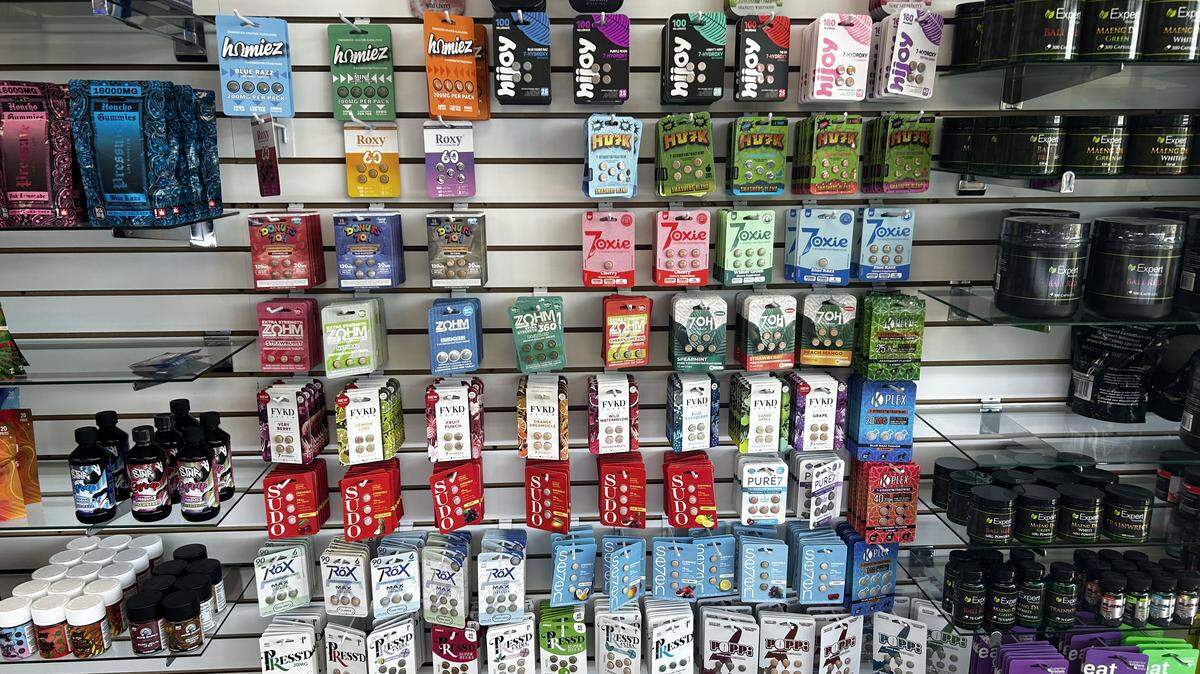
The synthetic offshoot of kratom known as 7-hydroxymitragynine, or 7-OH, was little known outside smoke shops and Reddit forums a mere six months ago.
That is changing — perhaps the inevitable result of the fact that more people are learning that this opioid is several times more potent than morphine and almost completely unregulated across the country.
Neither Missouri nor Kansas had any laws on the books related to 7-OH or kratom in September when The Star published a multi-part series about 7-OH and American Shaman, the local company that is one of the largest manufacturers of the product in the country.
Lately, officials in both states have begun moving with new urgency to rein in 7-OH. Here’s the latest on where things stand.
Missouri health officials issue statewide warning
The Missouri Department of Health and Senior Services issued a statewide health advisory last week warning Missourians about the dangers of 7-OH, calling it a “potent opioid-like substance” that’s showing up in gummies, powders, and liquid shots sold in stores and online.
“While kratom itself is a natural botanical, isolated 7-OH is far more potent — up to 13 times stronger than morphine at opioid receptors — and has not been tested for safety in humans,” DHHS said in a statement.
“Products containing 7-OH are being marketed as natural remedies, but they carry serious risks including addiction, overdose and even death,” added Dr. Heidi Miller, Missouri’s chief medical officer.
Between January and September, the Missouri Poison Center logged 47 reports involving kratom or 7-OH — nearly double the number from all of last year. Three of those involved 7-OH specifically, with at least one patient requiring hospitalization.
Julie Weber, director of the Missouri Poison Center, told The Star that her agency has been tracking 7-OH since February, though it does not actually test for the product. The center instead gathers information from callers who report what packaging and products were consumed.
The lack of regulation around smoke-shop products can make verifying that information challenging, though.
“We’re aware that what some products state on the label are not always the ingredients in the packaged product,” Weber said.
The Kansas Department of Health and Environment issued a similar warning in late September.
Gladstone police take local action
Earlier this fall, Gladstone became one of the first police departments in the region to enforce a ban on sales of 7-OH products outright.
Police chief Fred Farris ordered his sergeants Oct. 7 to visit the roughly 12 smoke shops and gas stations in the Northland city and inform them that they had 24 hours to remove 7-OH from their shelves. Farris said Gladstone’s legal department reviewed an existing city ordinance related to synthetic cannabinoids and said it applied to 7-OH.
Farris acted after speaking with Maggie Nurrenbern, a Missouri state senator representing Gladstone who had seen recent coverage of 7-OH in local media reports. Nurrenbern told The Star she plans to introduce legislation aimed at banning 7-OH across the state in the next session. But she also thinks other local governments could take action like Gladstone has.
“I would encourage other cities to look at the existing ordinances they have on the books,” she said.
Kansas City may be on the verge of doing just that. First District Councilman Nathan Willett introduced a resolution last week that would direct the city manager to “evaluate kratom regulations in other Missouri municipalities and make recommendations within 60 days for any necessary code amendments to regulate kratom in the City.”
That resolution is scheduled for discussion in a meeting of the Neighborhood Planning and Development Committee Tuesday. Willett did not respond to a request for comment Monday.
Roger Marshall calls for DEA action
Federally, the Food and Drug Administration and the Department of US Health & Human Services recommended classifying 7-OH as a Schedule I substance in July.
But that step still requires approval from the Drug Enforcement Administration. To the frustration of 7-OH prohibitionists, that approval process is expected to take at least six months, during which time 7-OH has remained on shelves.
Last week, U.S. Senator Roger Marshall of Kansas asked the DEA to pick up the pace. In a letter to DEA administrator Terrence Cole, Marshall called on the agency to execute an “emergency scheduling” of 7-OH and to strengthen its oversight to block new synthetic derivatives from reaching the market.
“The DEA has the authority under the Controlled Substances Act and the Federal Food, Drug, and Cosmetic Act to act swiftly by temporarily scheduling 7-hydroxymitragynine products and their analogues,” Marshall wrote. “Delaying action risks the proliferation of distribution networks and more victims.”