Kansas officials issue warning amid rising concerns about gas station drug
The Kansas Department of Health and Environment issued a public warning Wednesday about 7-hydroxymitragynine, or 7-OH, a potent opioid increasingly sold in gas stations, smoke shops and online.
“We are urging individuals to avoid using any products containing 7-OH,” said Dr. Dereck Totten, KDHE’s chief medical officer. “It can be extremely harmful, even in small doses. Always consult with your healthcare provider before consuming any new supplements, and if you suspect an adverse reaction or overdose, seek medical attention immediately.”
The warning comes after a three-part series by The Kansas City Star last week exploring 7-OH, its ties to Kansas City-based CBD American Shaman, and the product’s rise in popularity over the past few years.
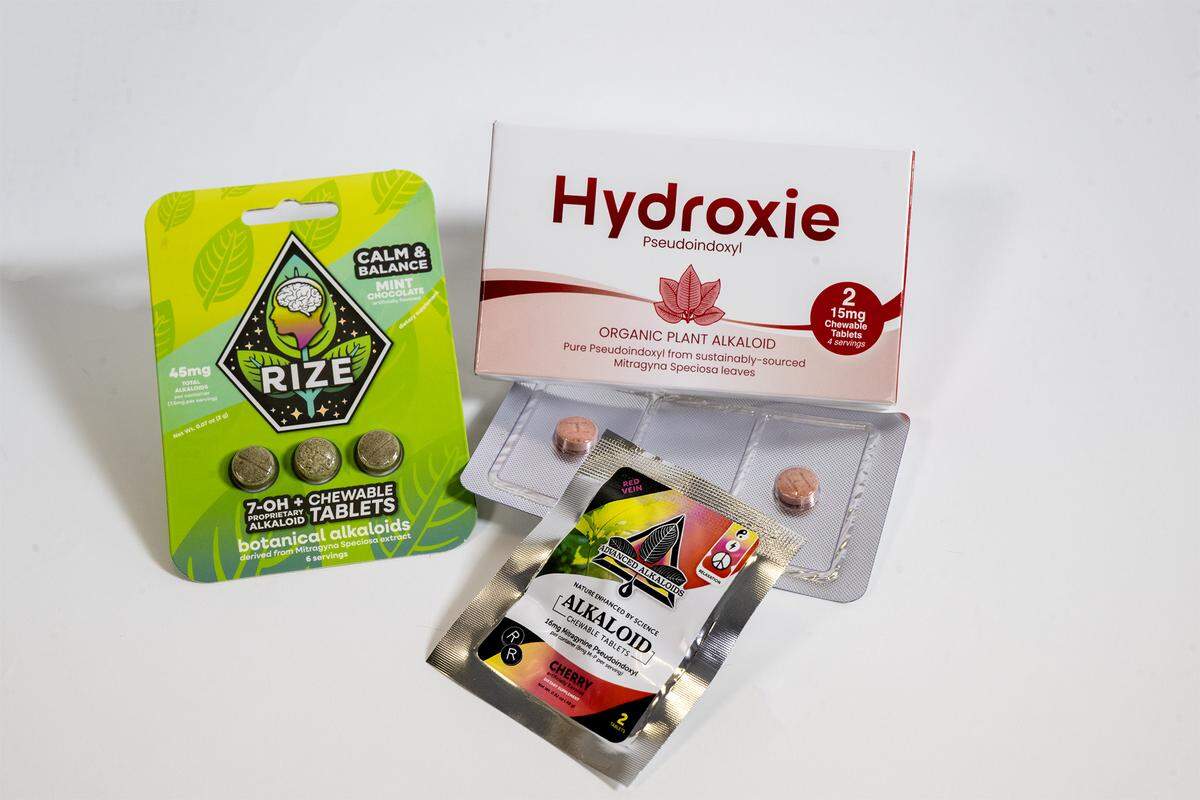
7-OH is derived from kratom, a plant sold in smoke shops that some use for pain relief and others use to wean off stronger opioids. While both kratom and 7-OH are largely unregulated, 7-OH is far more potent and is believe to carry significantly higher risks of addiction. The products are sold as gummies, liquid shots, tablets and powders.
“7-OH is sometimes sold as if it were the same product as kratom, but it is not,” the KDHE release says. “7-OH is more addictive, and using it in combination with alcohol or other sedatives can cause severe respiratory depression, and in some cases, even death.”
Several states — including Alabama, Arkansas, Indiana, Vermont, Wisconsin and Louisiana — have enacted outright bans of kratom products. Florida last month issued an emergency rule banning 7-OH.
But kratom and 7-OH remain legal in Kansas, though the products have faced legislative scrutiny in recent years. Bills in the legislature in 2023 and 2025 attempting to regulate kratom — via age restrictions, labeling requirements and the prohibition of synthetic alkaloids like 7-OH — failed to pass out of committee.
Missouri lawmakers also tried and failed to pass a similar kratom consumer protection act in 2025. In both states, the products are completely unregulated. No laws prevent anyone, of any age, anywhere in either state, from purchasing them.
Federal laws could soon change that. In July, the FDA and HHS announced they were recommending that 7-OH be classified by the DEA as a Schedule I controlled substance alongside drugs like heroin and cocaine. But the DEA has yet to act, and in the meantime 7-OH remains widely available at gas stations and smoke shops across the country.
KDHE’s warning about the harms of 7-OH aligns with what The Star reported in interviews with people who have used the product. One 29-year-old user said she started using 7-OH after being given a free sample while buying CBD from CBD American Shaman. Soon, she went from one or two tablets a day to 10, spending hundreds of dollars a week on the product. She experienced hair loss, skin issues, insomnia, anxiety and depression when she tried to quit.
Another user, also in his 20s, said the 30-milligram 7-OH pills he took were indistinguishable in their effects from the Oxycodone he had once been addicted to. Both described severe withdrawal symptoms and long-lasting health issues, consistent with addiction stories found in the growing subreddit r/quitting7OH.
KDHE urged residents to avoid 7-OH, read labels carefully, keep it away from children and pets, consult health care providers before taking supplements, and have naloxone available in case of an overdose.
Kansas residents can request free naloxone kits through DCCCA’s online order form. For immediate concerns, individuals can call the Poison Help Line at 1-800-222-1222, or dial 911 in the event of an overdose.
This story was originally published September 24, 2025 at 3:11 PM.