KC metro cities are swiftly changing e-bike policies. Is it the right solution?
A wave of recent electronic scooter and bike crashes have led to ordinance changes in several cities across the Kansas City metro this fall, mostly in Kansas, but now also in Missouri, where a local nonprofit is questioning the effectiveness of the recent amendments.
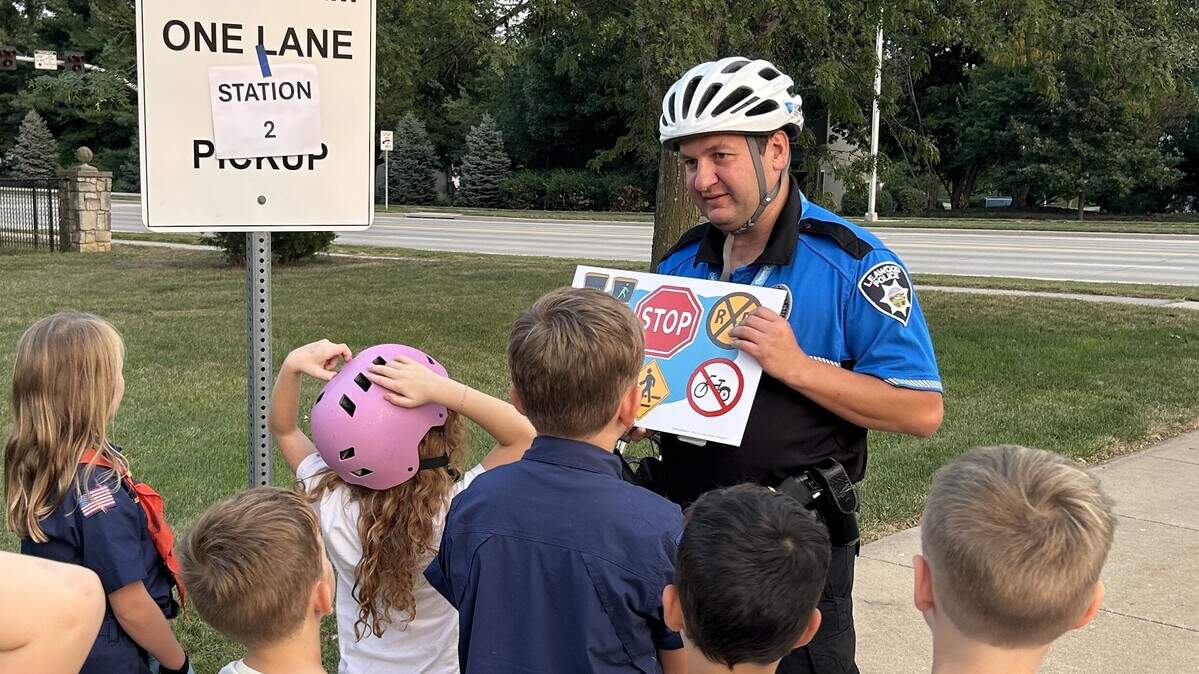
In Kansas, Johnson County cities like Shawnee and Prairie Village have amended ordinances to be stricter on scooter and electronic bicycle operators. Leawood police have been working with school districts to educate students about e-bikes, as the city’s Bike/Walk committee considers a helmet ordinance for minors.
In Missouri, the Kansas City Council approved an ordinance Thursday to prohibit drivers from making right turns on red lights in school zones during school zone hours, requiring signs at intersections and allowing schools to request waivers if pick-up and drop-off is disrupted by the rule change.
It’s the latest in a series of new ordinances across state lines, meant to crack down after several collisions where cyclists and scooter operators have been seriously injured or killed when they have been hit by moving motor vehicles.
Bike advocates, like nonprofit BikeWalkKC, co-founded by District 4 Councilor Eric Bunch, believe city ordinance changes are needed, but contend they should be focused on helping to protect cyclists and scooter operators, instead of restricting the usage of such modes of transportation. These areas lack the infrastructure to help protect them, like bike lanes, trails and parks, and cannot compensate for the recent amendments, BikeWalkKC director of policy Michael Kelley told The Star.
In fact, Kelley says creating such restrictions poses a new challenge for many people.
“It’s very easy to believe that driving is the only way we should move around, and that’s not the case. For a lot of people, driving is not an option,” Kelley said.
What led to ordinance changes
In Johnson County, 10-year-old Duke Ommert died almost two weeks after he was struck by a vehicle in Leawood while riding an electric scooter on Oct. 13.
After Ommert’s death, Shawnee City Council approved an ordinance classifying motorized skateboards and unicycles together with motorized skateboards, limiting their usage to sidewalks and requiring minors to wear helmets when operating them.
Several Johnson County shopping centers, like property owner Johnson County Management, have restricted e-bike usage for people under the age of 18 or banned them completely.
In Kansas City, on September 17, Children’s Mercy Hospital pediatric cardiologist Saswat Das was critically injured in a hit-and-run and suffered a traumatic brain injury, loved ones previously told The Star. A week later, a cyclist was killed in a hit-and-run in northeast Kansas City.
Then, on Oct. 14, 10-year-old Hazen Workman-Duffy was killed after being hit by a cargo van while biking to Ingles Elementary School in a crosswalk.

Two people were killed on scooters in Jackson County last year, according to data from Missouri State Highway Patrol. There were 18 e-bike crashes in Jackson County last year and seven this year.
Officials in both states said they enacted changes to save riders, particularly children, from traffic collisions, but by utilizing different approaches. Johnson County cities chose to tighten restrictions on operators of e-bikes and scooters, while Kansas City is tightening restrictions on the drivers of vehicles that could harm bike or scooter operators.
“Members of the governing body heard from a number of their constituents with concerns about motorized scooters and unicycles being used in the City and news events from around the Kansas City area certainly added to the feedback we received,” Shawnee Communications Director Doug Donahoo told The Star in an email.
Superintendents from the Shawnee Mission District and USD 232 reached out to the city council, according to Donahoo, as the topic received a “great deal of attention in their offices.” Both districts will partner with the city of Shawnee to educate students and their families, he said.
Kansas City Mayor Quinton Lucas said the city is also looking into further regulation for e-bikes and scooters, but called the initial ordinance amendment an “intervening step.”
“Kids don’t need to die on the streets of Kansas City,” Lucas told The Star. Lucas believes the ordinance puts more pressure on Kansas City police to do more targeted investigations for people who speed in school zones.
“Any loss of life for a young person, in this situation, a young person going to school, young people who are playing around on our streets, this has happened in other jurisdictions, deserves our full policy focus,” Lucas said.
While cities are racing to amend city codes in the name of protection, BikeWalkKC doesn’t believe these sudden regulation changes are the proper solution. The organization doesn’t believe there are enough school zone designations for Kansas City’s recent ordinance amendment to be effective.
Kelley said city infrastructure to protect riders is not in place enough for municipalities to limit the use of the machines in this manner.
“There has been, in a large part of municipalities, kind of a knee-jerk response to trying to address this,” Kelley said.
“We have not built an environment that makes it safe to use a scooter, an e-Bike, regular bike, all these forms of micro-mobility easily. People are often forced to navigate [streets] that were not designed with their safety in mind, and unfortunately, that can lead to some of the crashes, the serious injuries and fatalities that we’re seeing.”
How BikeWalkKC hopes to work with schools, cities
Because of the rising attention on the issue, BikeWalkKC created a blog post explaining to families the differences between e-bikes and e-motos, which are electronic motorcycles, mopeds and dirt bikes.
E-bikes have specific classes that determine the number of riders they can hold and the maximum speeds, with three classes available for purchase. Classes 1 and 2 can only go up to 20 miles per hour, with Class 2 bikes equipped with a throttle assist.
A Class 3 e-bike can go up to 28 miles per hour. E-motos, Kelley said, go faster than 30 mph with the pedals being performative because of a throttle.
“They may be on the bike, but that does not mean that that’s how the bike is operated,” Kelley said.
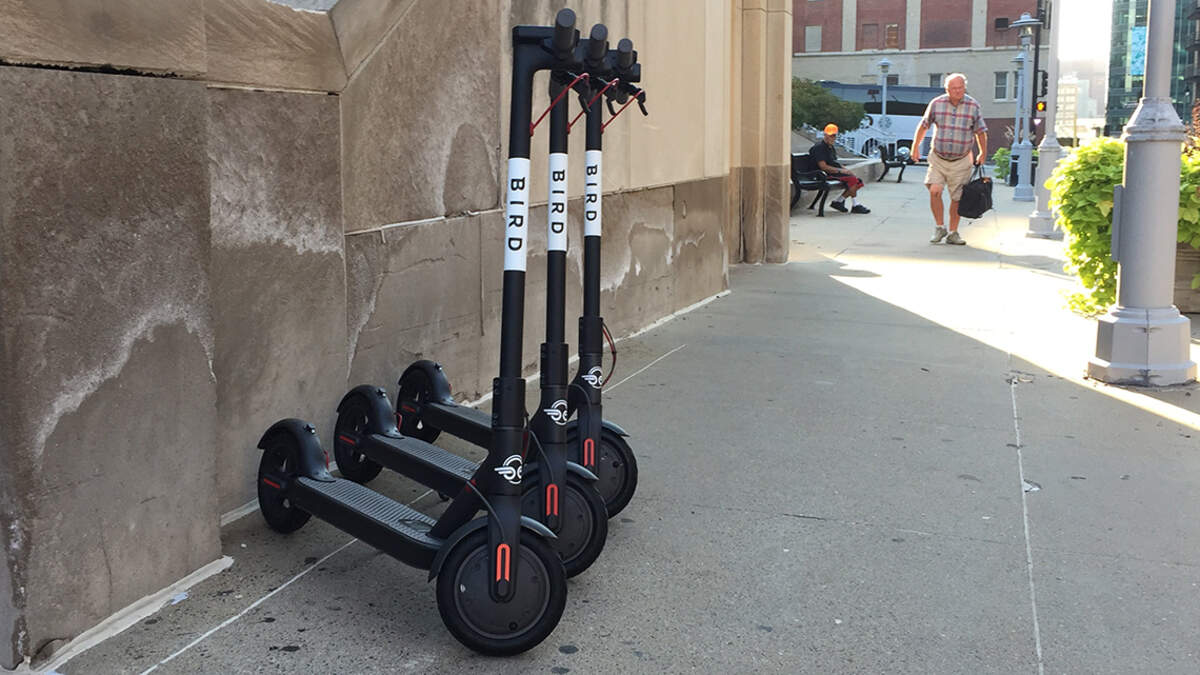
Kelley, who has been with the nonprofit for eight years, said the organization is meeting with school districts, like Shawnee Mission, as well as community members and elected officials to discuss potential policy changes.
The toughest challenge through his years has been attempting to shift people’s viewpoint to consider bikes as a main form of transportation for some people instead of cars, he said.
“You can’t afford the cost of owning and maintaining a car... so you’re often relegated to having to walk on broken sidewalks, having to bike in places that don’t have good bike infrastructure, and having to wait hours on end for a bus that may never come,” Kelley said.
“That is a transportation system that does not work, but for our neighbors across the Kansas City region, it’s a reality that they face every single day.”
Lucas said Kansas City’s public works department does their best to make sure they’re up to code when evaluating city policies. The city of Shawnee may consider “alternative options” for e-bike and scooter operators, Donahoo said.
“You should not actually only see Kansas City as a place that you can traverse through as quickly as possible, the safety of pedestrians and children be damned,” Lucas said. “So we will continue this work, at least until I’m done being mayor in terms of how we can do better.”
BikeWalkKC’s blog post recommends schools and cities build more parking options and safe spaces for bikes and scooters quickly. The organization also encourages parents to educate their children on the changes and demand their elected officials create spaces for e-bikes and scooters to roam freely.
“There’s definitely more work [that] needs to be done, and we’re eager to work with anyone,” Kelley said, “... elected officials, schools, even parents, to create the sort of built environment that keeps our kids safe, because that’s ultimately what the priority should be here is keeping children safe.”
This story was originally published November 11, 2025 at 6:00 AM.
CORRECTION: A previous version of this story mistated the measures the city of Leawood has taken around ordinances on e-bikes and scooters. Leawood has not changed those ordinances since 2023, but is currently considering a helmet requirement for minors.