
KC winner of a reality TV show, tells a cultural story cooking Indigenous food
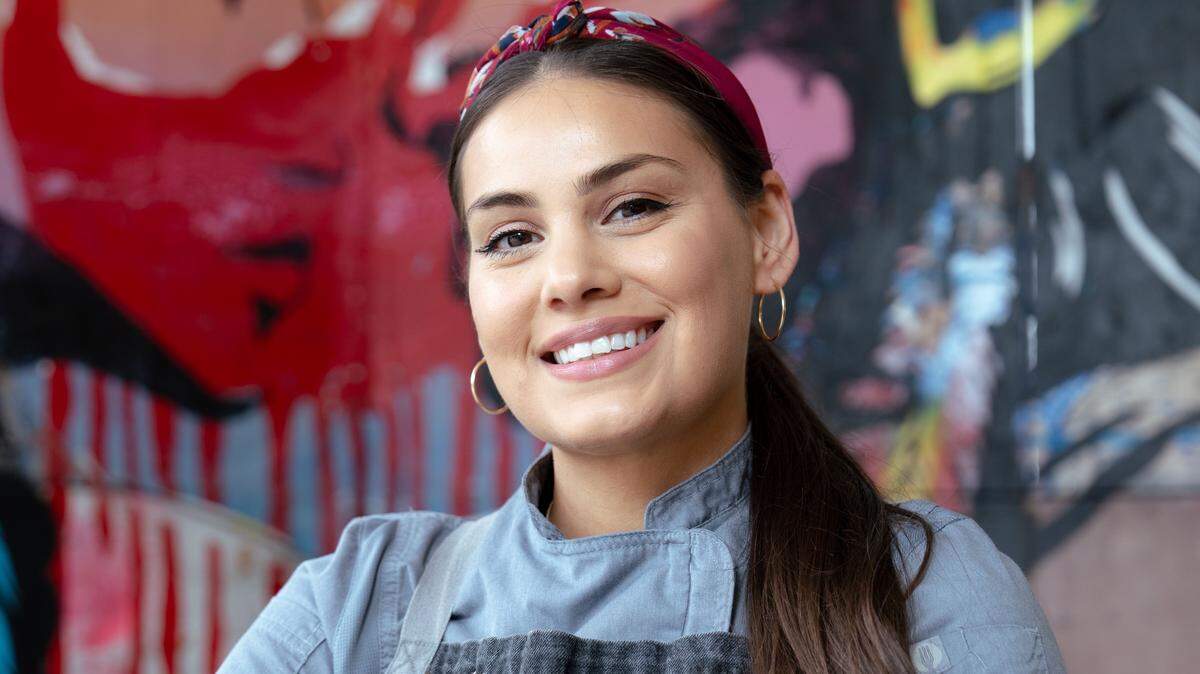
Kansas City native, Pyet DeSpain grew up with food at the center of many cultural festivities. These experiences instilled a passion that she turned into a mission to put Indigenous cuisine at the forefront of American kitchens.
As a chef, author and host of the new PBS TV show, Spirit Plate, she fuses traditional Native American ingredients, like wojapi sauce (made with berries), with contemporary culinary techniques, to create dishes that honor heritage while inviting home cooks to connect with her roots.
Her cookbook, “Rooted in Fire,” is more than a collection of recipes, it’s a deeply personal journey that weaves her life story with the history, traditions and philosophies of her culture as a member of the Prairie Band Potawatomi Nation.
Next month, DeSpain, who was the first winner of Gordon Ramsay’s Next Level Chef, a popular reality cooking show, will return to Kansas City from Los Angeles, for a book-signing event on Friday Nov. 28, at Cafe Corazon, 110 Southwest Blvd., in recognition of Native American Heritage Month.
DeSpain’s work goes beyond the kitchen. She celebrates Indigenous identity, educates audiences on forgotten ingredients, and challenges stereotypes about Native American food.
From carrying on her grandfather’s recipes to collaborating with mentors she has looked up to, DeSpain demonstrates how food can be a powerful tool for storytelling, cultural preservation, and community building.
While she is living in Los Angeles, for now, DeSpain plans to open a Kansas City restaurant in the future.
Recently The Star’s culture and identity reporter J.M. Banks caught up with DeSpain to talk about her growing up in a culturally diverse home, blending cooking styles and using food to preserve Indigenous history.
How did you get involved with cooking? Was it something that you did as a child, that you knew you were going to follow into a career? Or was that just a passion that turned into a career?
I grew up in Kansas City. We have a big population of Latinos here. My family is Mexican on my dad’s side, he’s half Mexican and half white. My grandmother cooked a lot of really good Mexican food. She actually had a restaurant in Kansas City called Tres Güeras at one point with her friends. So I come from a family that loves to cook and cooks well and is passionate about it.
I also had uncles who opened their own restaurants at different times. So I come from a family of people who just love to cook. For me, it was simply our way of life, something that’s in our DNA, something we’re passionate about as a family.
It didn’t really set in for me that it could be a career path. It wasn’t until I was about 23 years old that I decided to go to culinary school. I found out that there was a school that had opened up in Kansas City, Missouri, on the Plaza called The Cordon Bleu College of Culinary Arts. It’s no longer open, but they were touring the school and advertising it. I saw that and thought, wow, I want to go check it out. That really piqued my curiosity. I ended up signing up for classes the same day I took the tour.
As a member of the Prairie Band Potawatomi Nation on your mothers side and also with Mexican heritage from your father, how have both cultures shaped your approach to food and community?
Food is at the center of all of our special occasions on both sides of my family. Whether it’s on my Mexican side during family gatherings, holidays, or just getting together, we were always in the kitchen and always eating. Food was a big part of those celebrations.
Having a family that was so passionate about cooking, my cousins, siblings and I had to pitch in and help out at a young age. We have lots of cousins and family members to feed, so it was always a hands-on experience for everyone in the family.
On my Native side, we have these beautiful ceremonies and you primarily see traditional foods served there. You see the grandmothers, aunties women of the families out in the heat all day cooking food for the ceremony, doing it with so much love and intention.
Being able to experience that on both sides of my family, the love, care, nurturing sense of community, really shaped me as I got older.
When I started hosting things on my own and having friends over, I realized how much I love hosting. That’s a big part of the experience. I want to give people who come to my pop-ups or events: that family-style meal and family environment where everyone comes together.
I’m not really into the plated, four-course meal style where everything is individually served. Those are beautiful and great, but my favorite way of cooking and serving is family-style because it’s communal. Everyone’s passing things around and it encourages interaction. It breaks down barriers. I think food does that naturally, it connects people and you learn a lot about others through their food choices and cultural foods.
So when we talk about how my heritage influences my career and inspires me, it’s really about continuing to create meaningful connections among people and also with our food. We have a deep connection with our food and that’s something I want to honor and share.
Could you give me a little background information on the Prairie Band Potawatomi Nation?
The Potawatomi Nation originates from the Great Lakes area up north. There are still folks in Indiana and around the Lake Michigan area, that’s where we originally came from.
During the Removal Act, our tribe signed a treaty and the Prairie Band group ended up dispersing into a few different groups. One group left, signed a treaty and wound up in Oklahoma,. That group is now known as the Citizen Band Potawatomi. The second group was my tribe. We migrated and went through what’s known as the Trail of Death during that time.
After signing our treaty and being given land in Oklahoma, we eventually migrated to Kansas. That’s how we ended up in Mayetta, Kansas. So while that’s not our original homeland, that’s where our reservation is today, where our tribe continues to live and thrive.
We’re known as the Fire Keepers. Long before settlers came to the Americas, there was a confederacy and governance system between three tribes: the Ottawa, the Ojibwe and the Potawatomi. Each tribe had a specific responsibility and the Potawatomi’s role was as the Keepers of the Fire.
The fire was used for ceremonies, council meetings and other important gatherings. Our tribe was responsible for maintaining that fire and keeping those traditions alive.
That responsibility has carried down through generations, even to this day. As members of our tribe, being Fire Keepers means continuing to honor and preserve those traditions.
With you being the first winner of Next Level Chef (It completed its fourth season in May), was there any particular instance on the show where you were able to showcase Indigenous cuisine and put your culture on a plate?
Oh, absolutely. I won what was called the burger challenge. That was really the moment where I got to showcase my culture on a plate. In that competition, I made a sauce called wojapi sauce, which is a Lakota word for a berry sauce. It’s a traditional dish among Plains Natives because we have lots of berries in our region. Traditionally, it’s made with chokecherries, but given the circumstances of being on the show, I used whatever berries were available, so I used blackberries.
I made a wojapi barbecue sauce, put it on the burger ended up winning that challenge. When that episode aired, the word “wojapi” started trending on social media because many people had never heard of it before. It became an incredible educational moment for people across the country who weren’t familiar with Native American cuisine. That was a really special experience.
I also want to mention that I was able to cook some dishes on the show that represented my Mexican heritage as well. I brought in those Mexican flavors during a brunch competition, where I made a fry bread breakfast taco with chorizo, eggs, and a strawberry salsa on fry bread. It was delicious.
You don’t get to see Indigenous cooking showcased a lot on these cooking shows. How did that feel, being able to represent your culture on such a big scale?
It was awesome. It was amazing. I’m really proud that I was able to represent my culture on both sides of my family. Like you mentioned, you don’t see much of that on these shows, so it was great to be that representation and to do it in a way that was humble and not boastful.
What I’ve come to find is that Native American and Indigenous food, specifically, isn’t really meant to be cooked on these types of platforms because Indigenous food is very low and slow. It takes time to develop those deep flavors. For example, if you think of a traditional mole, it takes hours, if not days, to get that sauce to the consistency and flavor it needs to be. That’s not something you can really speed up and still capture its full effect and beauty in a 25-minute TV cooking competition.
So, it can be tough for Indigenous chefs to fully showcase the beauty of our food in that format. But luckily, I had a few opportunities to sneak it in here and there. And every chance I got to talk about my heritage and make that representation front and center, I took it. Because our youth need to see how valuable our stories are, that we deserve to be in these spaces.
You have spoken about giving voice to Indigenous people through your work. How do you see food as a form of cultural preservation and empowerment?
Well, if you look at our generations, you can lose a language in just one generation, we’ve seen that happen. You can also lose your food traditions in one generation. It only takes parents not passing them down then the children don’t know what those traditions are. That happened in my own family.
I was able to come in, be curious about it and start teaching, not only my family but also members of my community and others I know in the food world, about Native American cuisine, about what we value within our belief systems and about our kinship to the land. Those traditions are very important because when you think about our relationship with food, it’s the most intimate relationship we have.
There’s a lot of healing that can happen when you come together with family and eat foods that are culturally significant to your identity, your roots and your heritage. That’s what identity is, it’s your lifestyle, your beliefs and the things you consume every single day. When that’s taken away, a lot of people lose touch with who they are. They start asking questions like, “What’s my purpose?”
I believe food is a direct connection to that, to your purpose, your beliefs, your lineage to those who came before you and passed down their knowledge, prayers and wisdom.
Your book, “Rooted in Fire,” can you walk me through the background and inspiration of what first caused you to write this book?
“Rooted in Fire” is my introduction to the world beyond what people have seen on Instagram, social media, or cooking competitions.
I think people have a concept of who I am and what I’m about, which is great because I’ve been able to represent myself well through those platforms. But I wanted folks to really get the full picture of who Pyet is, the essence of what I stand for and what I’m passionate about.
I originally wanted to approach this book purely from an educational standpoint and just teach people about Indigenous foods. But I was given the advice to also let readers get to know me and my personal story, because I do have a unique story.
I think a lot of people can relate to feeling a little out of place when you’re multicultural, when you don’t look a certain way, when your skin is lighter, or when you don’t speak fluent Spanish.
When I was younger, I often felt like I didn’t quite fit in. As I got older, that insecurity became one of my strengths and one of the most powerful parts of my career.
The more I talked about my experiences and embraced my authenticity and identity, the more people started telling me they could relate. They would say, “I feel that way too,” or “It’s great that you’re speaking on this, it’s helped me be more authentic and stand in my power.” And that’s really what the book is about.
The title, “Rooted in Fire,” represents me finding my roots and discovering the depths of my purpose. I find that through my heritage, my upbringing and my multicultural background.
There are so many stories in the book that highlight those connections, along with recipes that reflect them as well. I’ve been able to fuse ingredients and recipes in a way that truly represents who I am on the plate.
One of my favorite parts of the book is that it includes Potawatomi language throughout. There’s a QR code readers can scan. Throughout the book you’ll see Potawatomi words translated from English to Potawatomi. When you scan the code, it takes you to my website where you can hear the pronunciation.
This is my homage, my dedication, to keeping the Potawatomi language alive, because it’s a language that, unfortunately, is at risk of being lost, dwindling, and there aren’t many fluent speakers. So our tribe is really trying to do a lot to get our younger generation interested in the language and learn it before it’s extinct . . . .
This cookbook was my effort to do a little bit of that, as well as just educate folks on what Native American food is and what we’re about as Indigenous people and how we are connected to not just each other, but to our landscapes and to our food.
Speaking of the ingredients, how do you approach adapting those traditional Indigenous ingredients, such as bison, salmon, venison, for home cooks today?
Well, the good thing is that, luckily, there are many stores that are becoming more inclusive with these ingredients. Here in California, for example, we have a lot more options than someone might have on a reservation or in a smaller city.
Many stores are becoming more aware of the importance of offering a wider variety of proteins, bison is one that I’ve noticed showing up in grocery stores more often lately.
Throughout the book, it’s really about teaching people how to bring those traditional ways of cooking, that sense of intentionality, into the modern-day kitchen.
I don’t expect anyone to go out and hunt, forage, or gather, because honestly, I can’t even do that myself. I live in an urban city, Los Angeles, so in order for me to forage, I’d have to know the right location, go out hope to find something edible and safely sourced, that hasn’t been sprayed with pesticides or chemicals.
So, I don’t expect people to go that extra mile to hunt or gather on their own. What this book does is bring that same intentionality to the table in a way that fits modern life. It helps readers understand that, even if they live in a city with a modern kitchen, they can still bring that traditional mindset into how they cook.
That can be as simple as substituting proteins, being more mindful about where you source your food, or visiting the farmers market more often and stocking up on seasonal items. Maybe that even means drying or preserving foods in different ways.
The book really serves as an introduction, an entry point, for bringing traditional practices into the modern kitchen. And focusing on the proteins is, I think, one of the most accessible and meaningful ways to do that
Is there any recipe in the book that is particularly meaningful to you?
Oh man, there are a lot, but I would say the one that stands out the most is the stewed bean recipe that my grandfather used to cook all the time. We would always have a big crock pot of beans on the counter that was a recipe he passed down to me just from watching him make it time and time again for years. It became a staple in our kitchen.
My grandfather was really the rock of our family, his passing deeply affected me, my siblings and my mother because he was such an important part of our lives. He was my mom’s adopted dad, but he loved us and raised us as his own. That bean recipe is really special. It always reminds me of him and the love he poured into our family.
With this book being a collection of stories and your journey more than just a cookbook, how do you hope readers will connect with the stories and philosophies behind the recipes?
I really hope that people can see their own stories reflected in the book and relate to them, finding a sense of groundedness and reconnection. I feel we have a lot of power in our stories and our truths, the more we explore them and sink into them, the more healing can come from it.
When I decided to write this book, I found myself sobbing at different parts because, in a way, I was releasing things I didn’t realize I was holding onto. Vulnerability is a huge part of telling your story to the world. I worried, what if people don’t find my story credible or moving? We all carry self-doubts, many of them imposed by society.
With the book signing that you are going to be having here in Kansas City at the end of November, what made you decide to return home for that event and partner with Cafe Corazon?
You know, I have been wanting to get back to Kansas City. I go back pretty often to visit family, but I don’t do many public events. I’ve done a few private events here and there with different organizations to give back to the community and the city, but I haven’t had an opportunity to do something public to celebrate my book.
The folks in Kansas City, my family, my closest friends even supporters within the Hispanic Chamber of Commerce and other organizations, have watched me grow up and follow my career. Their support and love means so much to me, I wanted to do something to celebrate with Kansas City and reconnect with the city now that it’s changed so much.
Every time I’ve gone back, I visit Cafe Corazon because it’s right around the corner from my mom’s work. I’ve heard amazing things about Dosiena and her family, who opened the café. They host Cafetons, monthly gatherings that bring people together and strengthen community. What they’re doing is amazing. In a time when people are feeling the pressures of all the changes in the city, I feel like our Latin community needs uplifting spaces like this, where anyone can feel welcome.
That was my number one reason for partnering with them. This is a space where Latinos, Latinas Indigenous people can feel a sense of identity just by walking in, seeing the artwork understanding the mission and goals of the café.
They’re a growing business I want to support them.
This event is a perfect way for the city to celebrate with us. It’s right the day after Thanksgiving, so the timing is ideal.
With the work you do as a chef of Indigenous descent, are there any misconceptions about Indigenous cooking that you would like to dispel with your work?
I mean, I would say the first thing is that when most people think about Native American food, the first thing that comes to mind is fry bread.
Fry bread is an important part of our survival and our story, but it’s not all that we have. We have so many beautiful ingredients that have been cultivated and shared around the world, yet there’s little recognition of the Indigenous people who domesticated these fruits and vegetables.
Ingredients like the potato, the tomato, corn, these have traveled across the world and are central to many cuisines, but the contributions of Indigenous peoples of the Americas are often overlooked.
I have a show called Spirit Plate that highlights these things. I visit six different Indigenous communities and showcase their foods and cooking techniques. It’s a cooking and travel show that really highlights Indigenous people in the U.S.
I feel like the world needs to see it so they can learn and understand that Indigenous cuisine is far more diverse than just fry bread.
Is there any advice you would give to other chefs of Indigenous descent who are looking to explore their heritage through food?
Definitely. I would say my biggest piece of advice is to keep working toward your goals and to understand the importance of community. We have an amazing, growing community of Indigenous chefs, we are stronger together than we are apart. When we help one another, share our knowledge and lift each other up, we collectively get our work seen and heard. That collaboration makes us better.
For a little background, I had Sean Sherman as someone I deeply admired, not necessarily an idol, but someone whose work inspired me.
Through all the work I’ve done and the connections I’ve made, I’ve been able to be in the same room and have the same conversations as him. Now, he’s one of my friends.
So my advice is to stay focused on your goals, don’t be discouraged, share your story, share the food you’re passionate about prioritizing building community. It’s incredibly important.
When is the PBS show set to air and was there any particular chef you worked with who taught you something new about indigenous cooking?
You can watch it on PBS’s streaming platform or on PBS Food on YouTube. New episodes will be released bi-weekly.
Off the top of my head, I’d say there was a woman named Angela Ferguson. She’s from the Onondaga Nation, up north near Syracuse, New York. Angela has the nation’s largest indigenous seed bank, which contains hundreds, if not over a thousand, different seeds that have been donated by people. Many of these seeds are thousands of years old.
I tried a squash that was grown from a seed that was, I think, 3,000 to 4,000 years old. They recultivated the seed, planted it from that harvest and they got three squash. I was able to eat one of them, it was one of the most incredible experiences I’ve ever had.
What are your goals for the future as a chef? And do you have any plans to return to the metro area?
I do have plans to return. I’m looking for a few opportunities to open up, but right now my cookbook is front and center. So my short-term plans are focused on a successful launch and promoting my TV series with PBS Food.
I would really love to have a brick-and-mortar restaurant in Kansas City at some point. It’s a growing city with a lot of available real estate right now. I’m hoping to make the right connections with the right people to establish a restaurant or space there. That would be amazing.
For more stories about culture and identity, sign up for our free On The Vine newsletter at http://KansasCity.com/newsletters.