DEI rollback slashed their scholarships. How a KC nonprofit is still finding a way
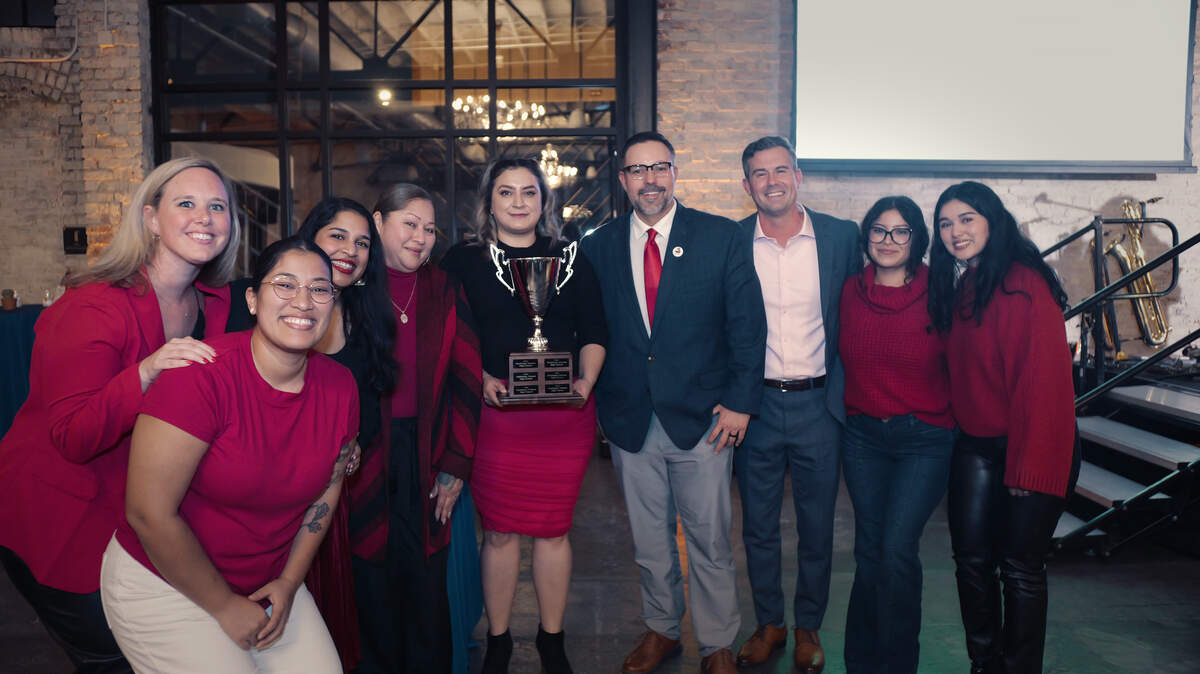
As colleges and universities have been mandated by the Trump administration to roll back diversity, equity and inclusion (DEI) programs and initiatives, the change is also being felt by organizations that have traditionally provided scholarship funds to minority groups, many of which have been told their scholarship funds can no longer be accepted.
That’s because one aspect of the DEI rollback was scrubbing race and ethnicity from scholarships and grants students could earn. As educational institutions have distanced themselves from DEI organizations, it’s forced groups like Hispanic Development Foundation (HDF), a Kansas City based nonprofit, is to find ways to adapt so they can continue providing financial assistance for Hispanic students.
For over 40 years, HDF has partnered with educational institutions who would match student scholarships awarded through their program.
But the mandated rollback of DEI cut the number of colleges and universities willing to work with organizations like HDF, and as a result has slashed scholarships for eligible students.
Following an executive order by President Donald Trump earlier this year, public universities across Missouri and Kansas — including Johnson County Community College (JCCC), the University of Kansas (KU), the University of Missouri (MU) and the University of Missouri Kansas City (UMKC) — rolled back DEI initiatives to comply with new federal requirements.
DEI and other diversity programs are typically organizational programs that seek to promote fair treatment and participation of all people, particularly among historically underrepresented groups. Missouri Republicans have argued for years that the policies treat white people unfairly or prioritize social justice over merit and achievement.
Kansas and Missouri governments enforced the rollbacks at public universities, which included actions like dismantling or downsizing DEI offices, eliminating DEI language, ending race or ethnicity based grants, taking away pronouns in university emails and ending mandatory DEI related training.
Missouri’s government also banned state agencies from spending money on diversity programs and initiatives, and Kansas banned public universities from requiring prospective students or hires to make statements on DEI.
In a statement, Christopher Ave, director of media relations and public affairs at MU, said the university decided after the Supreme Court ruling in 2023 on affirmative action they would honor all scholarships already awarded to students, but would end administering scholarships that included “race-conscious” criteria going forward.
“At that time, approximately $12.3 million in scholarships included race or ethnicity as a component, which accounted for 6.4 % of the total scholarship pool,” Ave said in a statement. “We have since removed race and/or ethnicity as a component from all our scholarships.”
MU reorganized their diversity inclusion staff in 2024, spreading them amongst different divisions.
UMKC renamed a mentoring program previously called African Americans Cultivating Excellence, run by the Office of Multicultural Student Affairs, to Ambitious Achievers Cultivating Excellence.
Less than 1% of UMKC’s scholarships and 5% of its student aid awards previously gave special consideration to race, gender or ethnicity, which it now doesn’t, according to previous reporting by The Star.
JCCC closed their Office of Inclusion and Belonging in February, while affirming the college’s continued commitment to a welcoming environment.
“It does not change our mission, our vision, or our values,” Interim President Judy Korb wrote. “JCCC will comply with the law while maintaining an environment where all students, faculty and staff are welcome, respected and supported.”
The University of Kansas did not respond to several requests for comment, but announced over the summer it would comply with government protocol and pledged to remove gender-identifying pronouns from state employee email signatures and official communications.
To many who provide support to minority groups, these changes have simply become additional challenges to overcome.
“It feels like barriers are being put in the way of obtaining a college degree for our community, but our community isn’t gonna give up that easily,” said Liz Torok, director of marketing and development at the Hispanic Development Fund.
How organizations like HDF are adapting
The act of severing state grants or contracts related to DEI has greatly impacted organizations like HDF, which for decades has had agreements with several regional colleges and universities to match scholarships HDF awards to their students.
HDF has awarded over $10 million in scholarships since it began in 1984. They were expecting to receive over $1 million in scholarship funds this year, but Torok said the total amount has fallen by $400,000 due to many schools ending their matches.
Last year, HDF had 22 regional colleges partnered with them. Now there are six, according to Torok. The drawback has forced the organization to get creative with fundraising, but Torok said they’ve seen a huge increase in local partnership during their annual drive.
Of the $890,000 awarded in scholarships this year, $507,000 came directly from public donations during their donation drive Cambio para Cambio, meaning change for change. Cambio para Cambio is a community-led campaign run by HDF that helps raise scholarship money. In years past, the organization got around 40 partners to participate — but that number this year jumped to at least 60.
“Our community is here, it has never waivered ... I think that’s beautiful,” Torok said. “There’s always a positive in the negative.”
Partners in fundraising efforts include high schools, colleges and business, which host drives, events and sell goods during Hispanic Heritage month. The money raised during the drive is matched by HDF.
“...that is money that is coming directly from us. It’s coming from the community, it’s coming from our current campaign.”
This past spring, HDF awarded 580 scholarships. Over 200 of those had to be given directly to the students because the universities wouldn’t accept them from HDF.
“The students understand the challenges and the sacrifices their families and parents and grandparents went through to get to this country to be able to give them a better life,” Torok said. “and I don’t think we’re gonna give up that easily.”
HDF is actively working to build new partnerships with other organizations and said the community has not wavered in their support.
“Our community continues to show up,” Torok said. “Our community is here to support our students, so that gives us hope.”
Donations can be given directly to HDF on their fundraising site, to their partners, or an organization can join the fundraiser as a partner. Cambio para Cambio’s fundraising was extended to Oct. 31.
Previous reporting from The Star’s Eric Adler, Kacen Bayless, Matthew Kelly and Taylor O’Connor were used in this piece.