KC college quietly scrubs DEI language from campus programs amid Trump crackdown
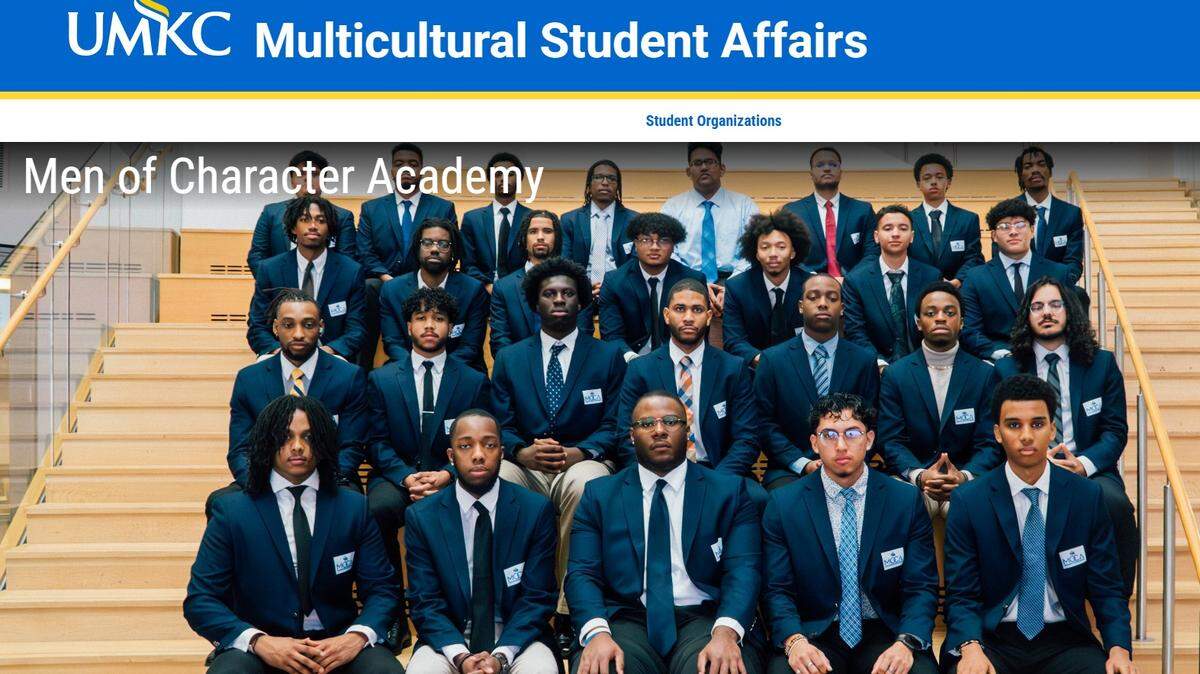
When the “Men of Color Academy” — known by the acronym MoCA — was created last year at the University of Missouri-Kansas City, the university’s announcement in August centered on gender and equity.
“MoCA, a pioneering effort in fostering equity and success,” the university posted with a photo of 19 students, most of whom were Black, “is designed to support male students of color by providing a structured pathway to academic achievement and personal growth.”
Six months later, in the wake of the Trump administration’s mission to rid what it has called “woke” diversity, equity and inclusion (DEI) programs or initiatives from federally funded agencies and schools, the MoCA name was drained of its color.
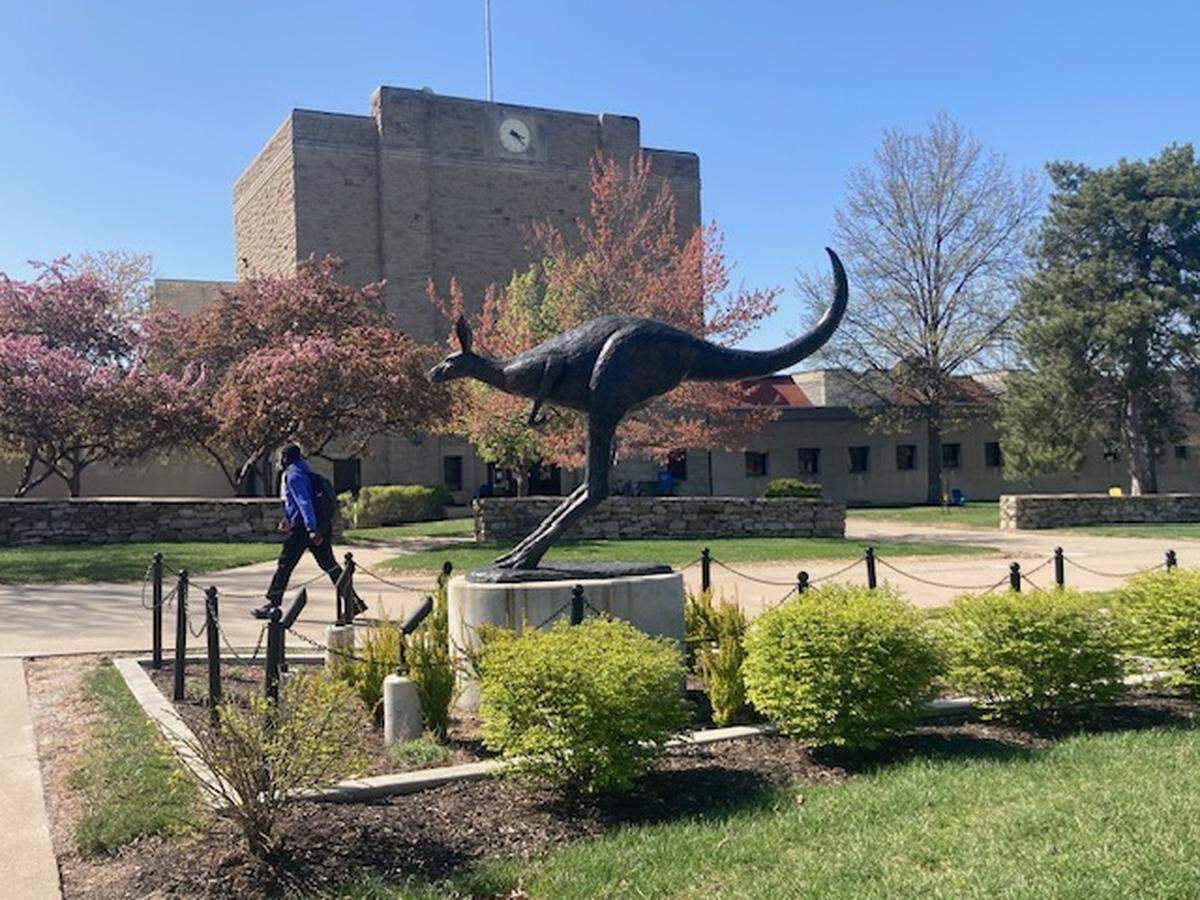
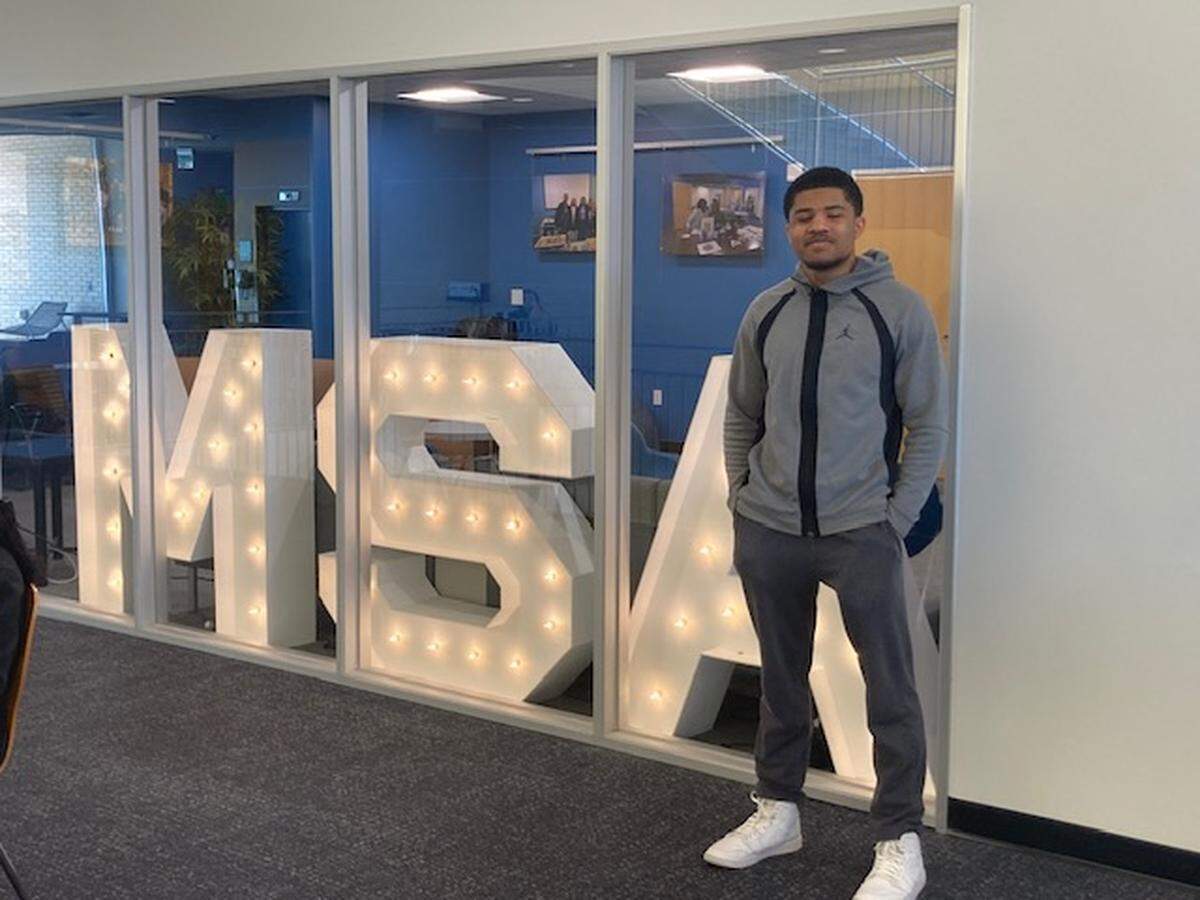
In February, the “Men of Color Academy” was quietly changed to the “Men of Character Academy,” an alteration that is drawing mixed reactions from students on campus.
Some condemn the change. Others expressed weary acceptance that, in the light of anti-DEI rulings from the federal government, Missouri Gov. Mike Kehoe and the U.S. Supreme Court, schools and organizations are doing what they must — including changing names — not only to follow the law, but also to maintain federal and state dollars, survive and continue their missions.
UMKC changed program
“I get why they had to do it. I think a lot of other student organizations have the same kind of question: Do we change our name to follow government guidelines?” said Ophelia Griffin, 22, a senior who is Black, gay and the most recent past president of the UMKC’s Student Government Association. “But coming from somebody of color, too, I think changing a name like that kind of strips away your identify. . . .
“As someone who is a marginalized person, it strips away who you are.”
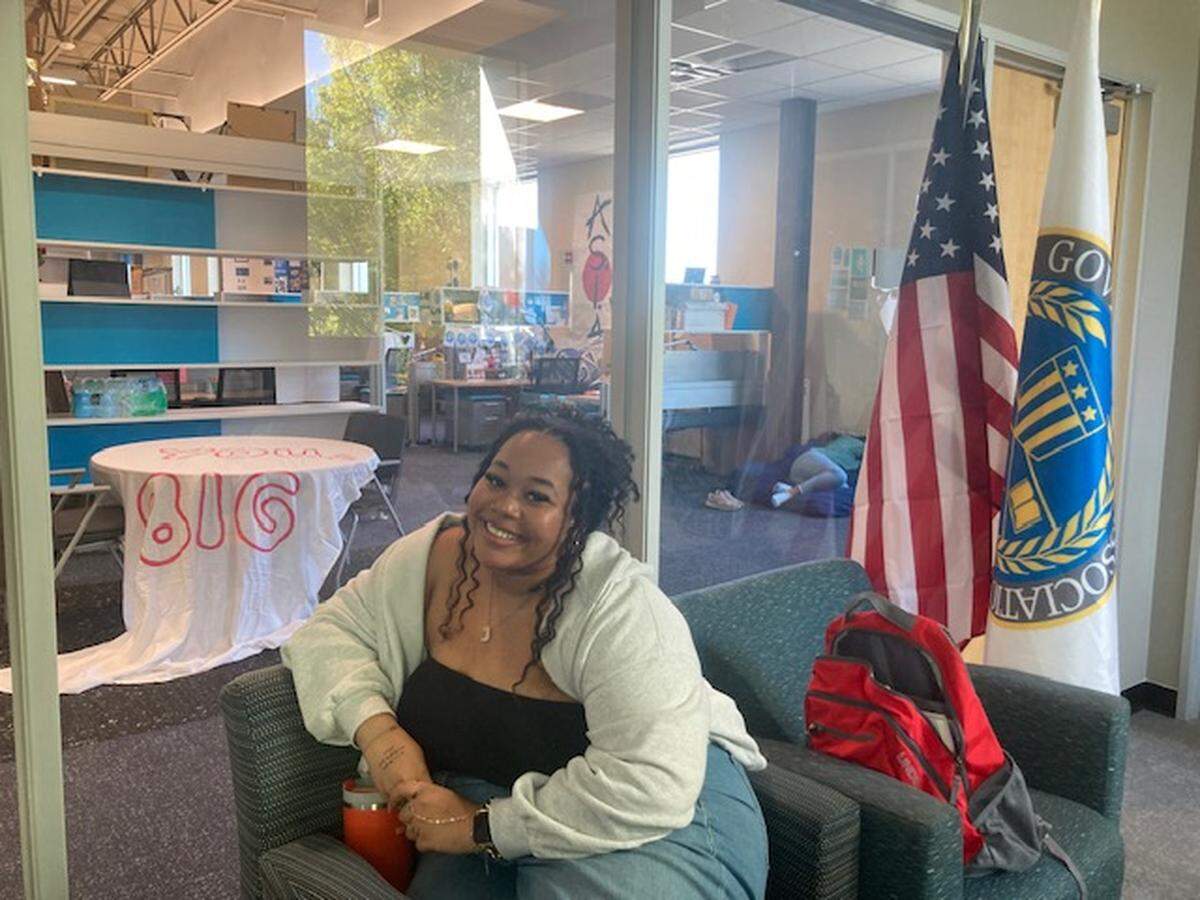
Caleb Elliott, 20, a senior, who is also Black, was equally as adamant.
“I think it’s dumb,” he said. “You’re taking away what make people themselves. It’s not good.”
Good, said Junior Tanyi, 20, a sophomore and part of MoCA, is assuring that the group and its mission continues to exist.
“It should have changed,” Tanyi said of the name. “If it didn’t change, it (the government) would have cut off funding for Men of Color. I am part of Men of Color, which is now Men of Character, and the values, the aspiration, the dreams, the work that they do to build individuals, they are still promoting the same values as the pre-DEI change.
“They felt forced to change the name.”
The Star reached out to UMKC Vice Chancellor Brandon Martin, who began the program last year, for a comment on the change. Martin, who is also UMKC’s director of athletics, did not personally respond to The Star.
The university’s department of strategic communications, however, provided a quote attributed to him:
“The program,” Martin’s statement said, “is designed to cultivate a supportive community, offering academic resources, mentorship, and leadership development opportunities to equip students to reach their full potential on campus, but also in life in general.”
The program has grown to about 70 people.
Pressure around DEI
It’s not the only DEI-related change that the university has made. A mentoring program called African Americans Cultivating Excellence (AACE), run by the Office of Multicultural Student Affairs, has also been stripped of any racial identifiers. It is now called Ambitious Achievers Cultivating Excellence.
Another program, Avanzando — which, using Spanish term for “moving forward,” was previously described as a mentoring and resource group for Hispanic students — has been lengthened to Avanzando, Moving Forward Together.

Descriptions online of all three programs have been changed to emphasize that they are open to all students from all backgrounds rather than to any single racial or ethnic group.
It’s a step that civil rights leaders say only further marginalizes groups already historically marginalized.
“It is upsetting,” said Gwendolyn Grant, president and chief executive officer of the Urban League of Greater Kansas City. “It’s sad that universities are being forced to erase the identity of minority students. It’s unfortunate.
“Basically, it is trying to whitewash the demographic of these institutions. At some point the leadership of institutions — be they corporate, philanthropic, educational, health care — they need to push back. The only way to stop the tide is to build a freakin’ dam.
“All of these things that we are supposed to be celebrating — celebrating the beauty of the diverse tapestry that makes up the student body at UMKC — they are being forced to erase it.”
Trump administration
Stacy Downs, UMKC director of strategic communications, noted UMKC is simply adhering to the law.
The legal history of what are now known as DEI initiatives goes back decades.
One major push to correct generations of discrimination and disenfranchisement came in 1961, beginning with an executive order signed by then-President John F. Kennedy to grant minority groups greater recognition and opportunities.
He called on contractors to take “affirmative action” to ensure applicants were employed and treated fairly without regard “to their race, creed, color or national origin.” The Civil Rights Act of 1964 subsequently prohibited discrimination based on “race, color, religion, sex or national origin.”
As affirmative action and later DEI initiatives expanded, conservative Republican lawmakers viewed, and looked to ban, them as promoting quotas and preferential treatment in hiring and college admissions.
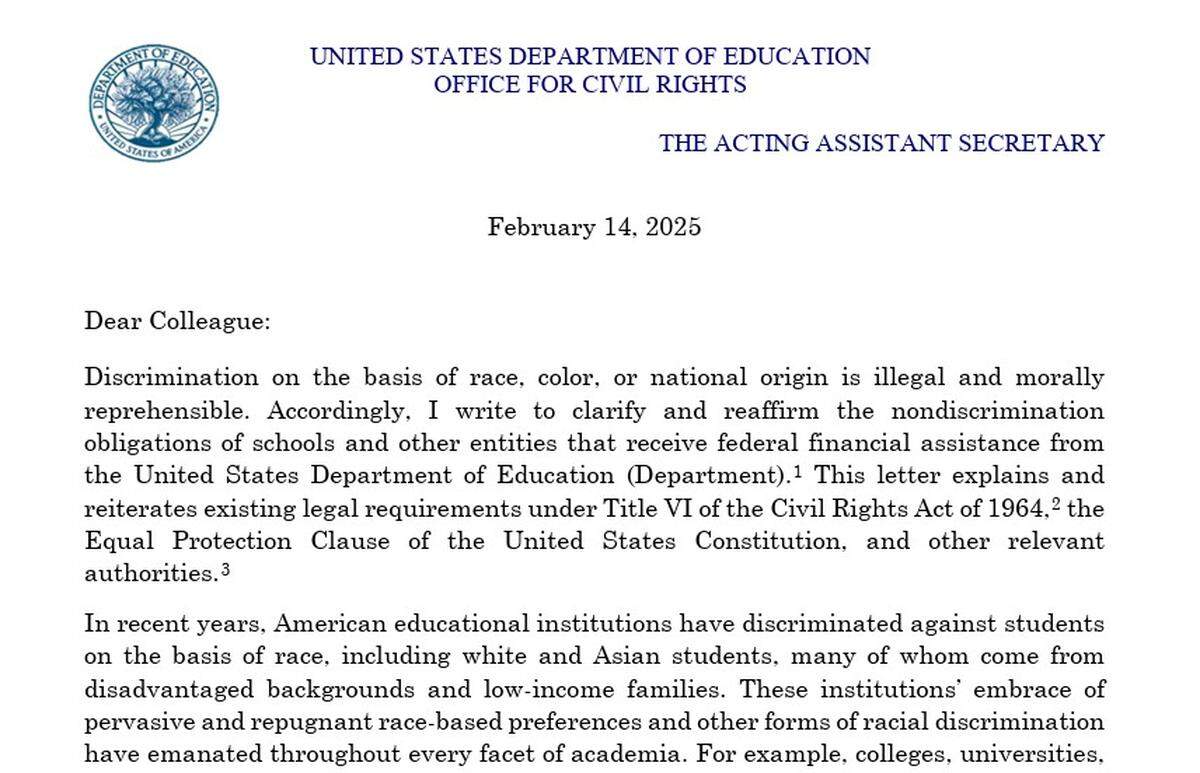
At UMKC, the most recent changes were made in February, soon after Donald Trump was inaugurated for his second term as president, and following a Feb. 14 “Dear Colleague” letter distributed by the U.S. Department of Education Office of Civil Rights.
The four-page letter, signed by Craig Trainor, the acting assistant secretary for civil rights, highlights the 6-3 decision by the U.S. Supreme Court in June 2023 case, Students for Fair Admissions v. President and Fellows of Harvard College.
In the case, the court ruled that race-based affirmative action policies in college admissions were unconstitutional, in that they violated the Equal Protections Clause of the Fourteenth Amendment. Although the courts decision applied to admissions, the Department of Education under Donald Trump said that it applied “more broadly.”
“At its core, the test is simple,’ the letter said. “If an educational institution treats a person of one race differently than it treats another person because of that person’s race, the educational institution violates the law.
“Federal law thus prohibits covered entities from using race in decisions pertaining to admissions, hiring, promotion, compensation, financial aid, scholarships, prizes, administrative support, discipline, housing, graduation ceremonies, and all other aspects of student, academic, and campus life.”
DEI scrubbed from scholarships
After the Supreme Court decision, universities and colleges nationwide began excising or altering language related to race, gender and ethnicity and wiping it from websites, scholarships and student aid packages.
Downs with UMKC said less than 1% of its scholarships and 5% of its student aid awards gave special consideration to race, gender or ethnicity. The focus of scholarships were gradually changed.
For example:
▪ The Dr. Agapito Mendoza Scholarship
Before the Supreme Court decision: “Awarded to an incoming freshman undergraduate student with a minimum 3.00 cumulative GPA and an ACT score of 23 or higher. Preference given to Hispanic students.
After the Supreme Court decision: No mention of ethnicity. “Awarded to undergraduate students (freshman/transfer/currently enrolled). Freshmen-high school rank needs to be top 25% or a composite ACT score of 23 or higher. Transfer students must have at least a 3.00 GPA. Award is renewable with a UMKC GPA of at least a 2.75 and full-time enrollment.”
▪ The Joel Christopher Brown Book Scholarship
Before Supreme Court decision: “Awarded to a full-time currently enrolled student at the University of Missouri-Kansas City with a 3.0 high school core GPA or a 2.5 undergraduate cumulative GPA. Preference is given to Hispanic or African-American students enrolled in ROTC. Preference is also given to students with demonstrated financial need.”
After Supreme Court decision: No mention of race or ethnicity. “Awarded to a full-time currently enrolled student at the University of Missouri - Kansas City with a 3.0 high school core GPA or a 2.5 undergraduate cumulative GPA. Preference is given to students enrolled in ROTC. Preference is also given to students with demonstrated financial need.”
In July 2024, the University of Missouri-Columbia eliminated its Division of Inclusion, Diversity and Equity. UMKC disbanded its central diversity office on Nov. 1. In January, Kehoe, a Republican, was sworn in as Missouri’s 58th governor.
In February, the governor signed a sweeping executive order that banned all state agencies from spending money on diversity programs and initiatives. Although the order does not specifically apply to state colleges and universities, Downs with UMKC said “our institution is in alignment.”
“UMKC is focused on ensuring that all students are welcomed, valued and provided opportunities to achieve academic success,” UMKC Provost Jennifer Lundgren, said in a prepared statement.
Diverse as ever
Despite recent changes, students on campus said they UMKC remains a welcoming place with diversity and inclusion at the core of the university with its nearly 12,000 students. Students, for example, still plan to hold their annual Lavender Graduation for LGBTQIA+ students, and celebrate Pride Month in the fall.
While the Department of Education’s “Dear Colleagues” letter speaks to academic programs, it does not apply to student-funded clubs, of which the university has more than 350.
Scores speak to diversity including the African Students’ Association, Muslim Girls Club, Muslim Students’ Association, Sikh Students’ Association, Asian Students in America, Pakistani Student Association, Middle Eastern Students Association, Sexuality and Gender Alliance Council and Pride Alliance.
“You’re going to find your people here. There’s probably an organization for you,” said Student Government Association President Jasmen Hassen. A junior from Olathe, Hassen’s parents emigrated from Ethiopia. She said that in high school, she was one of only a handful of Muslim students who wore the traditional head covering, or hijab.
At UMKC, she found a large community.
“I think going to a university where is it so diverse in nature,” she said, “you’re going to find people who look like you. It’s a very comforting feeling knowing that, like, oh my gosh, there are other Muslim women on campus who are active.
“Really, it’s inspiring to see, and honestly boosted my student engagement and being able to feel more comfortable stepping into spaces that would have never thought of stepping into.”
This story was originally published April 11, 2025 at 5:00 AM.