Mizzou vows to stop race-based admissions after SCOTUS rulings on affirmative action
Missouri Attorney General Andrew Bailey on Thursday demanded that colleges and local governments in the state immediately end all affirmative action policies after the Supreme Court struck down affirmative action in college admissions.
The Republican attorney general directed the demand to “dozens” of universities and local government leaders, including the University of Missouri System, Missouri State University, Kansas City Mayor Quinton Lucas and the mayors of St. Louis and Columbia.
“Missouri institutions must identify all policies that give preference to individuals on the basis of race and immediately halt the implementation of such policies,” he wrote in the letter.
The Supreme Court, which has a conservative majority, on Thursday overturned admissions plans at Harvard and the University of North Carolina, declaring that race could not be a factor in admissions. The ruling was 6-3 in the North Carolina case and 6-2 in the Harvard case.
Chief Justice John Roberts wrote that for too long universities have “concluded, wrongly, that the touchstone of an individual’s identity is not challenges bested, skills built, or lessons learned but the color of their skin. Our constitutional history does not tolerate that choice.”
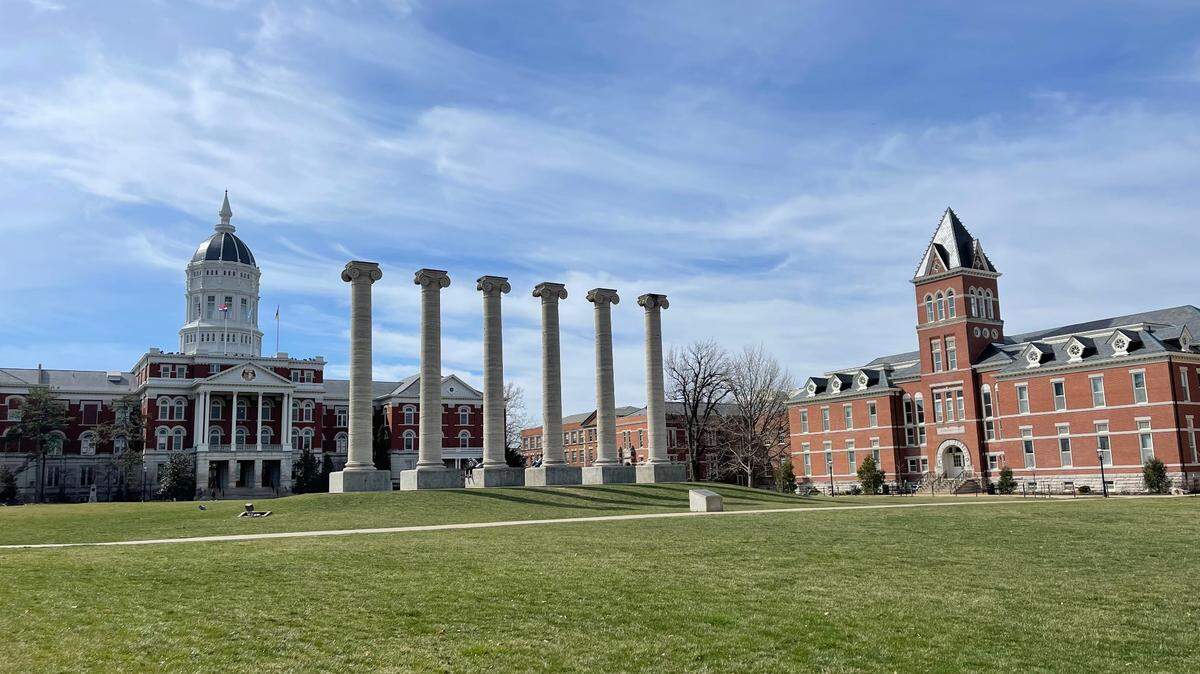
The rulings come as the University of Missouri’s main campus in Columbia has had a fraught relationship with race, including student-led protests in 2015 that criticized inaction by university leaders after a string of racist incidents.
The university, founded in 1839, didn’t allow its first Black student until 1950. Black students now make up only 5.45% of the student population while white students make up 76.4%, according to the most recent data online.
UM System President Mun Choi, who is also chancellor of the University of Missouri-Columbia, told reporters during a news conference Thursday that the UM System, which covers four campuses in Columbia, Kansas City, St. Louis and Rolla, does not use race-based admission at the undergraduate level.
However, at the University of Missouri-Columbia, about 20 of the university’s 150 graduate-level programs use race as part of a “holistic approach” for admissions. This year, the university used $12.3 million or 6.4% of its financial aid budget to pay for financial aid with a race or ethnicity component, according to UM System spokesperson Christian Basi.
“We will be stopping all race-based admissions and race-based scholarships moving forward,” Choi said.
However, the university will continue to honor current scholarships that had a racial component.
“So, in that sense, we’re going to follow the law and we’re going to honor the commitments that we have made to our students,” he said.
Bailey, in his letter, appeared to go further than just college admission standards, calling for Missouri institutions to end all decisions, including employment, with racial components.
“All Missouri programs that make admitting decisions by disfavoring individuals based on race—not just college admissions, but also scholarships, employment, law reviews, etc.—must immediately adopt race-blind standards,” he wrote.
Asked about this on Thursday, Choi said he had not read that detail in Bailey’s letter.
“I will look into it more carefully. I’ve been in meetings all day,” he said. “I’ll have a discussion with the board and the general counsel. So, I’m not disputing anything because I have not read it in detail yet.”
In March, the university system quietly scrapped the use of diversity statements in its hiring processes as Republican lawmakers considered legislation that would ban public colleges from asking job candidates questions about diversity and race.
A spokesperson for Lucas did not immediately respond to a request for comment.
Bailey, in his Thursday letter, floated potential legal action against colleges that continued affirmative action policies, saying he intends to “ensure that the constitutional rights of all Missourians are protected, including those who would be harmed by race-based policies that are unlawful under the rulings issued today.”
U.S. Secretary of Education Miguel Cardona criticized the ruling in a Thursday statement, “warning that it takes our country decades backward.” But he also urged higher education leaders nationwide to maintain their commitment to diversity in the face of the ruling.
“To our higher education leaders reviewing the decision: now is not the time to lessen your commitment to campus communities that reflect the rich diversity of this nation, which enhance the college experience in myriad ways and prepare students from all walks of life to live, work, and lead our democracy together,” Cardona said. “Your leadership and commitment to ensuring our educational institutions reflect the vast and rich diversity of our people are needed now more than ever.
The pair of rulings immediately sparked criticism from some Missouri leaders and the NAACP, who argued that the Supreme Court was rolling back years of progress for minority students.
“In a society still scarred by the wounds of racial disparities, the Supreme Court has displayed a willful ignorance of our reality,” NAACP President & CEO Derrick Johnson said in a statement.
U.S. Rep. Cori Bush, a Missouri Democrat, said ending affirmative action will be devastating, pointing to colleges that have historically denied admission to minorities.
“Affirmative action helped level the racist and uneven playing field,” the St. Louis congresswoman said in a statement. “Colleges and universities must ensure students benefit from the diverse perspectives and experiences of qualified students from all backgrounds.”
State Rep. LaKeySha Bosley, a St. Louis Democrat, said that the Supreme Court was ignoring the historic rationale for affirmative action, which was to integrate minorities into an American society that “had largely sought to keep them divorced from the rest of the country.”
An attitude, Bosley said, that still persists in America.
“By undermining one of our best tools to disestablish systemic racism in our institutions of higher education, these six justices have opened a path for racism to further prosper,” she said.
This story was updated after the University of Missouri-Columbia clarified how much money it paid in financial aid with race as a factor.
This story was originally published June 29, 2023 at 12:54 PM.