Why Frank White says Jackson County’s move to set recall election breaks the law
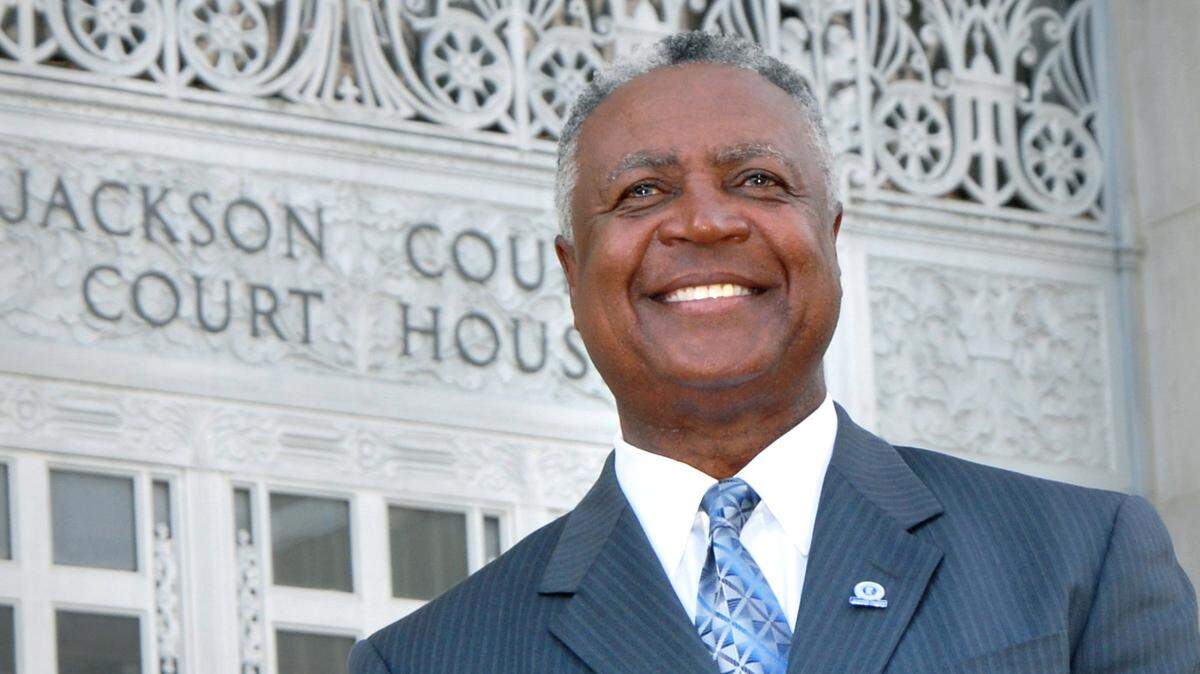
The recall effort for County Executive Frank White Jr. could be headed to the polls before the end of the summer, unless White is successful in his effort to stop it.
Jackson County legislators voted unanimously Monday to set a special election for August 26, where residents would decide whether to remove the former Kansas City Royals Hall of Famer from the seat he has held since 2016.
“The people have spoken in providing their vote for there to be an initiative such as this put on the ballot,” Vice Chairman and Second District Legislator Donna Peyton said. “(The legislature) will honor their request.”
But White has challenged the legality of the legislature’s vote to schedule the recall election, suggesting he may take action to block it.
In a statement Monday, he described legislators’ approval of an August election as “legally questionable” and “a betrayal of their own law,” referencing a county ordinance that he appears to interpret differently than the legislators.
White also dismissed the broader recall effort as a vendetta in response to his opposition to the tax question put before voters last year that would have funded a new Royals stadium in the Crossroads, saying the push to oust him has been “driven by many of the same political forces that backed the failed stadium tax campaign.”
“It’s about punishing an elected official who stood up for taxpayers and said no to a bad deal,” White said.
Many residents pushing for the recall saying their efforts have been spurred by how the county has handled property tax assessments in recent years and other concerns.
Petitioners collected 43,011 valid signatures in support of recalling White, according to the Jackson County and Kansas City election boards, breaking the necessary threshold by 109 signatures. The signatures were submitted June 30.
The election boards and the state also reviewed and rejected 50,040 invalid signatures, most of which came from unregistered voters in Kansas City.
White’s options
The Jackson County Legislature doesn’t have the power to finalize a new election date without consulting the county executive. Just like any other county ordinance, White will have 10 days to weigh in, during which he could potentially veto the ordinance setting the special election.
However, legislators would likely be able to override White if he does veto, since they voted unanimously to approve the election date.
Aside from his veto power, White seemed to hint at the potential for legal recourse against an August vote, based on his understanding of a 2023 county ordinance that sets the terms and process for getting referendums and petitions on the ballot.
According to both that ordinance and the Jackson County charter, a special election needs to be scheduled 60 days after a recall petition is filed, unless a regular election is already occurring within 90 days of when the signatures were submitted.
Since the next general election in Jackson County isn’t until November 4, which is more than 90 days away, legislators said a special election will need to happen sooner. Legislators said that waiting until November would be breaking that law.
But White is contradicting the legislators’ assessment, asserting that, inversely, an August election would violate that county law.
To justify his reasoning, White referenced a line further down in the ordinance that reads, “If no legal election date is available within sixty days, the election will occur at the next available election after certification of the Petition.”
“Despite the complexities of this issue, the many legal and procedural questions still unanswered, and the immense cost to our taxpayers, not one legislator has requested a formal legal opinion on these or other issues from their own legal counsel, even though they have both the right and the duty to do so,” White wrote Monday.
Fourth District Legislator DaRon McGee described the legislature’s involvement in the recall process as “a tedious and difficult process” with limited precedent, insisting that he and his colleagues are indeed following the county’s laws by setting the August vote.
“This is not about personalities or politics,” McGee said. “It’s about ensuring that we follow the law, respect the voices of our residents and preserve democratic institutions.”
Cost of a recall
More than half of the submitted signatures in support of a recall were raised by a “dark money” group called Democracy in Action, which spent more than $330,000 from an unknown source. Thousands of signatures were also collected by grassroots organizers centered in eastern Jackson County.
“Much of the funding for this recall has come through a dark money political action committee that shields the identities of its donors from public view,” White wrote. “That PAC has paid out-of-state contractors to gather signatures, making this anything but a grassroots effort.”
In his statement Monday, White also raised issues about the cost of a special election, which he said could cost taxpayers $2 million.
“I’m really, really pleased that we have a democratic process that allows citizens to express themselves in this way,” said Sixth District Legislator Sean Smith, who has been a vocal supporter of the recall effort.
White announced June 30 that he had referred Smith to the county sheriff and prosecutor for investigation, alleging that Smith illegally used taxpayer-funded resources on the recall campaign.