Royals, Chiefs owners won’t fund all stadium costs. Why public money key to deal
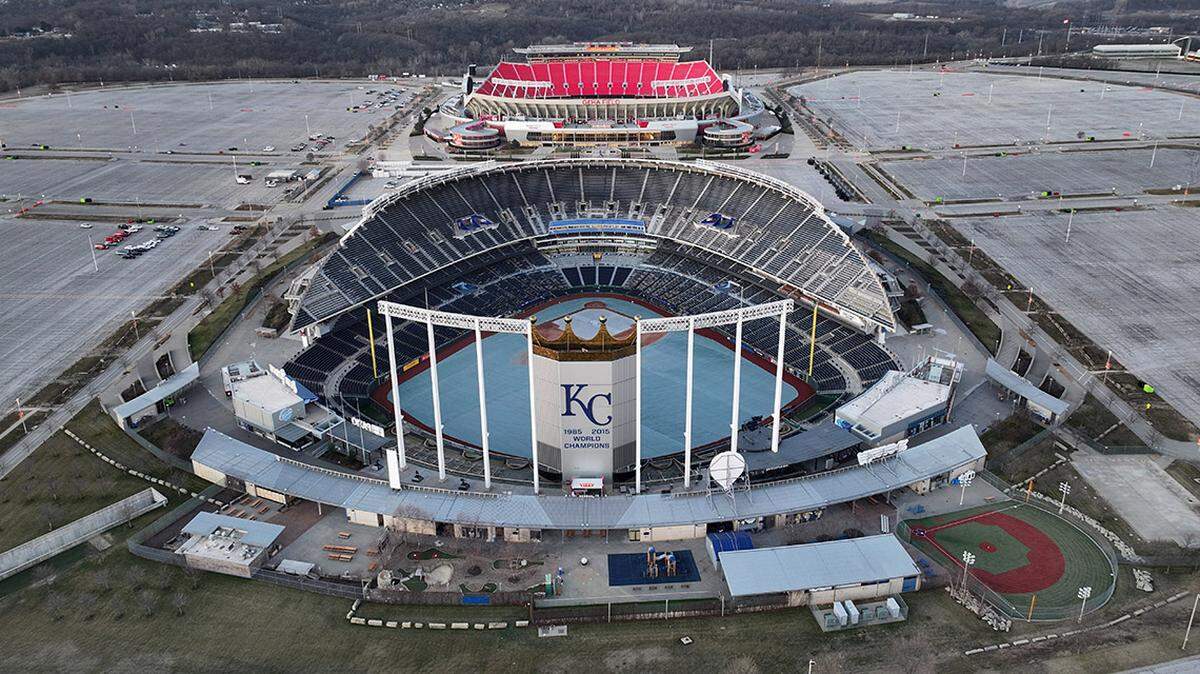
As the clock ticks for Missouri lawmakers, the Kansas City Royals remain tight-lipped on a future location of a potential new ballpark, and it remains unclear which state and county in the metro will offer the most team-friendly deal — and the most public money — to help build said ballpark.
Missouri legislators are set to squabble next week over whether to offer state aid for big-ticket sports stadium construction for both the Royals and the Chiefs.
Meanwhile, Kansas’ proposed stadium incentives are set to expire at the end of June, and a top lawmaker said he is not inclined to extend the offer beyond that deadline.
The team has publicly emphasized that it has not selected any specific site yet, with possible options in Overland Park, North Kansas City and near downtown – possibly among others – still in conversation, much to the frustration of some local officials and fans.
Kansas City Mayor Quinton Lucas has said the years-long government and real estate speculation around a stadium plan in the absence of a decision by the team is “unfair.”
“The real story is just very simply this: They’re shopping around for the best economic deal. I get it. I understand it. We’re all big kids, and that’s what’s happening,” Lucas said in an interview with Pete Mundo on a KCMO radio interview on Thursday.
“That’s the entirety of the story. It’s not who’s the nicest. It’s not who’s the coolest. It’s not who has the best demographic information lately. It is purely about money and purely about money for teams.”
A spokesperson for Lucas’ office said in a statement on Friday that while the renewed “border war” is unfortunate for taxpayers in the region long-term, the mayor appreciates Missouri Gov. Mike Kehoe’s efforts to retain professional sports teams in Kansas City and St. Louis.
Patrick Rishe, executive director of the Sports Business Program at Washington University in St. Louis, told The Star that he suspects that both the Chiefs and Royals will ultimately stay in Missouri but — like lawmakers, investors and thousands of residents — he is keeping a close eye on how far Kansas is willing to go to woo the teams.
“I know that Kansas is certainly motivated to offer significant financial inducements to entice the teams to think about moving to the Kansas side,” Rishe said. “In the midst of a financial showdown… it really comes down to, what is Missouri willing to do and what is Kansas willing to do?”
For some fans and readers, the back and forth begs a more fundamental question: Why is the team asking for so much taxpayer money in the first place instead of the teams’ owners paying for the stadiums themselves?
Public money for stadiums is the rule, not the exception
How often do professional sports teams ask for the public’s help to build their facilities? The short answer is: very often. The Royals are not an outlier.
Both across the country and historically in Kansas City, including with both the Royals and the Chiefs, professional sports stadiums are commonly constructed using public financing to help cover the costs.
However, Rishe said, the specific source of that public money varies by state and city. Sales taxes are common to help build stadiums, but some municipalities opt for lodging taxes or “sin taxes” on perceived vices like cigarette sales or gambling revenue.
Some teams also “dip into” a fund managed by the NFL to help defray the cost of a stadium that is being mostly financed by public dollars, Rishe said, or rely on loans that are later paid off by the revenue generated when a new stadium opens or reopens.
Part of the reason for frequent public assistance for these kinds of projects is that stadiums are extremely expensive. A new Royals stadium could cost more than $1 billion, while a new Chiefs stadium could cost up to $3 billion. A 2024 proposal to renovate Arrowhead for the Chiefs rang in at around $800 million.
The behind-the-scenes finances of the Royals’ ownership group and the team’s ability to get large private loans to cover the costs of building a new stadium is private information.
Over the years, team leaders have consistently described their vision for a new stadium as a “public-private partnership,” with the team making a private contribution and also leaning heavily on public support.
Only three of the 30 National Football League stadiums were completely funded with private money, according to The Week: MetLife Stadium in New Jersey, Gillette Stadium in Massachusetts and SoFi Stadium in Los Angeles.
That privately financed Los Angeles stadium came after negotiations for upgrades using public funds to the Rams dome facility in St. Louis faltered, prompting the team’s move to a much larger market in California.
Even when stadiums are built with private money, the teams could still receive public benefits related to the site, such as money spent on nearby infrastructure improvements for roads and utilities.
Busch Stadium, the downtown ballpark for the St. Louis Cardinals that opened in 2006, was mostly funded privately but used tens of millions of dollars in public funds including a county loan.
In Kansas City, the development of the $120 million KC Current women’s soccer stadium on the Berkley Riverfront was driven by private financing. But the team still got major public help to make it possible.
Through a deal with the Port Authority of Kansas City, a public agency, the team leases the prime riverfront land for only $1 a year.
The allure of public-backed stadiums
While public funding is still extremely common for stadiums, the handful of notable private projects in the past several decades mean tax money is no longer the final word in stadium financing, said Rishe.
However, economists like Rishe say that public funding has too much history — and too many advantages for teams — to fade from consideration.
A mix of private and public funding sources for major renovations or construction of sports stadiums has slowly become more common since the 1980s, Rishe said.
“There may be some people in the community who don’t care about the teams and don’t want their tax dollars earmarked for sports,” Rishe said.
And yet, Rishe said, teams have always sought mostly public funding when considering a move, considering themselves to have public value to a city or state.
“There’s some tangible economic reasons, there’s some intangible branding reasons and then there’s the negotiation and bargaining tactic aspect,” Rishe said.
Sports teams like the Chiefs and Royals are often a strong rallying point for residents, Rishe said, with fan culture serving as a “common identification symbol” for people all across the Kansas City area even if they aren’t die-hard sports fans.
“Going to a professional sporting event is not the same as going to a public park,” Rishe said. “Yet having the team in your community, there is some sense of publicly shared feeling and attributes associated with having that team in your community, and that’s part of the logic of that.”
Economic benefit, bargaining power
Public funding packages are often justified by the promise that having a professional sports team within a city could help boost the local economy, with fans and tourists spreading their dollars throughout the area of a stadium with each home game.
However, some lawmakers and researchers have begun to push back on the idea that having a sports team nearby will boost a city’s economy, Rishe said.
“There has been research and evidence that perhaps some of the claims of economic impact have been overstated in previous research,” Rishe said. “When people at the legislative level get ahold of that data, they use that against the teams to say, ‘Wait a minute, we want to help, but is that the best investment?’”
In some cases, seeking public funding has more to do with sports teams angling for the best deal on a potential move or rebuild, Rishe said.
“Historically, if existing owners don’t get what they want, it wasn’t uncommon for teams to use other potentially interested regions or cities as suitors,” Rishe said.
For either the Chiefs or the Royals, shying away from seeking public funding would stop the teams from benefiting from the ongoing bidding war between Kansas and Missouri, Rishe said.
“If ownership knew that they had an alternative location to move the team to, they could use that as a bargaining chip to try and negotiate a higher percentage of the funding to come from the public sector,” Rishe said.
The Royals and Chiefs get tax money now
Public funding asks were a driving factor at the height of the stadium relocation saga for the Chiefs and the Royals last spring, when Jackson County voters rejected a proposed new version of a sales tax that both teams have been benefiting from since 2006.
Their stadiums are currently funded by the first iteration of a similar 3/8-cent sales tax, which passed in 2006 with 53% of the vote. The tax, which expires in 2031, included a $425 million commitment from Jackson County to the two teams’ stadium costs, with the Chiefs chipping in $125 million and the Royals contributing $25 million.
The teams also currently lease public land from the county for both of their current stadiums, in the form of the county-owned and state-managed Truman Sports Complex.
The 25-year lease agreement was signed in 2006 — in conjunction with the vote — and also expires in 2031. Much of the funding from the existing sales tax goes toward paying back debt at Truman Sports Complex — including $26 million of the tax’s $48.6 million revenue in 2022, for example — along with maintenance and repairs at the existing stadiums.
If passed, the April 2024 renewal measure would have lasted 40 years for the Royals and 25 years for the Chiefs, guaranteeing that both teams stayed in the county.
Special session showdown looms
Kehoe’s proposed program would cover annual bond payments up to the amount a team generated in state tax revenue in the year before it took effect. In other words, it would cover the amount Missouri would lose if a team left for another state. Projects would also be eligible for tax credits.
There would also need to be funding from local governments, and the teams would be expected to kick in some of their own funding.
Officials in Kansas City hope to keep the teams within city limits, including the possibility of Washington Square Park near Crown Center for the Royals.
The Missouri House passed the bill during the final days of the regular legislative session in May, but it stalled in the state Senate as lawmakers’ frustrations over other priorities that fell apart boiled over.
Meanwhile, questions have swirled over whether the both teams may build new stadiums in Kansas.
Kansas legislators have offered their own program that could entice the teams to build new stadiums across the state line in the form of bonds that would cover up to 70% of costs and would be paid back by tax money generated by the new stadiums and surrounding retail alongside lottery and sports betting revenues.
The Kansas proposal is set to expire at the end of June. Kansas House Speaker Dan Hawkins said this week that he is not inclined to extend the offer and that teams should act on it soon.
The Kansas City Business Journal reported this week that an affiliate company of the Royals bought a mortgage loan tied to the Aspiria Campus at 119th and Nall Avenue in Overland Park, formerly the Sprint campus. The owners were reportedly surprised by the transaction, and Aspiria management have said they are not in talks with the Royals.
The team released a statement this week indicating that they have “made investments” in the Overland Park campus and several other sites but have not yet chosen a future home.
This story was originally published May 30, 2025 at 12:21 PM.