Man claims innocence in 1997 murder of KC teen, says faulty evidence used at trial
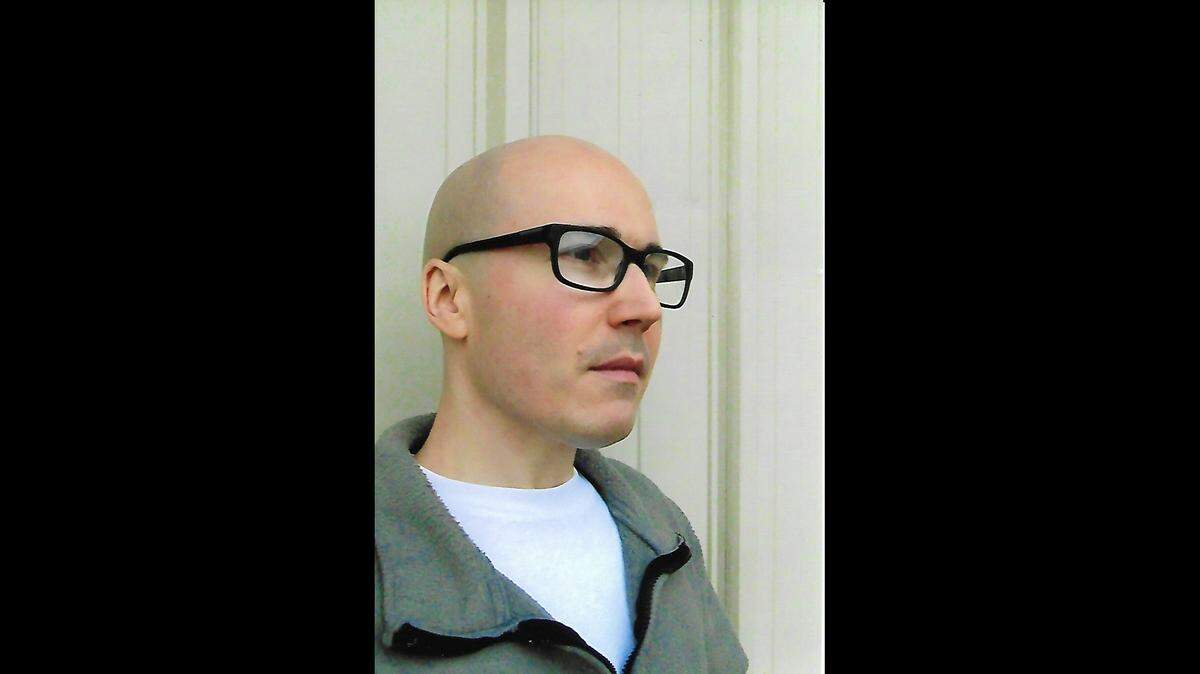
A recently reviewed recording between a man who has been in prison for more than two decades and the key witness in his murder trial should help exonerate him, his legal team argued in a motion filed Tuesday.
They filed the 139-page motion in the Missouri Court of Appeals, Western District, in Kansas City.
Byron Case, 45, of Kansas City, was found guilty in the 1997 murder of his friend Anastasia WitbolsFeugen, 18. Her body was found in a cemetery in between Kansas City and Independence. He was arrested in June 2001 and convicted about a year later.
According to posts on social media, many people, including family members of WitbolsFeugen believe he is guilty and should remain behind bars.
Questions about the case have been featured on TV shows, including MTV’s “Unlocking the Truth,” which produced three episodes about the murder in 2016.
But the case has not had any momentum in the court system in more than a decade.
In a phone call Monday, Case, who is serving out a life sentence at Eastern Reception, Diagnostic and Correctional Center, about an hour south of St. Louis, said while it is difficult to have hope in this latest legal attempt to get his case reviewed, he is optimistic.
“It’s exciting,” he said. “But it’s also a little nerve-racking and frightening. And I’m just trying to sort of weather the emotional storm, I guess, and try him walk that middle path in between.”
Earlier this year, attorneys in the Jackson County Prosecutor’s Office’s Conviction Integrity Unit declined to review the case, attorneys for Case said.
“We will review the new motion for any new or additional evidence, but the Attorney General’s Office will handle this new motion,” said Mike Mansur, a spokesman for the prosecutor’s office. “We believe the facts and evidence we’ve reviewed so far support the conviction imposed by the jury.”
The Missouri Attorney General’s Office, which has fought against Case’s appeals, did not immediately respond to a request for comment.
Tacit admission
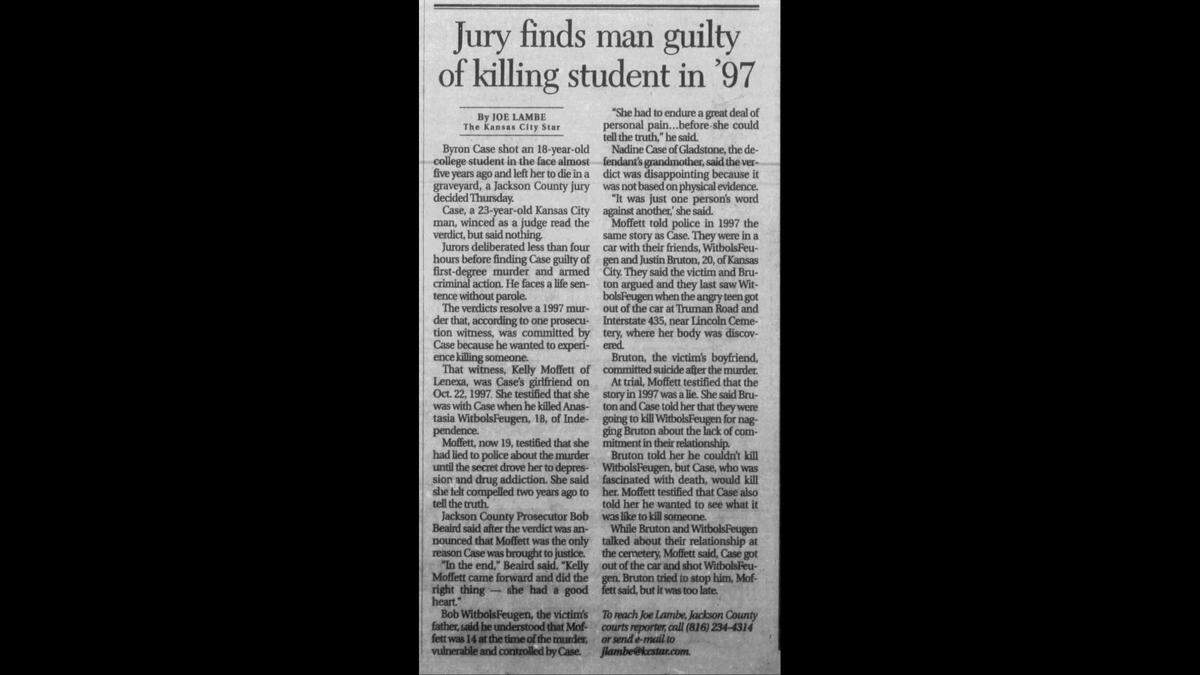
Case’s conviction was based on testimony from his ex-girlfriend, Kelly Moffett, and a phone recording she made in June 2001, his attorneys Sean O’Brien, Brian Russell and Nicole Gordon said in the motion.
They allege that the recording was made at the direction of former Jackson County assistant prosecutor Amy McGowan.
In a transcript of the call, Moffett says, “I mean if you could seriously explain to me as to why you actually felt the need to kill her, then that would really help me feel better about the whole f------ thing. I mean, was there seriously any reason to all this?”
At trial, Jackson County prosecutors said Case replied by saying, “We shouldn’t talk about this.”
His statement was presented as a tacit admission of guilt. Prosecutors also provided the jurors with a transcript of the phone conversation.
But according to his attorneys, what Case actually said was: “We should talk about this.”
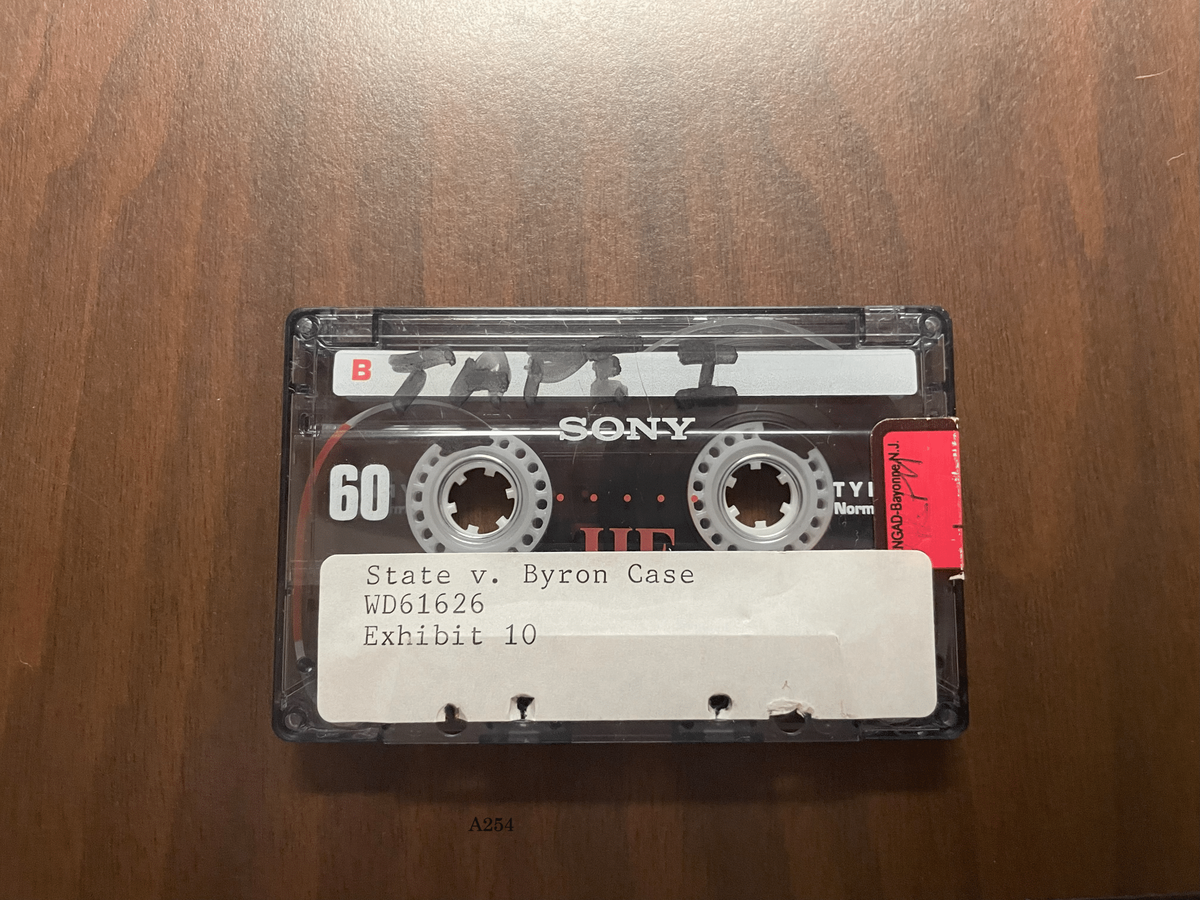
They obtained a clearer recording from the Jackson County Sheriff’s Office.
In an affidavit signed in July by Judge Charles Atwell, who presided over Case’s trial, Atwell said he listened to two versions of the tape. The first sounded like what had been played during the trial. The second recording was clearer.
“Mr. Case clearly answers twice, ‘We should talk about this,’” Atwell wrote in the affidavit.
“Having listened to both tapes, it is apparent to me the transcript provided by the State as it relates to what Mr. Case said was not a fair and accurate representation of the June 5, 2001 phone call. I recognize that an inaccurate transcript creates the risk that the jury could be unfairly influenced.”
In the motion filed Tuesday, O’Brien and Russell allege that prosecutors failed to disclose material evidence, including the clearer recording, in what is known as a Brady violation.
McGowan, one of the lead prosecutors, has been at the center of several botched cases, including the wrongful conviction of Ricky Kidd, who spent 23 years in prison. She was also accused of withholding evidence in the case against Richard Buchli II, who spent five years in prison before his conviction was overturned; made improper comments during closing arguments in five cases as a prosecutor in Douglas County, Kansas; and pressured a witness into identifying a man who would go on to spend 18 years in prison before his conviction was set aside last year by the Missouri Supreme Court.
Prosecutors were also obligated to disclose that Moffett had been convicted of a crime. In a 2002 deposition, she said that she did not have a criminal record when she had been convicted of a misdemeanor in 2001.
“The State never corrected this testimony,” Case’s attorney said in their motion.
They also allege that Moffett changed her story several times, including implicating WitbolsFeugen’s boyfriend, Justin Bruton.
Attempts to reach Moffett by phone Tuesday were not successful.
Teen found shot to death
Case met Bruton in early 1997 at a coffee shop in Westport. They bonded over movies and became fast friends. Case was 18 at the time.
One night at the cafe, Case ran into WitbolsFeugen, who he had known from high school. She and Bruton hit it off and began dating. Bruton then introduced Case to one of his friends, Moffett, and they began dating.
“The four of us, we were pretty close, pretty fast and basically inseparable,” Case said. “I think that that spring and summer really were probably in some ways, they were really the best years of my youth because I felt like we all understood each other and we were just so in line with one another.”
But by the fall, Bruton and WitbolsFeugen’s relationship had turned rocky.
On Oct. 22, 1997, Case, Bruton and Moffett drove to a Dairy Queen in Independence and picked up WitbolsFeugen, who according to Case, was upset with Bruton. Case said Bruton drove to Mount Washington Cemetery where he and Moffett could get out of the car and walk around while Bruton and WitbolsFeugen talked. But a groundskeeper flashed his car lights at them because the cemetery was closing. They piled back in the car. Case said Bruton and WitbolsFeugen were fighting and at Truman Road and Interstate 435, she got out of the car.
“I didn’t really know what was going to happen, but the light changed and Justin just kept on going,” Case said.
They went back to Bruton’s place near the Plaza. Later, when Bruton called WitbolsFeugen’s house, her sister said she wasn’t home yet and was upset that he had left her to walk home. Later, Bruton dropped Case off at his mom’s, where he lived.
The next morning, Case said that Bruton called him and said he had had trouble sleeping and asked if Case wanted to get breakfast. Case told him he was tired but would call him back later and maybe they could get lunch.
Later that afternoon, Case found out from a friend who had watched the news that WitbolsFeugen had been found dead. Bruton killed himself later that day.
“I was devastated,” Case said. “It was the worst thing that I had ever been through at that point in my life. I had never lost a friend and in the course of a couple days, I lost two.”
Initially, investigators with the Jackson County Sheriff’s Office theorized that Bruton had killed WitbolsFeugen and then himself as part of a murder-suicide. The gun that was used to kill Witbols-Feugen was never found and was not the weapon Bruton used to kill himself.
Case’s attorneys said that he and Moffett told detectives they had last seen WitbolsFeugen when she got out of the car at Truman and I-435.
As the case went cold, the relationship between Case and Moffett grew tumultuous and Case decided to move to St. Louis in 2000 for a fresh start.
Case said when he told Moffett he was relocating, she was angry.
A few days later, Moffett went to authorities and told them Case had killed WitbolsFeugen.
They then set her up with the device that recorded Case’s purported tacit admission.
Forensic evidence
Moffett’s testimony, according to the motion, also contradicts the physical evidence.
In an affidavit signed in May, former Jackson County Medical Examiner Thomas Young said he conducted the autopsy of WitbolsFeugen.
“Based on my review and my direct observations at autopsy, it is my opinion, to a reasonable degree of medical certainty, that Ms. Moffett’s story implicating Byron Case is not consistent with the physical evidence,” he said in the document.
Moffett reportedly said Case was five feet away from WitbolsFeugen when he shot her and that she was blown backwards. But Young said the gun was touching the tip of WitbolsFeugen’s face and that “a person being blown backwards by a gunshot is entirely Hollywood-style fiction.”
It’s unclear why an assistant, who was not at the autopsy, was called to testify at trial and Young was not.
Russell, one of Case’s attorneys, said they hope the appellate court will send the case back to Jackson County for a new trial.
As Case awaits a decision, he said he keeps busy with a full-time job as head of the prison’s media center, which creates original shows, public service announcements and training videos for the Missouri Department of Corrections. Recently, he produced a suicide prevention video.
“It’s really fulfilling,” he said. “It feels like I have a real purpose with that because I get to stuff that has a real impact on the lives of people here.”
“I find myself in a terrible place, but it doesn’t have to be terrible because I still have the ability to affect the lives of people around me and there’s a lot of people here that are in really extreme states of need for help.”
Case said he didn’t have illusions about the justice system even before he was arrested.
“But it’s one thing to know about it and it’s another thing to live it,” he said. “I think when you experience this firsthand like I have and find out that just because you didn’t commit a crime does not protect you from falling victim to a capricious justice system, I think that everybody needs to be aware of that, that they are not immune.”
This story was originally published December 5, 2023 at 2:56 PM.