Joe Amrine, sentenced to die in MO for crime he did not commit, marks 20 years of freedom
Joe Amrine was released 20 years ago from a Missouri prison after spending more than 16 years on death row, at times coming within hours of execution for a murder he did not commit.
He lives in Kansas City, where he grew up, and is celebrating two decades of freedom on Friday.
He’s been able to enjoy time with his son and six grandchildren — five girls and one boy — who range in age from 12 to 26.
“I’m loving it,” said Amrine, now 66.
In 1985, Amrine was more than halfway through a 15-year sentence for robbing a Safeway store with an unloaded gun when another prisoner, Gary “Fox” Barber, was stabbed to death at the Missouri State Penitentiary in Jefferson City.
Based on the word of three other prisoners — at times dubious testimony that has led to other wrongful convictions in Missouri — Amrine, who is Black, was found guilty the next year of first-degree murder. He was sentenced to death by an all-white jury.
During his 6,043 days on death row, Amrine himself faced execution four times. His case illustrated what lawyers describe as the historical callousness of the Missouri Attorney General’s Office, which argued in 2003 that Amrine should be executed even if the state’s highest court found him innocent. Instead, Amrine was exonerated and released at age 46.
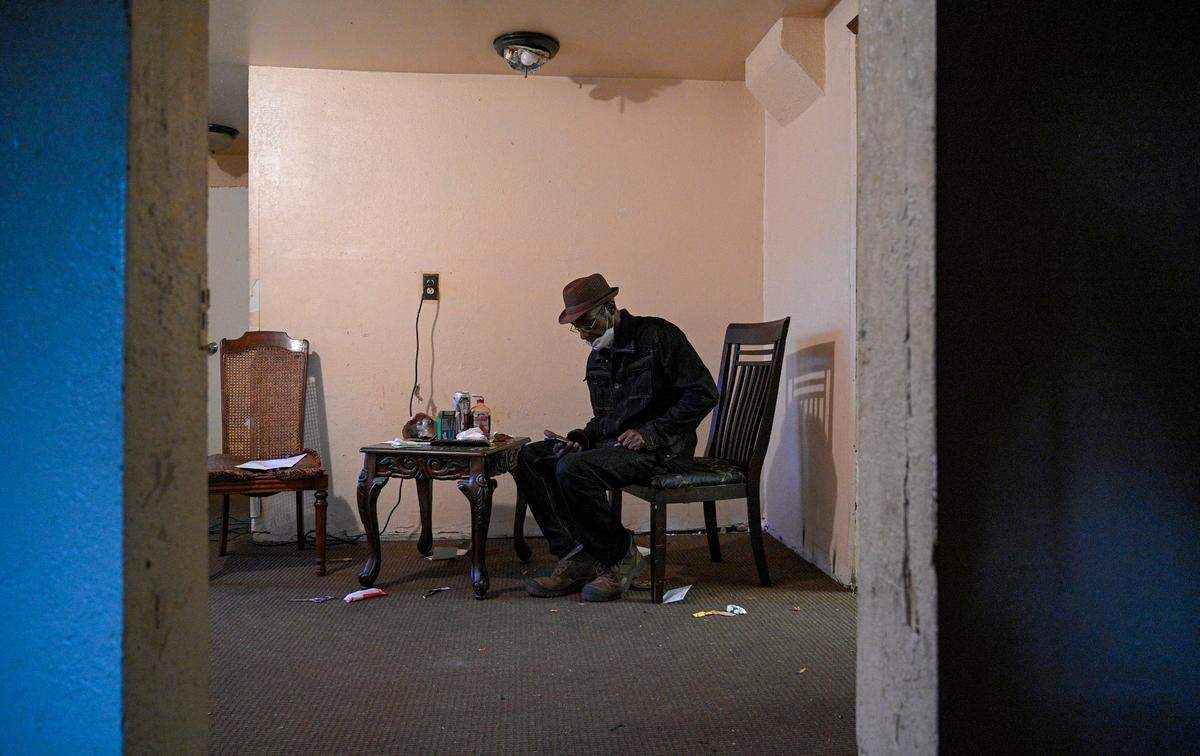
His life since July 28, 2003, has not been easy. At times he has struggled financially and emotionally. But in April, he got a cleaning job at Kauffman Stadium, where he makes $16 an hour, the highest wage he has ever earned.
“I’m liking it,” he said Friday. “I’m cleaning bathrooms, but it’s a job.”
Amrine has also had speaking engagements, where he has shared his story and spoken out against the death penalty.
Since 1989, Missouri has executed 96 prisoners, including ones with claims of innocence. Four have been exonerated and released from death row. Amrine told The Star he does not like those odds.
“I’m a perfect example,” he said. “I could have been executed. Our system’s not perfect.”
A fundraiser has been started for Amrine by the group Missourians to Abolish the Death Penalty. Amrine’s supporters say he continues to face financial burdens and lives in a house without running water.
Prisoners who are guilty and get paroled receive more resources than an innocent person who is exonerated, Amrine noted.
While Missouri has a compensation law, it’s so narrow that most exonerees, including Amrine, do not qualify. Earlier this month, Gov. Mike Parson vetoed a bill that would have expanded restitution.
‘He should be executed?’
Amrine was freed after the three prisoners who testified against him at trial recanted and admitted they lied for their own benefit.
But the Missouri Attorney General’s Office — which has fought just about every wrongful conviction claim to come before it in recent memory, including Kevin Strickland’s in Jackson County — argued that Amrine should be executed in the name of finality.
“Are you suggesting ... even if we find that Mr. Amrine is actually innocent, he should be executed?” Laura Denvir Stith, a state Supreme Court justice, asked of Assistant Attorney General Frank Jung in February 2003.
Jung responded: “That’s correct, your honor.”
Amrine prevailed and went home.
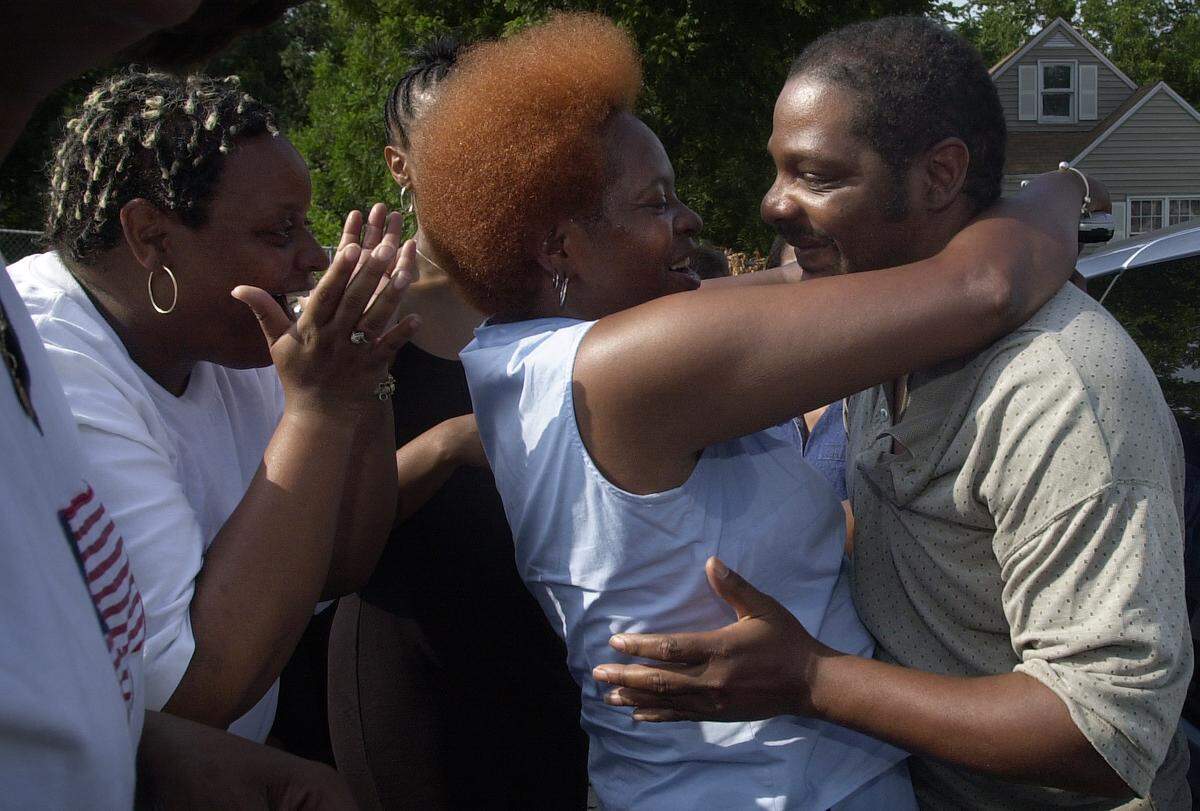
In a story three days after he was exonerated, a Star reporter wrote, “He says he’s like a man living a dream.”
At the same time, Amrine had trouble sleeping and was unfamiliar with items such as remote controls and cordless phones.
He has relied on a food pantry and has had his water and electricity cut off for weeks at a time. He suffers from post-traumatic stress disorder, depression and survivor’s guilt. He hoped it would get better with time — it hasn’t.
This year, the Missouri General Assembly passed a bill that would have allowed more people exonerated by the courts to receive restitution, though it would not have been retroactive.
Only wrongfully convicted people who were cleared by DNA evidence are eligible for payments from the state.
The measure would have increased the amount of money owed to the wrongly convicted from a yearly cap of $36,500 to $65,000.
When Parson vetoed the bill, he argued that Missouri should not pay for prosecutorial errors at the local level.
But that is how it works in other states that provide compensation, experts say. Some innocence attorneys called the rationale “bogus” because state investigators at prisons and the AG’s office have wrongly convicted Missourians.
“The whole rationale just doesn’t hold water,” said Kansas City-based lawyer Kent Gipson, adding that Amrine’s wrongful conviction was “squarely the fault of (the Department of Corrections).”
As Amrine reflected Friday, he said, “The Lord ain’t through with me.”
“That’s what gets me up everyday ... I’m not no hold-me-down religious person but I believe in God and my point is that if God was through with me, I’d be dead. Until then, he ain’t through with me. That’s what gets me up in the morning, that’s what makes me feel good.”
This story was originally published July 28, 2023 at 2:52 PM.