Fewer than 1 of every 5 KC bus stops have trash cans to curb litter. Here’s why
READ MORE
Let’s talk trash
Readers across the Kansas City metro kept asking us about trash: Is recycling really recycled? What’s up with all the trash on the highways? And where does our trash actually go when we throw it away? We’re digging in — literally.
Expand All
Editor’s note: This story is part of The Star’s series “Talking Trash.” All of the stories were inspired by questions and concerns we heard from Kansas Citians through listening sessions, an online callout and other conversations in our community. Stories will run throughout April, and you can find them all here. You can share thoughts in the form at the bottom of this story, or email kcq@kcstar.com. We’d love for you to join Star staff at a community cleanup event this month (more on that further down).
Last July, Chris Goode had a birthday gathering.
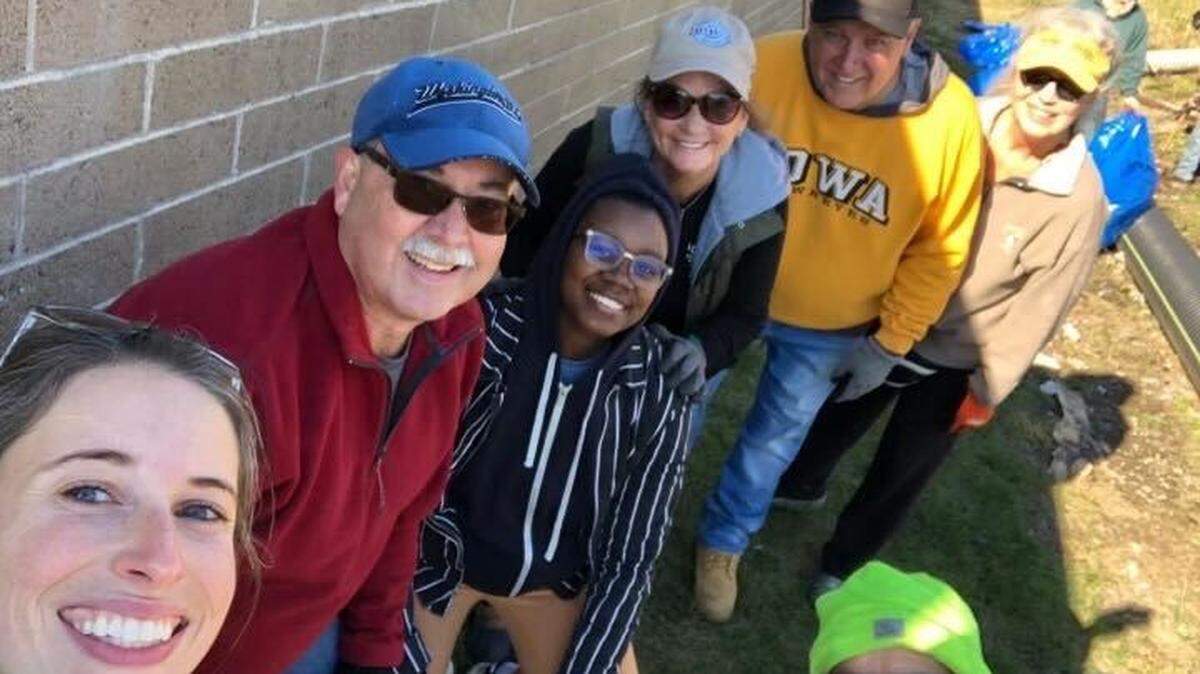
This wasn’t a typical affair with cake and candles — instead, Goode took to the streets with his wife and employees to pick up trash along Troost Avenue outside the flagship location of his business: Ruby Jean’s Juicery.
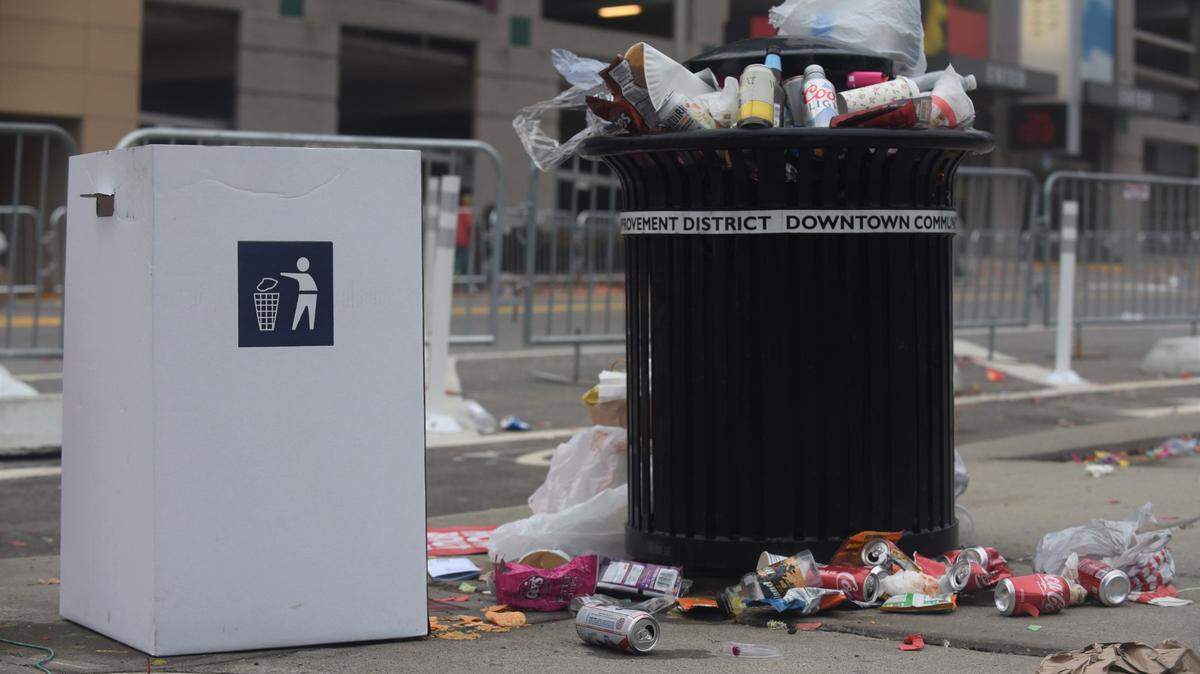
When their cleanup reached the bus stops at the busy intersection of 31st Street and Troost Avenue, just a block away from the juice shop, Goode said the amount of litter was overwhelming.
“We ended up spending a great deal of time at that bus stop,” Goode told The Star. “And, you know, ironically, when I was a kid, we would use that bus stop. My grandmother Ruby Jean, she would use that bus stop.”
The stops at the intersection of 31st and Troost are among the lucky ones in Kansas City that have trash cans. Even still, the litter problem persists.
The Kansas City Area Transit Authority (KCATA) oversees nearly 2,000 bus stops within Kansas City limits. Only 317, or around 17%, have trash cans.
“(There are) bus stops on all the residential streets, and they put in zero trash cans… I’m assuming because the metro doesn’t want to deal with it,” said Katie Mahoney, a south Kansas City resident who coordinates regular litter cleanups. “But those areas just get so dirty.”
When The Star asked readers to share questions and concerns with us about trash in the metro, many brought up that it’s hard to prevent littering if trash cans aren’t accessible. Several people brought up bus stops specifically as chronic problem spots for litter.
Read more about Kansas Citians who voluntarily pick up litter on our streets.
Eileen Weir, the former mayor of Independence, told The Star she has the same concern east of the city as well.
“There is an enormous amount of trash and debris around all the bus stops (near 40 Highway),” Weir said. “The excuses for not having trash cans (are) bees, vandalism (and) no one to empty them.”
In total, the KCATA oversees over 2,500 bus stops on the Missouri side of the metro alone — but only maintains the infrastructure at those within Kansas City. The rest fall to a multitude of local governments, each with their own system of handling bus stop trash services.
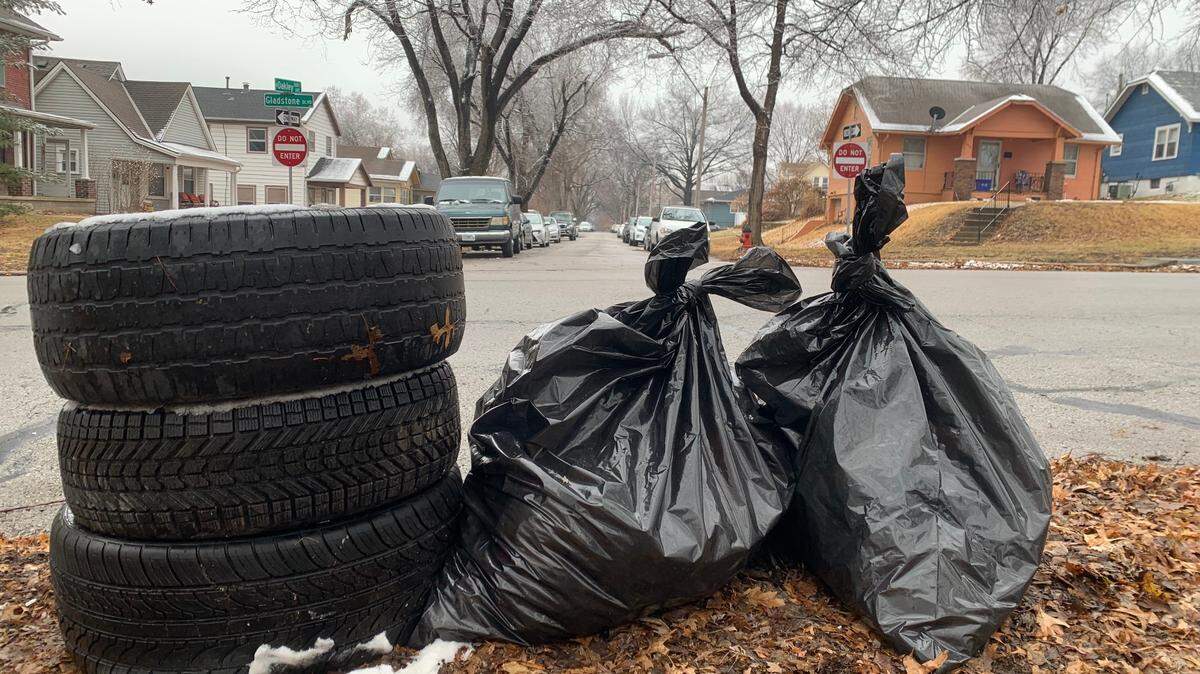
Area transit officials say the litter isn’t primarily coming from bus riders, but rather from other residents who see the stops as an ideal place to illegally dump their trash.
The KCATA said it doesn’t have plans to add trash more cans, but Kansas City officials say litter at bus stops is a problem they’re trying to tackle.
Read more about Kansas City’s two-bag trash limit.
Michael Shaw, the city’s public works director and an appointed member of the KCATA Board of Commissioners, told The Star that conversations around how to enhance existing bus stops are ongoing.
“It is absolutely an issue to have people come to a bus stop and not have anywhere to get rid of their trash, because people will then just throw it on the ground,” he said. “So that is something that is definitely being addressed with KCATA in terms of getting trash cans and shelters and benches out to our bus stops.”
“It’s something we’ve been talking about a lot,” added city manager Brian Platt. “We have not found the solution yet, but we’re working on it.”
Until then, Goode sees a space for local businesses like his to fill the gaps left by local governments. Later this month, Ruby Jean’s will be the first partner to “adopt” a bus stop and help take care of the litter.
Why do some Kansas City bus stops have no public trash cans?
The KCATA says its infrastructure at bus stops depends on the volume of riders: The more passengers typically board at a bus stop, the more likely it is to get amenities like benches, shelters and trash cans.
The stops with trash cans are mostly located along MAX bus routes and in the spots where major north-south and east-west routes intersect one another, KCATA spokesperson Cindy Baker told The Star. They can be found along major city roads like Troost and Prospect avenues, along with 27th, 31st and 39th Streets, she said.
Beyond that, they’re harder to come by.
“We are working within the constraints of our budget,” said Chuck Ferguson, the transit authority’s chief operations officer.
The agency’s guidelines state that a bus stop must see 25 passengers board per day on weekdays in order to qualify for a trash can. That means stops with lower ridership won’t get trash cans — even if they have a persistent litter problem.
“We don’t have an immediate plan to expand our trash collecting opportunities,” Ferguson said. “We always have to say (with) any decision we make is, how does it impact the passenger? If we have to move money from bus service to start collecting (more) trash, that’s negatively impacting the bus passenger.”
Who maintains the trash cans at bus stops?
The KCATA has its own facilities team tasked with keeping bus stops and shelters clean within Kansas City limits, Ferguson said. This team currently employs four people full-time, and has two pickup-style trucks for hauling away trash.
Stops and shelters outside of Kansas City, although still run by the KCATA, are maintained by the municipalities where they are located. Those include Gladstone, North Kansas City, Independence and Kansas City, Kansas.
These cities are responsible for arranging their own cleaning and trash collection at their KCATA bus stops.
While the transit authority is technically a regional entity, it gets a large portion of its funding from Kansas City, which Ferguson said gives KCATA workers union protections and means the agency cannot contract with a private trash hauling company.
Ferguson said he believes most of the litter found at city bus stops isn’t caused by riders, especially since all buses have a small trash can on board.
“You’ll see a bus stop that might have four trash bags thrown there. Well, that didn’t come from a bus rider,” he said. “Someone just says, ‘Oh, I’ll throw my trash here, because somebody will pick it up.’ Well, we unfortunately have to be the somebody.”
BEHIND THE STORY
MOREHow you can help: Join The Star at a community cleanup event
April 15 — Lee’s Summit highway cleanup
9 to 11 a.m. starting at Target in Lee’s Summit, 1850 NW Chipman Road off of NW Pryor Road. Sign up online here.
April 15 — Mattie Rhodes Center Northeast Kansas City cleanup
8 a.m. to noon starting at Mattie Rhodes Center Northeast, 148 N Topping Ave. Email or call Scott Wagner at SWagner@mattierhodes.org or 816-581-5662 to sign up.
April 22 — Ivanhoe Neighborhood Council Earth Day clean-up
9 a.m. to 1 p.m. starting at Ivanhoe Neighborhood Council, 3700 Woodland Ave. Sign up online here.
April 22 — Overland Park Recycling Extravaganza
8 a.m. to 2 p.m. starting at 11401 Lamar, Overland Park. Sign up online here.
April 21-23 — Great Kansas City Clean-up
There will be multiple events in various locations April 21, 22 and 23. Sign up online here.
April 15-23 — Northland Community Cleanup KC
There will be multiple events in various locations April 15, 16, 22 and 23. Ask to join Northland Community Cleanup KC’s Facebook group for a listing of these and future events.
Can I request a trash can be added to my local bus stop?
You can, but you might be disappointed with the answer. Ferguson said that the KCATA is not currently planning to expand its trash collection capabilities unless local governments provide new funding and update their contracts to mandate improved bus stop maintenance.
“Providing trash service at bus stops is an essential service that’s necessary,” public works director Shaw told The Star in response. “Kansas City will work with KCATA to identify opportunities for this infrastructure.”
Ferguson added that crews can respond to litter complaints by doing one-time cleanups at problematic bus stops. You can tell the agency about a litter problem at a stop near you using the form on its website. You can also call the KCATA at 816-221-0660.
Local businesses are filling gaps
Goode told The Star that as his birthday gathering collected trash at 31st and Troost, bus riders expressed their gratitude for the effort. Some even started helping the group gather litter as they waited for their buses.
“I said, you know what, there’s something deeper here,” he recalled.
After the cleanup, Goode reached out to the KCATA about becoming the first business in Kansas City to “adopt” a bus stop. The proposal was a success: the new program officially launches on Earth Day, Saturday, April 22.
“I think it’s an outstanding opportunity for a lot of reasons,” Ferguson said. “They’re going to kind of keep the area around the stop clean. They might sweep up trash and pick up trash outside the trash can on a regular basis… they’re going to do things that just keep it looking nice.”
Jobs like power washing benches and emptying trash cans will still fall to the KCATA, but he said the partnership could help address litter and appearance issues that his crews don’t have time to tackle regularly.
Goode added that he sees a cleaner environment as one step towards a greater impact.
“The people that are on those bus stops, oftentimes are people that are marginalized,” he said. “Consciously, maybe they don’t notice that the bus stop is cleaner. (But) subconsciously, that area being devoid of trash… I believe that it makes an impact on our psyche.”
.jpg)